

The United Nations Office at Geneva
Multimedia Newsroom
Nigeria: crisis in north-east will get worse without urgent help, says OCHA
UN humanitarians issued an alert on Tuesday on the deteriorating situation for millions of mainly women and children in north-east Nigeria who continue to be affected by protracted armed conflict, just as the country enters the lean season.
Well over eight million people are in need of assistance in Borno, Adamawa and Yobe (BAY) states and an estimated 600,000 face emergency levels of food insecurity because of extremist violence centred around the Lake Chad region, that’s now in its 12th year.
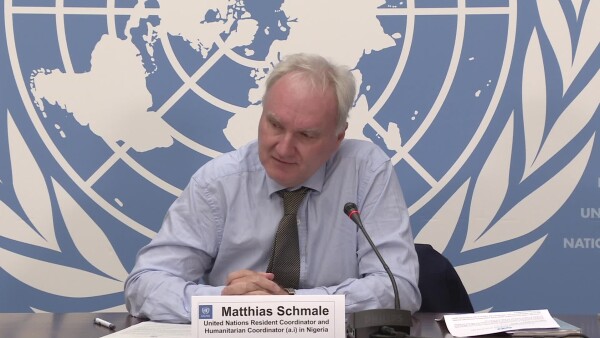
Although previously dominant Boko Haram militia have been significantly weakened since the group’s leader was killed over a year ago, it continues to carry out indiscriminate attacks, said the UN’s top relief official in Nigeria, Matthias Schmale. Another extremist offshoot, ISWAP, is also dangerous, although it had also suffered setbacks, he noted.
As in previous years, a staggering one million people are also beyond the reach of international aid teams, said Mr. Schmale, who is the acting UN Resident and Humanitarian Coordinator for Nigeria. More than 80 per cent of those in need are women and children, who also face “abductions, rape and abuse”, while indiscriminate attacks in Borno state make it the most “unstable place to be”, he added.
“We’ve been asking to support out of the 8.4 million people in need of support at least 5.5 million,” Mr. Schmale told journalists in Geneva. “The conflict has left 2.2 million people presently displaced…We’ve just entered what is called the lean season that normally lasts ‘til September; last year it lasted ‘til November, so we’re also seeing the impact of climate change.”
Mr. Schmale noted that although Nigeria is a major oil producer, it lacks refineries which means that it has not benefited from the global surge in energy prices, linked to war in Ukraine.
“It’s early days yet in terms of understanding the full impact, as you may know, in Nigeria from the beginning there was speculation as to whether Nigeria would benefit as an oil-producing country. We’re not seeing that in fact at all, because Nigeria, as contradictory as this may sound, depends very largely on imports of refined oil so, the price rises we’ve seen are not benefiting Nigeria, that’s one concern.”
In time, the massive country could feed itself and avoid ever costlier food imports, the UN official insisted, although for the moment, it lacks the infrastructure and agricultural investment required to be competitive at a global level.
Of particular concern are the 1.74 million children under five who are expected to be suffer from acute malnutrition in the north-east in coming months.
“A key message is ringing the alarm bell,” Mr. Schmale said. “If we don’t get immediate funding soon for an initial multisector response plan worth $350 million, we will have a crisis that will be much worse in a couple of months.”
He added: “We hope that the international community realises that you ignore a situation like in the north-east of Nigeria at your own peril; it could have far-reaching consequences beyond the borders of Nigeria if we’re not able to keep it stable.”
ends
STORY: Nigeria Humanitarian Emergency - OCHA
TRT: 2 mins 15s
SOURCE: UNTV CH
RESTRICTIONS: NONE
LANGUAGE: ENGLISH
ASPECT RATIO: 16:9
DATELINE: 21 June 2022 GENEVA, SWITZERLAND
SHOTLIST
- Exterior wide shot, flag alley, UN Geneva.
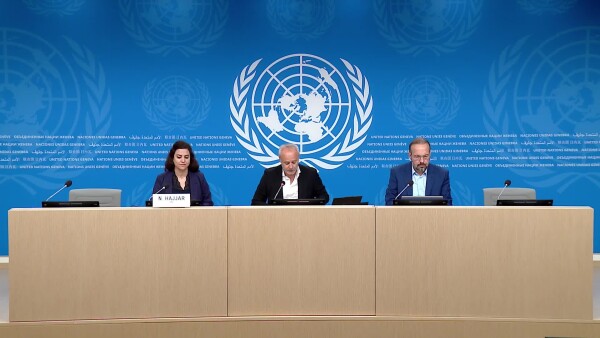
- Medium shot, UN Geneva Press room.
- SOUNDBITE (ENGLISH): Matthias Schmale, UN Resident and Humanitarian Coordinator for Nigeria, Office for the Coordination of Humanitarian Affairs (OCHA): “A key message is ringing the alarm bell. And what I mean by that is if we don’t get immediate funding soon for an initial multisector response plan worth $350 million, we will have a crisis that will be much worse in a couple of months.”
- Medium shot, participant, seated, in front of large TV screen showing Mr. Schmale.
- SOUNDBITE (ENGLISH): Matthias Schmale, UN Resident and Humanitarian Coordinator for Nigeria, Office for the Coordination of Humanitarian Affairs (OCHA): “There are 600,000 people projected to be at emergency risk level in terms of food insecurity.”
- Medium shot, podium speakers, journalists.
- SOUNDBITE (ENGLISH): Matthias Schmale, UN Resident and Humanitarian Coordinator for Nigeria, Office for the Coordination of Humanitarian Affairs (OCHA): “Now this is all happening in the context of a protracted crisis caused by a non-international armed conflict as many of you will know across the three states in the north-east in Nigeria: Borno, Adamawa and Yobe states.”
- Medium shot, journalists writing on notepad or laptop in foreground, participant to rear.
- SOUNDBITE (ENGLISH): Matthias Schmale, UN Resident and Humanitarian Coordinator for Nigeria, Office for the Coordination of Humanitarian Affairs (OCHA): “We’ve been asking to support out of the 8.4 million people in need of support at least 5.5 million. The conflict has left 2.2 million people presently displaced.”
- Medium shot, participant in foreground, podium speakers to rear.
- SOUNDBITE (ENGLISH): Matthias Schmale, UN Resident and Humanitarian Coordinator for Nigeria, Office for the Coordination of Humanitarian Affairs (OCHA): “We’ve just entered what is called the lean season that normally lasts ‘til September; last year it lasted ‘til November, so we’re also seeing the impact of climate change.”
- Medium shot, journalist in foreground, podium speakers to rear.
- SOUNDBITE (ENGLISH): Matthias Schmale, UN Resident and Humanitarian Coordinator for Nigeria, Office for the Coordination of Humanitarian Affairs (OCHA): “It’s early days yet in terms of understanding the full impact, as you may know, in Nigeria from the beginning there was speculation as to whether Nigeria would benefit as an oil-producing country. We’re not seeing that in fact at all, because Nigeria, as contradictory as this may sound, depends very largely on imports of refined oil so, the price rises we’ve seen are not benefiting Nigeria, that’s one concern.”
- Wide shot, journalists, TV camera on tripod, lighting panel on stand.
- Close-up, podium speakers seated in front of UN Geneva backdrop.
- Medium shot, journalists, UN staff.
Similar Stories
1
1
1
Edited News | OCHA , UNICEF , WFP
Aid agencies warned on Friday of the fast-developing humanitarian emergency inside Taiz City in Yemen, which has been encircled by de facto Houthi forces fighting government troops along the country’s west coast.
1
1
1
Press Conferences | UN WOMEN , WFP , WHO
UN WOMEN: Sudan Women and girls one year after the fall of El Fasher; increasing drone attacks across the country; WFP: DRC - Ebola spreads to eighth DRC province as WFP delivers food, builds treatment centres and keeps supplies moving; WHO - Update on Ebola (Bundibugyo Virus Disease)
1
12
1
1
Press Conferences , Images | UNOG
Closing Press Conference following the Sixth Consultative Meeting on Enhancing Coordination of Peace Initiatives and Efforts in Sudan

2
17
1
2
Edited News , Press Conferences , Images | OCHA , WMO
Two UN agencies teamed up on Wednesday to issue an appeal for immediate assistance to help communities already being impacted by the strongest El Niño on record.
3
16
2
2
Edited News , B-roll , Conferences , Images | UNITED NATIONS , UNOG
Sixth Consultative Meeting on Enhancing Coordination of Peace Initiatives and Efforts for Sudan
1
1
1
Press Conferences | CITES
Wildlife trade and conservation policy discussions at the 81st meeting of the CITES Standing Committee (SC81)

1
1
1
Edited News | UNICEF , WHO , UNHCR
Yemen war continues to force families from homes amid hunger and disease
More than 250,000 people have now fled renewed fighting in Yemen, the UN said on Tuesday, citing particular concern for those sheltering in the southwestern city of Taiz and the wider governorate, where access is “essentially blocked”.
1
1
1
Press Conferences | UNHCR , UNCTAD , WMO , OCHA , UNICEF , WHO
UNHCR Hungary’s 1956 Refugee Crisis: 70 Years On, UNCTAD World Investment Forum 2026, Doha, WMO Greenhouse Gas Bulletin and Climate Update for COP31, OCHA Afghanistan: Malnutrition, Girls’ Education and Recovery, UNICEF Yemen: Child Malnutrition and Unsafe Water in Taiz, WHO Inequalities in Noncommunicable Diseases and Risk Factors
1
1
1
Press Conferences | UNHCR
End of UNHCR's 77th Annual Executive Committee (ExCom) meeting week

1
1
1
Edited News | UNICEF
A little over one year since a ceasefire agreement was announced between Hamas fighters and Israel, more than 340 children have been reported killed and hundreds more injured, the UN Children’s Fund, UNICEF, said on Friday.
1
1
1
Press Conferences | UNICEF , IOM , UNHCR
UN Special Assistant to the Personal Envoy Office (SUDAN): Peace Initiatives and Efforts in Sudan; UNICEF: Dire situation of children in Gaza; IOM: Damaged Homes and Energy Attacks Risk Displacing Ukrainians for this winter; UNHCR: update on EXCOM week

1
1
1
Press Conferences | IOM , UNDRR
UN stresses importance of household preparedness for disaster risk reduction.