

The United Nations Office at Geneva
Multimedia Newsroom
Edited News | UNHCR , UNICEF
Bi-Weekly Press Briefing: Pakistan Floods Alert Update UNICEF - UNHCR
Pakistan floods update: the waters will take six months to go, warn relief agencies
Millions of people in Pakistan are still deeply affected by catastrophic flooding which “is not going anywhere”, UN relief agencies said on Tuesday.
Close to eight million people have been displaced by the disaster and the UN along with the authorities and partners have continued to race to reach affected populations with desperately needed relief items. To date, more than 1,500 people have been killed, including 552 children.
Southern Sindh province is still in crisis, with many areas still under water.
“We don’t have enough food, we don’t have shelter, and still even the kind of health care that is required is not available,” said Gerida Birukila, UN Children’s Fund Pakistan Chief of Field Office in Balochistan, another of the worst-hit provinces.
In a fresh appeal for international support, the UNICEF worker described desperate scenes.
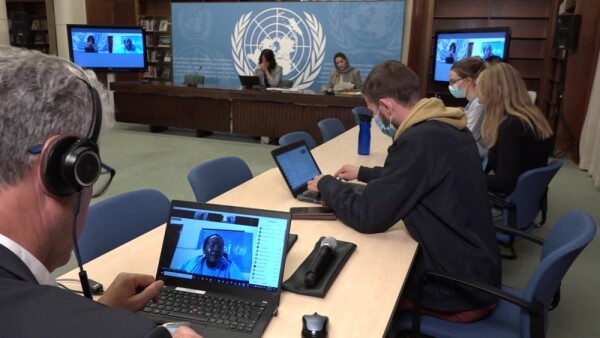
“Roads and bridges have been washed away; I’ve just come from the field and the water is not going anywhere,” Ms. Birukila continued, speaking via Zoom from Quetta.
As had been feared, life-threatening illness and disease have now spread among displaced communities, including cerebral malaria, for which there is no available medicine.
“There is no shelter...people don’t have even clothing,” Ms. Birukila continued. “One lady asked me, ‘Please give me some clothing, I ran away two weeks ago.’ She is still wearing the same dress she wore two weeks ago because she cannot change. You just run with what you have on your back.”
Echoing the deep concern among first-responders, the UN refugee agency, UNHCR noted that 7.6 million people in Pakistan have been displaced by the floods, with nearly 600,000 living in relief sites.
The UN agency has coordinated logistics as part of a plan to transport more than 1.2 million relief items to local authorities in the most flood-affected areas. To date, it has delivered more than one million life-saving items to authorities for distribution.
“Many parts of the country, especially in the southern province of Sindh, remain underwater, as well as … parts of eastern Balochistan,” said UNHCR spokesperson Babar Baloch, adding that officials have warned that it could take “up to six months for floodwaters to recede” in the hardest-hit areas.
There are also concerns for Pakistan’s 1.3 million registered Afghan refugees; an estimated 800,000 live in more than 45 “calamity hit” districts out of 80 affected locations, UNHCR said, noting that four of the worst-hit districts in Balochistan, Khyber Pakhtunkhwa and Sindh provinces host the highest number of refugees.
To help them, UNHCR and partners have provided emergency cash assistance to hundreds of vulnerable refugee families, supplementing the Government’s monsoon response.
“People are being displaced. They are looking out and they just tell you, ‘That used to be my house, this used to be the school,’ but what you can see is just water and water,” said UNICEF’s Ms. Birukila.
ends
STORY: Pakistan Floods Alert Update – UNICEF, UNHCR
TRT: 2 min 08s
SOURCE: UNTV CH
RESTRICTIONS: NONE
LANGUAGE: ENGLISH / NATS
ASPECT RATIO: 16:9
DATELINE: 20 September 2022 GENEVA, SWITZERLAND
SHOTLIST
- Medium shot, UN Geneva flag alley.
- Wide shot, press room with panel of speakers.
- SOUNDBITE (ENGLISH) Gerida Birukila, UNICEF Pakistan’s Chief of Field Office in Balochistan (from Quetta Moi): “We don’t have enough food, we don’t have shelter, and still, even the kind of health care that is required is not available.”
- Medium shot, journalist taking notes.
- SOUNDBITE(ENGLISH) Gerida Birukila, UNICEF Pakistan’s Chief of Field Office in Balochistan (from Quetta Moi): “Roads and bridges are being washed away. I’ve just come from the field and the water is not going anywhere.”
- Medium shot, TV camera operator.
- SOUNDBITE(ENGLISH) Gerida Birukila, UNICEF Pakistan’s Chief of Field Office in Balochistan (from Quetta Moi): “We have very severe malaria, people are getting fits, because of you know, cerebral malaria and there is no medicine, and then there is no shelter. There is no...people don’t have even clothing. One lady asked me, ‘Please give me some clothing, I ran away two weeks ago.’ She is still wearing the same dress she wore two weeks ago because she cannot change. You just run with what you have on your back.”
- Medium shot, journalist taking notes.
- SOUNDBITE(ENGLISH) Babar Baloch, UNHCR spokesperson: “In Pakistan are some 7.6 million people have now been displaced by the floods, according to the latest estimates that we have got, with nearly 600,000 living in relief sites. Many parts of the country, especially in the southern province of Sindh, remain underwater, as well as you just heard, in parts of eastern Balochistan as well.”
- Medium shot, journalist taking notes.
- SOUNDBITE(ENGLISH) Babar Baloch, UNHCR spokesperson: “Officials warn that it could take up to six months for floodwaters to recede in the hardest hit areas.”
- Medium shot, journalist taking notes.
- SOUNDBITE(ENGLISH) Gerida Birukila, UNICEF Pakistan’s Chief of Field Office in Balochistan (from Quetta Moi): “People are being displaced. They are looking out and they just tell you, ‘That used to be my house, this used to be the school,’ but what you can see is just water and water.”
- Medium shot, staff monitoring, journalist taking notes.
- Close up shot, journalist taking notes.
- Close up shot, screen showing speaker.
Similar Stories

1
1
1
Edited News | OCHA , UNICEF , WFP
Aid agencies warned on Friday of the fast-developing humanitarian emergency inside Taiz City in Yemen, which has been encircled by de facto Houthi forces fighting government troops along the country’s west coast.

2
17
1
2
Edited News , Press Conferences , Images | OCHA , WMO
Two UN agencies teamed up on Wednesday to issue an appeal for immediate assistance to help communities already being impacted by the strongest El Niño on record.

3
16
2
2
Edited News , B-roll , Conferences , Images | UNITED NATIONS , UNOG
Sixth Consultative Meeting on Enhancing Coordination of Peace Initiatives and Efforts for Sudan

1
1
1
Edited News | UNICEF , WHO , UNHCR
Yemen war continues to force families from homes amid hunger and disease
More than 250,000 people have now fled renewed fighting in Yemen, the UN said on Tuesday, citing particular concern for those sheltering in the southwestern city of Taiz and the wider governorate, where access is “essentially blocked”.

1
1
1
Edited News | UNICEF
A little over one year since a ceasefire agreement was announced between Hamas fighters and Israel, more than 340 children have been reported killed and hundreds more injured, the UN Children’s Fund, UNICEF, said on Friday.

1
1
1
Edited News | UNICEF , IFRC
Six weeks after Nepal’s deadly flooding disaster, communities are still struggling to rebuild their lives, but they will need sustained help as global warming increases the risk of another Himalayan catastrophe, the UN Children’s Fund (UNICEF) said on Friday.

1
1
1
Edited News | WHO
In suspected Russia plague death, testing and monitoring underway – WHO
The death of a lab worker in Russia’s Siberia region has sparked concerns about plague being the cause, the UN World Health Organization (WHO) said on Tuesday, adding that it was following the situation closely.

1
1
Edited News | OHCHR , UNOG
UN Human Rights Chief Volker Türk on Friday provided and oral update to the 63rd session of the Human rights Council on Ukraine.

1
1
1
Edited News | OHCHR , UNOG
UN Human Rights Chief Volker Türk on Friday provided and oral update to the 63rd session of the Human rights Council on the human rights situation in Haiti.

1
1
1
Edited News | WHO
Repeated delays in bringing lifesaving medicines, prosthetics and more from Israel into Gaza risk having devastating consequences on Palestinians who urgently need them in the wartorn enclave, the UN World Health Organization (WHO) said on Friday. “A truck full of non-priority supplies or the right supplies arriving too late, doesn't save lives. That's the question that actually matters," said Dr Reinhilde Van De Weerdt, WHO Representative in the OPT.

1
1
1
Edited News | WHO
DRC: Early access to care and oxygen decisive for Ebola patients’ survival – WHO
In the Democratic Republic of the Congo (DRC), health workers fighting the country’s largest-ever Ebola outbreak are struggling to overcome critical challenges to patient care, the UN World Health Organization (WHO) warned on Tuesday.

1
1
1
Edited News | OCHA , UN
Civilians in Iran are continuing to feel the consequences of months of conflict and military escalation, the UN’s top official in the country has said, as loss of life, damage to civilian infrastructure and mounting economic pressures leave many facing continued uncertainty.