

The United Nations Office at Geneva
Multimedia Newsroom
Edited News | UNICEF
Bi-Weekly Press Briefing 08 November 2022 : Impact on climate crisis on most vulnerable - UNICEF
Almost 28 million children have been impacted this year by record flooding in 27 countries. A large majority of those children affected by flooding in 2022 are among the most vulnerable and are at high risk of a multitude of threats including death by drowning, disease outbreaks, lack of safe drinking water, malnutrition, disruption in learning, and violence.
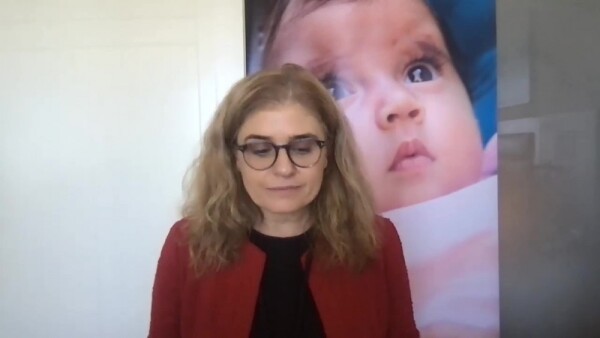
“According to a UNICEF analysis released today, 27.7 million children in 27 countries have been impacted by flooding so far in this year”, said Paloma Escudero, UNICEF’s Global Director of Communications and Advocacy while speaking from the COP27 in Sharm el-Sheikh to journalists at the United Nations in Geneva.
UNICEF together with youth climate activists from around the world, are drawing the spotlight at the UN Climate Change Conference to the impact of the climate crisis on the poorest children and are challenging world leaders to also respond at an unprecedented scale. Governments must prevent a climate catastrophe by rapidly reducing emissions.
“UNICEF also urges world leaders to agree immediate funding for the children who are facing, and will be facing, irreversible climate losses and damages", said Paloma Escudero. "Governments must close the finance gap for addressing loss and damage at COP27. Decisions about climate change included in these halls at COP27 in Sharm el-Sheikh need to be inclusive, especially of young people from the most-affected places.”
According to UNICEF, Pakistan’s floods in June 2022, the worst in 100 years, have killed at least 615 children, and left 10 million girls and boys in immediate need of lifesaving support. The floods have contaminated drinking water, which is spawning deadly water-borne diseases such as acute watery diarrhea, which compounds already acute malnutrition. Estimates suggest close to 1.6 million children in flood areas could be suffering from severe acute malnutrition.
“Right now, Pakistan is drowning in the world’s inaction », said UNICEF’s Global Communications Director. “One of the most important but heartbreaking things about climate change is that its most horrific impacts are often reserved for those who are least responsible for creating the problem.”
The aftermath of floods is often more deadly for children than the extreme weather events that caused the flooding. In 2022, floods have contributed to the increased spread of major killers of children, such as malnutrition, malaria, cholera and diarrhea.
In addition to threatening the lives of millions of children, the flood waters have disrupted essential services and displaced countless families.
“In Africa, just like in Pakistan, children are paying the price for a climate disaster not of their making », said Paloma Escudero. “From the extreme drought and risk of famine in Somalia to the erratic rains across the Sahel, UNICEF is being challenged to respond at an unprecedented scale to emergencies that have all the markings of climate-induced disasters.”
UNICEF’s immediate humanitarian response to flood affected countries is wide-ranging across all sectors: health, nutrition, water, sanitation and hygiene (WASH), child protection, and education. However, a lack of funding has hampered the response in many countries.
-ends-
STORY: Impact on climate crisis on most vulnerable - UNICEF
TRT: 1 min 52 s
SOURCE: UNTV CH
RESTRICTIONS: NONE
LANGUAGE: ENGLISH/NATS
ASPECT RATIO: 16:9
DATELINE: 08 November 2022 GENEVA, SWITZERLAND
SHOTLIST
- Wide shot, UN Geneva flag alley.
- Wide shot, press room with panel of speakers and cameraman.
- SOUNDBITE (ENGLISH) - UNICEF’s Global Director of Communications and Advocacy, Paloma Escudero: “According to a UNICEF analysis released today,7 million children in 27 countries have been impacted by flooding so far in this year.”
- Close-up shot, hands of journalists taking notes.
- SOUNDBITE (ENGLISH) UNICEF’s Global Director of Communications and Advocacy, Paloma Escudero: “UNICEF also urges world leaders to agree immediate funding for the children who are facing, and will be facing, irreversible climate losses and damages. Governments must close the finance gap for addressing loss and damage at COP27. Decisions about climate change included in these halls at COP27 in Sharm el-Sheikh need to be inclusive, especially of young people from the most-affected places.”
- Medium shot, journalists and screen showing speakers.
- SOUNDBITE (ENGLISH) UNICEF’s Global Director of Communications and Advocacy, Paloma Escudero: “Right now, Pakistan is drowning in the world’s inaction. One of the most important but heartbreaking things about climate change is that its most horrific impacts are often reserved for those who are least responsible for creating the problem.”
- Close-up shot, pressroom with camera and journalists.
- SOUNDBITE (ENGLISH) UNICEF’s Global Director of Communications and Advocacy, Paloma Escudero: “In Africa, just like in Pakistan, children are paying the price for a climate disaster not of their making. From the extreme drought and risk of famine in Somalia to the erratic rains across the Sahel, UNICEF is being challenged to respond at an unprecedented scale to emergencies that have all the markings of climate-induced disasters.”
- Medium shot, speakers panel and tv screen.
- Close-up shot, hands of journalists taking notes.
- Medium shot, press room with panel of speakers.
- Close-up shot, press room and journalists.
Similar Stories

2
17
1
2
Edited News , Press Conferences | OCHA , WMO
Two UN agencies teamed up on Wednesday to issue an appeal for immediate assistance to help communities already being impacted by the strongest El Niño on record.

3
16
2
2
B-roll , Conferences , Edited News | UNITED NATIONS , UNOG
Sixth Consultative Meeting on Enhancing Coordination of Peace Initiatives and Efforts for Sudan

1
1
1
Edited News | UNICEF , WHO , UNHCR
Yemen war continues to force families from homes amid hunger and disease
More than 250,000 people have now fled renewed fighting in Yemen, the UN said on Tuesday, citing particular concern for those sheltering in the southwestern city of Taiz and the wider governorate, where access is “essentially blocked”.

1
1
1
Edited News | UNICEF
A little over one year since a ceasefire agreement was announced between Hamas fighters and Israel, more than 340 children have been reported killed and hundreds more injured, the UN Children’s Fund, UNICEF, said on Friday.

1
1
1
Edited News | UNICEF , IFRC
Six weeks after Nepal’s deadly flooding disaster, communities are still struggling to rebuild their lives, but they will need sustained help as global warming increases the risk of another Himalayan catastrophe, the UN Children’s Fund (UNICEF) said on Friday.

1
1
1
Edited News | WHO
In suspected Russia plague death, testing and monitoring underway – WHO
The death of a lab worker in Russia’s Siberia region has sparked concerns about plague being the cause, the UN World Health Organization (WHO) said on Tuesday, adding that it was following the situation closely.

1
1
Edited News | OHCHR , UNOG
UN Human Rights Chief Volker Türk on Friday provided and oral update to the 63rd session of the Human rights Council on Ukraine.

1
1
1
Edited News | OHCHR , UNOG
UN Human Rights Chief Volker Türk on Friday provided and oral update to the 63rd session of the Human rights Council on the human rights situation in Haiti.

1
1
1
Edited News | WHO
Repeated delays in bringing lifesaving medicines, prosthetics and more from Israel into Gaza risk having devastating consequences on Palestinians who urgently need them in the wartorn enclave, the UN World Health Organization (WHO) said on Friday. “A truck full of non-priority supplies or the right supplies arriving too late, doesn't save lives. That's the question that actually matters," said Dr Reinhilde Van De Weerdt, WHO Representative in the OPT.

1
1
1
Edited News | WHO
DRC: Early access to care and oxygen decisive for Ebola patients’ survival – WHO
In the Democratic Republic of the Congo (DRC), health workers fighting the country’s largest-ever Ebola outbreak are struggling to overcome critical challenges to patient care, the UN World Health Organization (WHO) warned on Tuesday.

1
1
1
Edited News | OCHA , UN
Civilians in Iran are continuing to feel the consequences of months of conflict and military escalation, the UN’s top official in the country has said, as loss of life, damage to civilian infrastructure and mounting economic pressures leave many facing continued uncertainty.

1
1
1
Edited News | WHO , UNICEF
Aid agencies in Yemen highlighted the growing hunger emergency sparked by renewed fighting between Houthi opposition forces and Government troops, after mobile health clinics reported that hundreds of children displaced by the violence are suffering from the most deadly form of malnutrition.