

The United Nations Office at Geneva
Multimedia Newsroom
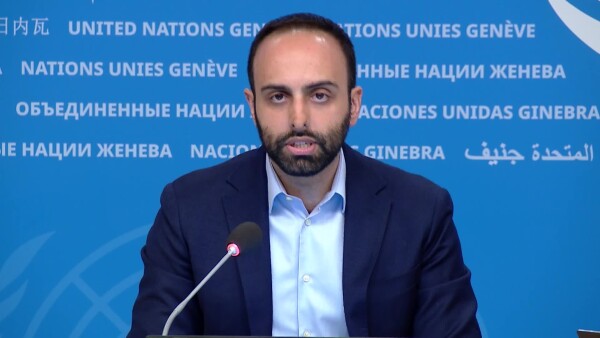
At the bi-weekly press briefing on Friday, Jeremy Laurence Spokesperson for the UN Human Rights Office, made the following comments on Myanmar.
“Two years after the Myanmar military launched a coup against the democratically elected government, the country has sunk deeper than ever into crisis and has undergone a wholesale regression in human rights,” said Laurence.
“By nearly every feasible measurement, and in every area of human rights – economic, social and cultural, as much as civil and political – Myanmar has profoundly regressed,” the spokesperson said, reflecting on the spiraling crisis since the attempted coup of 1 February 2021.
“Despite clear legal obligations for the military to protect civilians in the conduct of hostilities, there has been consistent disregard for the related rules of international law. Far from being spared, civilians have been the actual targets of attacks – victims of targeted and indiscriminate artillery barrages and air strikes, extrajudicial executions, the use of torture, and the burning of whole villages,” said Laurence.
“According to credible sources at least 2,890 people have died at the hands of the military and others working with them, of whom at least 767 were initially taken into custody. This is almost certainly an underestimation of the number of civilians killed as a result of military action,” the spokesperson said.
A staggering further 1.2 million people have been internally displaced, and over 70,000 have left the country - joining over one million others, including the bulk of the country’s Rohingya Muslim population, who fled sustained persecution and attacks over the past decades.
Credible information indicates that over 34,000 civilian structures, including homes, clinics, schools and places of worship, have been burned over the past two years. Myanmar’s economy has collapsed with nearly half of the population now living below the poverty line.
Regional leaders, who engaged the military leadership through ASEAN, agreed a Five-Point Consensus, the High Commissioner said that Myanmar’s generals have treated with disdain.
“Two of the critical conditions that were agreed - to cease all violence and to allow humanitarian access - have not been met. In fact, we have seen the opposite. Violence has spiraled out of control and humanitarian access has been severely restricted,” Laurence said.
The High Commissioner pointed to other measures that would be crucial to a political foundation for resolving the crisis: the release of all political prisoners, including State Counsellor Aung San Suu Kyi and President U Win Myint, as called for by the UN Security Council; inclusive dialogue with all parties -- involving both the ASEAN Chair and the UN Special Envoy; and allowing the UN Human Rights Office meaningful access to the country to monitor the situation independently and impartially.
“Restoring respect for human rights is a key to ending this crisis, to end this situation where Myanmar’s generals are trying to prop up through brute force a decades-old system in which they answer to no-one but themselves,” said Laurence.
In its first year of independence, Myanmar was among the first Member States of the United Nations to vote in favour of the Universal Declaration of Human Rights. Sadly, as we mark 75 years since the Declaration’s adoption, the military is actively engaged in violating its fundamental values, principles and rights enshrined in it,” he said.
“How can a military that purports to defend the country have brought their own people – from all parts of Myanmar’s rich and diverse society – to such a point of desperation?” Laurence said.
“Last month, the Security Council united to adopt a path-breaking resolution that demanded an immediate end to the violence, among other urgent steps. Now it is time for the world to come together to take common actions to stop the killing, protect the people of Myanmar, and ensure respect for their universal human rights,” he said.
At the briefing joining remotely James Rodehaver, who heads the Myanmar Team at the UN Human Rights Office, “I would just indicate that 767 out of that number of verified deaths, the 2,890 deaths, that that's 28%. So 28% of the people that we know for certain. We can put a name and a place to their death. 28% of them have died in the custody of the military. And that tells quite a story, I think. So many people think of this conflict or of this crisis in terms of the protesters that were shot and killed on the streets. But then there's another story that you can find and tell just from those being taken into custody.”
“First of all, by cutting off communications, the first thing that happens is, is that civilians in a particular village, they don't get advance warning that a military force is moving in. So, it greatly increases the chances that they are caught in the middle. If the military movement is targeting an armed group – so, then what happens is the armed group gets engaged and is stuck, and civilians are stuck in the middle. What has happened in many cases are that the military then rounds up civilians that are caught in the middle and uses them as human shields,” Rodehaver said.
“And we have several testimonies regarding that. But then, you know, the other factor in all of this is that those people who, you know, do get free, you know, they flee into remote, even remoter areas with even less ability to make contact or to travel freely or safely away from the areas where they're hiding in rather rough and awful circumstances,” he said.
STORY: UN Human Rights Spokesperson Jeremy Laurence and James Rodehaver on Myanmar
TRT: 06:05
SOURCE: OHCHR
RESTRICTIONS: NONE
LANGUAGE: English/French / NATS
ASPECT RATIO: 16:9
DATELINE: 27 January 2023 GENEVA, SWITZERLAND
SHOTLIST
- Exterior shot: Wide shot entrance of Palais des Nations
- Wide Shot: Briefing room
- SOUNDBITE (English) – Jeremy Laurence, Spokesperson for the UN Human Rights Office (OHCHR): “Two years after the Myanmar military launched a coup against the democratically elected government, the country has sunk deeper than ever into crisis and has undergone a wholesale regression in human rights.”
- Cut aways: briefing room
- SOUNDBITE (English) – Jeremy Laurence, Spokesperson for the UN Human Rights Office (OHCHR): “By nearly every feasible measurement, and in every area of human rights – economic, social and cultural, as much as civil and political – Myanmar has profoundly regressed,” the spokesperson said, reflecting on the spiraling crisis since the attempted coup of 1 February 2021.
- Cut aways: briefing room
- SOUNDBITE (English) – Jeremy Laurence, Spokesperson for the UN Human Rights Office (OHCHR): “Despite clear legal obligations for the military to protect civilians in the conduct of hostilities, there has been consistent disregard for the related rules of international law. Far from being spared, civilians have been the actual targets of attacks – victims of targeted and indiscriminate artillery barrages and air strikes, extrajudicial executions, the use of torture, and the burning of whole villages,” said Laurence.
- Cut aways: briefing room
- SOUNDBITE (English) – Jeremy Laurence, Spokesperson for the UN Human Rights Office (OHCHR): “According to credible sources at least 2,890 people have died at the hands of the military and others working with them, of whom at least 767 were initially taken into custody. This is almost certainly an underestimation of the number of civilians killed as a result of military action,” the spokesperson said.
- Cut aways: briefing room
- SOUNDBITE (English) – Jeremy Laurence, Spokesperson for the UN Human Rights Office (OHCHR): “Two of the critical conditions that were agreed - to cease all violence and to allow humanitarian access - have not been met. In fact, we have seen the opposite. Violence has spiraled out of control and humanitarian access has been severely restricted,” Laurence said.
- Cut aways: briefing room
- SOUNDBITE (English) – Jeremy Laurence, Spokesperson for the UN Human Rights Office (OHCHR): “Restoring respect for human rights is a key to ending this crisis, to end this situation where Myanmar’s generals are trying to prop up through brute force a decades-old system in which they answer to no-one but themselves,” said Laurence.
- Cut aways: briefing room
- SOUNDBITE (English) – Jeremy Laurence, Spokesperson for the UN Human Rights Office (OHCHR): “How can a military that purports to defend the country have brought their own people – from all parts of Myanmar’s rich and diverse society – to such a point of desperation?”
- Cut aways: briefing room
- SOUNDBITE (English) – Jeremy Laurence, Spokesperson for the UN Human Rights Office (OHCHR): “Last month, the Security Council united to adopt a path-breaking resolution that demanded an immediate end to the violence, among other urgent steps. Now it is time for the world to come together to take common actions to stop the killing, protect the people of Myanmar, and ensure respect for their universal human rights,” he said.
- Cut aways: briefing room
- SOUNDBITE (English) – James Rodehaver, Chief of Myanmar Team, UN Human Rights Office (OHCHR): “I would just indicate that 767 out of that number of verified deaths, the 2,890 deaths, that that's 28%. So 28% of the people that we know for certain. We can put a name and a place to their death. 28% of them have died in the custody of the military. And that tells quite a story, I think. So many people think of this conflict or of this crisis in terms of the protesters that were shot and killed on the streets. But then there's another story that you can find and tell just from those being taken into custody.”
- Cut aways: briefing room
- SOUNDBITE (English) – James Rodehaver, Chief of Myanmar Team, UN Human Rights Office (OHCHR): “First of all, by cutting off communications, the first thing that happens is, is that civilians in a particular village, they don't get advance warning that a military force is moving in. So, it greatly increases the chances that they are caught in the middle. If the military movement is targeting an armed group – so, then what happens is the armed group gets engaged and is stuck, and civilians are stuck in the middle. What has happened in many cases are that the military then rounds up civilians that are caught in the middle and uses them as human shields.”
- Cut aways: briefing room
- SOUNDBITE (English) – James Rodehaver, Chief of Myanmar Team, UN Human Rights Office (OHCHR): “And we have several testimonies regarding that. But then, you know, the other factor in all of this is that those people who, you know, do get free, you know, they flee into remote, even remoter areas with even less ability to make contact or to travel freely or safely away from the areas where they're hiding in rather rough and awful circumstances.”
Similar Stories
1
1
1
Edited News | IFRC , OHCHR
Lebanon's first responders face high risks amid conflict, with 116 killed since March.
1
1
1
Edited News | WHO
DRC Ebola outbreak: hundreds of suspected cases, no vaccine
A fast-spreading Ebola outbreak in the Democratic Republic of the Congo (DRC) has health workers rushing to stop transmission while the roll out of any potential vaccine is months away, the UN World Health Organization (WHO) said on Tuesday.
1
1
1
Edited News | OHCHR
A UN Human Rights Office report released today covers 19 months of large-scale violations of international law including atrocity crimes, from October 2023 to the end of May 2025.
1
1
1
Edited News | OCHA , UNICEF
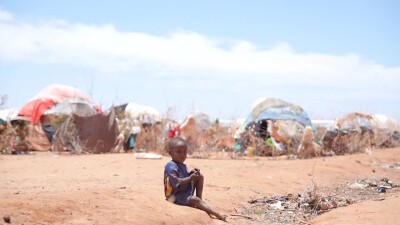
At least six million people in Somalia are going days without enough food, UN aid teams warned on Friday, highlighting that nearly two million of this number are young children “at high risk of illness or death”.
1
1
1
Edited News | UNICEF , WHO
Children shot, stabbed and pepper-sprayed in occupied West Bank; scores of Gaza amputees denied prosthetics, aid teams warn
Israeli military operations and surging settler attacks in the occupied West Bank are killing and maiming Palestinian children, while in Gaza tens of thousands with life-changing injuries lack access to treatment and rehabilitation, UN agencies warned on Tuesday.
1
1
1
Edited News | WHO
The risk of hantavirus spreading to the general population is “absolutely low”, the UN World Health Organization (WHO) stressed on Friday.
1
1
1
Edited News | UNHCR , IFRC
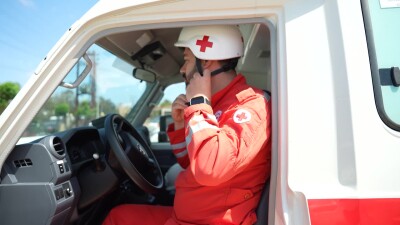
Death and destruction have continued unabated in Lebanon while communities are still unable to return to their homes despite a ceasefire that began on 17 April, humanitarians said on Tuesday.
1
1
Edited News | WHO
Deadly hantavirus on board cruise ship may be transmitted among humans - WHO
Hantavirus victims on a ship in the Atlantic Ocean may have been infected prior to joining the cruise and human-to-human transmission on board cannot be ruled out – although it is rare - the World Health Organization (WHO) said on Tuesday.
1
1
1
Edited News | OHCHR
UN rights chief concerned by upheld convictions of Cambodian activists.
1
1
1
Edited News | UNHCR , OHCHR
Middle East crisis puts aid, food, fuel further out of reach for millions already struggling – UN agencies
As the Middle East crisis continues the humanitarian fallout is worsening, with aid route disruptions and food and fuel price hikes wrecking the lives and rights of the most vulnerable, UN agencies warned on Friday.
1
1
2
Edited News | UNMAS
Demining experts from around the world have been sharing their collective shock at the widespread and growing threat from unexploded ordnance, the new head of the UN Mine Action Service (UNMAS) said on Wednesday.
1
1
1
Edited News | OHCHR , UNOG
The UN Human Rights Office in Syria conducted a 5-day visit to the northeast of the country where they received accounts of human rights violations and abuses.