

The United Nations Office at Geneva
Multimedia Newsroom
Edited News | OHCHR , UNOG
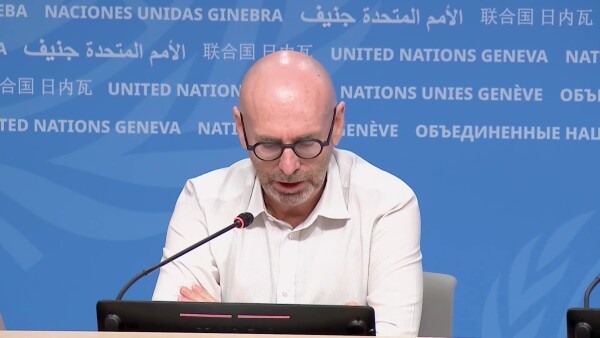
Comment by UN Human Rights Office spokesperson Jeremy Laurence on Viet Nam 29 September 2023
“The arrest, detention, and sentencing of human rights defenders in Viet Nam who advocate for the environment and the country’s transition to clean-energy use raises serious concerns not only with respect to the charges levelled against them but also the conduct of their trials,” Laurence said.
“Yesterday, Hoang Thi Minh Hong became the fifth of six environmental human rights defenders arrested from 2021 to 2023 to be sentenced. She has been prosecuted on tax evasion charges, which appear to be politically motivated, according to UN independent experts,” he said.
After a trial lasting just three hours, Hong was sentenced to three years imprisonment and fined USD 4,100. Her access to a defence counsel and her family has been limited throughout her detention.
Four other environmental rights advocates have been prosecuted on similar charges and sentenced to up to five years imprisonment, in what seems to be a wider crackdown on environmental rights defenders and against civic space in Viet Nam. The charges levelled against the sixth person are still unknown.
“Arrests of environmental human rights defenders are taking place amid Viet Nam’s implementation of the Just Energy Transition Partnership. We reiterate that, to achieve the goal of a just and sustainable transition to green energy, human rights defenders and environmental organizations must be able to participate freely and actively in shaping climate and environmental policies and decision-making,” Laurence said.
“These prosecutions and the arbitrary application of restrictive legislation are having a chilling effect on the critically important work of environmental defenders, and that of other human rights defenders in Viet Nam,” the spokesperson said.
This issue has also been highlighted in the 2023 Secretary General’s report on intimidation and reprisals, as well as by UN Human Rights Mechanisms, including Special Procedures of the UN Human Rights Council, Treaty Bodies, and the Universal Periodic Review.
“We call to the Government of Viet Nam to refrain from using criminal charges to curtail the exercise of fundamental freedoms and to release unconditionally all those who have been detained in such cases. We also remind the authorities of their obligations under international law to respect the rule of law, the right to a fair trial and ensuring judicial independence,” Laurence stressed.
ENDS
For more information and media requests, please contact:
In Geneva
Liz Throssell + 41 22 917 9296 / elizabeth.throssell@un.org or
Jeremy Laurence + +41 22 917 9383 / jeremy.laurence@un.org or
Tag and share
Twitter @UNHumanRights
Facebook unitednationshumanrights
Instagram @unitednationshumanrights
- Exterior shots : Palais des Nations.
- Wide shot: Briefing room.
- SOUNDBITE (English) – Jeremy Laurence, Spokesperson United Nations Human Rights (OHCHR): “The arrest, detention, and sentencing of human rights defenders in Viet Nam who advocate for the environment and the country’s transition to clean-energy use raises serious concerns not only with respect to the charges levelled against them but also the conduct of their trials.”
- Cut away: Briefing room.
- SOUNDBITE (English) – Jeremy Laurence, Spokesperson United Nations Human Rights (OHCHR): “Yesterday, Hoang Thi Minh Hong became the fifth of six environmental human rights defenders arrested from 2021 to 2023 to be sentenced. She has been prosecuted on tax evasion charges, which appear to be politically motivated, according to UN independent experts.”
- Cut away: Briefing room.
- SOUNDBITE (English) – Jeremy Laurence, Spokesperson United Nations Human Rights (OHCHR): “Arrests of environmental human rights defenders are taking place amid Viet Nam’s implementation of the Just Energy Transition Partnership. We reiterate that, to achieve the goal of a just and sustainable transition to green energy, human rights defenders and environmental organizations must be able to participate freely and actively in shaping climate and environmental policies and decision-making.”
- Cut away: Briefing room.
- SOUNDBITE (English) – Jeremy Laurence, Spokesperson United Nations Human Rights (OHCHR): “These prosecutions and the arbitrary application of restrictive legislation are having a chilling effect on the critically important work of environmental defenders, and that of other human rights defenders in Viet Nam.
- Cut away: Briefing room.
- SOUNDBITE (English) – Jeremy Laurence, Spokesperson United Nations Human Rights (OHCHR): “We call to the Government of Viet Nam to refrain from using criminal charges to curtail the exercise of fundamental freedoms and to release unconditionally all those who have been detained in such cases. We also remind the authorities of their obligations under international law to respect the rule of law, the right to a fair trial and ensuring judicial independence,”
- Cut away: Briefing room.
Similar Stories

1
1
1
Edited News | OCHA , UNICEF , WFP
Aid agencies warned on Friday of the fast-developing humanitarian emergency inside Taiz City in Yemen, which has been encircled by de facto Houthi forces fighting government troops along the country’s west coast.

2
17
1
2
Edited News , Press Conferences , Images | OCHA , WMO
Two UN agencies teamed up on Wednesday to issue an appeal for immediate assistance to help communities already being impacted by the strongest El Niño on record.

3
16
2
2
Edited News , B-roll , Conferences , Images | UNITED NATIONS , UNOG
Sixth Consultative Meeting on Enhancing Coordination of Peace Initiatives and Efforts for Sudan

1
1
1
Edited News | UNICEF , WHO , UNHCR
Yemen war continues to force families from homes amid hunger and disease
More than 250,000 people have now fled renewed fighting in Yemen, the UN said on Tuesday, citing particular concern for those sheltering in the southwestern city of Taiz and the wider governorate, where access is “essentially blocked”.

1
1
1
Edited News | UNICEF
A little over one year since a ceasefire agreement was announced between Hamas fighters and Israel, more than 340 children have been reported killed and hundreds more injured, the UN Children’s Fund, UNICEF, said on Friday.

1
1
1
Edited News | UNICEF , IFRC
Six weeks after Nepal’s deadly flooding disaster, communities are still struggling to rebuild their lives, but they will need sustained help as global warming increases the risk of another Himalayan catastrophe, the UN Children’s Fund (UNICEF) said on Friday.

1
1
1
Edited News | WHO
In suspected Russia plague death, testing and monitoring underway – WHO
The death of a lab worker in Russia’s Siberia region has sparked concerns about plague being the cause, the UN World Health Organization (WHO) said on Tuesday, adding that it was following the situation closely.

1
1
Edited News | OHCHR , UNOG
UN Human Rights Chief Volker Türk on Friday provided and oral update to the 63rd session of the Human rights Council on Ukraine.

1
1
1
Edited News | OHCHR , UNOG
UN Human Rights Chief Volker Türk on Friday provided and oral update to the 63rd session of the Human rights Council on the human rights situation in Haiti.

1
1
1
Edited News | WHO
Repeated delays in bringing lifesaving medicines, prosthetics and more from Israel into Gaza risk having devastating consequences on Palestinians who urgently need them in the wartorn enclave, the UN World Health Organization (WHO) said on Friday. “A truck full of non-priority supplies or the right supplies arriving too late, doesn't save lives. That's the question that actually matters," said Dr Reinhilde Van De Weerdt, WHO Representative in the OPT.

1
1
1
Edited News | WHO
DRC: Early access to care and oxygen decisive for Ebola patients’ survival – WHO
In the Democratic Republic of the Congo (DRC), health workers fighting the country’s largest-ever Ebola outbreak are struggling to overcome critical challenges to patient care, the UN World Health Organization (WHO) warned on Tuesday.

1
1
1
Edited News | OCHA , UN
Civilians in Iran are continuing to feel the consequences of months of conflict and military escalation, the UN’s top official in the country has said, as loss of life, damage to civilian infrastructure and mounting economic pressures leave many facing continued uncertainty.