

The United Nations Office at Geneva
Multimedia Newsroom
Edited News | OHCHR , UNOG
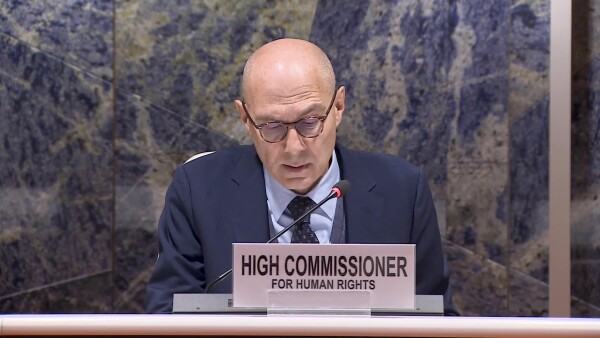
UN Human Rights chief Volker Türk informal statement to States on his trip to the Middle East
Türk was briefing States on his missions to Egypt and Jordan last week, where he met, among others, officials, and representatives of Palestinian, Egyptian, Jordanian and Israeli civil society.
“Rarely have I heard such disturbing testimony about the catastrophic harm that ordinary people have endured, and which continues to mount. And never in my career of working in many crisis situations around the world have I met such an outpouring of fear, anger and despair,” Türk told diplomats at the briefing at the UN Palais des Nations in Geneva.
“The people of Gaza, who for years have been profoundly impoverished behind barbed wire fences, are enduring bombardment by the Israeli Security Forces of an intensity rarely experienced in this century,” he said.
The UN Human Rights Chief noted that one in every 57 people living in the Gaza Strip has been killed or injured in the past five weeks, according to figures from the Gaza Ministry of Health. Over 11,100 have been killed, more than 4,600 of them children. An entire population is being deeply traumatised, he said.
In Israel, according to the authorities, 1,200 people, including many children, were killed in horrific attacks by Hamas and other armed groups on 7 and 8 October. 239 people, including children, were captured and taken to Gaza. And the nation has been thrown into shock.
“It is apparent that on both sides, some view the killing of civilians as either acceptable collateral damage, or a deliberate and useful weapon of war. This is a humanitarian and human rights catastrophe. It represents a breakdown of the most basic respect for humane values. The killing of so many civilians cannot be dismissed as collateral damage. Not in a kibbutz. Not in a refugee camp. And not in a hospital,” Türk warned.
The UN Human Rights Chief stressed that no one is above the law, and that international humanitarian law is clear. Extremely serious allegations of multiple and profound breaches of international humanitarian law, whoever commits them, demand rigorous investigation and full accountability. And it must be clear that breaches of international humanitarian law – even war crimes – committed by one party do not, ever, absolve the other from compliance with the clear principles of the law of war.
Türk also voiced his deep concern about the intensification of violence and severe discrimination against Palestinians in the occupied West Bank, including East Jerusalem.
He also shared, he said, the deep sense of foreboding about the risk of spill over into the wider Middle East region.
“Let me be clear. The outbreak of conflict is always a failure: A failure to find a peaceful solution. A failure of prevention. A failure to uphold human rights. I feel this deeply. The failure, in this case, has been long-standing, and many parties could count their part of responsibility in it. But every conflict that has been enduringly resolved, has achieved that resolution through the advancement of justice, accountability and human rights,” he said.
“Today, among both Israelis and Palestinians, entirely separate narratives are building up, parallel to each other and with no connection between them. Profound historical traumas have been revived. I plead for everyone to recognise and acknowledge this depth of pain, and the reality of the humanity and the suffering of the other. This is perhaps my most important recommendation: it is essential that all parties acknowledge that all human lives have equal value,” said Türk.
“My Office is not partisan. But yes: I am taking sides. I am on the side of every civilian, Palestinian or Israeli, who is harmed, or who lives in fear. Every one of them has exactly the same rights to live and thrive in peace and in freedom. That is the promise of the Universal Declaration of Human Rights,” he said.
“There must be an end to grave human rights violations, notably against children. All forms of collective punishment must come to an end. All hostages must be released. International humanitarian and human rights law must be immediately and fully respected, including the principles of necessity, distinction, precaution and proportionality,” the High Commissioner said.
“There must be a ceasefire on humanitarian and human rights grounds, and an end to the fighting – not only to deliver urgently needed food and water, but to create the space for a path out of this horror,” Türk stressed.
Rapid and unimpeded humanitarian assistance throughout Gaza, including fuel, and at the scale required, is urgently needed, and must be facilitated. He also urged the Israeli authorities to take immediate measures to ensure that the security forces comply with their obligations as an occupying power to protect Palestinians in the occupied West Bank, including from violence by settlers. Continued, widespread impunity for such violations must stop, he said.
“Finally, it is clear that the Israeli occupation must end. It is essential to ensure the rights of Palestinians to self-determination and to their own State. And it is essential to acknowledge that Israel has a right to exist,” Türk said.
The UN Human Rights Office would continue to do its utmost to assist all parties to step back from the precipice to which extremism and violence have led, he concluded.
ENDS
For more information and media requests, please contact:
In Geneva
Ravina Shamdasani - + 41 22 917 9169 / ravina.shamdasani@un.org or Liz Throssell + 41 22 917 9296 / elizabeth.throssell@un.org Jeremy Laurence + +41 22 917 9383 / jeremy.laurence@un.org or Marta Hurtado - + 41 22 917 9466 / marta.hurtadogomez@un.org
In Nairobi
Seif Magango - +254 788 343 897 / seif.magango@un.org
Tag and share
Twitter @UNHumanRights
Facebook unitednationshumanrights
Instagram @unitednationshumanrights
STORY: UN Human Rights chief informal briefing to States on his visit to the Middle East
TRT: 04:15
SOURCE:OHCHR
RESTRICTIONS: NONE
LANGUAGE: English/NATS
ASPECT RATIO: 16:9
DATELINE: 16 November 2023 Geneva, Switzerland
- Exterior: Palais des Nations
- Soundbite (English)—Volker Türk, UN High Commissioner for Human Rights: “Rarely have I heard such disturbing testimony about the catastrophic harm that ordinary people have endured, and which continues to mount. And never in my career of working in many crisis situations around the world have I met such an outpouring of fear, anger and despair.”
- Cut aways: Room 17
- Soundbite (English)—Volker Türk, UN High Commissioner for Human Rights: “The people of Gaza, who for years have been profoundly impoverished behind barbed wire fences, are enduring bombardment by the Israeli Security Forces of an intensity rarely experienced in this century.”
- Cut aways: Room 17
- Soundbite (English)—Volker Türk, UN High Commissioner for Human Rights: “It is apparent that on both sides, some view the killing of civilians as either acceptable collateral damage, or a deliberate and useful weapon of war. This is a humanitarian and human rights catastrophe. It represents a breakdown of the most basic respect for humane values. The killing of so many civilians cannot be dismissed as collateral damage. Not in a kibbutz. Not in a refugee camp. And not in a hospital.”
- Cut aways: Room 17
- Soundbite (English)—Volker Türk, UN High Commissioner for Human Rights: “Let me be clear. The outbreak of conflict is always a failure: A failure to find a peaceful solution. A failure of prevention. A failure to uphold human rights. I feel this deeply. The failure, in this case, has been long-standing, and many parties could count their part of responsibility in it. But every conflict that has been enduringly resolved, has achieved that resolution through the advancement of justice, accountability and human rights.”
- Cut aways: Room 17
- Soundbite (English)—Volker Türk, UN High Commissioner for Human Rights: “Today, among both Israelis and Palestinians, entirely separate narratives are building up, parallel to each other and with no connection between them. Profound historical traumas have been revived. I plead for everyone to recognise and acknowledge this depth of pain, and the reality of the humanity and the suffering of the other. This is perhaps my most important recommendation: it is essential that all parties acknowledge that all human lives have equal value.”
- Cut aways: Room 17
- Soundbite (English)—Volker Türk, UN High Commissioner for Human Rights: “My Office is not partisan. But yes: I am taking sides. I am on the side of every civilian, Palestinian or Israeli, who is harmed, or who lives in fear. Every one of them has exactly the same rights to live and thrive in peace and in freedom. That is the promise of the Universal Declaration of Human Rights.”
- Cut aways: Room 17
- Soundbite (English)—Volker Türk, UN High Commissioner for Human Rights: “ “There must be an end to grave human rights violations, notably against children. All forms of collective punishment must come to an end. All hostages must be released. International humanitarian and human rights law must be immediately and fully respected, including the principles of necessity, distinction, precaution and proportionality,” the High Commissioner said.
- Cut aways: Room 17
- Soundbite (English)—Volker Türk, UN High Commissioner for Human Rights: “There must be a ceasefire on humanitarian and human rights grounds, and an end to the fighting – not only to deliver urgently needed food and water, but to create the space for a path out of this horror.”
- Cut aways: Room 17
- Soundbite (English)—Volker Türk, UN High Commissioner for Human Rights: “Finally, it is clear that the Israeli occupation must end. It is essential to ensure the rights of Palestinians to self-determination and to their own State. And it is essential to acknowledge that Israel has a right to exist.”
Similar Stories
1
1
1
Edited News | OCHA , UNICEF , WFP
Aid agencies warned on Friday of the fast-developing humanitarian emergency inside Taiz City in Yemen, which has been encircled by de facto Houthi forces fighting government troops along the country’s west coast.

2
17
1
2
Edited News , Press Conferences , Images | OCHA , WMO
Two UN agencies teamed up on Wednesday to issue an appeal for immediate assistance to help communities already being impacted by the strongest El Niño on record.

3
16
2
2
Edited News , B-roll , Conferences , Images | UNITED NATIONS , UNOG
Sixth Consultative Meeting on Enhancing Coordination of Peace Initiatives and Efforts for Sudan

1
1
1
Edited News | UNICEF , WHO , UNHCR
Yemen war continues to force families from homes amid hunger and disease
More than 250,000 people have now fled renewed fighting in Yemen, the UN said on Tuesday, citing particular concern for those sheltering in the southwestern city of Taiz and the wider governorate, where access is “essentially blocked”.

1
1
1
Edited News | UNICEF
A little over one year since a ceasefire agreement was announced between Hamas fighters and Israel, more than 340 children have been reported killed and hundreds more injured, the UN Children’s Fund, UNICEF, said on Friday.

1
1
1
Edited News | UNICEF , IFRC
Six weeks after Nepal’s deadly flooding disaster, communities are still struggling to rebuild their lives, but they will need sustained help as global warming increases the risk of another Himalayan catastrophe, the UN Children’s Fund (UNICEF) said on Friday.

1
1
1
Edited News | WHO
In suspected Russia plague death, testing and monitoring underway – WHO
The death of a lab worker in Russia’s Siberia region has sparked concerns about plague being the cause, the UN World Health Organization (WHO) said on Tuesday, adding that it was following the situation closely.

1
1
Edited News | OHCHR , UNOG
UN Human Rights Chief Volker Türk on Friday provided and oral update to the 63rd session of the Human rights Council on Ukraine.

1
1
1
Edited News | OHCHR , UNOG
UN Human Rights Chief Volker Türk on Friday provided and oral update to the 63rd session of the Human rights Council on the human rights situation in Haiti.

1
1
1
Edited News | WHO
Repeated delays in bringing lifesaving medicines, prosthetics and more from Israel into Gaza risk having devastating consequences on Palestinians who urgently need them in the wartorn enclave, the UN World Health Organization (WHO) said on Friday. “A truck full of non-priority supplies or the right supplies arriving too late, doesn't save lives. That's the question that actually matters," said Dr Reinhilde Van De Weerdt, WHO Representative in the OPT.

1
1
1
Edited News | WHO
DRC: Early access to care and oxygen decisive for Ebola patients’ survival – WHO
In the Democratic Republic of the Congo (DRC), health workers fighting the country’s largest-ever Ebola outbreak are struggling to overcome critical challenges to patient care, the UN World Health Organization (WHO) warned on Tuesday.

1
1
1
Edited News | OCHA , UN
Civilians in Iran are continuing to feel the consequences of months of conflict and military escalation, the UN’s top official in the country has said, as loss of life, damage to civilian infrastructure and mounting economic pressures leave many facing continued uncertainty.