

The United Nations Office at Geneva
Multimedia Newsroom
Dengue spike fuels concerns of public health threat with over five million cases reported in over 80 countries in 2023: WHO
This year's surprising spike in dengue infections globally in 2023 represents a potentially high public health threat, the UN World Health Organization (WHO) said on Friday.
The warning came as WHO reported more than five million dengue infections and 5,000 deaths from the disease worldwide this year.
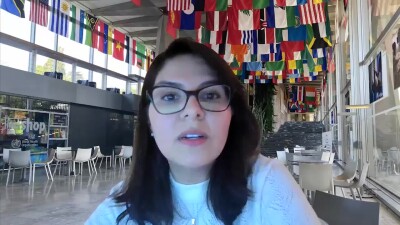
Briefing journalists on Friday at the UN in Geneva, Dr. Diana Rojas Alvarez, WHO Team Lead on Arboviruses, said that the threat required “the maximal attention and response from all levels” of the UN health agency to support countries in controlling current dengue outbreaks and prepare for the upcoming dengue season.
Dengue is the most common viral infection transmitted to humans bitten by infected mosquitoes. It is mostly found in urban areas within tropical and sub-tropical climates.
The rise in the number of reported cases of dengue in more countries is explained by the fact that infected mosquitoes now thrive in more countries because of global warming associated with rising emissions.
“Climate change has an impact in dengue transmission because it increases rainfall, humidity and temperature,” said Dr. Alvarez. “These mosquitoes are very sensitive to temperature.”
Although four billion people are at risk from dengue, most of those infected are symptom-free and usually recover within one to two weeks.
However, severe dengue infections are marked by shock, severe bleeding or severe organ impairment, according to WHO.
It also highlighted that these dangerous symptoms often start “after the fever has gone away”, catching carers and medical professionals unawares. Warning signs to look out for include intense abdominal pain, persistent vomiting, bleeding gums, fluid accumulation, lethargy, restlessness and liver enlargement.
As there is no specific treatment for dengue, early detection and access to proper medical care is crucial, to lower the probability to die due to severe dengue.
“Since the beginning of this year, over five million cases and about 5,000 deaths of dengue have been reported worldwide and close to 80 per cent of those cases have been reported in the Americas, followed by Southeast Asia and the Western Pacific,” reported Dr. Alvarez. She added that “it is also concerning that dengue outbreaks are occurring in fragile and conflict-affected countries in the eastern Mediterranean region such as Afghanistan, Pakistan, Sudan, Somalia and Yemen.
The global prevalence of mosquitoes has changed in the last few years owing to the 2023 El Niño phenomenon which accentuated the effects of global warming temperatures and climate change, WHO said.
Both factors are associated with previously dengue-free countries such as France, Italy and Spain reporting cases of infections that originated at home – so-called autochthonous transmission - rather than abroad. The disease vector is the Aedes aegypti mosquito, which is widely distributed in Europe and also more commonly known as the “tiger mosquito”.
“Usually, Europe reports imported cases from the Americas, from the Western Pacific, from the endemic regions”, said Dr. Alvarez. “But this year we saw limited clusters of autochthonous transmission. As we know, the summers are getting warmer”.
-ends-
STORY: Global dengue situation – WHO
TRT: 2:48”
SOURCE: UNTV CH
LANGUAGE: ENGLISH
ASPECT RATIO: 16:9
DATELINE: 22 December 2023 - GENEVA, SWITZERLAND
SHOTLIST
- Exterior wide shot: UN building with UN flag, UN Geneva.
- SOUNDBITE (ENGLISH) – Dr. Diana Rojas Alvarez, Team Lead on Arboviruses at the WHO: “WHO has assessed the risk of dengue as high globally. What it means: it requires the maximal attention and response from all levels of the organization to support countries around the world, controlling the current dengue outbreaks and also preparing for the countries to respond to the upcoming dengue season.”
- Cutaway: Medium shot, UN building with UN flag
- SOUNDBITE (ENGLISH) – Dr. Diana Rojas Alvarez, Team Lead on Arboviruses at the WHO: “The main drivers of dengue transmission are mostly social and environmental factors. So, unplanned urbanization, population growth and other factors that are related with the globalization process are part of the transmission dynamics of dengue. Climate change has an impact in dengue transmission because it increases rainfall, humidity and temperature. So, these mosquitoes are very sensitive to temperature.”
- Cutaway: Medium shot UN entrance at Place des Nations
- SOUNDBITE (ENGLISH) – Dr. Diana Rojas Alvarez, Team Lead on Arboviruses at the WHO: “Mosquitoes can thrive in more countries because of increasing temperatures due to climate change many more countries are reporting cases. About four billion people are at risk of becoming infected with dengue virus, but most of the people won't get any symptoms. But for those who do, they will recover within 1 to 2 weeks.”
- Cutaway: Wide shot, Ariana Park at the UN Geneva
- SOUNDBITE (ENGLISH) – Dr. Diana Rojas Alvarez, Team Lead on Arboviruses at the WHO: “Since the beginning of this year, over five million cases and about 5,000 deaths of dengue have been reported worldwide and close to 80 per cent of those cases have been reported in the Americas, followed by Southeast Asia and the Western Pacific. The distribution of the mosquitoes that transmit dengue and other mosquito borne viruses have changed in the last few years due to several social and environmental factors.”
- Cutaway: Wide shot, Ariana Park at the UN Geneva
- SOUNDBITE (ENGLISH) – Dr. Diana Rojas Alvarez, Team Lead on Arboviruses at the WHO: “It is also concerning that dengue outbreaks are occurring in fragile and conflict-affected countries in the eastern Mediterranean region such as Afghanistan, Pakistan, Sudan, Somalia, Yemen.”
- Cutaway: Medium shot, UN building with UN flag
- SOUNDBITE (ENGLISH) – Dr. Diana Rojas Alvarez, Team Lead on Arboviruses at the WHO: “Usually Europe reports imported cases from the Americas, from the Western Pacific, from the endemic regions. But this year we saw limited clusters of autochthonous transmission. As we know, the summers are getting warmer and there are two main vectors of this virus. One is Aedes aegypti mosquito which is widely distributed in Europe and it is called the tiger mosquito.”
- Cutaway: Wide shot, UN building with flag alley
Similar Stories

1
1
1
Edited News | OCHA , UNICEF , WFP
Aid agencies warned on Friday of the fast-developing humanitarian emergency inside Taiz City in Yemen, which has been encircled by de facto Houthi forces fighting government troops along the country’s west coast.

2
17
1
2
Edited News , Press Conferences , Images | OCHA , WMO
Two UN agencies teamed up on Wednesday to issue an appeal for immediate assistance to help communities already being impacted by the strongest El Niño on record.

3
16
2
2
Edited News , B-roll , Conferences , Images | UNITED NATIONS , UNOG
Sixth Consultative Meeting on Enhancing Coordination of Peace Initiatives and Efforts for Sudan

1
1
1
Edited News | UNICEF , WHO , UNHCR
Yemen war continues to force families from homes amid hunger and disease
More than 250,000 people have now fled renewed fighting in Yemen, the UN said on Tuesday, citing particular concern for those sheltering in the southwestern city of Taiz and the wider governorate, where access is “essentially blocked”.

1
1
1
Edited News | UNICEF
A little over one year since a ceasefire agreement was announced between Hamas fighters and Israel, more than 340 children have been reported killed and hundreds more injured, the UN Children’s Fund, UNICEF, said on Friday.

1
1
1
Edited News | UNICEF , IFRC
Six weeks after Nepal’s deadly flooding disaster, communities are still struggling to rebuild their lives, but they will need sustained help as global warming increases the risk of another Himalayan catastrophe, the UN Children’s Fund (UNICEF) said on Friday.

1
1
1
Edited News | WHO
In suspected Russia plague death, testing and monitoring underway – WHO
The death of a lab worker in Russia’s Siberia region has sparked concerns about plague being the cause, the UN World Health Organization (WHO) said on Tuesday, adding that it was following the situation closely.

1
1
Edited News | OHCHR , UNOG
UN Human Rights Chief Volker Türk on Friday provided and oral update to the 63rd session of the Human rights Council on Ukraine.

1
1
1
Edited News | OHCHR , UNOG
UN Human Rights Chief Volker Türk on Friday provided and oral update to the 63rd session of the Human rights Council on the human rights situation in Haiti.

1
1
1
Edited News | WHO
Repeated delays in bringing lifesaving medicines, prosthetics and more from Israel into Gaza risk having devastating consequences on Palestinians who urgently need them in the wartorn enclave, the UN World Health Organization (WHO) said on Friday. “A truck full of non-priority supplies or the right supplies arriving too late, doesn't save lives. That's the question that actually matters," said Dr Reinhilde Van De Weerdt, WHO Representative in the OPT.

1
1
1
Edited News | WHO
DRC: Early access to care and oxygen decisive for Ebola patients’ survival – WHO
In the Democratic Republic of the Congo (DRC), health workers fighting the country’s largest-ever Ebola outbreak are struggling to overcome critical challenges to patient care, the UN World Health Organization (WHO) warned on Tuesday.

1
1
1
Edited News | OCHA , UN
Civilians in Iran are continuing to feel the consequences of months of conflict and military escalation, the UN’s top official in the country has said, as loss of life, damage to civilian infrastructure and mounting economic pressures leave many facing continued uncertainty.