

The United Nations Office at Geneva
Multimedia Newsroom
STORYLINE
Amid ongoing bombardment and constant displacement in the Gaza Strip as well as desperate aid shortages, UN humanitarians warned today (19 January) of the harrowing conditions, especially for mothers and newborn in the war-raged Palestinian enclave.
“Becoming a mother should be a time of celebration. But in Gaza, it's another child delivered into hell,” said Tess Ingram, Communications Specialist of the UN Children’s Fund (UNICEF). “Humanity cannot allow its warped version of normal to persist any longer. Mothers and newborns need a humanitarian ceasefire.”
Mothers face unimaginable challenges in accessing adequate medical care, nutrition and protection before, during and after giving birth. Caesarean sections have been performed without anaesthetic, according to UNICEF’s Ms. Ingram.
“In the 105 days of this escalation in the Gaza Strip, nearly 20,000 babies have been born into war. That's a baby born into this horrendous war about every 10 minutes,” said Ms. Ingram who was speaking from Amman in Jordan after returning from southern Gaza.
UNICEF’s Communication Specialist quoted her conversation with a nurse called Webda who has reportedly performed emergency cesareans on six dead women in the last eight weeks. “She tells me there are also more miscarriages now because of the unhealthy air and smoke due to the bombing. And this has happened more times than I can count. The situation of pregnant women and newborns in the Gaza Strip is beyond belief, and it demands intensified and immediate actions.”
Ms. Ingram reported that “constant bombardment and displacement directly impacts newborns, resulting in higher rates of undernutrition, developmental issues and other health complications”.
UNICEF estimates that around 135,000 children under two years are at risk of severe malnutrition. The availability of water for drinking and domestic use in Gaza is shrinking each day. Record levels of diarrhea and other diseases caused by poor sanitation and hunger, reported the UN health organization (WHO).
As of 18 January, the Ministry of Health in Gaza stated that over 8,000 cases of viral Hepatitis A resulting from overcrowding in shelters had been recorded. The number of hepatitis cases is expected to double in overcrowded shelters.
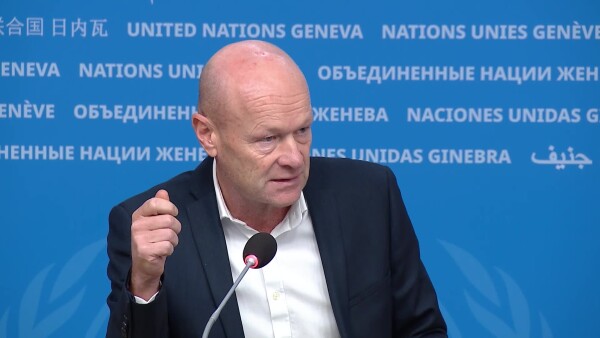
Briefing journalists from Gaza, Mr Ajith Sunghay, Head of the UN Human Rights Office (OHCHR) in the Occupied Palestinian Territory, expressed deep concern that “nearly 25,000 people reported killed, according to the Gaza Ministry of Health. 70 per cent of them women and children. Another 61,500 at least have been injured. Several thousands more are under the rubble, many presumed dead.”
Sunghay said that he “managed to meet a number of released detainees. These are men who were detained by the Israeli Security Forces in unknown locations for between 30 to 55 days. They described being beaten, humiliated, subjected to ill-treatment, and to what may amount to torture.”
He added that “they reported being blindfolded for long periods, some of them for several consecutive days. One man said he had access to a shower only once during his 55 days in detention. There are reports of men who were subsequently released, but only in diapers without any adequate clothing in this cold weather.”
Mr. Sunghay recalled that “Israel must take urgent steps to ensure that all those arrested or detained are treated in line with international human rights and international humanitarian law, norms and standards, notably with full respect for the due process rights. Unless Israel can demonstrate imperative security grounds for each person remaining in detention they must be charged or released.”
As of 18 January, telecommunication services in Gaza have remained shut down for the sixth consecutive day, since 12 January, adding to confusion and fear.
“It is a pressure-cooker environment here, in the midst of utter chaos, given the terrible humanitarian situation, shortages, and pervasive fear and anger,” said Mr. Sunghay.
-ends-
STORY: Gaza update – UNICEF - OHCHR
TRT: 3:13”
SOURCE: UNTV CH
RESTRICTIONS: NONE
LANGUAGE: ENGLISH / NATS
ASPECT RATIO: 16:9
DATELINE: 19 January 2024 GENEVA, SWITZERLAND
- Exterior medium shot: UN flag alley
- Wide shot: speakers at the press conference
- SOUNDBITE (English) – Tess Ingram, UNICEF Communication Specialist: “In the 105 days of this escalation in the Gaza Strip, nearly 20,000 babies have been born into war. That's a baby born into this horrendous war about every 10 minutes.”
- Medium shot: press room with camerawoman
- SOUNDBITE (English) – Tess Ingram, UNICEF Communication Specialist: “Becoming a mother should be a time of celebration. But in Gaza, it's another child's delivering into hell. Humanity cannot allow its warped version of normal to persist any longer. Mothers and newborns need a humanitarian ceasefire.”
- Wide shot: press room with journalists and speakers at the podium
- SOUNDBITE (English) – Tess Ingram, UNICEF Communication Specialist: “Nurse Webda has performed emergency cesareans on six dead women in the last eight weeks. She tells me there are also more miscarriages now because of the unhealthy air and smoke due to the bombing. And this has happened more times than I can count. The situation of pregnant women and newborns in the Gaza Strip is beyond belief, and it demands intensified and immediate actions.”
- Medium shot: press room with journalists
- SOUNDBITE (English) – Ajith Sunghay, Head of UN Human Rights Office in the Occupied Palestinian Territory: “We are reaching yet another staggering milestone in Gaza. Nearly 25,000 people reported killed, according to the Gaza Ministry of Health. 70% of them women and children. Another 61,500 at least have been injured. Several thousands more are under the rubble, many presumed dead.”
- Wide shot: press room with journalists and speakers at the podium
- SOUNDBITE (English) – Ajith Sunghay, Head of UN Human Rights Office in the Occupied Palestinian Territory: “I managed to meet a number of released detainees. These are men who were detained by the Israeli Security Forces in unknown locations for between 30 to 55 days. They described being beaten, humiliated, subjected to ill-treatment, and to what may amount to torture.”
- Wide shot: press room with journalists and camerawoman filming
- SOUNDBITE (English) – Ajith Sunghay, Head of UN Human Rights Office in the Occupied Palestinian Territory: “They reported being blindfolded for long periods, some of them for several consecutive days. One man said he had access to a shower only once during his 55 days in detention. There are reports of men who were subsequently released, but only in diapers without any adequate clothing in this cold weather.”
- Wide shot: press room with journalists and speakers at the podium
- SOUNDBITE (English) – Ajith Sunghay, Head of UN Human Rights Office in the Occupied Palestinian Territory: “Israel must take urgent steps to ensure that all those arrested or detained are treated in line with international human rights and international humanitarian law, norms and standards, notably with full respect for the due process rights. Unless Israel can demonstrate imperative security grounds for each person remaining in detention they must be charged or released.”
- Close up: journalists listening
- Close up: camerawoman filming
- Medium shot: journalists listening
Similar Stories
1
1
1
Edited News | OCHA , UNICEF , WFP
Aid agencies warned on Friday of the fast-developing humanitarian emergency inside Taiz City in Yemen, which has been encircled by de facto Houthi forces fighting government troops along the country’s west coast.

2
17
1
2
Edited News , Press Conferences , Images | OCHA , WMO
Two UN agencies teamed up on Wednesday to issue an appeal for immediate assistance to help communities already being impacted by the strongest El Niño on record.
3
16
2
2
Edited News , B-roll , Conferences , Images | UNITED NATIONS , UNOG
Sixth Consultative Meeting on Enhancing Coordination of Peace Initiatives and Efforts for Sudan
1
1
1
Edited News | UNICEF , WHO , UNHCR
Yemen war continues to force families from homes amid hunger and disease
More than 250,000 people have now fled renewed fighting in Yemen, the UN said on Tuesday, citing particular concern for those sheltering in the southwestern city of Taiz and the wider governorate, where access is “essentially blocked”.

1
1
1
Edited News | UNICEF
A little over one year since a ceasefire agreement was announced between Hamas fighters and Israel, more than 340 children have been reported killed and hundreds more injured, the UN Children’s Fund, UNICEF, said on Friday.

1
1
1
Edited News | UNICEF , IFRC
Six weeks after Nepal’s deadly flooding disaster, communities are still struggling to rebuild their lives, but they will need sustained help as global warming increases the risk of another Himalayan catastrophe, the UN Children’s Fund (UNICEF) said on Friday.

1
1
1
Edited News | WHO
In suspected Russia plague death, testing and monitoring underway – WHO
The death of a lab worker in Russia’s Siberia region has sparked concerns about plague being the cause, the UN World Health Organization (WHO) said on Tuesday, adding that it was following the situation closely.

1
1
Edited News | OHCHR , UNOG
UN Human Rights Chief Volker Türk on Friday provided and oral update to the 63rd session of the Human rights Council on Ukraine.

1
1
1
Edited News | OHCHR , UNOG
UN Human Rights Chief Volker Türk on Friday provided and oral update to the 63rd session of the Human rights Council on the human rights situation in Haiti.

1
1
1
Edited News | WHO
Repeated delays in bringing lifesaving medicines, prosthetics and more from Israel into Gaza risk having devastating consequences on Palestinians who urgently need them in the wartorn enclave, the UN World Health Organization (WHO) said on Friday. “A truck full of non-priority supplies or the right supplies arriving too late, doesn't save lives. That's the question that actually matters," said Dr Reinhilde Van De Weerdt, WHO Representative in the OPT.

1
1
1
Edited News | WHO
DRC: Early access to care and oxygen decisive for Ebola patients’ survival – WHO
In the Democratic Republic of the Congo (DRC), health workers fighting the country’s largest-ever Ebola outbreak are struggling to overcome critical challenges to patient care, the UN World Health Organization (WHO) warned on Tuesday.

1
1
1
Edited News | OCHA , UN
Civilians in Iran are continuing to feel the consequences of months of conflict and military escalation, the UN’s top official in the country has said, as loss of life, damage to civilian infrastructure and mounting economic pressures leave many facing continued uncertainty.