

The United Nations Office at Geneva
Multimedia Newsroom
Edited News , Press Conferences | OHCHR , UNOG
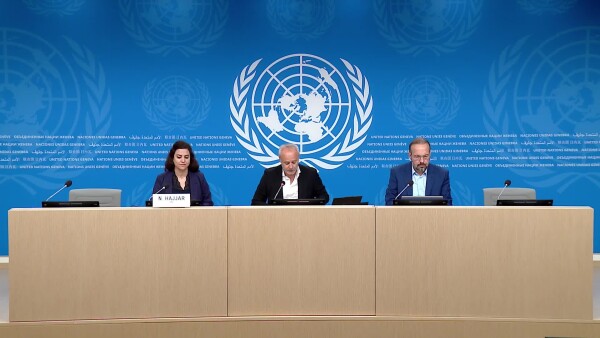
UN Human Rights briefing by Ajith Sunghay on Gaza
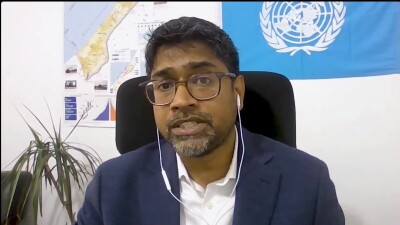
Ajith Sunghay, who heads the UN Human Rights Office for the Occupied Palestinian Territory, was speaking after a visit to Gaza last week. In Khan Younis he had met people who had fled their homes to seek shelter in overcrowded, makeshift camps.
“In Rafah, I saw displaced people who had been ordered by Israeli authorities to leave their homes, with no provision for their accommodation, literally living on the street, with sewage running in the streets and conditions of desperation conducive to a complete breakdown in order,” Sunghay added.
“And even in the midst of it all, human rights and humanitarian NGOs, our counterparts in Gaza, continue their courageous work, trying to make sure human rights violations are properly documented and humanitarian response continues – even as their own lives fall apart,” he said.
Over the past few days, there have been near continuous attacks, including on medical facilities and schools in Khan Younis, UN facilities, as well as residential areas.
“The people I spoke to fear the extreme violence is spilling into Rafah – which will have catastrophic implications for the more than 1.3 million people already crowded there,” Sunghay warned.
Shelling by the Israeli Defence Forces (IDF) continues in areas unilaterally designated as “safe” areas, including Al Mawasi in western Khan Younis.
“Having personally witnessed and heard the testimonies of those who have endured so much pain and suffering, I am very, very worried. I fear that many more civilians will die. The continued attacks on specifically protected facilities, such as hospitals, will kill civilians, and there will be a further, massive impact on access to health care, safety and security in general of Palestinians,” said Sunghay.
The apparent disregard for international law needs to end, Sunghay stressed.. The violence needs to end. Humanitarian aid needs to be delivered without impediment to all those who need it.
The UN Human Rights Office has repeatedly called for an immediate ceasefire, the release of hostages, and the need for a political solution that respects and ensures the rights of all Palestinians and Israelis.
In Geneva:
Ravina Shamdasani - + 41 22 917 9169 / ravina.shamdasani@un.org
Liz Throssell + 41 22 917 9296 / elizabeth.throssell@un.org
Jeremy Laurence - + 41 22 917 9383 / jeremy.laurence@un.org
Tag and share - Twitter: @UNHumanRights and Facebook: unitednationshumanrights
STORY: UN Human Rights Spokesperson Ajith Sunghay on “catastrophic situation” for civilians in Gaza
TRT: 01:35
SOURCE: OHCHR/UNTV
RESTRICTIONS: NONE
LANGUAGE: English/NATS
ASPECT RATIO: 16:9
DATELINE: 26 January 26, 2024, GENEVA, SWITZERLAND
SHOTLIST
- Exterior shot:
- SOUNDBITE (English)—Ajith Sunghay, Ajith Sunghay, Head of the UN Human Rights Office for the Occupied Palestinian Territory (OHCHR): “In Rafah, I saw displaced people who had been ordered by Israeli authorities to leave their homes, with no provision for their accommodation, literally living on the street, with sewage running in the streets and conditions of desperation conducive to a complete breakdown in order.”
- Cut away: Briefing room
- SOUNDBITE (English)—Ajith Sunghay, Ajith Sunghay, Head of the UN Human Rights Office for the Occupied Palestinian Territory (OHCHR): “And even in the midst of it all, human rights and humanitarian NGOs, our counterparts in Gaza, continue their courageous work, trying to make sure human rights violations are properly documented and humanitarian response continues – even as their own lives fall apart.”
- Cut away: Briefing room
- SOUNDBITE (English)—Ajith Sunghay, Ajith Sunghay, Head of the UN Human Rights Office for the Occupied Palestinian Territory (OHCHR): “The people I spoke to fear the extreme violence is spilling into Rafah – which will have catastrophic implications for the more than 1.3 million people already crowded there. ”
- Cut away: Briefing room
- SOUNDBITE (English)—Ajith Sunghay, Ajith Sunghay, Head of the UN Human Rights Office for the Occupied Palestinian Territory (OHCHR): “Having personally witnessed and heard the testimonies of those who have endured so much pain and suffering, I am very, very worried. I fear that many more civilians will die. The continued attacks on specifically protected facilities, such as hospitals, will kill civilians, and there will be a further, massive impact on access to health care, safety and security in general of Palestinians.”
- Cut away: Briefing room
Similar Stories
1
1
1
Press Conferences | WMO , UNHCR , WHO , ILO
WMO: Greenhouse Gas Bulletin; UNHCR: As attacks intensify UNHCR urges support for war ravaged Ukrainians; WHO: Clinical trials in DRC: vaccines and beyond; ILO: New global and regional estimates on domestic work, informality and working conditions
1
1
1
Edited News | OCHA , UNICEF , WFP
Aid agencies warned on Friday of the fast-developing humanitarian emergency inside Taiz City in Yemen, which has been encircled by de facto Houthi forces fighting government troops along the country’s west coast.
1
1
1
Press Conferences | UN WOMEN , WFP , WHO
UN WOMEN: Sudan Women and girls one year after the fall of El Fasher; increasing drone attacks across the country; WFP: DRC - Ebola spreads to eighth DRC province as WFP delivers food, builds treatment centres and keeps supplies moving; WHO - Update on Ebola (Bundibugyo Virus Disease)
1
12
1
1
Press Conferences , Images | UNOG
Closing Press Conference following the Sixth Consultative Meeting on Enhancing Coordination of Peace Initiatives and Efforts in Sudan

2
17
1
2
Edited News , Press Conferences , Images | OCHA , WMO
Two UN agencies teamed up on Wednesday to issue an appeal for immediate assistance to help communities already being impacted by the strongest El Niño on record.

3
16
2
2
Edited News , B-roll , Conferences , Images | UNITED NATIONS , UNOG
Sixth Consultative Meeting on Enhancing Coordination of Peace Initiatives and Efforts for Sudan
1
1
1
Press Conferences | CITES
Wildlife trade and conservation policy discussions at the 81st meeting of the CITES Standing Committee (SC81)

1
1
1
Edited News | UNICEF , WHO , UNHCR
Yemen war continues to force families from homes amid hunger and disease
More than 250,000 people have now fled renewed fighting in Yemen, the UN said on Tuesday, citing particular concern for those sheltering in the southwestern city of Taiz and the wider governorate, where access is “essentially blocked”.
1
1
1
Press Conferences | UNHCR , UNCTAD , WMO , OCHA , UNICEF , WHO
UNHCR Hungary’s 1956 Refugee Crisis: 70 Years On, UNCTAD World Investment Forum 2026, Doha, WMO Greenhouse Gas Bulletin and Climate Update for COP31, OCHA Afghanistan: Malnutrition, Girls’ Education and Recovery, UNICEF Yemen: Child Malnutrition and Unsafe Water in Taiz, WHO Inequalities in Noncommunicable Diseases and Risk Factors
1
1
1
Press Conferences | UNHCR
End of UNHCR's 77th Annual Executive Committee (ExCom) meeting week

1
1
1
Edited News | UNICEF
A little over one year since a ceasefire agreement was announced between Hamas fighters and Israel, more than 340 children have been reported killed and hundreds more injured, the UN Children’s Fund, UNICEF, said on Friday.
1
1
1
Press Conferences | UNICEF , IOM , UNHCR
UN Special Assistant to the Personal Envoy Office (SUDAN): Peace Initiatives and Efforts in Sudan; UNICEF: Dire situation of children in Gaza; IOM: Damaged Homes and Energy Attacks Risk Displacing Ukrainians for this winter; UNHCR: update on EXCOM week