

The United Nations Office at Geneva
Multimedia Newsroom
As plight of Rafah’s displaced spirals, humanitarians plead for reopening of aid corridors
With all crossings into Rafah closed or unsafe, the situation in Gaza has reached even “more unprecedented emergency levels”, the UN aid coordination office, OCHA, warned on Friday.
At least 110,000 people have fled Rafah since Monday after the Israeli military issued evacuation orders for those sheltering in the east of the city. The closure of Rafah crossing since it was seized by the Israeli military on Tuesday has severed access to fuel and other vital relief supplies, while also curtailing the movement of staff and entry of critical humanitarian items.
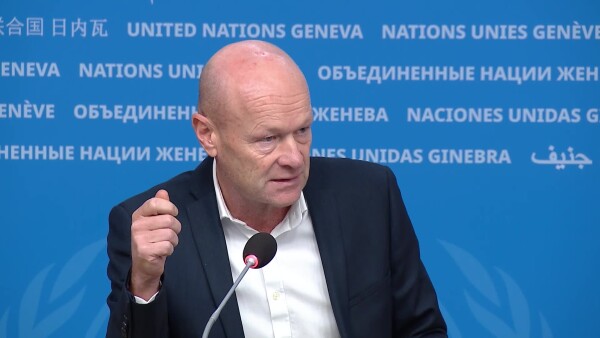
“We are scraping the bottom of the barrel,” said UN Children’s Fund (UNICEF) Senior Emergency Coordinator in Gaza, Hamish Young, who told journalists in Geneva that no fuel or humanitarian aid has entered the Gaza Strip for five days. “This is already a huge issue for the population and all humanitarian actors but in a matter of days, if this is not corrected, the lack of fuel could grind humanitarian operations to a halt.”
The closure of Rafah crossing from Egypt and Kerem Shalom from Israel close by “has severed access for us to fuel, supplies and the movement of humanitarian staff,” explained Georgios Petropoulos, head of OCHA’s Gaza sub-office, adding that the development had also affected the movement of civilians across the border and medical evacuations out of Gaza.
A continuing lack of fuel will affect all key sectors as it could force hospitals to close and lead to a further worsening of malnutrition. Over the next 24 hours, five hospitals run by the Palestinian Ministry of Health and 28 ambulances are expected to run out of fuel.
This is a major concern for the UN World Health Organization (WHO) which cannot run equipment without power. “Even if you've got somebody back from the brink, you've operated on them, you've put them on a ventilator, (the) ventilator stops, they no longer breathe,” explained Dr Margaret Harris, WHO spokesperson. “Without fuel, no matter what everybody has done, the whole system collapses.”
In terms of growing malnutrition, Mr. Petropoulos warned that the UN World Food Programme (WFP) and the UN agency for Palestinian refugees (UNWRA) will run out of food for distribution in the south by Saturday. “That means people will be left only with what has been distributed in their shelters, in their homes and and on site," he said. “As of today, we have 12 bakeries supported by humanitarian partners here in South Gaza: eight have ceased to operate due to lack of fuel and stock and those that are still operating at reduced capacities will be out of that stock by Monday.”
According to the WFP, northern Gaza’s “full-blown famine” is rapidly spreading across the Strip after seven months of war. Displaced people are subject to an even greater risk of disease, infection, malnutrition and dehydration, the WHO warned. To date, at least 30 people have died of malnutrition and dehydration, said Dr. Harris, adding that all three specialized feeding centres opened in Gaza to treat severe acute malnutrition caused by the lack of aid flowing into the enclave since war erupted are “full of patients”.
“A lack of sewage services, lack of clean water means that if the bombs don't get you, you die of thirst, infectious diseases or simply hunger,” Dr Harris said.
Only a ceasefire can avert further bloodshed and restore desperately needed aid deliveries, UN aid teams insisted.
According to the Hamas-run health ministry, at least 34,900 people have been killed in Israeli shelling and ground operation in Gaza since 7 October 2023. Some 1,250 people died in the Hamas-led attacks on southern Israel that sparked the war, and more than 250 Israelis were taken hostage. Dozens are still being held.
Ends
Story: “Gaza urgent fuel needs – OCHA, UNICEF, WHO” – 10 May 2024
Speakers:
· Hamish Young, UNICEF's Senior Emergency Coordinator in the Gaza Strip (speaking from Rafah)
· Georgios Petropoulos, head of the Gaza sub-office of UN Office for the Coordination of Humanitarian Affairs in Gaza (speaking from Rafah)
· Margaret Harris, WHO spokesperson
TRT: 01’58”
SOURCE: UNTV CH
LANGUAGE: ENGLISH
ASPECT RATIO: 16:9
DATELINE: 10 May 2024 - GENEVA, SWITZERLAND
Geneva Press briefing
SHOTLIST
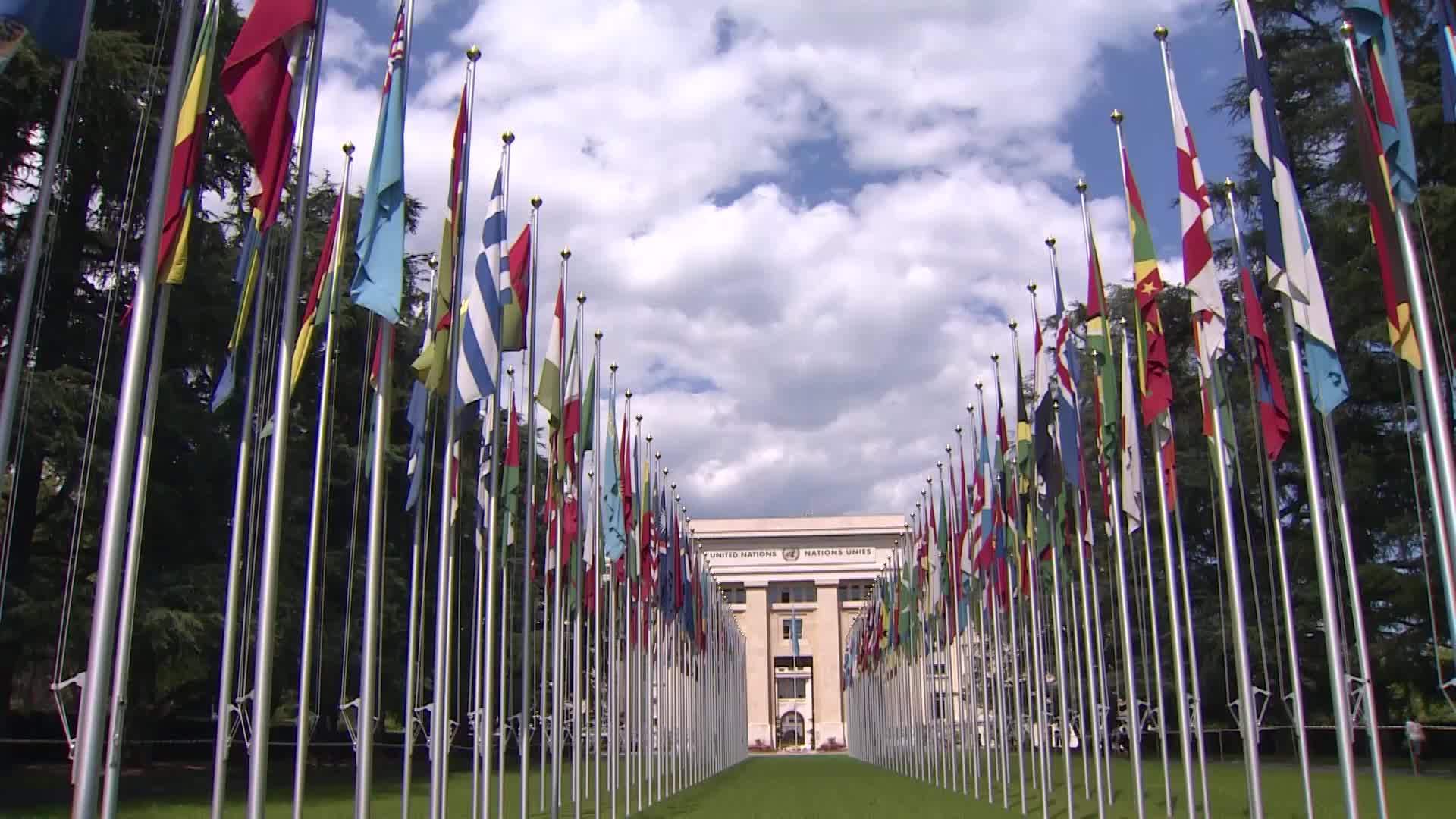
- Exterior medium shot: UN flag alley
- Wide shot of the podium with speakers in the press conference room
- SOUNDBITE (English) Hamish Young, UNICEF's Senior Emergency Coordinator in the Gaza Strip: "For five days, no fuel and virtually no humanitarian aid has entered the Gaza Strip and we are scraping the bottom of the barrel. This is already a huge issue for the population and for all humanitarian actors. But in a matter of days, if this is not corrected, the lack of fuel will really grind the whole humanitarian operations to a halt.”
- Medium shot of the podium and the press conference room
- SOUNDBITE (English) Georgios Petropoulos, Head of OCHA Sub-office in Gaza: “The closure, especially of Rafah crossing and Kerem Shalom, has severed access for us to fuel, to supplies and the movement of humanitarian staff. It has also affected the movement of any civilian who could go out on a medical evacuation.”
- Medium shot of the podium:
- SOUNDBITE (English) Margaret Harris, WHO spokesperson: “Even if you've got somebody back from the brink, you've operated on them, you've put them on a ventilator, ventilator stops, they no longer breathe. So, without fuel, no matter what everybody has done, the whole system collapses.”
- Medium shot: journalists in the press conference room
- SOUNDBITE (English) Georgios Petropoulos, Head of OCHA Sub-office in Gaza: “The World Food Programme and UNRWA will run out of food for distribution in the south by tomorrow. That means that people will be left only with the aid that has already been distributed in their shelters, in their homes and outside. As of today, we have 12 bakeries supported by the humanitarian partners here in south Gaza. Eight have ceased to operate due to the lack of fuel in stock, and the four that are still operating at reduced capacity will be out of that stock by Monday.”
- Medium shot: journalists in the press conference room
- SOUNDBITE (English) Margaret Harris, WHO spokesperson: “A lack of sewage services, a lack of clean water means that if the bombs don’t get you, you die of thirst, infectious diseases or simply hunger.”
- Medium shot: journalists in the press conference room
- Close shot: cameraman recording the press conference
- Medium shot of the press conference room podium
- Wide shot: journalists in the press conference room
Similar Stories
1
1
1
Edited News | OCHA , UNICEF , WFP
Aid agencies warned on Friday of the fast-developing humanitarian emergency inside Taiz City in Yemen, which has been encircled by de facto Houthi forces fighting government troops along the country’s west coast.

2
17
1
2
Edited News , Press Conferences , Images | OCHA , WMO
Two UN agencies teamed up on Wednesday to issue an appeal for immediate assistance to help communities already being impacted by the strongest El Niño on record.
3
16
2
2
Edited News , B-roll , Conferences , Images | UNITED NATIONS , UNOG
Sixth Consultative Meeting on Enhancing Coordination of Peace Initiatives and Efforts for Sudan
1
1
1
Edited News | UNICEF , WHO , UNHCR
Yemen war continues to force families from homes amid hunger and disease
More than 250,000 people have now fled renewed fighting in Yemen, the UN said on Tuesday, citing particular concern for those sheltering in the southwestern city of Taiz and the wider governorate, where access is “essentially blocked”.

1
1
1
Edited News | UNICEF
A little over one year since a ceasefire agreement was announced between Hamas fighters and Israel, more than 340 children have been reported killed and hundreds more injured, the UN Children’s Fund, UNICEF, said on Friday.

1
1
1
Edited News | UNICEF , IFRC
Six weeks after Nepal’s deadly flooding disaster, communities are still struggling to rebuild their lives, but they will need sustained help as global warming increases the risk of another Himalayan catastrophe, the UN Children’s Fund (UNICEF) said on Friday.

1
1
1
Edited News | WHO
In suspected Russia plague death, testing and monitoring underway – WHO
The death of a lab worker in Russia’s Siberia region has sparked concerns about plague being the cause, the UN World Health Organization (WHO) said on Tuesday, adding that it was following the situation closely.

1
1
Edited News | OHCHR , UNOG
UN Human Rights Chief Volker Türk on Friday provided and oral update to the 63rd session of the Human rights Council on Ukraine.

1
1
1
Edited News | OHCHR , UNOG
UN Human Rights Chief Volker Türk on Friday provided and oral update to the 63rd session of the Human rights Council on the human rights situation in Haiti.

1
1
1
Edited News | WHO
Repeated delays in bringing lifesaving medicines, prosthetics and more from Israel into Gaza risk having devastating consequences on Palestinians who urgently need them in the wartorn enclave, the UN World Health Organization (WHO) said on Friday. “A truck full of non-priority supplies or the right supplies arriving too late, doesn't save lives. That's the question that actually matters," said Dr Reinhilde Van De Weerdt, WHO Representative in the OPT.

1
1
1
Edited News | WHO
DRC: Early access to care and oxygen decisive for Ebola patients’ survival – WHO
In the Democratic Republic of the Congo (DRC), health workers fighting the country’s largest-ever Ebola outbreak are struggling to overcome critical challenges to patient care, the UN World Health Organization (WHO) warned on Tuesday.

1
1
1
Edited News | OCHA , UN
Civilians in Iran are continuing to feel the consequences of months of conflict and military escalation, the UN’s top official in the country has said, as loss of life, damage to civilian infrastructure and mounting economic pressures leave many facing continued uncertainty.