

The United Nations Office at Geneva
Multimedia Newsroom
Edited News | OHCHR , UNOG
UN Human Rights office concerns on Russian attacks in Kharkiv region of Ukraine
“We are deeply concerned at the plight of civilians in Ukraine, particularly in the Kharkiv region, as Russian armed forces have stepped up their attacks in recent days. This assault has seized more Ukrainian territory, triggered further displacement and potentially threatens Kharkiv, Ukraine's second largest city,” said spokesperson Liz Throssell at the bi-weekly press briefing in Geneva.
Since the latest incursion by Russian forces on 10 May, during which they took control of several small settlements, at least 6,000 people are believed to have fled or been evacuated from areas on the border. Many have reached the city of Kharkiv, which is just some 30 to 40 kilometers from the fighting.
“Our human rights monitoring team in Ukraine, which is continuing to analyze information from the ground, has verified that at least eight civilians have been killed and 35 injured in the Kharkiv region since last Friday,” she said.
“This follows a pattern of civilian casualties documented for April, when at least 129 civilians were killed and 574 injured, the majority amid attacks by Russian armed forces along the frontlines,” Throssell stated.
“In Kharkiv region, the situation is dire, as fighting intensifies. Colleagues in Kharkiv report air raid sirens sounding almost constantly and hearing explosions in the border area and in the city itself. Continuing attacks on Ukraine’s energy infrastructure, which since March have affected millions across Ukraine, have also meant daily power cuts in many parts of Kharkiv,” she said.
Reports indicate that in the north-eastern border city of Vovchansk, where there has been significant destruction, heavy fighting has been continuing. Several hundred civilian residents out of a population of some 3,000 prior to 10 May are believed to still be there.
The UN Human Rights Office is also looking into reports that falling debris from an intercepted missile hit an apartment block in Belgorod in the Russian Federation, causing civilian casualties.
“We once again call on the Russian Federation to immediately cease its armed attack against Ukraine - in line with the relevant resolutions of the UN General Assembly, the binding provisional measures ordered by the International Court of Justice, and with wider international law - and to withdraw to internationally recognizedborders,” said Throssell.
She also urged all parties to make every effort to avoid or at least minimize harm to civilians, including by avoiding the use of explosive weapons with wide area effects in populated areas.
ENDS
For more information and media requests, please contact:
In Geneva
Liz Throssell - + 41 22 917 9296 / elizabeth.throssell@un.org or
Jeremy Laurence - +41 22 917 9383 / jeremy.laurence@un.org
Tag and share
Twitter @UNHumanRights
Facebook unitednationshumanrights
Instagram @unitednationshumanrights
SHOTLIST
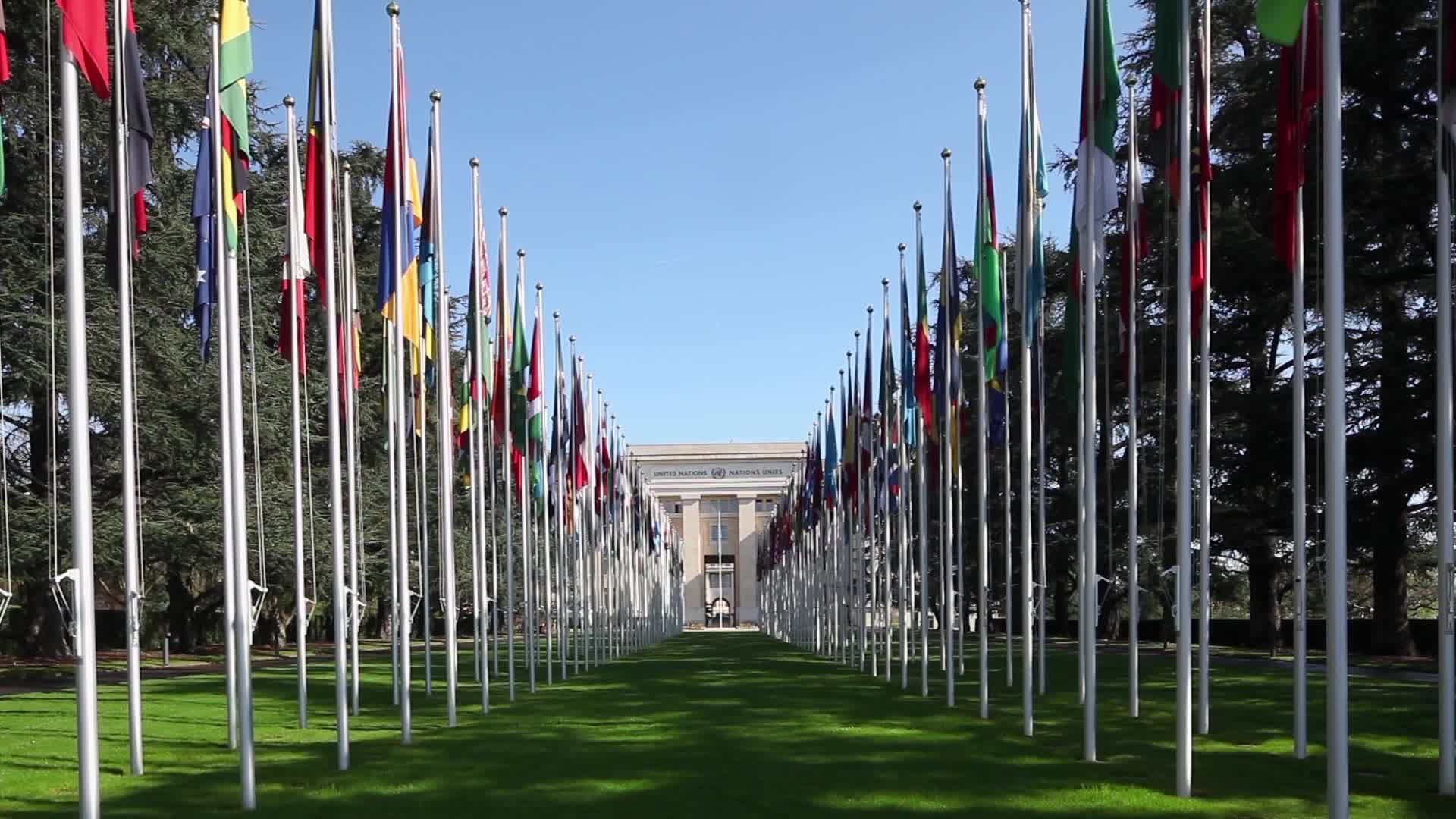
1. Exterior shots: Palais des Nations
2. Cut Aways: Briefing room.
3. SOUNDBITE (English)—Liz Throssell, Spokesperson for the Office of the UN High Commissioner for Human Rights (OHCHR): “We are deeply concerned at the plight of civilians in Ukraine, particularly in the Kharkiv region, as Russian armed forces have stepped up their attacks in recent days. This assault has seized more Ukrainian territory, triggered further displacement and potentially threatens Kharkiv, Ukraine's second largest city.”
4. Cut Away: Briefing room.
5. SOUNDBITE (English)—Liz Throssell, Spokesperson for the Office of the UN High Commissioner for Human Rights (OHCHR): “Our human rights monitoring team in Ukraine, which is continuing to analyze information from the ground, has verified that at least eight civilians have been killed and 35 injured in the Kharkiv region since last Friday.”
6. Cut Away: Briefing room.
7. SOUNDBITE (English)—Liz Throssell, Spokesperson for the Office of the UN High Commissioner for Human Rights (OHCHR): “This follows a pattern of civilian casualties documented for April, when at least 129 civilians were killed and 574 injured, the majority amid attacks by Russian armed forces along the frontlines.”
8. Cut Away: Briefing room.
9. SOUNDBITE (English)—Liz Throssell, Spokesperson for the Office of the UN High Commissioner for Human Rights (OHCHR): “In Kharkiv region, the situation is dire, as fighting intensifies. Colleagues in Kharkiv report air raid sirens sounding almost constantly and hearing explosions in the border area and in the city itself. Continuing attacks on Ukraine’s energy infrastructure, which since March have affected millions across the Ukraine, have also meant daily power cuts in many parts of Kharkiv.”
10. Cut Away: Briefing room.
11. SOUNDBITE (English)—Liz Throssell, Spokesperson for the Office of the UN High Commissioner for Human Rights (OHCHR): “We once again call on the Russian Federation to immediately cease its armed attack against Ukraine - in line with the relevant resolutions of the UN General Assembly, the binding provisional measures ordered by the International Court of Justice, and with wider international law - and to withdraw to internationally recognised borders.”
12. Cut Away: Briefing room.
Similar Stories

1
1
1
Edited News | OCHA , UNICEF , WFP
Aid agencies warned on Friday of the fast-developing humanitarian emergency inside Taiz City in Yemen, which has been encircled by de facto Houthi forces fighting government troops along the country’s west coast.

2
17
1
2
Edited News , Press Conferences , Images | OCHA , WMO
Two UN agencies teamed up on Wednesday to issue an appeal for immediate assistance to help communities already being impacted by the strongest El Niño on record.

3
16
2
2
Edited News , B-roll , Conferences , Images | UNITED NATIONS , UNOG
Sixth Consultative Meeting on Enhancing Coordination of Peace Initiatives and Efforts for Sudan

1
1
1
Edited News | UNICEF , WHO , UNHCR
Yemen war continues to force families from homes amid hunger and disease
More than 250,000 people have now fled renewed fighting in Yemen, the UN said on Tuesday, citing particular concern for those sheltering in the southwestern city of Taiz and the wider governorate, where access is “essentially blocked”.

1
1
1
Edited News | UNICEF
A little over one year since a ceasefire agreement was announced between Hamas fighters and Israel, more than 340 children have been reported killed and hundreds more injured, the UN Children’s Fund, UNICEF, said on Friday.

1
1
1
Edited News | UNICEF , IFRC
Six weeks after Nepal’s deadly flooding disaster, communities are still struggling to rebuild their lives, but they will need sustained help as global warming increases the risk of another Himalayan catastrophe, the UN Children’s Fund (UNICEF) said on Friday.

1
1
1
Edited News | WHO
In suspected Russia plague death, testing and monitoring underway – WHO
The death of a lab worker in Russia’s Siberia region has sparked concerns about plague being the cause, the UN World Health Organization (WHO) said on Tuesday, adding that it was following the situation closely.

1
1
Edited News | OHCHR , UNOG
UN Human Rights Chief Volker Türk on Friday provided and oral update to the 63rd session of the Human rights Council on Ukraine.

1
1
1
Edited News | OHCHR , UNOG
UN Human Rights Chief Volker Türk on Friday provided and oral update to the 63rd session of the Human rights Council on the human rights situation in Haiti.

1
1
1
Edited News | WHO
Repeated delays in bringing lifesaving medicines, prosthetics and more from Israel into Gaza risk having devastating consequences on Palestinians who urgently need them in the wartorn enclave, the UN World Health Organization (WHO) said on Friday. “A truck full of non-priority supplies or the right supplies arriving too late, doesn't save lives. That's the question that actually matters," said Dr Reinhilde Van De Weerdt, WHO Representative in the OPT.

1
1
1
Edited News | WHO
DRC: Early access to care and oxygen decisive for Ebola patients’ survival – WHO
In the Democratic Republic of the Congo (DRC), health workers fighting the country’s largest-ever Ebola outbreak are struggling to overcome critical challenges to patient care, the UN World Health Organization (WHO) warned on Tuesday.

1
1
1
Edited News | OCHA , UN
Civilians in Iran are continuing to feel the consequences of months of conflict and military escalation, the UN’s top official in the country has said, as loss of life, damage to civilian infrastructure and mounting economic pressures leave many facing continued uncertainty.