

The United Nations Office at Geneva
Multimedia Newsroom
War in Ukraine should not be “new normal”: children study in the subway tunnels of Kharkiv, UN official says
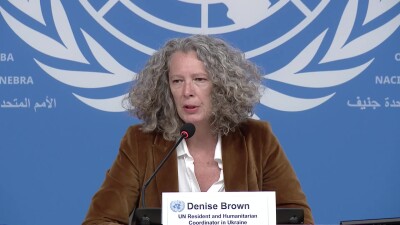
A surge of attacks by Russian forces on the Kharkiv area of Ukraine is causing significant civilian casualties, as well as the destruction of homes and of crucial infrastructure, the top UN official in Ukraine said today, in a plea to not “normalize” the dire conditions for Ukrainian civilians.
“There has been a very clear intensification of the war over the past couple of months,” said Denise Brown, UN Resident and Humanitarian Coordinator in Ukraine. “On my last trip to Ukraine two weeks ago, there were 12 sirens during the day and 12 explosions. There's a constant disruption to daily life in the city of Kharkiv,” she told journalists in Geneva.
Russian military staged a fresh incursion on Kharkiv region on 10 May, seizing the town of Vovchansk and intensifying aerial attacks on Kharkiv city, Ukraine’s second largest urban center, with some one million inhabitants fearing for their lives.
A total of nearly ten million people - children included- are estimated by the World Health Organization to be at risk of acute Post-Traumatic Syndrome Disease (PTSD) in Ukraine. Meanwhile, some four million children across the country have had their education disrupted, and 600,000 of them are unable to access in-person school at all, according to UNICEF, the United Nations Children’s Fund.
In the city of Kharkiv, the only way children can safely study is in the subterranean tunnels of the metro, Ms. Brown said, having witnessed this recently, when she visited the underground with the city’s mayor. “My initial reaction was that classrooms look like regular classrooms: full of children, teachers, full of the energy and enthusiasm that children have. My second thought was: ‘but this isn't normal’. It's not normal that children have to study, underground.”
Ms. Brown recently attended the Ukraine Recovery Conference in Berlin, where 14 countries and international organizations renewed their support for recovery, reconstruction and reform in Ukraine. Asked about her participation in the upcoming Swiss-organized Ukraine peace conference at the Bürgenstock resort this weekend, she clarified that the “UN is an observer, not a member state. So, whoever is going will be in listening mode.” She echoed the position of the UN Secretary-General to say that the Russian invasion of Ukraine is “a violation of the UN Charter.”
“We hope for a just peace for Ukraine,” Ms. Brown said, “and as I've said repeatedly in my remarks, the rest of the world should not normalize the war in Ukraine.”
After 28 months of war, the scale of humanitarian needs is vast. More than 32,000 civilian casualties, including 11,000 deaths, have been verified — but the real number is likely much higher. Thirty per cent of pre-war jobs have been erased and poverty increased from five to 25 per cent. Over 14.6 million people, 40 per cent of the population will need humanitarian assistance in 2024. The humanitarian community has appealed for US$3.1 billion to providing life-saving assistance to 8.5 million of the most vulnerable for 2024.
ends
Speakers, agencies spokespersons:
· Denise Brown, UN Resident and Humanitarian Coordinator in Ukraine
TRT: 02’16”
SOURCE: UNTV CH
LANGUAGE: ENGLISH
ASPECT RATIO: 16:9
DATELINE: 14 June 2024 - GENEVA, SWITZERLAND
Press briefing by Denise Brown in Geneva
SHOTLIST
- Exterior medium shot: Palais des Nations
- Wide shot of the podium with speakers at the press conference room
3. SOUNDBITE (English) Denise Brown, UN Resident and Humanitarian Coordinator in Ukraine: “I would like to really speak to you about Kharkiv and give you a flavor of what's happening in that part of Ukraine where there has been a very clear intensification of the war over the past couple of months.”
- Wide and lateral shot of the press room
- SOUNDBITE (English) Denise Brown, UN Resident and Humanitarian Coordinator in Ukraine: “We have over 100 UN staff based in the city of Kharkiv. I'm there quite often. And on my last trip there, two weeks ago, there were 12 sirens during the day and 12 explosions. So, there's a constant disruption to daily life in the city of Kharkiv.”
- Medium shot: journalists in the press conference room
- SOUNDBITE (English) Denise Brown, UN Resident and Humanitarian Coordinator in Ukraine: “Children: you've heard the reports, but probably you haven't gone to the schools in the metro. I have, and it's the only way children can safely study in the city of Kharkiv. And, you know, my initial reaction when I go down with the mayor into the bowels of the metro and come across classrooms which look like regular classrooms full of children, teachers learning science, learning math, full of the energy and enthusiasm that children have, my second thought was: ‘but, this isn't normal’. It's not normal that children have to study underground.”
- Medium lateral shot of the press conference room
- SOUNDBITE (English) Denise Brown, UN Resident and Humanitarian Coordinator in Ukraine: “The UN is an observer, not a member state. So, whoever is going (to Bürgenstock) will be in listening mode. And again, just to repeat what the Secretary General has said since the very beginning, this is a violation of the (UN) Charter. We hope for a just peace for Ukraine, and as I've said just repeatedly in my remarks, the rest of the world should not normalize the war in Ukraine.”
- Medium shot of the podium with speakers
- Various shots of journalists listening in the press conference room
Similar Stories
1
1
1
Edited News | OCHA , UNICEF , WFP
Aid agencies warned on Friday of the fast-developing humanitarian emergency inside Taiz City in Yemen, which has been encircled by de facto Houthi forces fighting government troops along the country’s west coast.

2
17
1
2
Edited News , Press Conferences , Images | OCHA , WMO
Two UN agencies teamed up on Wednesday to issue an appeal for immediate assistance to help communities already being impacted by the strongest El Niño on record.
3
16
2
2
Edited News , B-roll , Conferences , Images | UNITED NATIONS , UNOG
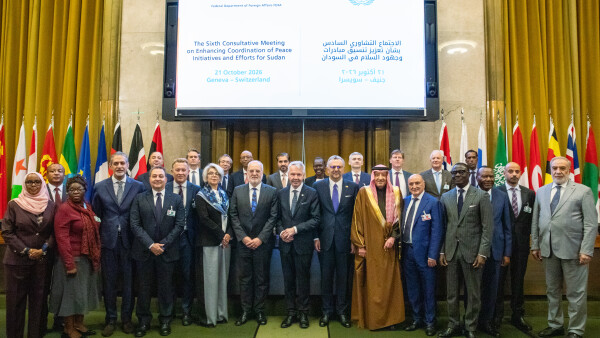
Sixth Consultative Meeting on Enhancing Coordination of Peace Initiatives and Efforts for Sudan
1
1
1
Edited News | UNICEF , WHO , UNHCR
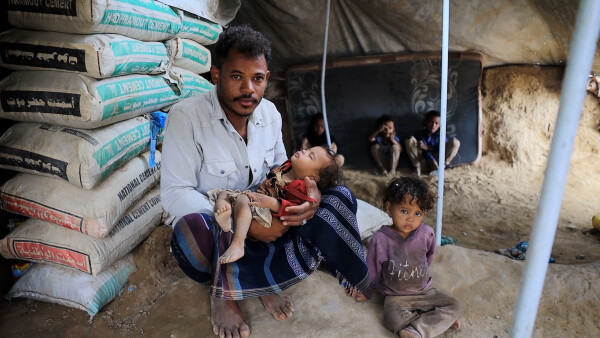
Yemen war continues to force families from homes amid hunger and disease
More than 250,000 people have now fled renewed fighting in Yemen, the UN said on Tuesday, citing particular concern for those sheltering in the southwestern city of Taiz and the wider governorate, where access is “essentially blocked”.

1
1
1
Edited News | UNICEF
A little over one year since a ceasefire agreement was announced between Hamas fighters and Israel, more than 340 children have been reported killed and hundreds more injured, the UN Children’s Fund, UNICEF, said on Friday.

1
1
1
Edited News | UNICEF , IFRC
Six weeks after Nepal’s deadly flooding disaster, communities are still struggling to rebuild their lives, but they will need sustained help as global warming increases the risk of another Himalayan catastrophe, the UN Children’s Fund (UNICEF) said on Friday.

1
1
1
Edited News | WHO
In suspected Russia plague death, testing and monitoring underway – WHO
The death of a lab worker in Russia’s Siberia region has sparked concerns about plague being the cause, the UN World Health Organization (WHO) said on Tuesday, adding that it was following the situation closely.

1
1
Edited News | OHCHR , UNOG
UN Human Rights Chief Volker Türk on Friday provided and oral update to the 63rd session of the Human rights Council on Ukraine.

1
1
1
Edited News | OHCHR , UNOG
UN Human Rights Chief Volker Türk on Friday provided and oral update to the 63rd session of the Human rights Council on the human rights situation in Haiti.

1
1
1
Edited News | WHO
Repeated delays in bringing lifesaving medicines, prosthetics and more from Israel into Gaza risk having devastating consequences on Palestinians who urgently need them in the wartorn enclave, the UN World Health Organization (WHO) said on Friday. “A truck full of non-priority supplies or the right supplies arriving too late, doesn't save lives. That's the question that actually matters," said Dr Reinhilde Van De Weerdt, WHO Representative in the OPT.

1
1
1
Edited News | WHO
DRC: Early access to care and oxygen decisive for Ebola patients’ survival – WHO
In the Democratic Republic of the Congo (DRC), health workers fighting the country’s largest-ever Ebola outbreak are struggling to overcome critical challenges to patient care, the UN World Health Organization (WHO) warned on Tuesday.

1
1
1
Edited News | OCHA , UN
Civilians in Iran are continuing to feel the consequences of months of conflict and military escalation, the UN’s top official in the country has said, as loss of life, damage to civilian infrastructure and mounting economic pressures leave many facing continued uncertainty.