

The United Nations Office at Geneva
Multimedia Newsroom
Edited News , Press Conferences | WMO
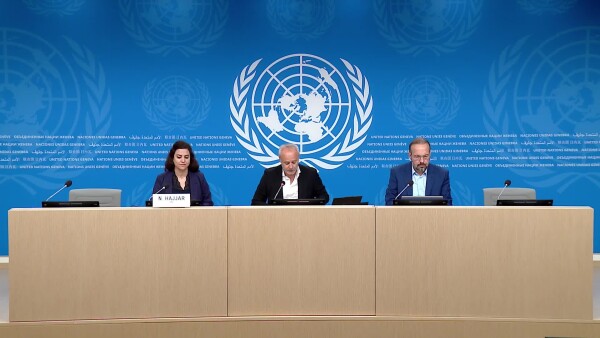
WMO Press conference: Air Quality and Climate Bulletin - 05 September 2024
We must do more to keep the air we breathe clean: UN weather agency
Unchecked climate change, wildfires and air pollution continue to have “a spiralling, negative impact on health, ecosystems and agriculture”, with millions of deaths attributed to dirty air, the UN World Meteorological Organization (WMO) said on Thursday.
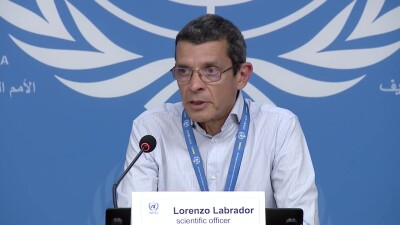
“Almost everybody on Earth, basically nine out of 10 people breathe air that is essentially unfit for purpose,” said Lorenzo Labrador, Scientific Officer at WMO. “This means that it is air that exceeds the [UN World Health Organization] WHO guideline limits and contains a high level of pollutants with low and middle-income countries basically being the most affected.”
Heat driver
That stark finding is just one of many unsettling discoveries featuring in the latest WMO Air Quality and Climate Bulletin. It highlights, for instance, that the first eight months of 2024 have seen no let-up in periods of intense heat and persistent droughts around the world, fuelling the risk of wildfires and air pollution.
“Climate change means that we face this scenario with increasing frequency. Interdisciplinary science and research is key to finding solutions,” the UN agency warned.
The clear link between polluted air and poor health is clear, according to the WHO, which has urged global action to counter “one of the greatest environmental risks to health” and numerous preventable illnesses including stroke, heart disease, lung cancer and acute respiratory diseases, including asthma.
“Ambient air pollution alone mostly coming from vehicles and industry causes more than 4.5 million premature deaths a year,” WMO’s Mr. Labrador told journalists in Geneva.
“This is more than those death by malaria and HIV AIDS combined; so air pollution is the biggest environmental risk of our time. But not only is it a health risk in itself, it also exacerbates climate change.”
Regional trends
A snapshot of regional emissions variations featured in the UN agency report indicated a trend for “lower pollution in Europe and China” than North America and India, where there was an increase in pollution emissions from human and industrial activities.
This is likely the “direct result of a reduction in emissions in those countries over the years, and we have been noticing this tendency since we started publishing the bulletin back in 2021.”
And while it is generally widely understood that polluted air containing microscopic particulates - including sulphates, nitrates, ammonia, soot from human activity and wildfires - is harmful, Mr. Labrador reiterated the UN agency’s 2023 findings that these and other pollutants have a damaging impact on food security, too.
Crop yields down
“Particulate matter can severely affect the productivity of crops - of staple crops - such as maize, rice and wheat,” he said. “Many of this particulate matter pollution that affect crop yields are due to man-made practices, which include the land use practices such as tillage and harvesting. Also, application of fertilizers and stubble-burning at the end the season, of the growing seasons.”
New data-crunching on naturally occurring wildfires around the world last year also indicated that the inferno that spread across Canada in 2023 “was even stronger with respect to emissions” than the 2021 wildfire season in Siberia – although that was “very, very strong”, the WMO officer insisted.
“[The Canada fires] broke records concerning the amount of surface area burned over a 20-year period.”
To coincide with this year’s Clean Air for Blue Skies Day on Saturday 7 September, the UN agency urged governments to protect health, the environment and the economy, given the cost ramifications of the air pollution.
“The first thing that cities have to do is to recognize that the problem exists in the first place,” Mr. Labrador said. “So, those cities and those countries have to acknowledge first that there is an air quality problem and there is sufficient data around the world to basically acknowledge that it is a worldwide problem, particularly in urban areas.”
Story: WMO Press conference: Air Quality and Climate Bulletin
TRT: 03’08”
SOURCE: UNTV CH
LANGUAGE: ENGLISH / NATS
ASPECT RATIO: 16:9
DATELINE: 05 September 2024 - GENEVA, SWITZERLAND
RESTRICTIONS: NONE
SHOTLIST
- Exterior medium shot: UN flag alley.
- Wide shot of the podium at the press conference room.
- SOUNDBITE (English) Lorenzo Labrador, Scientific Officer, WMO: “Almost everybody on Earth, basically nine out of 10 people breathe air that is essentially unfit for purpose. This means that it is air that exceeds the WHO guideline limits and contains a high level of pollutants with low and middle-income countries basically being the most affected.”
- Medium-wide, podium speakers and Press room.
- SOUNDBITE (English) Lorenzo Labrador, Scientific Officer, WMO: “Ambient air pollution alone mostly coming from vehicles and industry causes more than 4.5 million premature deaths a year. Just for context, this is more than those death by malaria and HIV AIDS combined; so air pollution is the biggest environmental risk of our time. But not only is it a health risk in itself, it also exacerbates climate change.”
- Medium, podium speakers from above, TV screens showing speakers in Press room.
- SOUNDBITE (English) Lorenzo Labrador, Scientific Officer, WMO: “We tend to believe that the lower pollution in Europe and China are the direct result of a reduction in emissions in those countries over the years, and we have been noticing this tendency since we started publishing the bulletin back in 2021. So, we can say that we are starting to see a tendency in that regard.”
- Medium-wide, podium speakers and Press room.
- SOUNDBITE (English) Lorenzo Labrador, Scientific Officer, WMO: “Whereas particulate matter is responsible for about eight million premature death a year worldwide, you would not find surprising that the focus is usually on the effects of particular matter on health. However, a 2023 World Meteorological Organization report pointed out that particulate matter can severely affect the productivity of crops - of staple crops - such as maize, rice and wheat.
- Medium-close, TV screen showing Mr. Labrador.
- SOUNDBITE (English) Lorenzo Labrador, Scientific Officer, WMO: “Many of this particulate matter pollution that affect crop yields are due to man-made practices, which include the land use practices such as tillage and harvesting. Also, application of fertilizers and stubble-burning at the end the season, of the growing seasons.”
- Medium, speaker’s hands on desk and screen.
- SOUNDBITE (English) Lorenzo Labrador, Scientific Officer, WMO: “We reported back in 2022 about the 2021 wildfire season in Siberia, which was very, very strong. But there are indications that the wildfire that we had in Canada last year was even stronger with respect to emissions. It broke records concerning the amount of surface area burned over a 20-year period in Canada.”
- Medium-wide, raised shot of podium speakers and Press room.
- SOUNDBITE (English) Lorenzo Labrador, Scientific Officer, WMO: “The first thing that cities have to do is to recognize that the problem exists in the first place. So, those cities and those countries have to acknowledge first that there is an air quality problem and there is sufficient data around the world to basically acknowledge that it is a worldwide problem, particularly in urban areas.”
- Wide, podium and speakers with UN logo providing backdrop.
- Medium, journalist.
Similar Stories
1
1
1
Press Conferences | WMO , UNHCR , WHO , ILO
WMO: Greenhouse Gas Bulletin; UNHCR: As attacks intensify UNHCR urges support for war ravaged Ukrainians; WHO: Clinical trials in DRC: vaccines and beyond; ILO: New global and regional estimates on domestic work, informality and working conditions

1
1
1
Edited News | OCHA , UNICEF , WFP
Aid agencies warned on Friday of the fast-developing humanitarian emergency inside Taiz City in Yemen, which has been encircled by de facto Houthi forces fighting government troops along the country’s west coast.
1
1
1
Press Conferences | UN WOMEN , WFP , WHO
UN WOMEN: Sudan Women and girls one year after the fall of El Fasher; increasing drone attacks across the country; WFP: DRC - Ebola spreads to eighth DRC province as WFP delivers food, builds treatment centres and keeps supplies moving; WHO - Update on Ebola (Bundibugyo Virus Disease)
1
12
1
1
Press Conferences , Images | UNOG
Closing Press Conference following the Sixth Consultative Meeting on Enhancing Coordination of Peace Initiatives and Efforts in Sudan

2
17
1
2
Edited News , Press Conferences , Images | OCHA , WMO
Two UN agencies teamed up on Wednesday to issue an appeal for immediate assistance to help communities already being impacted by the strongest El Niño on record.

3
16
2
2
Edited News , B-roll , Conferences , Images | UNITED NATIONS , UNOG
Sixth Consultative Meeting on Enhancing Coordination of Peace Initiatives and Efforts for Sudan
1
1
1
Press Conferences | CITES
Wildlife trade and conservation policy discussions at the 81st meeting of the CITES Standing Committee (SC81)

1
1
1
Edited News | UNICEF , WHO , UNHCR
Yemen war continues to force families from homes amid hunger and disease
More than 250,000 people have now fled renewed fighting in Yemen, the UN said on Tuesday, citing particular concern for those sheltering in the southwestern city of Taiz and the wider governorate, where access is “essentially blocked”.
1
1
1
Press Conferences | UNHCR , UNCTAD , WMO , OCHA , UNICEF , WHO
UNHCR Hungary’s 1956 Refugee Crisis: 70 Years On, UNCTAD World Investment Forum 2026, Doha, WMO Greenhouse Gas Bulletin and Climate Update for COP31, OCHA Afghanistan: Malnutrition, Girls’ Education and Recovery, UNICEF Yemen: Child Malnutrition and Unsafe Water in Taiz, WHO Inequalities in Noncommunicable Diseases and Risk Factors
1
1
1
Press Conferences | UNHCR
End of UNHCR's 77th Annual Executive Committee (ExCom) meeting week

1
1
1
Edited News | UNICEF
A little over one year since a ceasefire agreement was announced between Hamas fighters and Israel, more than 340 children have been reported killed and hundreds more injured, the UN Children’s Fund, UNICEF, said on Friday.
1
1
1
Press Conferences | UNICEF , IOM , UNHCR
UN Special Assistant to the Personal Envoy Office (SUDAN): Peace Initiatives and Efforts in Sudan; UNICEF: Dire situation of children in Gaza; IOM: Damaged Homes and Energy Attacks Risk Displacing Ukrainians for this winter; UNHCR: update on EXCOM week