

The United Nations Office at Geneva
Multimedia Newsroom
Gaza: UN humanitarian agencies ahead of their targets for polio vaccinations, says WHO
The UN World Health Organization (WHO) said on Tuesday that 161,030 children under 10 years of age had been vaccinated in central Gaza after the first two days of the UN-led mass vaccination campaign, surpassing the initial target of 156,000. The figure amounts to about a quarter of the total population needing to be reached - some 640,000 children.
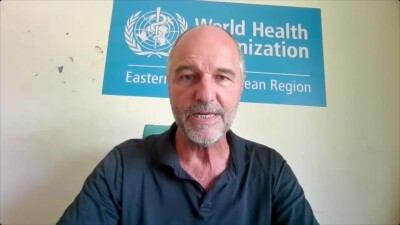
“We think that we will need another day tomorrow to actually wrap-up the central zone completely,” said Dr. Rik Peeperkorn, WHO Representative for the Occupied Palestinian Territories (OPT).
Speaking from Gaza, he explained that day three of the campaign was continuing during the eight-hour daily pauses agreed by the Israeli military and Hamas fighters. Each “humanitarian pause” is meant to last from 06:00 until 14:00 local time, with the possibility of adding an extra day if required.
The WHO medic explained that vaccination teams will shift to the larger southern zone on Thursday for another three days and most likely a fourth, before they turn to the northern zone. “Four weeks later the process will be repeated for the second round of vaccination,” he added.
Reaching the northern part of the Strip remains a concern, as the WHO has tried to get missions to the north over the last two weeks to provide hospitals with essential medical supplies. “From the eight or nine missions we planned, only three or four could go,” he said. An Emergency Medical Team (EMT) was deployed to the Indonesian Hospital and a paediatric doctor to Kamal Adwan Hospital in addition to medications and other supplies.
The journey back to base involved a seven-hour wait for authorization to proceed to the holding point, with an additional 2.5 hours for screening at the checkpoint. Nearly 11 months into the war, the deconfliction process is still not effective, Dr. Peeperkorn maintained.
According to the UN health agency, at least 90 per cent of Palestinian children need to be vaccinated for the campaign to be effective and to prevent the circulation of polio within Gaza and globally.
The Gaza Strip had a high level of vaccination coverage across the population before the conflict began in October 2023. Due the impact of the war, routine immunization coverage dropped from 99 per cent in 2022 to less than 90 per cent in the first quarter of 2024, increasing the risk of vaccine-preventable diseases to children, including polio.
Asked about whether it might be possible to assess other deeply worrying health issues such as malnutrition among children while the vaccination teams are working, Dr. Peeperkorn said that there was no spare capacity to do so. “It's a very intense campaign. You want to do it as quickly as possible, over as least number of days as possible. With all the complexities now in Gaza, we decided we cannot add anything in this campaign. This is absolutely the max if we want to reach 90 per cent coverage,” he continued. “If we see that more activities are possible in the second round, four weeks from now, we will definitely do that.”
The polio vaccination campaign comes amid the massive destruction of Gaza’s health care infrastructure, including water and sanitation systems, and after health officials detected the first case of polio in Gaza in 25 years, in a 10-month-old baby in a refugee camp. The virus can cause paralysis and even death in young children.
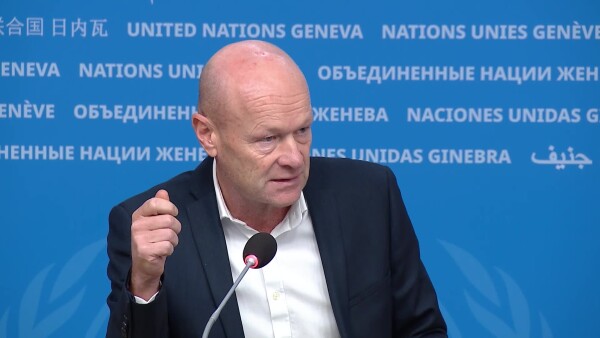
While UN humanitarian agencies welcomed the humanitarian pauses in specific areas to allow the large-scale polio vaccination campaign, they emphasized the urgent need for the immediate release of all remaining hostages and a ceasefire in the Gaza Strip. “Once these children have been vaccinated, they will go back to areas that in the coming week, we imagine, will be bombed again,” warned James Elder, spokesperson for the UN Children's Fund (UNICEF). “There is nothing in that, that should be accepted as normal,” he continued. “And I think that everyone now accepts that the talks on ceasefires are just talks for us to continually think that there's hope there. After 10 months, we might be a little bit naive. So, something has to give, and that again, has to fall on those leaders needing to represent their people.”
Ends.
Story: “Gaza polio campaign Day-3 – WHO, UNICEF” – 03 September 2024
Speaker:
- Dr. Rik Peeperkorn, UN World Health Organization (WHO) Representative for the Occupied Palestinian Territories (OPT) - (speaking from Gaza)
- James Elder, spokesperson for the UN Children's Fund (UNICEF)
TRT: 02’34”
SOURCE: UNTV CH
LANGUAGE: ENGLISH / NATS
ASPECT RATIO: 16:9
DATELINE: 03 September 2024 - GENEVA, SWITZERLAND
Geneva Press briefing
SHOTLIST
- Exterior medium shot: UN flag alley.
- Wide shot of the podium at the press conference room.
- SOUNDBITE (English) Dr. Rik Peeperkorn, UN World Health Organization (WHO) Representative for the Occupied Palestinian Territories (OPT): “We think that we will need another day tomorrow to actually wrap-up the central zone completely. And then we will shift to the south, the southern zone on Thursday in a similar approach, three intense days and most likely, the southern zone is a bigger area, most likely with another day. And after that we shift to the northern zone. Four weeks later we repeat this process.”
- Wide shot of the press conference room and TV screens.
- SOUNDBITE (English) Dr. Rik Peeperkorn, UN World Health Organization (WHO) Representative for the Occupied Palestinian Territories (OPT): “We also continue all our other work. I mean, WHO, we tried to get missions to the north over the last couple of weeks, and from the eight missions we planned, eight or nine missions we planned, only three or four could go.”
- Medium shot: journalists taking notes at the press conference room.
- SOUNDBITE (English) Dr. Rik Peeperkorn, UN World Health Organization (WHO) Representative for the Occupied Palestinian Territories (OPT): “It's a very intense campaign. You want to do it as quickly as possible, over as least number of days as possible. The complexities now in Gaza, we - that's ‘we’, that's not me, that’s the technical team: a bit of polio experts, there are many more child experts, we sit together (with all of them) – so, we decided in this campaign we cannot add anything, this is absolutely the max. We want to reach 90 per cent coverage.”
- Medium shot of videographers and control room.
- SOUNDBITE (English) Dr. Rik Peeperkorn, UN World Health Organization (WHO) Representative for the Occupied Palestinian Territories (OPT): “We will learn lessons from this first round everywhere. And if we see that, more things, more activities would be possible in the second round, four weeks from now, we will definitely do that.”
- Wide shot of the press conference room and podium.
- SOUNDBITE (English) James Elder, Spokesperson for the UN Children's Fund (UNICEF): “Once these children have been vaccinated, they will go back to areas that in the coming week we imagine will be bombed again. There is nothing in that, that should be accepted as normal. And I think that everyone now accepts that the talks on ceasefires are just talks for us to continually think that there's hope there. After ten months, we might be being a little bit naive. So, something has to give, and that again, has to fall on those leaders needing to represent their people.”
- Various shots of the press conference room, control room and journalists.
Similar Stories
1
1
1
Edited News | OCHA , UNICEF , WFP
Aid agencies warned on Friday of the fast-developing humanitarian emergency inside Taiz City in Yemen, which has been encircled by de facto Houthi forces fighting government troops along the country’s west coast.

2
17
1
2
Edited News , Press Conferences , Images | OCHA , WMO
Two UN agencies teamed up on Wednesday to issue an appeal for immediate assistance to help communities already being impacted by the strongest El Niño on record.

3
16
2
2
Edited News , B-roll , Conferences , Images | UNITED NATIONS , UNOG
Sixth Consultative Meeting on Enhancing Coordination of Peace Initiatives and Efforts for Sudan

1
1
1
Edited News | UNICEF , WHO , UNHCR
Yemen war continues to force families from homes amid hunger and disease
More than 250,000 people have now fled renewed fighting in Yemen, the UN said on Tuesday, citing particular concern for those sheltering in the southwestern city of Taiz and the wider governorate, where access is “essentially blocked”.

1
1
1
Edited News | UNICEF
A little over one year since a ceasefire agreement was announced between Hamas fighters and Israel, more than 340 children have been reported killed and hundreds more injured, the UN Children’s Fund, UNICEF, said on Friday.

1
1
1
Edited News | UNICEF , IFRC
Six weeks after Nepal’s deadly flooding disaster, communities are still struggling to rebuild their lives, but they will need sustained help as global warming increases the risk of another Himalayan catastrophe, the UN Children’s Fund (UNICEF) said on Friday.

1
1
1
Edited News | WHO
In suspected Russia plague death, testing and monitoring underway – WHO
The death of a lab worker in Russia’s Siberia region has sparked concerns about plague being the cause, the UN World Health Organization (WHO) said on Tuesday, adding that it was following the situation closely.

1
1
Edited News | OHCHR , UNOG
UN Human Rights Chief Volker Türk on Friday provided and oral update to the 63rd session of the Human rights Council on Ukraine.

1
1
1
Edited News | OHCHR , UNOG
UN Human Rights Chief Volker Türk on Friday provided and oral update to the 63rd session of the Human rights Council on the human rights situation in Haiti.

1
1
1
Edited News | WHO
Repeated delays in bringing lifesaving medicines, prosthetics and more from Israel into Gaza risk having devastating consequences on Palestinians who urgently need them in the wartorn enclave, the UN World Health Organization (WHO) said on Friday. “A truck full of non-priority supplies or the right supplies arriving too late, doesn't save lives. That's the question that actually matters," said Dr Reinhilde Van De Weerdt, WHO Representative in the OPT.

1
1
1
Edited News | WHO
DRC: Early access to care and oxygen decisive for Ebola patients’ survival – WHO
In the Democratic Republic of the Congo (DRC), health workers fighting the country’s largest-ever Ebola outbreak are struggling to overcome critical challenges to patient care, the UN World Health Organization (WHO) warned on Tuesday.

1
1
1
Edited News | OCHA , UN
Civilians in Iran are continuing to feel the consequences of months of conflict and military escalation, the UN’s top official in the country has said, as loss of life, damage to civilian infrastructure and mounting economic pressures leave many facing continued uncertainty.