

The United Nations Office at Geneva
Multimedia Newsroom
Les déplacés du Soudan ont enduré des « souffrances inimaginables, des atrocités brutales » : HCR
Les déplacés du Soudan ont enduré des « souffrances inimaginables » dans leur quête d'abri face à la guerre en cours dans le pays, ont averti vendredi les humanitaires de l'ONU.
Dix-neuf mois après le déclenchement du conflit entre les forces armées soudanaises et les forces de soutien rapide sur le transfert de pouvoir à un régime civil, l'agence des Nations Unies pour les réfugiés (HCR) a exprimé sa profonde préoccupation quant au fait que plus de trois millions de personnes ont désormais été forcées de fuir le pays à la recherche de sécurité.
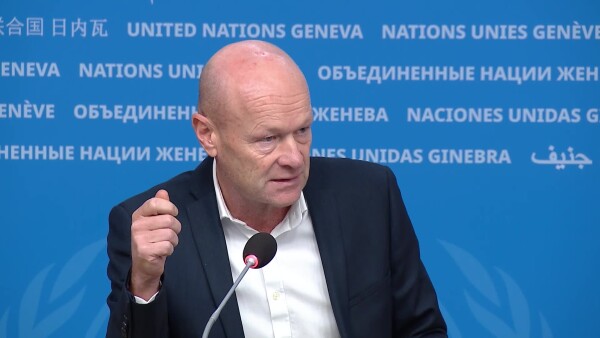
« Cela fait plus d'un an et demi de souffrances inimaginables, d'atrocités brutales et de violations généralisées des droits de l'homme, » a déclaré Dominique Hyde, Directrice des relations extérieures du HCR. « Chaque jour, chaque minute, des milliers de vies sont brisées par la guerre et la violence loin de l'attention du monde. »
Parlant à Genève après avoir visité des communautés déplacées abritées dans le pays voisin, le Tchad, Mme Hyde a décrit le Tchad comme « un sanctuaire, une bouée de sauvetage » pour 700 000 réfugiés de guerre.
« J'ai parlé à des personnes qui ont vu leurs familles être assassinées, » a-t-elle dit. « Les gens sont ciblés en raison de leur appartenance ethnique. Les hommes et les garçons sont tués et leurs corps sont brûlés. Les femmes sont violées en fuyant. Les gens m'ont dit à maintes reprises comment ils se souviennent des corps qu'ils ont vus abandonnés au bord de la route alors qu'ils fuyaient. »
La responsable du HCR a expliqué qu'en face de besoins massifs, l'agence de l'ONU et ses partenaires avaient relogé plus de 370 000 réfugiés au Tchad « dans six nouveaux sites d'accueil et 10 extensions de sites préexistants, tous achevés en un temps record. Mais des dizaines de milliers de familles attendent encore cette opportunité de recommencer. »
L'exode du Soudan a exercé une pression sur les pays voisins pour fournir une assistance à tous ceux qui ont besoin d'abri et de services de base.
« D'autres pays voisins du Soudan, le Soudan du Sud, l'Éthiopie, l'Égypte, la République centrafricaine ont dépassé leurs moyens, non seulement en offrant un refuge aux personnes en fuite, mais en donnant aux réfugiés la chance de commencer à reconstruire leur vie en exil, » a déclaré la responsable du HCR.
« Le bain de sang continu » au Darfour et à travers le Soudan a créé la pire crise de protection civile au monde depuis des décennies, mais « le monde n'y prête aucune attention », a insisté Mme Hyde.
Le Plan de réponse pour les réfugiés de 1,5 milliard de dollars pour les déplacés du Soudan, qui vise à aider 2,7 millions de personnes dans cinq pays voisins, n'est financé qu'à hauteur de 29 %. « Le Tchad et son peuple… ont été plus que généreux, plus qu'accueillants, » a déclaré Mme Hyde. « J'ai entendu à maintes reprises qu'ils se sentaient unis avec la communauté soudanaise. Mais nous avons besoin de ce soutien. Nous avons besoin de soutien maintenant. »
Histoire : “Crise au Soudan - HCR” – 08 novembre 2024
Orateur :
- Dominique Hyde, Directrice des Relations Extérieures du HCR
TRT : 5’19”
SOURCE : Images UNTV CH à Genève, images du HCR depuis le Tchad.
LANGUES : ANGLAIS / ARABE / NATS
FORMAT D'IMAGE : 16:9
DATELINE : 08 novembre 2024 - GENÈVE, SUISSE + images du HCR tournées les 28-29 octobre 2024 à Adré, Tchad – détails ici : https://media.unhcr.org/Share/gb03u0dk5hnqrd746ce74016c3744n06
LISTE DES PLANS
- Plan extérieur moyen : allée des drapeaux de l'ONU.
- Plan large du podium avec les orateurs dans la salle de conférence de presse.
- EXTRAIT SONORE (Anglais) Dominique Hyde, Directrice des Relations Extérieures du HCR : “Cette semaine, nous avons atteint un seuil dévastateur. Depuis le début de la guerre il y a 19 mois, plus de trois millions de personnes ont été forcées de fuir le Soudan, cherchant la sécurité dans les pays voisins et au-delà.”
- Plan large, journalistes, journaliste TV, caméra et salle de contrôle.
- EXTRAIT SONORE (Anglais) Dominique Hyde, Directrice des Relations Extérieures du HCR : “Cela fait plus d'un an et demi de souffrances inimaginables, d'atrocités brutales et de violations généralisées des droits de l'homme. Chaque jour, chaque minute, des milliers de vies sont brisées par la guerre et la violence, loin de l'attention du monde.”
- Plan moyen : journalistes.
- EXTRAIT SONORE (Anglais) Dominique Hyde, Directrice des Relations Extérieures du HCR : “Le Tchad est devenu ce que j'appellerais un sanctuaire, une bouée de sauvetage pour ces réfugiés, les 700 000 réfugiés soudanais qui ont fui depuis le début de la guerre en avril de l'année dernière.”
- Plan moyen, écrans de télévision montrant l'orateur sur les murs de la salle de presse, journalistes.
- EXTRAIT SONORE (Anglais) Dominique Hyde, Directrice des Relations Extérieures du HCR : “Depuis le début de la guerre, plus de 370 000 réfugiés ont été relocalisés dans six nouveaux camps et dix extensions de camps préexistants, tous achevés en un temps record. Mais des dizaines de milliers de familles attendent encore cette opportunité de repartir à zéro.
- Plan moyen-large, journalistes.
- EXTRAIT SONORE (Anglais) Dominique Hyde, Directrice des Relations Extérieures du HCR : “D'autres pays voisins du Soudan, le Soudan du Sud, l'Éthiopie, l'Égypte, la République Centrafricaine ont dépassé leurs moyens, non seulement en offrant un refuge aux personnes en fuite, mais en donnant aux réfugiés une chance de commencer à reconstruire leur vie en exil.”
- Plan moyen, orateurs au podium.
- EXTRAIT SONORE (Anglais) Dominique Hyde, Directrice des Relations Extérieures du HCR : “J'ai parlé à des personnes qui ont vu leurs familles être assassinées. Les gens sont ciblés en raison de leur ethnie. Les hommes et les garçons sont tués et leurs corps sont brûlés. Les femmes sont violées en fuyant. Les gens m'ont dit à maintes reprises comment ils se souviennent des corps qu'ils ont vus abandonnés sur la route alors qu'ils fuyaient.”
- Plan moyen, orateurs au podium et journalistes.
- Plan moyen, journalistes et caméra TV.
- Plan moyen, journaliste écoutant parmi une multitude de micros.
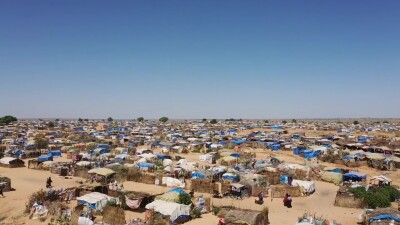
- Plan large aérien des abris de déplacement informels à Adré, Tchad.
- Plan large aérien des abris de déplacement informels à Adré, Tchad.
- Plan moyen, personnes s'abritant sous une tente ouverte.
- Plan moyen, personnes - principalement des enfants - s'abritant sous une tente ouverte.
- Plan moyen, enfants et femmes dans une tente ouverte.
- Plan rapproché, femme regardant au loin.
- Plan moyen, enfants et femmes dans une tente ouverte.
- Plan rapproché, femme regardant la caméra.
- Plan rapproché, femme âgée avec jeune fille marchant devant la caméra.
- Plan moyen, enregistrement HCR.
- Plan moyen, enregistrement HCR.
- Plan moyen, femmes assises au sol à l'ombre d'une tente ouverte.
- Plan moyen, deux femmes assises au sol à l'ombre d'une tente ouverte.
- Plan aérien, site d'Aboutengue au Tchad.
- Plan large, abris, un grand arbre.
- Plan moyen-large, personnes déplacées s'abritant sous l'arbre.
- Plan moyen, personnes déplacées s'abritant sous l'arbre.
- Plan moyen, femme déplacée.
- Plan moyen, femme déplacée.
- Plan moyen-large, personnes déplacées s'inscrivant pour des services de nutrition.
- Plan moyen, point de distribution de nutrition infantile.
- Plan moyen, femme marchant autour de la station de nutrition.
- Plan moyen, femme recevant un soutien de secours.
- Plan moyen, femme, fille et bébé se reposant à l'ombre.
- Plan moyen, femmes et enfants se reposant.
Similar Stories
1
1
1
Edited News | OCHA , UNICEF , WFP
Aid agencies warned on Friday of the fast-developing humanitarian emergency inside Taiz City in Yemen, which has been encircled by de facto Houthi forces fighting government troops along the country’s west coast.

2
17
1
2
Edited News , Press Conferences , Images | OCHA , WMO
Two UN agencies teamed up on Wednesday to issue an appeal for immediate assistance to help communities already being impacted by the strongest El Niño on record.
3
16
2
2
Edited News , B-roll , Conferences , Images | UNITED NATIONS , UNOG
Sixth Consultative Meeting on Enhancing Coordination of Peace Initiatives and Efforts for Sudan

1
1
1
Edited News | UNICEF , WHO , UNHCR
Yemen war continues to force families from homes amid hunger and disease
More than 250,000 people have now fled renewed fighting in Yemen, the UN said on Tuesday, citing particular concern for those sheltering in the southwestern city of Taiz and the wider governorate, where access is “essentially blocked”.

1
1
1
Edited News | UNICEF
A little over one year since a ceasefire agreement was announced between Hamas fighters and Israel, more than 340 children have been reported killed and hundreds more injured, the UN Children’s Fund, UNICEF, said on Friday.

1
1
1
Edited News | UNICEF , IFRC
Six weeks after Nepal’s deadly flooding disaster, communities are still struggling to rebuild their lives, but they will need sustained help as global warming increases the risk of another Himalayan catastrophe, the UN Children’s Fund (UNICEF) said on Friday.

1
1
1
Edited News | WHO
In suspected Russia plague death, testing and monitoring underway – WHO
The death of a lab worker in Russia’s Siberia region has sparked concerns about plague being the cause, the UN World Health Organization (WHO) said on Tuesday, adding that it was following the situation closely.

1
1
Edited News | OHCHR , UNOG
UN Human Rights Chief Volker Türk on Friday provided and oral update to the 63rd session of the Human rights Council on Ukraine.

1
1
1
Edited News | OHCHR , UNOG
UN Human Rights Chief Volker Türk on Friday provided and oral update to the 63rd session of the Human rights Council on the human rights situation in Haiti.

1
1
1
Edited News | WHO
Repeated delays in bringing lifesaving medicines, prosthetics and more from Israel into Gaza risk having devastating consequences on Palestinians who urgently need them in the wartorn enclave, the UN World Health Organization (WHO) said on Friday. “A truck full of non-priority supplies or the right supplies arriving too late, doesn't save lives. That's the question that actually matters," said Dr Reinhilde Van De Weerdt, WHO Representative in the OPT.

1
1
1
Edited News | WHO
DRC: Early access to care and oxygen decisive for Ebola patients’ survival – WHO
In the Democratic Republic of the Congo (DRC), health workers fighting the country’s largest-ever Ebola outbreak are struggling to overcome critical challenges to patient care, the UN World Health Organization (WHO) warned on Tuesday.

1
1
1
Edited News | OCHA , UN
Civilians in Iran are continuing to feel the consequences of months of conflict and military escalation, the UN’s top official in the country has said, as loss of life, damage to civilian infrastructure and mounting economic pressures leave many facing continued uncertainty.