

The United Nations Office at Geneva
Multimedia Newsroom
Edited News | UNHCR , WHO , WFP
Bi-weekly press briefing:Ukraine Update - Haiti Impact UNHCR WHO WFP 22 March 2022
Ukraine invasion sees refugee numbers pass 3.5 million, Haiti impact feared
Nearly a month since Russia invaded Ukraine, more than 3.5 million refugees have fled the country, UN humanitarians said on Tuesday, citing massive needs among the new arrivals.
“Now we’ve passed 3.5 million mark, in terms of refugees, the overall number is 3.557 million refugees, and this is really another tragic milestone for the people of Ukraine and it’s been achieved in just under one month,” said Matthew Saltmarsh, spokesperson for the UN refugee agency, UNHCR.
Confirming UNHCR data, the World Health Organization’s (WHO) representative in Poland, Dr Paloma Cuchi said that Ukraine’s neighbour had welcomed “around two million people, this is about 61 per cent of the refugees are in Poland”. About two-thirds of them said that they wanted to stay in Poland “because it’s close to home and they are thinking of going back if the situation permits”.
Amid ongoing reports that Russian shelling has continued to target heavily built-up areas inside Ukraine, latest WHO information confirmed 62 attacks on health care inside Ukraine since Russian forces invaded on 24 February.
“As you can imagine access to health care in Ukraine is very restricted,” Dr Cuchi said. “And on top of that, refugees are coming from a long, difficult and dangerous journey, you know, until they arrive at the border of Poland. Children are travelling for days without proper food, without the proper water. They are tired, they are worried.”
Many refugees also have chronic health care needs which require urgent assistance, as they can no longer be treated inside Ukraine because of the deadly threat of violence, the WHO official explained. “There is a tremendous number of senior refugees that come, without, that have been without their medications for days, they come with decompensated diabetes, with blood pressure with other health problems, and of course, we have women, pregnant women who are without prenatal care.”
New arrivals from Ukraine receive assistance in reception centres. Common complaints include fever, diarrhoea, hypothermia, upper-respiratory tract infections, cardiac arrest, mental and emotional distress.
“Some refugees with long-term, chronic, and rare diseases need to be referred immediately to trusted hospitals in Poland, the EU, or elsewhere where beds are available and receive treatment,” the UN agency noted.
Early WHO estimates indicate that the war has left 500,000 refugees with a mental disorder and around 30,000 with severe mental disorders, based on the experience of other conflict settings.
Inside Ukraine, where some 6.5 million people have been displaced internally, UNHCR responded to concerns that civilians from the shattered city of Mariupol had been transported to Russia against their will.
“Of course we’re aware of these reports, but we’re not in a position unfortunately to confirm anything,” said spokesperson Matthew Saltmarsh. “What we would say is that any transfer, movement of people, would have to be done voluntarily and in dignity. As I said in the last briefing, UNHCR has not been involved in the negotiations of safe passage for civilians.”
Reflecting the global commodity price crunch made worse by Russia’s invasion of Ukraine, UN humanitarians in Haiti warned that it would likely continue to hurt vulnerable people in the highly import-dependent island nation.
In an alert on Tuesday, the UN World Food Programme (WFP) warned that hunger levels there were “rising unabated (amid) persistent political instability, growing inflation and recurrent disasters”.
Needs remain high in the southern part of the country where communities are still reeling from a devastating earthquake that hit in August 2021. In the north, heavy flooding in January hit Haitians hard, prompting WFP to scale up its response with daily food deliveries.
“We estimate that over 40 per cent of the population is food insecure among which 1.5 million require an emergency response,” said Pierre Honnorat, WFP Country Director in Haiti, citing the latest Integrated Food Security Phase Classification (IPC) forecast, valid from March to June 2022.
He explained that the wheat that Haiti imports “is mainly coming from Russia and then coming from Canada as well...so if the wheat flour is going up, you will see a problem and as I said, the price has already multiplied by five in two years. So, we can only expect that it will multiply again.”
Faced with extreme hunger, the WFP official warned that individuals are at heighted risk of sexual exploitation to secure enough food to eat. “It’s everything about those coping mechanisms that the population has to go for. And it’s different, they have to change their diet, they have to reduce their meals; but it also brings them to violence, it also leads some of them to prostitution.”
ends
STORY: Ukraine Update – Haiti Impact: UNHCR, WHO, WFP
TRT: 3 mins 19s
SOURCE: UNTV CH
RESTRICTIONS: NONE
LANGUAGE: ENGLISH
ASPECT RATIO: 16:9
DATELINE: 22 March 2022 GENEVA, SWITZERLAND
SHOTLIST
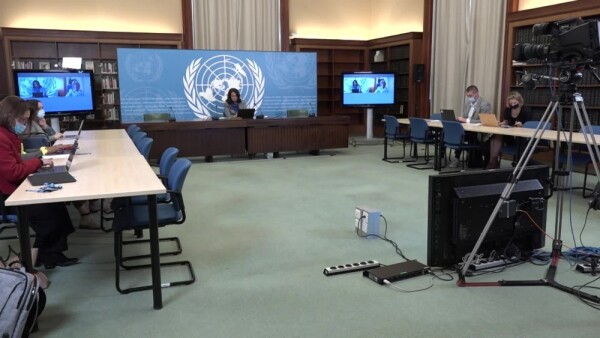
- Wide shot, UN Geneva Press room.
- SOUNDBITE (ENGLISH): Matthew Saltmarsh, spokesperson, United Nations High Commissioner for Refugees (UNHCR): “Now we’ve passed 3.5 million mark, in terms of refugees, the overall number is 3.557 million refugees, and this is really another tragic milestone for the people of Ukraine and it’s been achieved in just under one month.”
- Close-up, participant wearing headphones and filmed from behind, looking at laptop.
- SOUNDBITE (ENGLISH): Dr Paloma Cuchi, WHO representative in Poland: “Poland has welcomed around two million people, this is about 61 per cent of the refugees are in Poland. And a quick discussion is with the refugees …about two-thirds of these refugees want to stay in Poland, because it’s close to home and they are thinking of going back if the situation permits.”
- Medium shot, journalists typing on laptops, profile, faces masked.
- SOUNDBITE (ENGLISH): Dr Paloma Cuchi, WHO representative in Poland: “As you can imagine access to health care in Ukraine is very restricted. And on top of that, refugees are coming from a long, difficult and dangerous journey, you know, until they arrive at the border of Poland. Children are travelling for days without proper food, without the proper water. They are tired, they are worried.”
- Medium shot, participants checking phone and laptop, faces masked.
- SOUNDBITE (ENGLISH): Dr Paloma Cuchi, WHO representative in Poland: “There is a tremendous number of senior refugees that come, without, that have been without their medications for days, they come with decompensated diabetes, with blood pressure with other health problems, and of course, we have women, pregnant women who are without prenatal care.”
- Close-up, showing hand holding pen, writing notes on notepad.
- SOUNDBITE (ENGLISH): Matthew Saltmarsh, spokesperson, United Nations High Commissioner for Refugees (UNHCR): “Of course we’re aware of these reports, but we’re not in a position unfortunately to confirm anything. What we would say is that any transfer, movement of people, would have to be done voluntarily and in dignity. As I said in the last briefing, UNHCR has not been involved in the negotiations of safe passage for civilians.”
- Close-up, showing podium moderator blurred in foreground and on TV screen to rear, along with external speakers.
- SOUNDBITE (ENGLISH): Pierre Honnorat (Zoom), WFP Country Director in Haiti: “We estimate that over 40 per cent of the population is food insecure among which 1.5 million require an emergency response.”
- Medium shot, participants seated in front of laptops, masked faces.
- SOUNDBITE (ENGLISH): Pierre Honnorat (Zoom), WFP Country Director in Haiti: “But the wheat is mainly coming from Russia and then coming from Canada as well, so far. Just to say on the wheat, while we expect an impact, as I was saying, they are consuming bread at the moment, this is the first meal of the day…so if the wheat flour is going up, you will see a problem and as I said, the price has already multiplied by five in two years. So, we can only expect that it will multiply again.”
- Medium shot, participants writing on laptops, filmed from behind, TV camera on tripod to rear.
- SOUNDBITE (ENGLISH): Pierre Honnorat (Zoom), WFP Country Director in Haiti: “On the sexual exploitation, what I wanted to refer, it’s everything about those coping mechanisms that the population has to go for. And it’s different, they have to change their diet, they have to reduce their meals; but it also brings them to violence, it also leads some of them to prostitution, this is what I wanted to refer (to).”
- Wide shot: Press room, participants masked.
- Close-up: participant with glasses and face mask.
- Medium shot: participant wearing ear buds and face mask.
Similar Stories
1
1
1
Edited News | OCHA , UNICEF , WFP
Aid agencies warned on Friday of the fast-developing humanitarian emergency inside Taiz City in Yemen, which has been encircled by de facto Houthi forces fighting government troops along the country’s west coast.

2
17
1
2
Edited News , Press Conferences , Images | OCHA , WMO
Two UN agencies teamed up on Wednesday to issue an appeal for immediate assistance to help communities already being impacted by the strongest El Niño on record.
3
16
2
2
Edited News , B-roll , Conferences , Images | UNITED NATIONS , UNOG
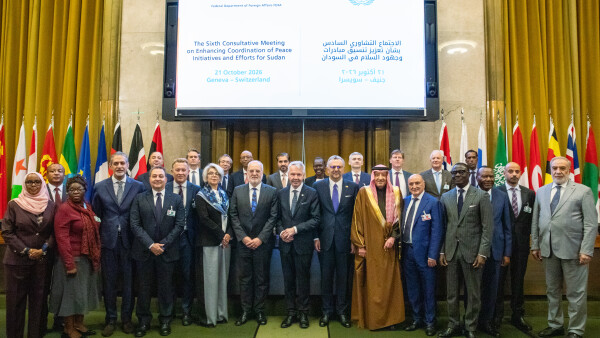
Sixth Consultative Meeting on Enhancing Coordination of Peace Initiatives and Efforts for Sudan

1
1
1
Edited News | UNICEF , WHO , UNHCR
Yemen war continues to force families from homes amid hunger and disease
More than 250,000 people have now fled renewed fighting in Yemen, the UN said on Tuesday, citing particular concern for those sheltering in the southwestern city of Taiz and the wider governorate, where access is “essentially blocked”.

1
1
1
Edited News | UNICEF
A little over one year since a ceasefire agreement was announced between Hamas fighters and Israel, more than 340 children have been reported killed and hundreds more injured, the UN Children’s Fund, UNICEF, said on Friday.

1
1
1
Edited News | UNICEF , IFRC
Six weeks after Nepal’s deadly flooding disaster, communities are still struggling to rebuild their lives, but they will need sustained help as global warming increases the risk of another Himalayan catastrophe, the UN Children’s Fund (UNICEF) said on Friday.

1
1
1
Edited News | WHO
In suspected Russia plague death, testing and monitoring underway – WHO
The death of a lab worker in Russia’s Siberia region has sparked concerns about plague being the cause, the UN World Health Organization (WHO) said on Tuesday, adding that it was following the situation closely.

1
1
Edited News | OHCHR , UNOG
UN Human Rights Chief Volker Türk on Friday provided and oral update to the 63rd session of the Human rights Council on Ukraine.

1
1
1
Edited News | OHCHR , UNOG
UN Human Rights Chief Volker Türk on Friday provided and oral update to the 63rd session of the Human rights Council on the human rights situation in Haiti.

1
1
1
Edited News | WHO
Repeated delays in bringing lifesaving medicines, prosthetics and more from Israel into Gaza risk having devastating consequences on Palestinians who urgently need them in the wartorn enclave, the UN World Health Organization (WHO) said on Friday. “A truck full of non-priority supplies or the right supplies arriving too late, doesn't save lives. That's the question that actually matters," said Dr Reinhilde Van De Weerdt, WHO Representative in the OPT.

1
1
1
Edited News | WHO
DRC: Early access to care and oxygen decisive for Ebola patients’ survival – WHO
In the Democratic Republic of the Congo (DRC), health workers fighting the country’s largest-ever Ebola outbreak are struggling to overcome critical challenges to patient care, the UN World Health Organization (WHO) warned on Tuesday.

1
1
1
Edited News | OCHA , UN
Civilians in Iran are continuing to feel the consequences of months of conflict and military escalation, the UN’s top official in the country has said, as loss of life, damage to civilian infrastructure and mounting economic pressures leave many facing continued uncertainty.