

The United Nations Office at Geneva
Multimedia Newsroom
Edited News | OHCHR , UNHCR , WHO , UNITED NATIONS , WFP
Ukraine Update OHCHR - WHO - WFP - UNHCR 25 Mars 2022
UN alarm over mounting casualties in Ukraine, desperate scenes in Mariupol
Ongoing violence in Ukraine has left millions of people “in constant fear” of indiscriminate shelling, the UN warned on Friday, as efforts continued to push for access to the country’s most vulnerable populations, one month since the Russian invasion.
“Some 13 million people are estimated to be stranded in affected areas or unable to leave due to heightened security risks, destruction of bridges and roads, as well as lack of resources and information on where to find safety and accommodation,” said Karolina Lindholm Billing, UN Refugee Agency (UNHCR) Representative in Ukraine.
Speaking from Lviv, Ms. Billing added that millions of Ukrainians “live in constant fear of indiscriminate shellings and heavy bombardment”, amid the systematic bombardment of cities, towns, hospitals, schools and shelters that has forced them to shelter in bunkers day and night.
With long-established roots in Ukraine, UNHCR’s current focus inside the country is to provide immediate relief to those fleeing the war, by providing protection, shelter and cash and in-kind assistance.
UNHCR teams and local partners have been deployed at border points, in transit and reception centres, too.
The UN has continued to push to reach populations at greatest risk “in eastern Ukraine, in Kharkiv, Donetsk, Luhansk oblast, as well as in the south, Kherson and Kiev”, the UNHCR official explained. “They are blocked in these areas that are encircled or where the roads are now inaccessible, due to mines and, for example, burnt-out vehicles. This has been one of the reasons why it's so difficult to get to Mariupol.”
Echoing that dire assessment, the UN World Food Programme (WFP) explained that the country's food supply chain was “broken”. Speaking to journalists in Geneva, WFP spokesperson Tomson Phiri said that existing systems that feed tens of millions trapped inside Ukraine were “falling apart, (with) trucks and trains destroyed, airports bombed, bridges fallen, supermarkets emptied, and warehouses drained”.
WFP also warned that situation is more desperate than ever in the southern city of Mariupol which has been subject to constant Russian shelling.
“The encircled city of Mariupol is running out of its last reserves of food and water,” said Mr. Phiri. “No humanitarian aid has been allowed into the city since it was encircled on 24 February. The only way to reach Mariupol is through humanitarian convoys which until now have not made it through.”
All the while the civilian death toll continues to rise, said the head of the UN Human Rights Monitoring Mission in Ukraine, Matilda Bogner.
“The overwhelming damage and destruction is being done by weapons - explosive weapons - with wide impact areas,” she said, speaking from Uzhhorod in the west. “The attacks that are happening on a daily basis and this is what the civilian population is suffering from because they are being used in populated areas.”
Ms. Bogner said that the death toll and human suffering in cities, towns and villages across Ukraine was increasing “day after day” and that the indiscriminate nature of the attacks - in which the use of cluster munitions has been confirmed by the Russian Federation and potentially by Ukrainian forces also – were potential violations of international humanitarian law.
Since Russian armed forces launched their attacks on 24 February, at least 1,035 civilians have been killed and at least 1,650 injured, The UN rights office official said, adding the caveat that the figure “is likely much higher in locations that have seen intense fighting, in particular Mariupol and Volnovakha…If we look at Mariupol, clearly the number of deaths of civilian casualties there is significantly higher. We are trying to look into the scale, we have, for example, got increasing information on mass graves that are there.”
Since February the UN and partners have delivered over 2,700 tonnes of food and medical supplies and over 1,100 tonnes of water, sanitation and hygiene items.
People on the move have also received essential advice via hotlines, and another 5,500 tonnes of supplies are already being distributed or are on the way.
Pushing further east to conflict-affected regions, or oblasts, is a particular priority, said Rob Holden, World Health Organization (WHO) Incident Manager for Ukraine, speaking from Dnipro.
“WHO, along with certain colleagues from OCHA, arrived in Dnipro about 48 hours ago to further strengthen and build an operational capability in sort of the central east of the country. The purposes of us doing that is very much to get closer to the people who are in greatest need of lifesaving humanitarian assistance.”
The UN has launched two coordinated UN emergency appeals calling for $1.7 billion to help people across Ukraine and beyond. Within Ukraine, $1.1 billion is needed to meet escalating humanitarian needs of more than six million people affected and displaced by military operations over the next three months. The appeal is currently around 40 per cent funded.
Outside the country, more than $550 million is required to help Ukrainians who have fled across borders, principally to Poland, Hungary, Romania and Moldova.
ends
STORY: Ukraine Update – OHCHR, UNHCR, WHO, WFP
TRT: 2 mins 45 s
SOURCE: UNTV CH
RESTRICTIONS: NONE
LANGUAGE: ENGLISH
ASPECT RATIO: 16:9
DATELINE: 25 March 2022 GENEVA, SWITZERLAND
SHOTLIST
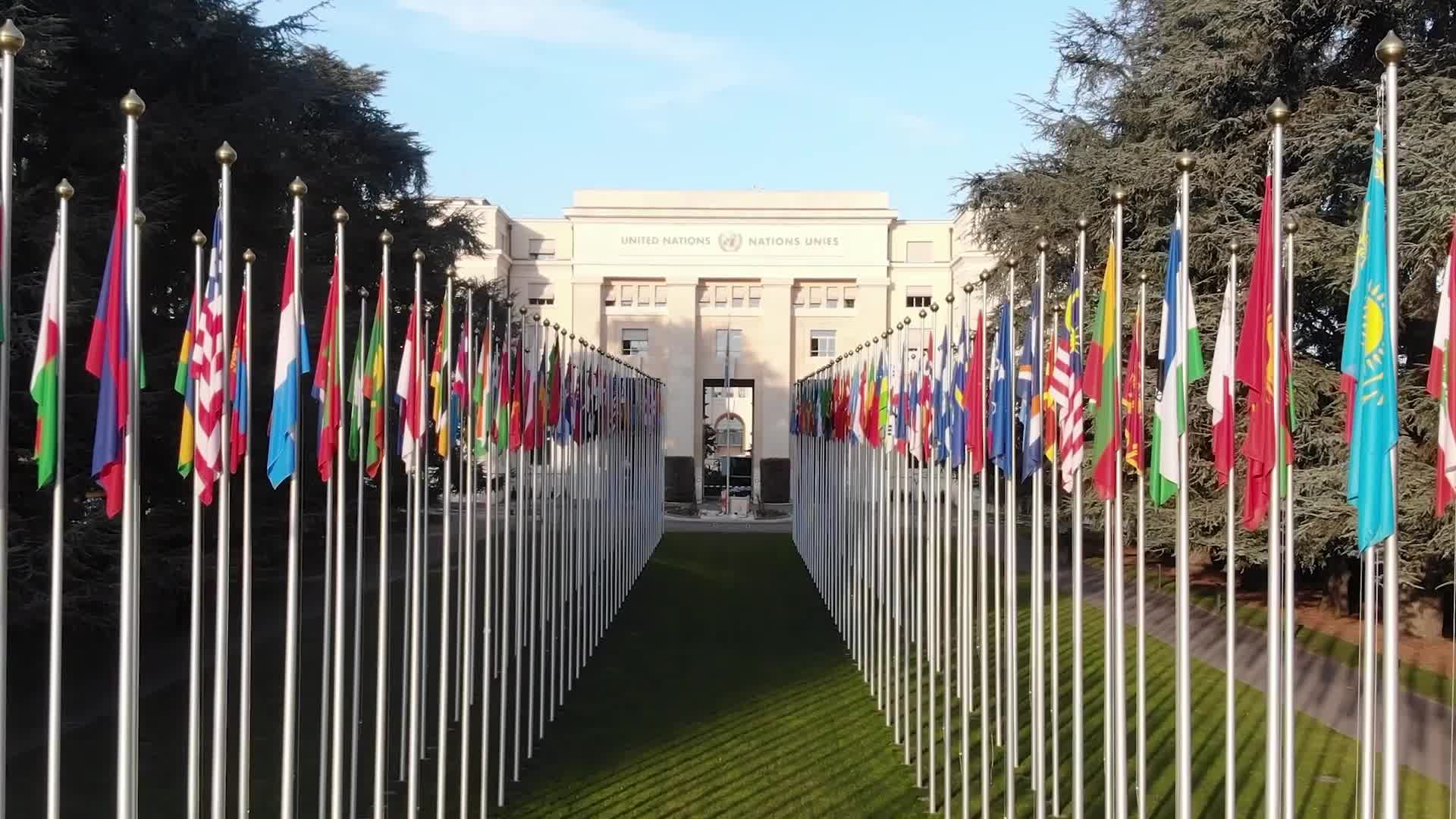
- Exterior wide shot, flag alley, UN Geneva.
- Wide shot, UN Geneva Press room.
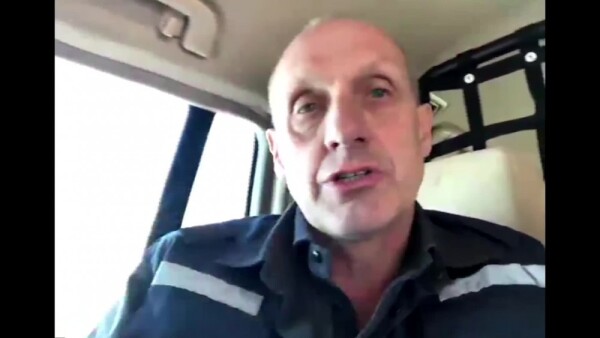
- SOUNDBITE (ENGLISH): Karolina Lindholm Billing (Zoom from Lviv), UNHCR Representative in Ukraine: “As I talk to you now, I mean, some 13 million people are estimated to be stranded in affected areas or unable to leave due to heightened security risks, destruction of bridges and roads, as well as lack of resources and information on where to find safety and accommodation. And today, these millions of people in Ukraine live in constant fear of indiscriminate shellings and heavy bombardment.”
- Medium shot, participants seated in front of laptops with faces masked in the foreground, TV screen displaying speakers to rear.
- SOUNDBITE (ENGLISH): Karolina Lindholm Billing (Zoom from Lviv), UNHCR Representative in Ukraine: “In eastern Ukraine, in Kharkiv, Donetsk, Luhansk oblast, as well as in the south, Kherson and Kiev. And they are blocked in these areas that are encircled or where the roads are now inaccessible, due to mines and, for example, burnt-out vehicles. This has been one of the reasons why it's so difficult to get to Mariupol.”
- Wide shot, podium speakers masked and listening, with TV screens to left and right of shot.
- SOUNDBITE (ENGLISH): Tomson Phiri, spokesperson, United Nations World Food Programme (WFP): “The country's food supply chain is broken. The existing systems that feed the tens of millions trapped inside Ukraine are falling apart. Trucks and trains destroyed, airports bombed, bridges fallen, supermarkets emptied, and warehouses drained.”
- Medium shot, participants listening, filmed from behind, TV screen and other participants to rear.
- SOUNDBITE (ENGLISH): Matilda Bogner, head of the UN Human Rights Monitoring Mission in Ukraine): “The overwhelming damage and destruction is being done by weapons - explosive weapons - with wide impact areas. The attacks that are happening on a daily basis and this is what the civilian population is suffering from because they are being used in populated areas.”
- Medium wide shot, showing podium speaker from behind, with TV screen showing speakers to rear, along with participants and TV camera operator.
- SOUNDBITE (ENGLISH): Matilda Bogner, head of the UN Human Rights Monitoring Mission in Ukraine): “If we look at Mariupol, clearly the number of deaths of civilian casualties there is significantly higher. We are trying to look into the scale, we have, for example, got increasing information on mass graves that are there.”
- Medium shot, participants taking notes on notepad or listening in foreground, light panel to rear.
- SOUNDBITE (ENGLISH): Rob Holden (Zoom from Dnipro), WHO Incident Manager for Ukraine: “WHO, along with certain colleagues from OCHA, arrived in Dnipro about 48 hours ago to further strengthen and build an operational capability in sort of the central east of the country. The purposes of us doing that is very much to get closer to the people who are in greatest need of lifesaving humanitarian assistance.”
- Medium shot, participant wearing face mask, checking phone.
- Medium wide shot, TV camera operator filming in foreground, masked participants to rear.
- Close-up, showing UN Geneva panel with podium speakers to rear, side shot.
Similar Stories
1
1
1
Edited News | WHO
‘A disease you get when you care for someone’: on the frontlines of the Ebola crisis with WHO
Two weeks into the latest Ebola outbreak, the World Health Organization (WHO) is estimating that there are 906 suspected cases of Ebola in the Democratic Republic of Congo (DRC), including 223 suspected deaths.
1
1
1
Edited News | OHCHR , UNOG
UN Human Rights Chief Volker Türk on 29 May called for more robust measures by both states and tech companies to make online platforms safer for children, insisting on effective regulation, oversight and accountability. The digital world that connects children to learning, community and creativity also expose them to real risks, to their safety, to their privacy, and to their well-being. Online harms to kids’ safety, privacy, and well-being are not innate or inevitable.
See High Commissioner video: https://media.un.org/unifeed/en/asset/d357/d3579089
1
1
1
Edited News | UNRWA , WHO
Gaza: Life-saving medicines blocked as killing continues, disease gains ground
In Gaza, a dire humanitarian situation marked by continuing violence, rodent infestations and the spread of diseases is being made worse by blockages of essential medical supplies, UN agencies warned on Friday.
1
1
1
Edited News | OHCHR , UNOG
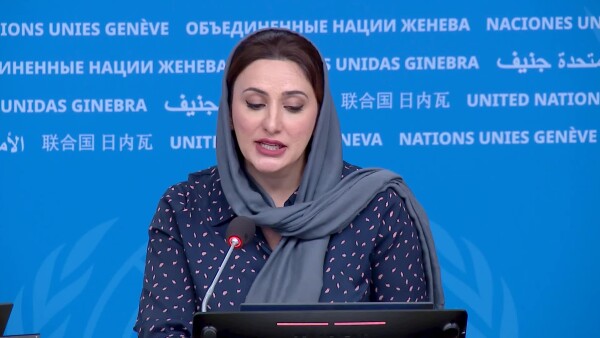
UN Human Rights spokesperson Shabia Mantoo, warned against the continuing trend of involuntary returns of Afghan refugees and asylum-seekers from host countries to Afghanistan, in violation of international human rights and refugee law, at the bi-weekly press briefing in Geneva.

1
1
1
Edited News | IFRC , OHCHR
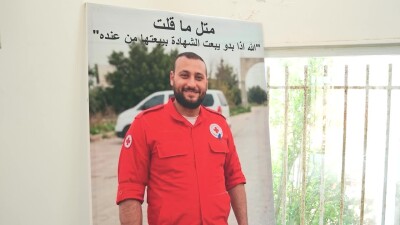
Lebanon's first responders face high risks amid conflict, with 116 killed since March.
1
1
1
Edited News | WHO
DRC Ebola outbreak: hundreds of suspected cases, no vaccine
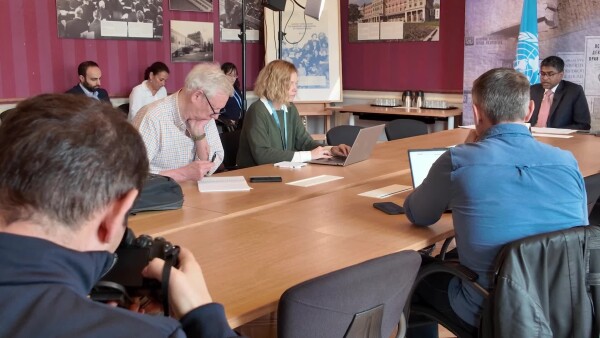
A fast-spreading Ebola outbreak in the Democratic Republic of the Congo (DRC) has health workers rushing to stop transmission while the roll out of any potential vaccine is months away, the UN World Health Organization (WHO) said on Tuesday.
1
1
1
Edited News | OHCHR
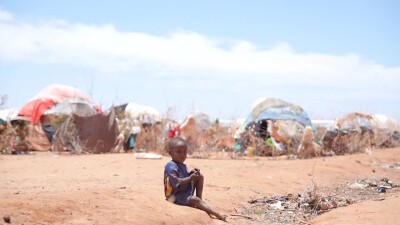
A UN Human Rights Office report released today covers 19 months of large-scale violations of international law including atrocity crimes, from October 2023 to the end of May 2025.
1
1
1
Edited News | OCHA , UNICEF
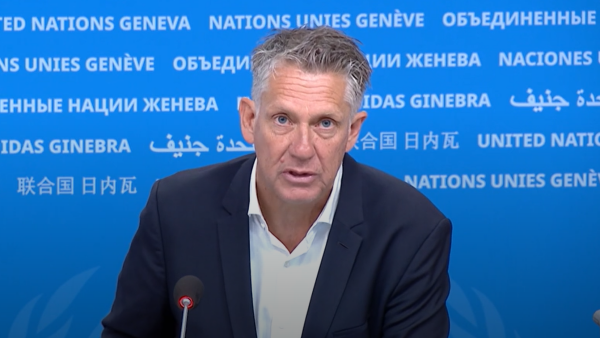
At least six million people in Somalia are going days without enough food, UN aid teams warned on Friday, highlighting that nearly two million of this number are young children “at high risk of illness or death”.
1
1
1
Edited News | UNICEF , WHO
Children shot, stabbed and pepper-sprayed in occupied West Bank; scores of Gaza amputees denied prosthetics, aid teams warn
Israeli military operations and surging settler attacks in the occupied West Bank are killing and maiming Palestinian children, while in Gaza tens of thousands with life-changing injuries lack access to treatment and rehabilitation, UN agencies warned on Tuesday.

1
1
1
Edited News | WHO
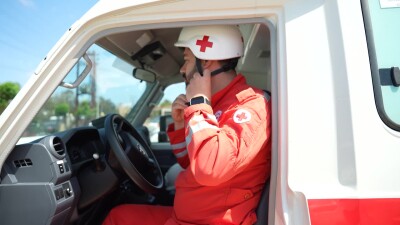
The risk of hantavirus spreading to the general population is “absolutely low”, the UN World Health Organization (WHO) stressed on Friday.
1
1
1
Edited News | UNHCR , IFRC
Death and destruction have continued unabated in Lebanon while communities are still unable to return to their homes despite a ceasefire that began on 17 April, humanitarians said on Tuesday.