

The United Nations Office at Geneva
Multimedia Newsroom
STORYLINE
United Nations humanitarian agency OCHA warned on Friday that the funding shortfall for aid operations is the biggest it’s ever been, at nearly $34 billion.
The news comes at a time when global needs are at an all-time high, with a record 303 million people in crisis worldwide. “UN appeals aim to reach 204 million of the most vulnerable. Never before have humanitarians been called to respond to this level of need and they are doing so in ever more dangerous environments,” said OCHA spokesperson Jens Laerke.
UN-coordinated relief projects have been costed at almost $50 billion dollars this year.
Although funding pledges have reached their highest ever level - at more than $15 billion - needs are outpacing the money coming:
“This is the largest gap we've ever had. However, it is also the largest amount of donor funding that has ever been committed. So the problem is the following: that the needs in the world are rising much, much faster than the donor funding is coming in,” Mr. Laerke added.
According to data from the NGO Humanitarian Outcomes, with whom the UN partners every year to highlight these numbers, more than 140 aid workers were killed in the line of duty last year, the highest number of fatalities since 2013.”
All but two of the aid workers who died were national staff, highlighting the perils that national aid workers often face, said Mr. Laerke, who noted that another 203 aid workers were injured and 117 were kidnapped last year.
The OCHA spokesperson explained that “the most violent countries for aid workers continue to be South Sudan, followed by Afghanistan and Syria.” According to Humanitarian Outcomes, 168 aid workers have been attacked so far this year, leading to 44 fatalities. “Most of the over 140 fatalities in 2021 were killed by small weapons and shooting incidents, with the second highest cause of death being airstrikes and shelling, most of them in Syria,” said Mr. Laerke.
To commemorate their sacrifice, World Humanitarian Day is held annually on 19 August. This year’s theme for the Day is “It Takes A Village”, to focus on how aid workers of all nationalities work together to alleviate extreme suffering.
The UN General Assembly designated the annual event in 2008 to commemorate the anniversary of the 2003 bombing of the UN headquarters in Baghdad, Iraq, which killed 22 aid workers. WHD has evolved to highlight different aspects of humanitarian action, mobilizing people from around the world to advocate for the broader humanitarian cause.
STORY: Humanitarian Funding Gap, OCHA
TRT: 02:22”
SOURCE: UNTV CH
RESTRICTIONS: NONE
LANGUAGE: ENGLISH/NATA
ASPECT RATIO: 16:9
DATELINE: 12 AUGUST 2022 GENEVA, SWITZERLAND
SHOTLIST
1. Exterior wide shot, United Nations flag flying.
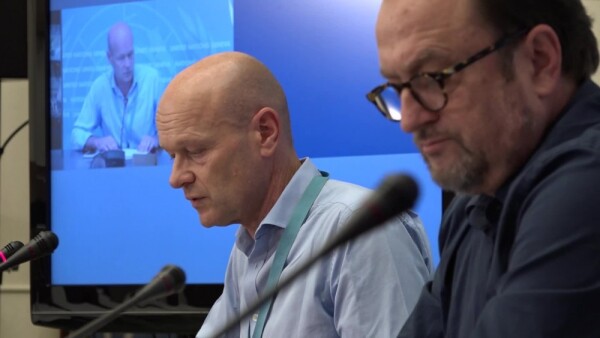
2. Wide shot, press briefing.
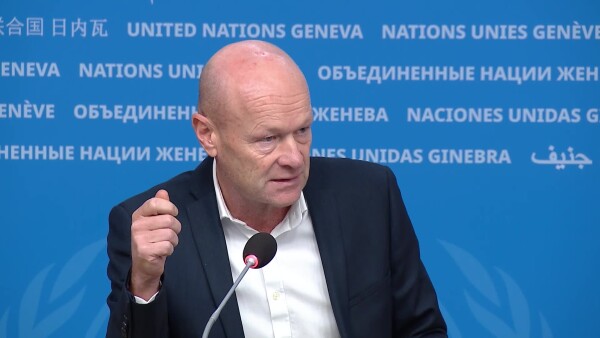
3. Soundbite: (English) Jens Laerke, OCHA Spokesperson:
“Global needs are at an all time high with a record 303 million people in crisis worldwide. UN appeals aim to reach 204 million of the most vulnerable. Never before have humanitarians been called to respond to this level of need and they are doing so in ever more dangerous environments.”
4. Camera filming OCHA spokesperson.
5. Soundbite: (English) Jens Laerke, OCHA Spokesperson:
“More than 148 workers were killed in the line of duty last year, the highest number of fatalities since 2013. All but two of them were national staff, highlighting the perils that national aid workers often face. Last year 203 aid workers were also injured and 117 were kidnapped.”
6. Wide view of cameraman and journalists.
7. Soundbite: (English) Jens Laerke, OCHA Spokesperson:
“The most violent countries for aid workers continue to be South Sudan, followed by Afghanistan and Syria. Most of the over 140 fatalities in 2021 were killed by small weapons and shooting incidents, with the second highest cause of death being airstrikes and shelling, most of them in Syria.”
8. Close shot of panel at the press briefing.
9. Soundbite: (English) Jens Laerke, OCHA Spokesperson:
“We need $48.7 billion to join coordinated humanitarian response globally. Almost 50 billion USD. The shortfall is currently more than 33 billion. So that means that we have received 15 billion. 33 billion shortfall and 15 billion has been received.”
10. Mid shot of attendees of press briefing.
11. Soundbite: (English) Jens Laerke, OCHA Spokesperson:
“So this is the largest gap we've ever had. However, it is also the largest amount of donor funding that has ever been committed. So the problem is the following: that the needs in the world are rising much, much faster than the donor funding is coming in.”
12. Close shot of panel at the press briefing.
13. Close shot of attendees of press briefing.
14. Close of journalist.
Similar Stories
1
1
1
Edited News | OCHA , UNICEF , WFP
Aid agencies warned on Friday of the fast-developing humanitarian emergency inside Taiz City in Yemen, which has been encircled by de facto Houthi forces fighting government troops along the country’s west coast.

2
17
1
2
Edited News , Press Conferences , Images | OCHA , WMO
Two UN agencies teamed up on Wednesday to issue an appeal for immediate assistance to help communities already being impacted by the strongest El Niño on record.

3
16
2
2
Edited News , B-roll , Conferences , Images | UNITED NATIONS , UNOG
Sixth Consultative Meeting on Enhancing Coordination of Peace Initiatives and Efforts for Sudan

1
1
1
Edited News | UNICEF , WHO , UNHCR
Yemen war continues to force families from homes amid hunger and disease
More than 250,000 people have now fled renewed fighting in Yemen, the UN said on Tuesday, citing particular concern for those sheltering in the southwestern city of Taiz and the wider governorate, where access is “essentially blocked”.

1
1
1
Edited News | UNICEF
A little over one year since a ceasefire agreement was announced between Hamas fighters and Israel, more than 340 children have been reported killed and hundreds more injured, the UN Children’s Fund, UNICEF, said on Friday.

1
1
1
Edited News | UNICEF , IFRC
Six weeks after Nepal’s deadly flooding disaster, communities are still struggling to rebuild their lives, but they will need sustained help as global warming increases the risk of another Himalayan catastrophe, the UN Children’s Fund (UNICEF) said on Friday.

1
1
1
Edited News | WHO
In suspected Russia plague death, testing and monitoring underway – WHO
The death of a lab worker in Russia’s Siberia region has sparked concerns about plague being the cause, the UN World Health Organization (WHO) said on Tuesday, adding that it was following the situation closely.

1
1
Edited News | OHCHR , UNOG
UN Human Rights Chief Volker Türk on Friday provided and oral update to the 63rd session of the Human rights Council on Ukraine.

1
1
1
Edited News | OHCHR , UNOG
UN Human Rights Chief Volker Türk on Friday provided and oral update to the 63rd session of the Human rights Council on the human rights situation in Haiti.

1
1
1
Edited News | WHO
Repeated delays in bringing lifesaving medicines, prosthetics and more from Israel into Gaza risk having devastating consequences on Palestinians who urgently need them in the wartorn enclave, the UN World Health Organization (WHO) said on Friday. “A truck full of non-priority supplies or the right supplies arriving too late, doesn't save lives. That's the question that actually matters," said Dr Reinhilde Van De Weerdt, WHO Representative in the OPT.

1
1
1
Edited News | WHO
DRC: Early access to care and oxygen decisive for Ebola patients’ survival – WHO
In the Democratic Republic of the Congo (DRC), health workers fighting the country’s largest-ever Ebola outbreak are struggling to overcome critical challenges to patient care, the UN World Health Organization (WHO) warned on Tuesday.

1
1
1
Edited News | OCHA , UN
Civilians in Iran are continuing to feel the consequences of months of conflict and military escalation, the UN’s top official in the country has said, as loss of life, damage to civilian infrastructure and mounting economic pressures leave many facing continued uncertainty.