

The United Nations Office at Geneva
Multimedia Newsroom
Edited News , Press Conferences | WMO
Report launch « United in Science » - WMO 13 September 2022
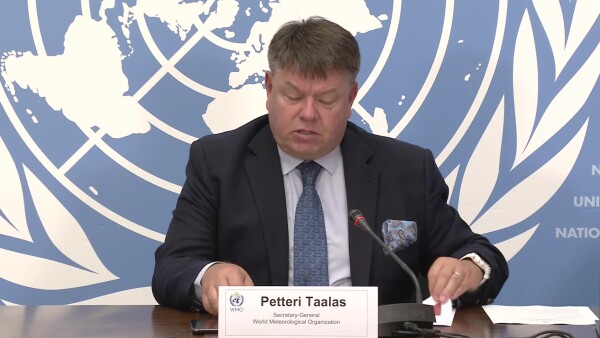
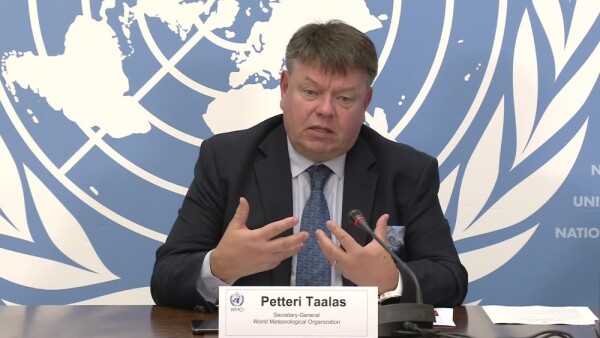
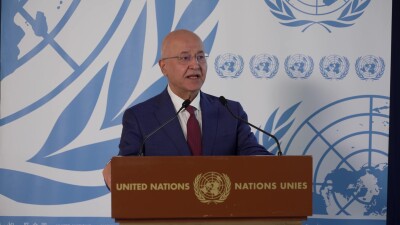
Urgent action is needed to mitigate emission and adapt to the changing climate, this is the key message of the latest report “United in Science” presented today by Prof Petteri Taalas, Secretary General of the World Meteorological Organization (WMO), at the United Nations in Geneva.
“We have again broken records in main greenhouse gas concentrations", said Mr. Taalas when speaking to the media."Carbon dioxide, methane and nitrous oxide and the carbon dioxide emissions have already exceeded the emission level of 2019 before the pandemic”,
The report says that greenhouse gas concentrations continue to rise to record highs. The ambition of emissions reduction pledges for 2030 needs to be seven times higher to be in line with the 1.5 °C goal for the Paris Agreement.
The new multi-agency report coordinated by WMO provides an overview of the most recent science related to climate change, its impacts and responses. It includes input from WMO, the UN Environment Programme, the UN Office for Disaster Risk Reduction and many others.
“Temperatures, the estimation is that again the past five years are going to be the warmest period on record”, said Mr. Taalas. “We still have three months to go this year, but it’s practically sure that this period is going to be the warmest again.”
The report predicts that there is a 93% probability that at least one year in the next five will be warmer than the warmest year on record (2016).
Cities – home to 4,2 billion people - will face increasing socio-economic impacts with the most vulnerable populations suffering the most.
“One of the new features of this report is that we are also focusing on cities”, said WMO’s Chief. “70 percent of the emissions are coming from cities where are growing amount of global population are living, and also the impacts of climate change are very much felt in cities”.
He added that “the heat waves are more dramatic, especially the night temperatures are higher than in the more urban areas, and also flooding challenges and drought challenges and storm challenges there felt more strongly in cities.”
According to Mr. Taalas, climate science is increasingly able to show that many of the extreme weather events that the world is experiencing have become more likely and more intense due to human-induced climate change.
“We have seen a fivefold increase in the amount of disasters during the past five years. That means flooding, drought, tropical storms and especially heat waves,” he said.
Hence, it is more important than ever to scale up action on early warning systems to build resilience to current and future climate risks in vulnerable communities, Mr. Taalas stressed.
“Only half of the 193 members of WMO have proper early warning services in place. This gap means that once disaster hits a country, there’s more casualties and also more economic losses and we could save lots of money and also human lives by implementing proper early warning services.”
-ends-
- Wide shot, UN Geneva flag alley.
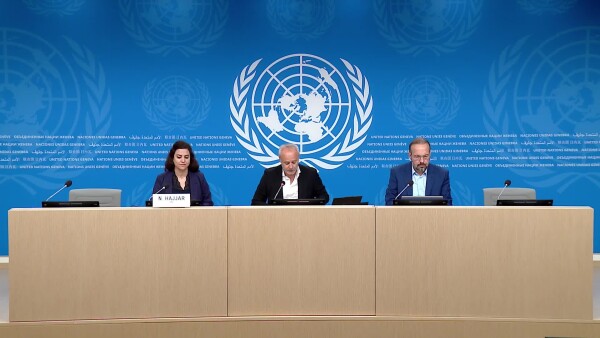
- Wide shot, press room with panel of speakers.
- SOUNDBITE (ENGLISH): Prof Petteri Taalas, Secretary-General of the World Meteorological Organisation (WMO): “We have again broken records in main greenhouse gas concentrations. Carbon dioxide, methane and nitrous oxide and the carbon dioxide emissions have already exceeded the emission level of 2019 before the pandemic.”
- Medium shot, press room, panel in background.
- SOUNDBITE (ENGLISH): Prof Petteri Taalas, Secretary-General of the World Meteorological Organisation (WMO): “Temperatures, the estimation is that again the past five years are going to be the warmest period on record. We still have three months to go this year, but it’s practically sure that this period is going to be the warmest again.”
- Medium shot, journalist taking notes, screen showing graph.
- SOUNDBITE (ENGLISH): Prof Petteri Taalas, Secretary-General of the World Meteorological Organisation (WMO): “One of the new features of this report is that we are also focusing on cities. Seventy percent of the emissions are coming from cities where are growing amount of global population are living, and also the impacts of climate change are very much felt in cities. The heat waves are more dramatic, especially the night temperatures are higher than in the more urban areas, and also flooding challenges and drought challenges and storm challenges there felt more strongly in cities.”
- Close up shot, speakers, screen in background.
- SOUNDBITE (ENGLISH): Prof Petteri Taalas, Secretary-General of the World Meteorological Organisation (WMO): “We have seen a fivefold increase in the amount of disasters during the past five years. That means flooding, drought, tropical storms and especially heat waves.”
- Medium shot, staff monitoring.
- SOUNDBITE (ENGLISH): Prof Petteri Taalas, Secretary-General of the World Meteorological Organisation (WMO): “Only half of the 193 members of WMO have proper early warning services in place. This gap means that once disaster hits a country, there’s more casualties and also more economic losses and we could save lots of money and also human lives by implementing proper early warning services.”
- Medium shot, panel of speakers.
- Close up shot, journalist taking notes.
- Medium shot, staff monitoring.
Similar Stories
1
1
1
Edited News | OCHA , UNICEF , WFP
Aid agencies warned on Friday of the fast-developing humanitarian emergency inside Taiz City in Yemen, which has been encircled by de facto Houthi forces fighting government troops along the country’s west coast.
1
1
1
Press Conferences | UN WOMEN , WFP , WHO
UN WOMEN: Sudan Women and girls one year after the fall of El Fasher; increasing drone attacks across the country; WFP: DRC - Ebola spreads to eighth DRC province as WFP delivers food, builds treatment centres and keeps supplies moving; WHO - Update on Ebola (Bundibugyo Virus Disease)
1
12
1
1
Press Conferences , Images | UNOG
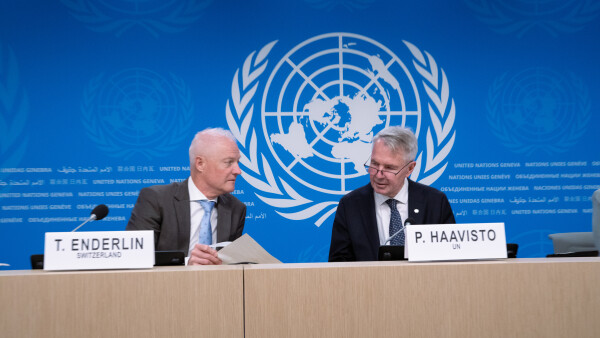
Closing Press Conference following the Sixth Consultative Meeting on Enhancing Coordination of Peace Initiatives and Efforts in Sudan

2
17
1
2
Edited News , Press Conferences , Images | OCHA , WMO
Two UN agencies teamed up on Wednesday to issue an appeal for immediate assistance to help communities already being impacted by the strongest El Niño on record.
3
16
2
2
Edited News , B-roll , Conferences , Images | UNITED NATIONS , UNOG
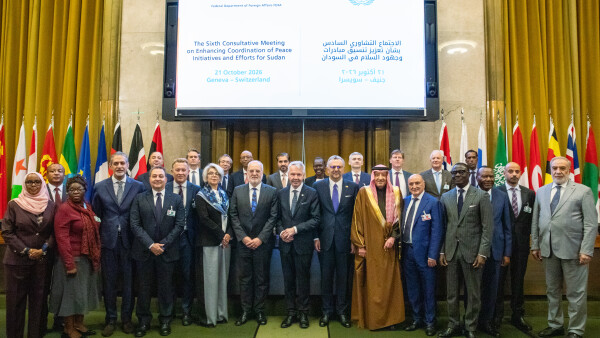
Sixth Consultative Meeting on Enhancing Coordination of Peace Initiatives and Efforts for Sudan
1
1
1
Press Conferences | CITES
Wildlife trade and conservation policy discussions at the 81st meeting of the CITES Standing Committee (SC81)

1
1
1
Edited News | UNICEF , WHO , UNHCR
Yemen war continues to force families from homes amid hunger and disease
More than 250,000 people have now fled renewed fighting in Yemen, the UN said on Tuesday, citing particular concern for those sheltering in the southwestern city of Taiz and the wider governorate, where access is “essentially blocked”.
1
1
1
Press Conferences | UNHCR , UNCTAD , WMO , OCHA , UNICEF , WHO
UNHCR Hungary’s 1956 Refugee Crisis: 70 Years On, UNCTAD World Investment Forum 2026, Doha, WMO Greenhouse Gas Bulletin and Climate Update for COP31, OCHA Afghanistan: Malnutrition, Girls’ Education and Recovery, UNICEF Yemen: Child Malnutrition and Unsafe Water in Taiz, WHO Inequalities in Noncommunicable Diseases and Risk Factors
1
1
1
Press Conferences | UNHCR
End of UNHCR's 77th Annual Executive Committee (ExCom) meeting week

1
1
1
Edited News | UNICEF
A little over one year since a ceasefire agreement was announced between Hamas fighters and Israel, more than 340 children have been reported killed and hundreds more injured, the UN Children’s Fund, UNICEF, said on Friday.
1
1
1
Press Conferences | UNICEF , IOM , UNHCR
UN Special Assistant to the Personal Envoy Office (SUDAN): Peace Initiatives and Efforts in Sudan; UNICEF: Dire situation of children in Gaza; IOM: Damaged Homes and Energy Attacks Risk Displacing Ukrainians for this winter; UNHCR: update on EXCOM week

1
1
1
Press Conferences | IOM , UNDRR
UN stresses importance of household preparedness for disaster risk reduction.