

The United Nations Office at Geneva
Multimedia Newsroom
Edited News , Press Conferences | UNDP , UNITED NATIONS , UNOG
International Conference on Climate Resilient Pakistan - Stake-out
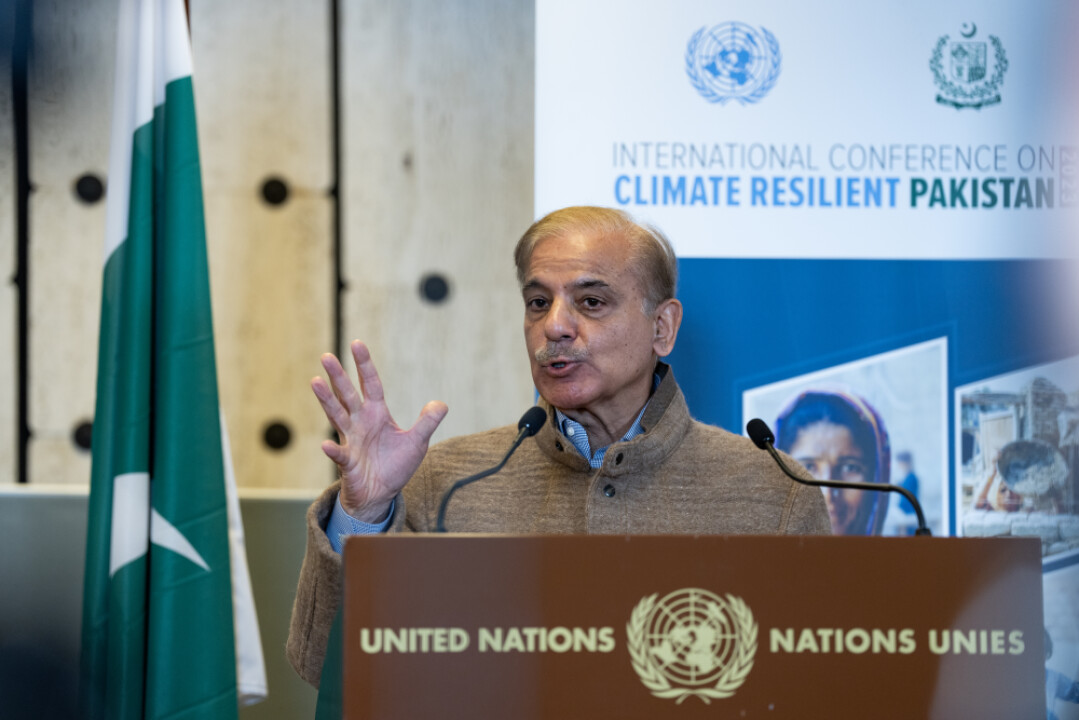
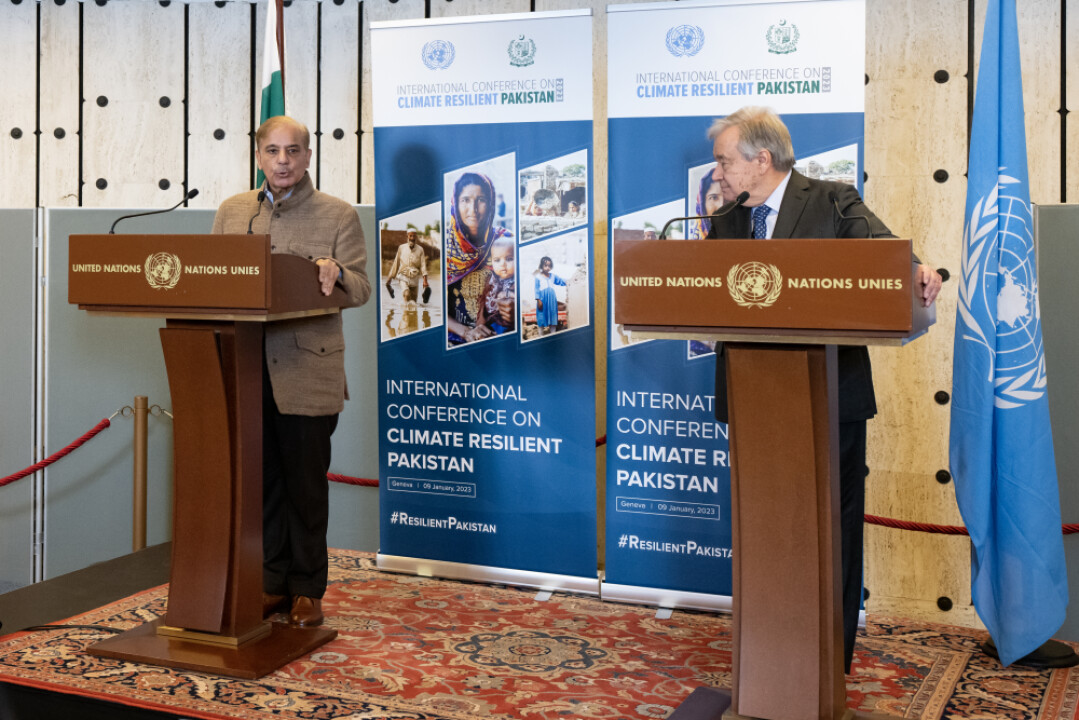
At the International Conference on Climate-Resilient Pakistan, co-hosted by the Government of Pakistan and the United Nations, which took place today at the UN Office in Geneva, U.N. Secretary-General Antonio Guterres called for support to help Pakistan with a $16 billion rebuilding effort following devastating floods.
“This conference is focused on resilience, and I have seen resilience time and time again from the women and men of Pakistan. From enduring the scourge of natural disaster and terrorism to Pakistan’s long and proud history of welcoming, protecting and supporting millions of Afghan refugees currently living in Pakistan”, the UN Secretary-General said on the sidelines of the conference.
Catastrophic floods in September 2022 left 33 million Pakistanis affected and displaced 8 million, killing over 1,700 and injuring thousands, and destroying more than 2 million homes. The ferocity of the flowing water damaged over 8,000 km of roads, 3,000 km of railway track. This calamity has led to the complete collapse of health and education services in the most affected areas. Education has been disrupted for 2.6 million students.
According to Pakistan’s Prime Minister, Shehbaz Sharif, the country requires $8 billion from its global allies in the next three years to recover from the devastating floods.
“I have not seen in my entire lifetime this kind of devastation which has not only crippled our economy but has posed a challenge which Pakistan alone cannot negotiate with – 30 billion dollars as the loss to our economy”, he said.
Pakistan is the fifth most populous country in the world and responsible for less than one percent of greenhouse gas emissions. Yet it is one of the most vulnerable to the increasing number of extreme weather events. While Pakistan hasn’t recovered from losses during the flood, the country’s economy remains in turmoil.
“In addition to natural disasters, Pakistan is also a victim of the manmade disaster of a morally bankrupt global financial system. A system that denies middle-income countries debt relief and concessional financing to invest in resilience and recovery. And that must change”, said António Guterres.
Massive investments are now needed to supporting Pakistan to rebuild homes, buildings and infrastructure, to jump-start jobs and agriculture and to ensure access to technology and knowledge to help withstand future disasters.
Pakistan's Prime Minister Shehbaz Sharif assured that “every penny will be spent in the most transparent fashion. I have put in place third party validation mechanisms so that every penny is accounted for and is invested in the interest of the needy and helpless people who have been badly affected by these ferocious floods”.
According to Antonio Guterres, countries on the frontlines of the climate crisis need massive support. Developed countries must deliver on their commitment to double adaptation finance, without delay.
“Today it’s Pakistan. Tomorrow it could be in your country. And I am deeply frustrated that global leaders are not giving this life-or-death emergency the action and investment it requires. Because words are not enough. Without action, climate catastrophe is coming for all of us”.
-ends-
More information on: https://www.undp.org/international-conference-climate-resilient-pakistan
More Photos available on: https://www.flickr.com/photos/unisgeneva/albums/72177720305114603
- Medium shot, UN Geneva flag alley.
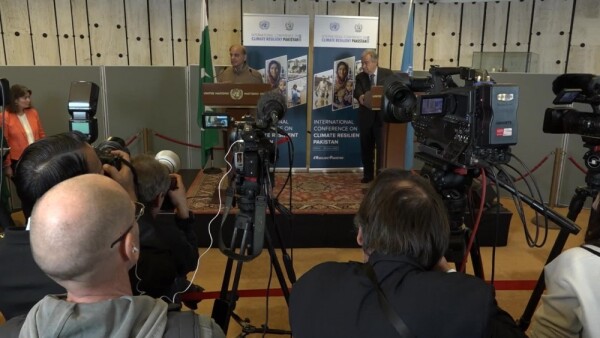
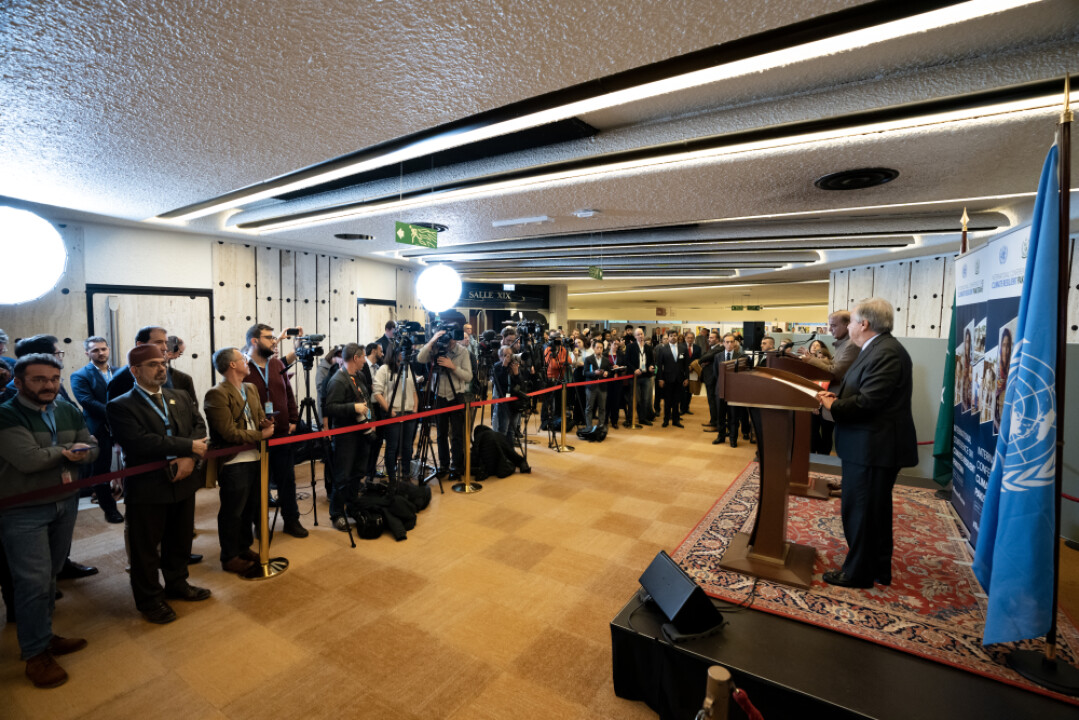
- Wide shot, press stakeout at UN Palais des Nations
- SOUNDBITE (ENGLISH) - António Guterres, UN Secretary-General: “This conference is focused on resilience, and I have seen resilience time and time again from the women and men of Pakistan. From enduring the scourge of natural disaster and terrorism to Pakistan’s long and proud history of welcoming, protecting and supporting millions of Afghan refugees currently living in Pakistan”.
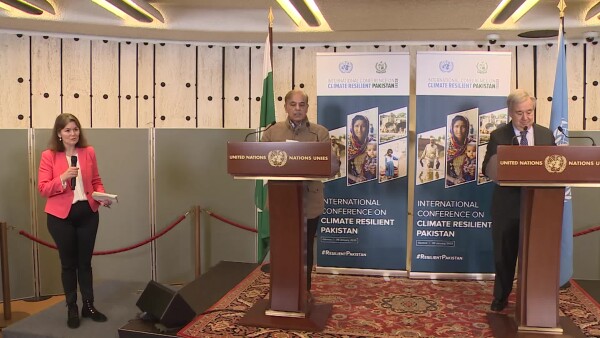
- Medium shot, UN Secretary-General Antonio Guterres and Shehbaz Sharif, Prime Minister of Pakistan at stake out position
- Close-up shot, hands typing on laptop
- SOUNDBITE (ENGLISH) - Shehbaz Sharif, Prime Minister of Pakistan: “I have not seen in my entire lifetime this kind of devastation which has not only crippled our economy but has posed a challenge which Pakistan alone cannot negotiate with – 30 billion dollars as the loss to our economy”.
- Medium shot, camera view finder with Pakistan’s Prime Minister in background
- SOUNDBITE (ENGLISH) - Shehbaz Sharif, Prime Minister of Pakistan: “As I speak, we have already spent about 400 million dollars to provide basic support to 2.7 million households and this includes repurposed amounts as well given by World Bank and other institutions”.
- Close up, journalist taking notes
- SOUNDBITE (ENGLISH) - Shehbaz Sharif, Prime Minister of Pakistan: “It’s a huge challenge and we have to put back people on the tune of 33 million and that is, I think, unprecedented in the contemporary history”.
- Medium shot, UN Secretary-General Antonio Guterres and Shehbaz Sharif, Prime Minister of Pakistan at stake out position
- SOUNDBITE (ENGLISH) - António Guterres, UN Secretary-General: “In addition to natural disasters, Pakistan is also a victim of the manmade disaster of a morally bankrupt global financial system. A system that denies middle-income countries debt relief and concessional financing to invest in resilience and recovery. And that must change”.
- Medium shot, taking photo with cellphone
- SOUNDBITE (ENGLISH) - Shehbaz Sharif, Prime Minister of Pakistan: “Every penny will be spent in the most transparent fashion. I have put in place third party validation mechanisms so that every penny is accounted for and is invested in the interest of the needy and helpless people who have been badly affected by these ferocious floods”.
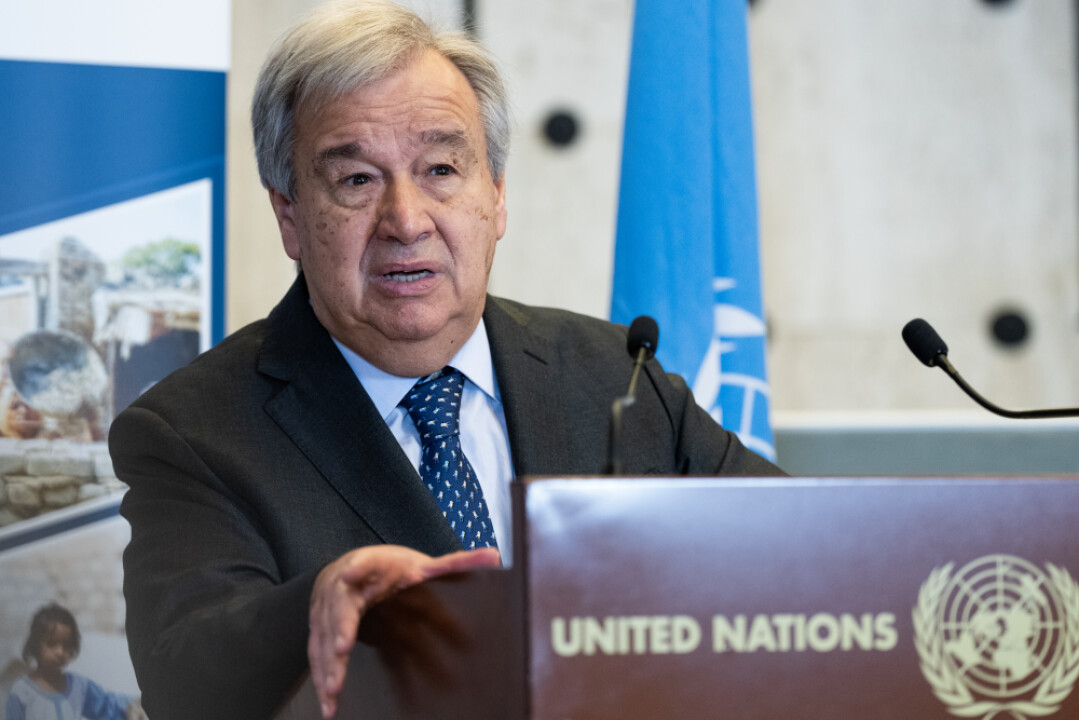
- Close-up, camera view finder featuring UN SG Antonio Guterres
- SOUNDBITE (ENGLISH) - António Guterres, UN Secretary-General: “Today it’s Pakistan. Tomorrow it could be in your country. And I am deeply frustrated that global leaders are not giving this life-or-death emergency the action and investment it requires. Because words are not enough. Without action, climate catastrophe is coming for all of us”.
- Wide shot, camerapersons and journalists at stake-out position
- Wide shot, journalists at stake-out position
- Two shot, UN Secretary-General Antonio Guterres and Shehbaz Sharif, Prime Minister of Pakistan at stake out position
Similar Stories

1
1
1
Press Conferences | UNHCR
End of UNHCR's 77th Annual Executive Committee (ExCom) meeting week

1
1
1
Edited News | UNICEF
A little over one year since a ceasefire agreement was announced between Hamas fighters and Israel, more than 340 children have been reported killed and hundreds more injured, the UN Children’s Fund, UNICEF, said on Friday.

1
1
1
Press Conferences | UNICEF , IOM , UNHCR
UN Special Assistant to the Personal Envoy Office (SUDAN): Peace Initiatives and Efforts in Sudan; UNICEF: Dire situation of children in Gaza; IOM: Damaged Homes and Energy Attacks Risk Displacing Ukrainians for this winter; UNHCR: update on EXCOM week

1
1
1
Press Conferences | IOM , UNDRR
UN stresses importance of household preparedness for disaster risk reduction.

1
1
1
Edited News | UNICEF , IFRC
Six weeks after Nepal’s deadly flooding disaster, communities are still struggling to rebuild their lives, but they will need sustained help as global warming increases the risk of another Himalayan catastrophe, the UN Children’s Fund (UNICEF) said on Friday.

1
1
1
Statements , Press Conferences | OHCHR

1
1
1
Press Conferences | UNHCR , UNICEF , IFRC , OHCHR , UN WOMEN , IOM , OCHA , WHO
UNHCR – ExCom Meeting, UNICEF – Nepal Recovery, IFRC – Flash Floods, WHO – Mental Health, IOM – South Sudan Floods, OCHA – DRC Humanitarian aid, UNHCR – Sahel Displacement, UNICEF – Yemen Update, IOM – Gaza Shelter, UN Women – Gaza Women, OHCHR – Arrests and detentions of Syrians by Israeli force

2
1
2
Press Conferences | UNCTAD
Presentation of the Trade and Developement Report 2026
Embargoed until 9 October 2026 at 11 a.m. (Geneva Time)
UNCTAD: UNCTAD’s flagship report finds that governments increasingly use industrial, trade, financial and technology policies to pursue economic and national security objectives. Market access and the ability to move into higher-value activities now depend more heavily on technology, finance and geopolitics.

1
1
1
Press Conferences | UPU
Release of the State of the Postal Sector Report 2026

1
1
1
Edited News | WHO
In suspected Russia plague death, testing and monitoring underway – WHO
The death of a lab worker in Russia’s Siberia region has sparked concerns about plague being the cause, the UN World Health Organization (WHO) said on Tuesday, adding that it was following the situation closely.
1
1
1
Press Conferences | IOM , ITU , UNECE , UNICEF , WHO , WMO
UNICEF: Ebola, DRC - children orphans or separating them from parents and caregivers; IOM: Humanitarian needs in Djibouti amid arrivals from Yemen and increased migrant movements; WHO: Darfur, scale of health needs far exceeds available resources; WMO co-sponsored Global Heat Forum, Bangkok, monthly Global Seasonal Climate Update; UNECE: UN Forum of Mayors; ITU Plenipotentiary Conference 2026; WHO: child and adolescent obesity guidelines and new global roadmap to tackle pregnancy hypertension, a leading cause of maternal mortality

1
1
Edited News | OHCHR , UNOG
UN Human Rights Chief Volker Türk on Friday provided and oral update to the 63rd session of the Human rights Council on Ukraine.