

The United Nations Office at Geneva
Multimedia Newsroom
UN seeks $4.3 billion to help 17.3 million most vulnerable Yemenis
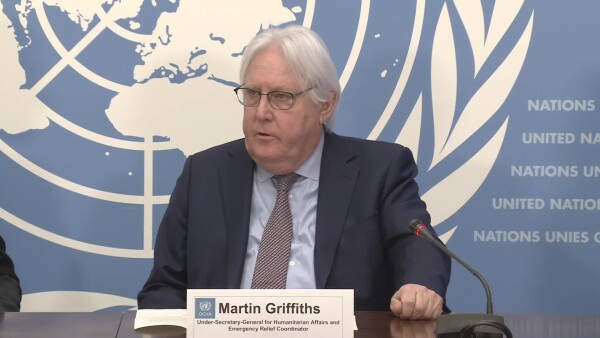
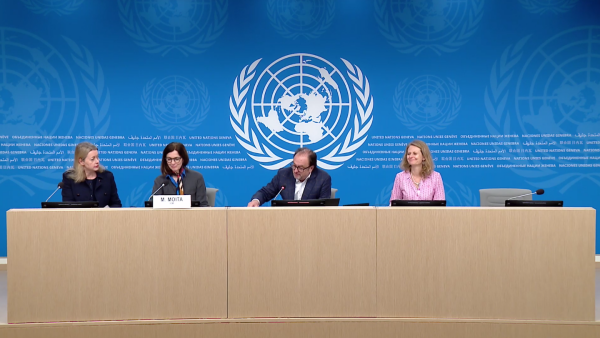
The UN's Emergency Relief Chief Martin Griffiths appealed on Monday for $4.3 billion to assist 17.3 million of Yemen’s most vulnerable people, after years of grinding war and economic hardship.
Speaking in Geneva ahead of the High-Level Pledging Event for the Humanitarian Crisis in Yemen, Mr. Griffiths highlighted how Yemen continues to teeter on the brink of catastrophic food insecurity, with two in three people in need of help.
“By any standards, it's enormously important,” he said. “We're looking at 21 - more than - 21.7 million people this year in Yemen in need of humanitarian assistance. And of those we're targeting in this humanitarian response plan, about 17 million.”
Mr. Griffiths urged support for the appeal, co-hosted by Switzerland and Sweden: “Last year, the 2022 plan, we received, thanks to the generosity of governments like those here and others, over $2.2 billion on a $4.3 billion budget. Again, we're looking for about the same amount this year: $4.3 billion.”
Although UN aid coordination office OCHA said that Yemen was not experiencing "full-scale military offensives”, no formal peace has been declared either, after fighting escalated in 2015, between the Government and opposition forces that control the capital, Sana’a.
And despite the improved security situation brought about by the truce from 2 April to 2 October last year that led to a 76 per drop in conflict-related displacement, victims of landmines and explosive remnants of war increased by 160 per cent, according to the Office for the Coordination of Humanitarian Affairs.
“I think it is crucial that we maintain our support for Yemen in particular at this point in time and to also reach the people that we have not reached, for example before the truce,” said Andrea Studer, Assistant Director General, Head of Middle East and North Africa (MENA) - Europe Division, Ministry of Foreign Affairs of Switzerland.
The need for safe aid access throughout Yemen remains crucial for communities struggling to feed themselves, find work and resist flooding linked to the climate crisis.
According to OCHA, an estimated 5.4 million—25 per cent—of the people in need across Yemen are affected by aid access constraints. These are most numerous in northwest Yemen, where they are largely bureaucratic impediments, the UN office said. It noted with concern, too, that carjackings, kidnappings and other violence are on the increase, particularly across areas primarily under the control of the internationally recognized Government of Yemen.
“We call on all parties to the conflict to refrain from obstructing, restricting or interfering in humanitarian operations and we ask specifically for female aid workers to be allowed to access women and girls in need,” Ms. Studer said.
Today, in the absence of a comprehensive political settlement, continued displacement, the economic situation, and lack of capacity of state institutions, are likely to remain a key driver of needs, OCHA warned.
One of the biggest challenges is displacement estimated at 4.5 million people, or 14 per cent of the population.
“In the last year, humanitarian efforts have managed to improve the hunger situation for two million Yemenis, averting famine,” said Carl Skau, Deputy Director-General, Head of Department for Multilateral Partnerships, Ministry of Foreign Affairs of Sweden. “And this, despite the global food security impact of the Russian aggression. At the same time, we also know that there needs to be an improved humanitarian operating environment, so that assistance is even more effective, that we can do more with each dollar.”
In 2022, humanitarian partners in Yemen delivered lifesaving assistance to nearly 11 million vulnerable people every month.
Monday's High-Level Pledging event seeks this year to support four priority areas: raise awareness of Yemen’s severe humanitarian crisis; expand the limited improvements made in 2022; mobilize support to address underlying drivers of human needs; call for an end to the conflict.
ends
STORY: Yemen Humanitarian Appeal 2023 – OCHA
TRT: 1 mins 59s
SOURCE: UNTV CH
RESTRICTIONS: NONE
LANGUAGE: ENGLISH / NATS
ASPECT RATIO: 16:9
DATELINE: 27 February 2023 GENEVA, SWITZERLAND
SHOTLIST
- Exterior wide shot, Palais des Nations flag alley, nations’ flags flying, a bright day.
- Wide shot, TV cameras in foreground, podium speakers to rear, Press photographer, journalists.
- SOUNDBITE (English) — Martin Griffiths, UN Emergency Relief Chief: “By any standards, it's enormously important. We're looking at 21 - more than - 21.7 million people this year in Yemen in need of humanitarian assistance. And of those we're targeting in this humanitarian response plan, about 17 million.”
- Medium, video camera showing Martin Griffiths in viewfinder, the UN official is also to rear and the presser signal is broadcast on a large TV screen.
- SOUNDBITE (English) — Martin Griffiths, UN Emergency Relief Chief: “Last year, the 2022 plan, we received, thanks to the generosity of governments like those here and others, over $2.2 billion on a $4.3 billion budget. Again, we're looking for about the same amount this year: $4.3 billion.”
- Wide, press room, journalists and light panels, TV cameras.
- SOUNDBITE (English) — Andrea Studer, Assistant Director General, Head of Middle East and North Africa (MENA) - Europe Division, Ministry of Foreign Affairs of Switzerland: “I think it is crucial that we maintain our support for Yemen in particular at this point in time and to also reach the people that we have not reached, for example before the truce.”
- Medium-wide, press room, Press photographers, podium speakers.
- SOUNDBITE (English) — Andrea Studer, Assistant Director General, Head of Middle East and North Africa (MENA) - Europe Division, Ministry of Foreign Affairs of Switzerland: “We call on all parties to the conflict to refrain from obstructing, restricting or interfering in humanitarian operations and we ask specifically for female aid workers to be allowed to access women and girls in need.”
- Medium, journalists and podium speakers, other participants following proceedings.
- SOUNDBITE (English) — Carl Skau, Deputy Director-General, Head of Department for Multilateral Partnerships, Ministry of Foreign Affairs of Sweden: “In the last year, humanitarian efforts have managed to improve the hunger situation for two million Yemenis, averting famine. And this despite the global food security impact of the Russian aggression. At the same time, we also know that there needs to be an improved humanitarian operating environment, so that assistance is even more effective, that we can do more with each dollar.”
- Medium, podium speakers, side shot.
- Medium, participants looking on.
- Close, journalist’s hand holding pen, writing notes in notepad.
- Wide, journalists and participants, seated.
Similar Stories
1
1
1
Edited News | OCHA , UNICEF , WFP
Aid agencies warned on Friday of the fast-developing humanitarian emergency inside Taiz City in Yemen, which has been encircled by de facto Houthi forces fighting government troops along the country’s west coast.
1
1
1
Press Conferences | UN WOMEN , WFP , WHO
UN WOMEN: Sudan Women and girls one year after the fall of El Fasher; increasing drone attacks across the country; WFP: DRC - Ebola spreads to eighth DRC province as WFP delivers food, builds treatment centres and keeps supplies moving; WHO - Update on Ebola (Bundibugyo Virus Disease)
1
12
1
1
Press Conferences , Images | UNOG
Closing Press Conference following the Sixth Consultative Meeting on Enhancing Coordination of Peace Initiatives and Efforts in Sudan

2
17
1
2
Edited News , Press Conferences , Images | OCHA , WMO
Two UN agencies teamed up on Wednesday to issue an appeal for immediate assistance to help communities already being impacted by the strongest El Niño on record.

3
16
2
2
Edited News , B-roll , Conferences , Images | UNITED NATIONS , UNOG
Sixth Consultative Meeting on Enhancing Coordination of Peace Initiatives and Efforts for Sudan
1
1
1
Press Conferences | CITES
Wildlife trade and conservation policy discussions at the 81st meeting of the CITES Standing Committee (SC81)

1
1
1
Edited News | UNICEF , WHO , UNHCR
Yemen war continues to force families from homes amid hunger and disease
More than 250,000 people have now fled renewed fighting in Yemen, the UN said on Tuesday, citing particular concern for those sheltering in the southwestern city of Taiz and the wider governorate, where access is “essentially blocked”.

1
1
1
Press Conferences | UNHCR , UNCTAD , WMO , OCHA , UNICEF , WHO
UNHCR Hungary’s 1956 Refugee Crisis: 70 Years On, UNCTAD World Investment Forum 2026, Doha, WMO Greenhouse Gas Bulletin and Climate Update for COP31, OCHA Afghanistan: Malnutrition, Girls’ Education and Recovery, UNICEF Yemen: Child Malnutrition and Unsafe Water in Taiz, WHO Inequalities in Noncommunicable Diseases and Risk Factors
1
1
1
Press Conferences | UNHCR
End of UNHCR's 77th Annual Executive Committee (ExCom) meeting week

1
1
1
Edited News | UNICEF
A little over one year since a ceasefire agreement was announced between Hamas fighters and Israel, more than 340 children have been reported killed and hundreds more injured, the UN Children’s Fund, UNICEF, said on Friday.
1
1
1
Press Conferences | UNICEF , IOM , UNHCR
UN Special Assistant to the Personal Envoy Office (SUDAN): Peace Initiatives and Efforts in Sudan; UNICEF: Dire situation of children in Gaza; IOM: Damaged Homes and Energy Attacks Risk Displacing Ukrainians for this winter; UNHCR: update on EXCOM week
1
1
1
Press Conferences | IOM , UNDRR
UN stresses importance of household preparedness for disaster risk reduction.