

The United Nations Office at Geneva
Multimedia Newsroom
STORYLINE
Tropical cyclone Freddy set to further weaken cholera-hit Malawi: UNICEF, WMO
Malawi’s deadly cholera outbreak could worsen if - as expected - Tropical Cyclone Freddy triggers further heavy rainfall in the south of the country, UN humanitarians said on Tuesday.
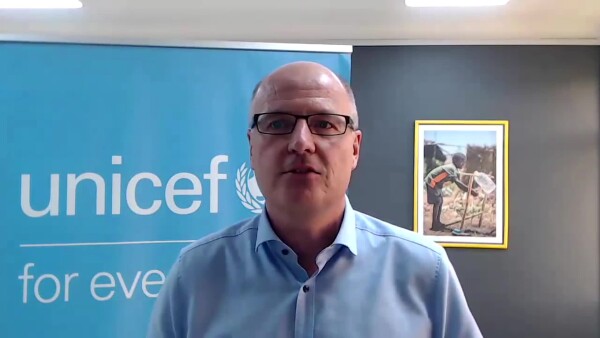
“Malawi is really experiencing the deadliest cholera outbreak in its recorded history - nothing less than that - and the country is also struggling to respond to an earlier outbreak and ongoing COVID-19 cases across the nation,” said Rudolf Schwenk, UN Children’s Fund (UNICEF) Malawi Representative.
In an update to journalists in Geneva, Mr. Schwenk reported that since the outbreak was officially announced a year ago, cholera has spread to 29 districts across Malawi. “So, it’s all over the country, affecting more than 50,000 people and over 1,500 deaths,” he said, via Zoom link from Lilongwe. “Of these, more than 12,000 children have contracted cholera, and of these, unfortunately 197 - almost 200 - have died.”
In a related warning, the UN World Meteorological Organization (WMO) noted that Tropical cyclone Freddy “will once again bring more heavy rainfall to the south of the country”, according to Malawi’s national meteorological service.
The development will likely create additional life-threatening challenges to communities who are already struggling as the rainy season reaches its height, combined with the fact that it is now the annual lean season in Malawi, where many families have to cope with scant resources.
Despite being a preventable disease, cholera is a “death sentence” for thousands of vulnerable children in the southern African nation, UNICEF’s Mr. Schwenk said.
The situation is particularly difficult because national “resources are limited” as the country struggles to recover from the impact of COVID-19, the UNICEF official continued. “The health system’s overburdened, the health workers are really stretched to the limit since many months; and these are really difficult times for the children in Malawi.”
Across Malawi, an estimated 4.8 million children – “one in two children in the country” need humanitarian assistance, Mr. Schwenk warned, noting that severely hungry children are 11 times more likely to die from cholera than a well-nourished youngster. “By the end of March, almost a quarter of a million children under five years of age are expected to be acutely malnourished, with over 60,000 children expected to be severely malnourished.”
As part of the UN’s response, UNICEF has distributed clean water and sanitation supplies and support, including plastic buckets, soap, water purification tablets, mobile plastic latrines and chlorine bleaching powder, reaching 4,000 people at the Malawi-Zambian Border.
The UN agency has also prioritized six districts based on consistently high cholera caseloads and mortality: Lilongwe, Mangochi, Blantyre, Balaka, Salima and Machinga.
ends
STORY: Malawi – Cholera Outbreak: UNICEF, WMO
TRT: 1 mins 49s
SOURCE: UNTV CH
RESTRICTIONS: NONE
LANGUAGE: ENGLISH/NATS
ASPECT RATIO: 16:9
DATELINE: 7 March 2023 GENEVA, SWITZERLAND
SHOTLIST
- Exterior wide, Palais des Nations flag alley, nations’ flags flying.
- Medium-wide, Press conference room, UN Geneva, podium speaker, journalist.
- SOUNDBITE (English) — Rudolf Schwenk, UNICEF Malawi Representative (via Zoom from Lilongwe): “Malawi is really experiencing the deadliest cholera outbreak in its recorded history - nothing less than that - and the country is also struggling to respond to an earlier outbreak and ongoing COVID-19 cases across the nation.”
- Medium-wide, journalists seated.
- SOUNDBITE (English) — Rudolf Schwenk, UNICEF Malawi Representative (via Zoom from Lilongwe): “Since the outbreak was officially announced just one year ago, cholera has spread to 29 districts across the country – so it’s all over the country – affecting more than 50,000 people and over 1,500 deaths and of these, more than 12,000 children have contracted cholera, and of these, unfortunately 197 - almost 200 - have died.”
- Medium, journalists working on laptops, speakers on large screen TV to rear.
- SOUNDBITE (English) — Clare Nullis, spokesperson, World Meteorological Organization (WMO, via Zoom): “The Malawi meteorological service is saying that Freddy will once again bring more heavy rainfall to the south of the country.”
- Medium-wide, journalists, speakers.
- SOUNDBITE (English) — Rudolf Schwenk, UNICEF Malawi Representative (via Zoom from Lilongwe): “We see that the resources are limited, the health system’s overburdened, the health workers are really stretched to the limit since many months; and these are really difficult times for the children in Malawi.”
- Wide, journalists working on laptops.
- SOUNDBITE (English) — Rudolf Schwenk, UNICEF Malawi Representative (via Zoom from Lilongwe): “Today we have an estimated 4.8 million children, or one in two, one in two children in the country are in humanitarian need. And by the end of March, almost a quarter of a million children under five years of age are expected to be acutely malnourished, with over 60,000 children expected to be severely malnourished.”
- Medium-wide, TV camera mounted tripod in foreground, journalists working on laptops to rear.
- Wide, journalists working on laptops, light panel in shot.
- Medium-wide, journalists, seated.
- Medium, journalists, seated.
Similar Stories

1
1
1
Edited News | OCHA , UNICEF , WFP
Aid agencies warned on Friday of the fast-developing humanitarian emergency inside Taiz City in Yemen, which has been encircled by de facto Houthi forces fighting government troops along the country’s west coast.

2
17
1
2
Edited News , Press Conferences , Images | OCHA , WMO
Two UN agencies teamed up on Wednesday to issue an appeal for immediate assistance to help communities already being impacted by the strongest El Niño on record.

3
16
2
2
Edited News , B-roll , Conferences , Images | UNITED NATIONS , UNOG
Sixth Consultative Meeting on Enhancing Coordination of Peace Initiatives and Efforts for Sudan

1
1
1
Edited News | UNICEF , WHO , UNHCR
Yemen war continues to force families from homes amid hunger and disease
More than 250,000 people have now fled renewed fighting in Yemen, the UN said on Tuesday, citing particular concern for those sheltering in the southwestern city of Taiz and the wider governorate, where access is “essentially blocked”.

1
1
1
Edited News | UNICEF
A little over one year since a ceasefire agreement was announced between Hamas fighters and Israel, more than 340 children have been reported killed and hundreds more injured, the UN Children’s Fund, UNICEF, said on Friday.

1
1
1
Edited News | UNICEF , IFRC
Six weeks after Nepal’s deadly flooding disaster, communities are still struggling to rebuild their lives, but they will need sustained help as global warming increases the risk of another Himalayan catastrophe, the UN Children’s Fund (UNICEF) said on Friday.

1
1
1
Edited News | WHO
In suspected Russia plague death, testing and monitoring underway – WHO
The death of a lab worker in Russia’s Siberia region has sparked concerns about plague being the cause, the UN World Health Organization (WHO) said on Tuesday, adding that it was following the situation closely.

1
1
Edited News | OHCHR , UNOG
UN Human Rights Chief Volker Türk on Friday provided and oral update to the 63rd session of the Human rights Council on Ukraine.

1
1
1
Edited News | OHCHR , UNOG
UN Human Rights Chief Volker Türk on Friday provided and oral update to the 63rd session of the Human rights Council on the human rights situation in Haiti.

1
1
1
Edited News | WHO
Repeated delays in bringing lifesaving medicines, prosthetics and more from Israel into Gaza risk having devastating consequences on Palestinians who urgently need them in the wartorn enclave, the UN World Health Organization (WHO) said on Friday. “A truck full of non-priority supplies or the right supplies arriving too late, doesn't save lives. That's the question that actually matters," said Dr Reinhilde Van De Weerdt, WHO Representative in the OPT.

1
1
1
Edited News | WHO
DRC: Early access to care and oxygen decisive for Ebola patients’ survival – WHO
In the Democratic Republic of the Congo (DRC), health workers fighting the country’s largest-ever Ebola outbreak are struggling to overcome critical challenges to patient care, the UN World Health Organization (WHO) warned on Tuesday.

1
1
1
Edited News | OCHA , UN
Civilians in Iran are continuing to feel the consequences of months of conflict and military escalation, the UN’s top official in the country has said, as loss of life, damage to civilian infrastructure and mounting economic pressures leave many facing continued uncertainty.