

The United Nations Office at Geneva
Multimedia Newsroom
Libya: Crimes against humanity and widescale exploitation of migrants
The UN Independent Fact-Finding Mission on Libya on Monday expressed deep concern in its final report about the country’s deteriorating human rights situation. The human rights investigators said that there are grounds to believe that Libyan authorities and armed militia groups have been responsible for “a wide array of war crimes, and crimes against humanity” in recent years.
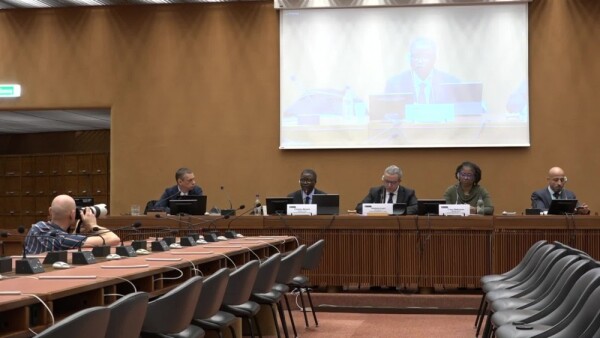
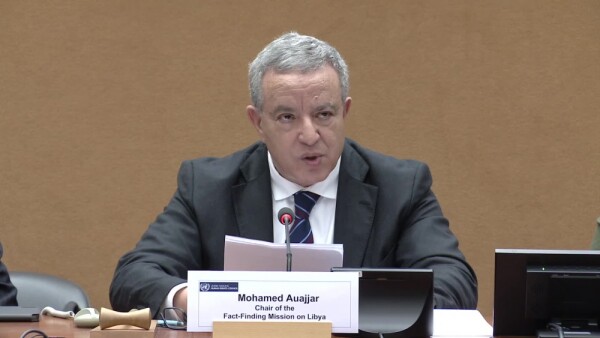
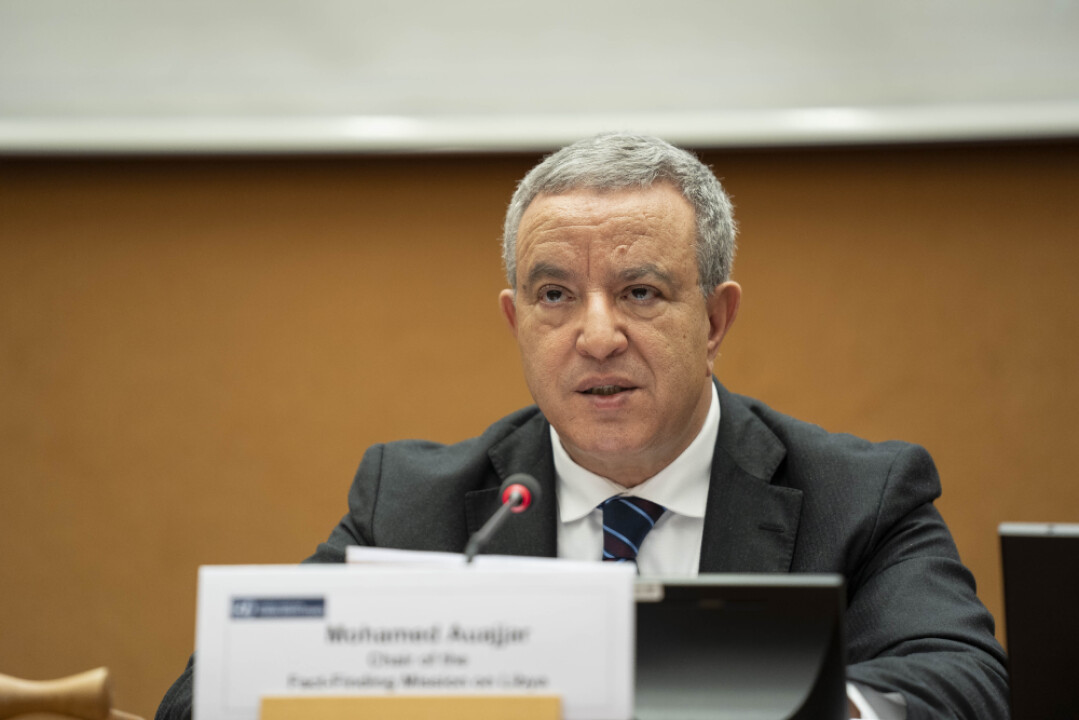
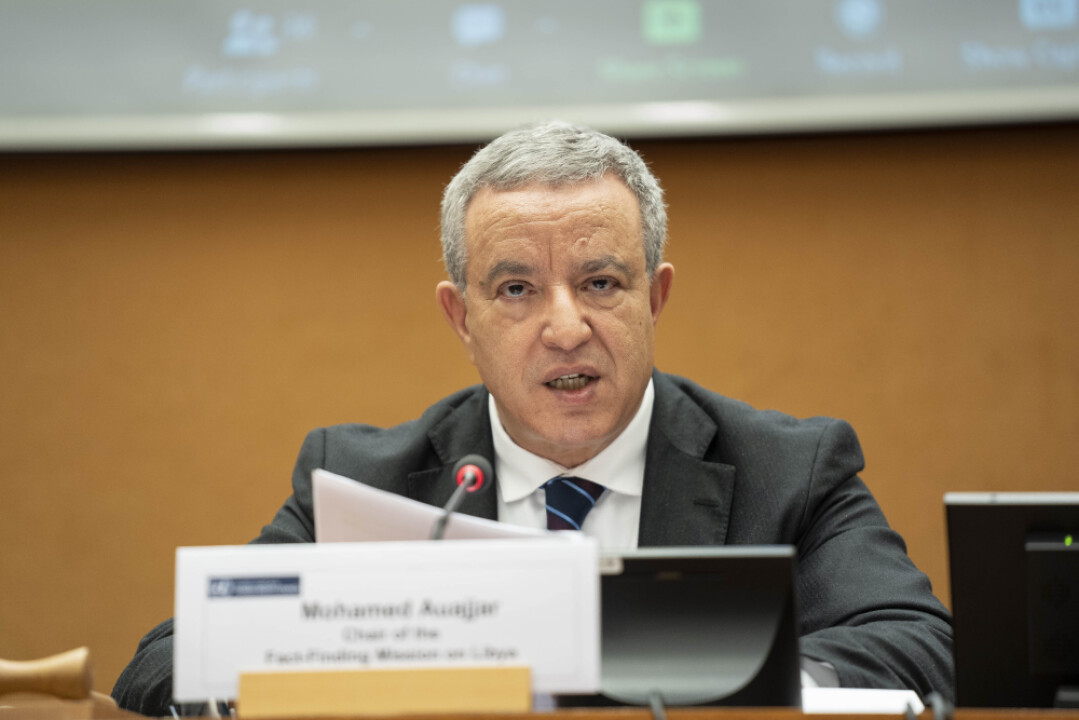
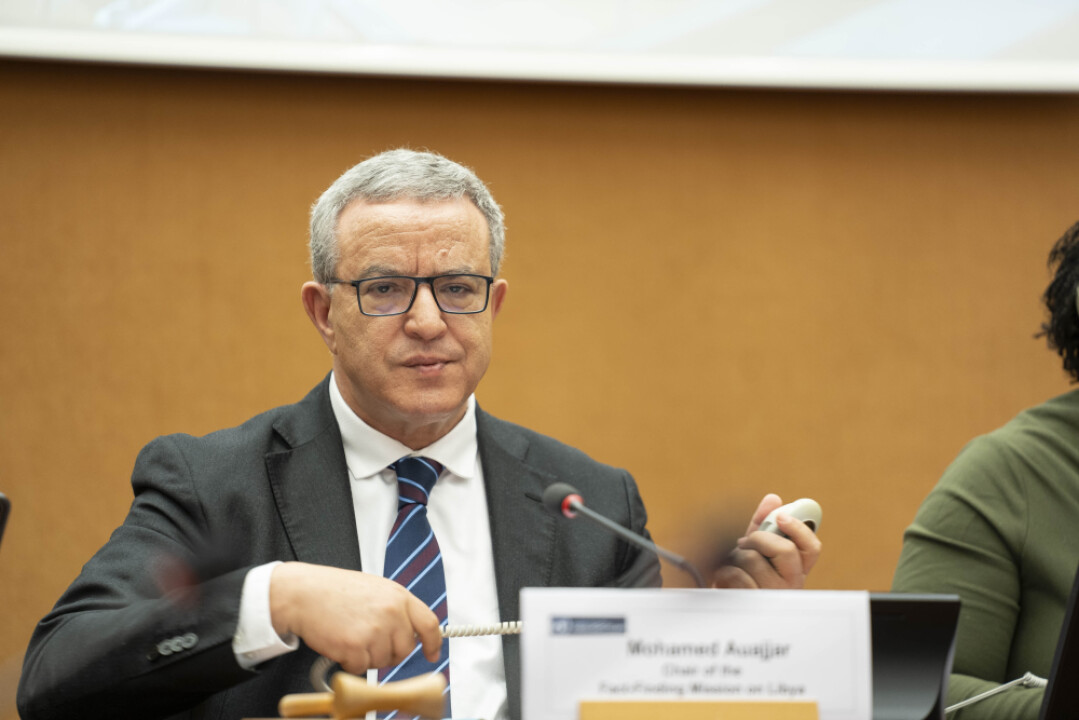
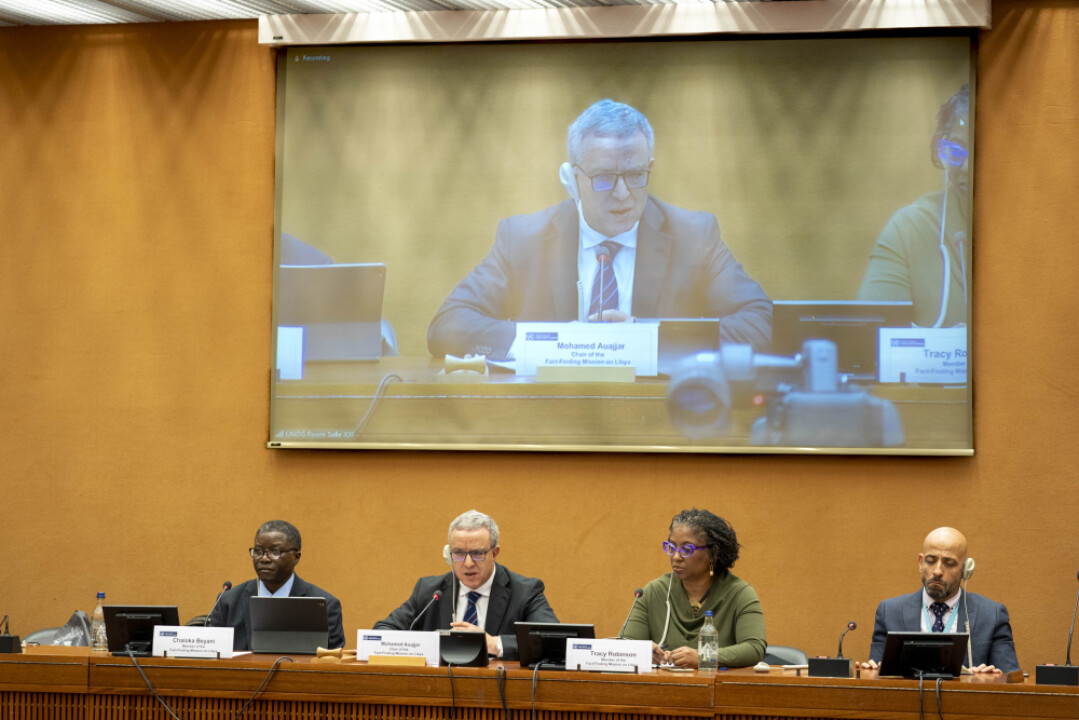
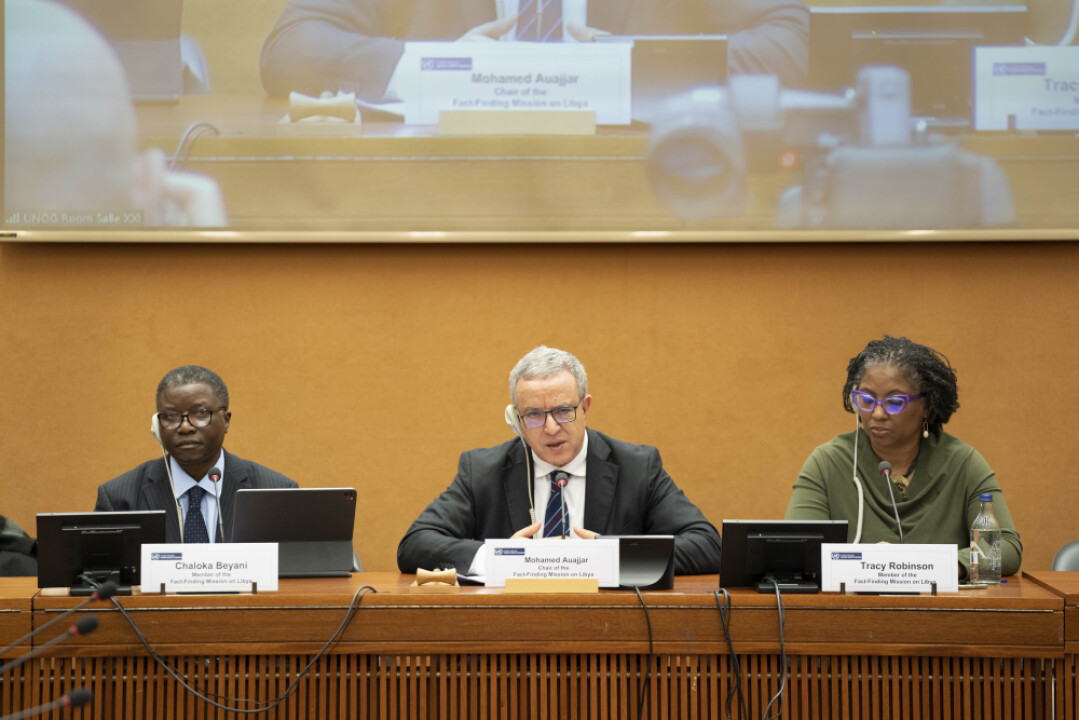
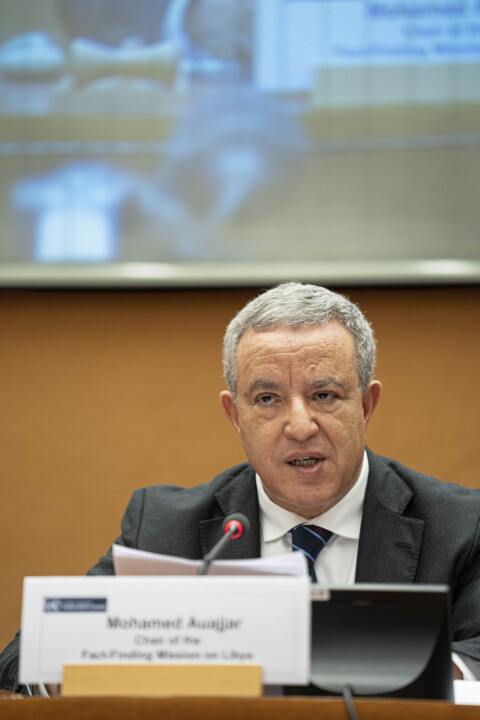
“The FFM on Libya has found reasonable ground to believe that crimes against humanity were committed against Libyan civilians and migrants who were deprived of their liberties throughout Libya since 2016,” said Mr. Mohamed Auajjar, Chair of the Libya Fact-Finding Mission, when talking to the media at the United Nations in Geneva.
Libya has been in turmoil since former long-time leader Muammar Gaddafi was ousted leaving the country divided between a UN-recognized Government of National Accord based in the capital Tripoli and the forces of General Khalifa Haftar’s self-styled Libyan National Army which holds sway in the east and southern areas of the country.
Migrants, in particular, have been targeted and there is overwhelming evidence that they have been systematically tortured, the report indicated.
“The Commission finalized its assessment of the evidence in the treatment of migrants,” said Mr. Auajjar. “The Mission has proven that it had enough reasons to believe that sexual slavery which is also a crime against humanity was committed against migrants.”
The Chair of the Fact-Finding mission also said that ”the Mission found that crimes against humanity have been committed against migrants in detention, and which are under the actual or nominal control of the Anti-illegal Immigration Agency, the Libyan port and the Stability Support Apparatus. He added that “these entities received technical, logistical and financial support from the EU and from the EU member countries in order to intercept the paths of migrants and to bring them back home.”
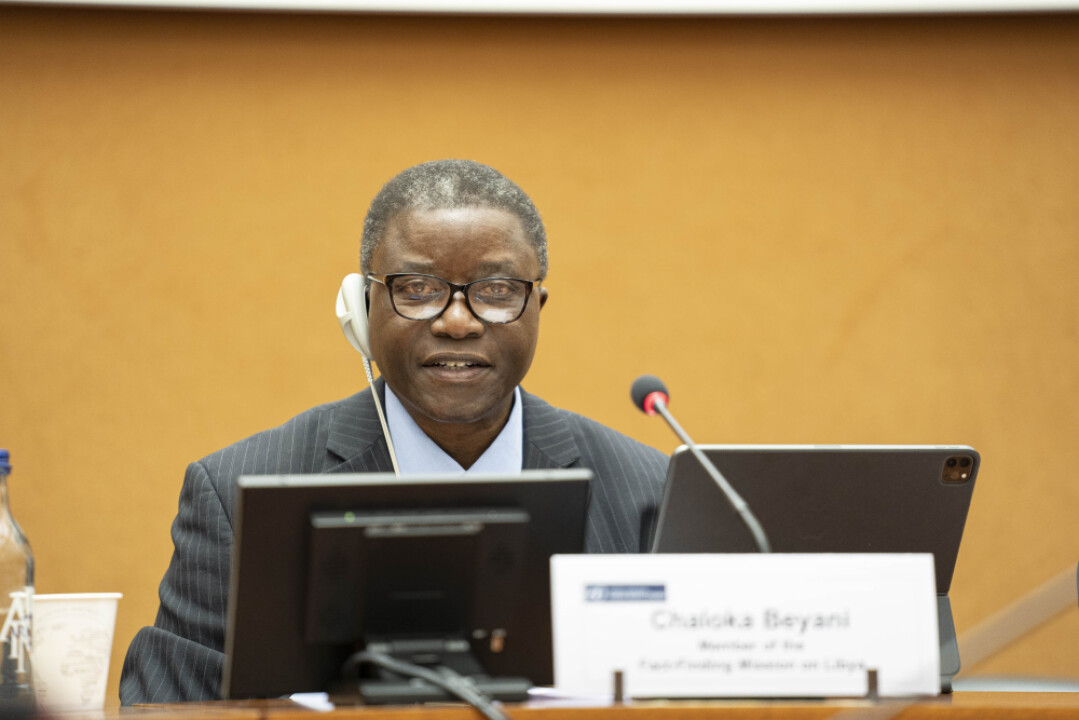
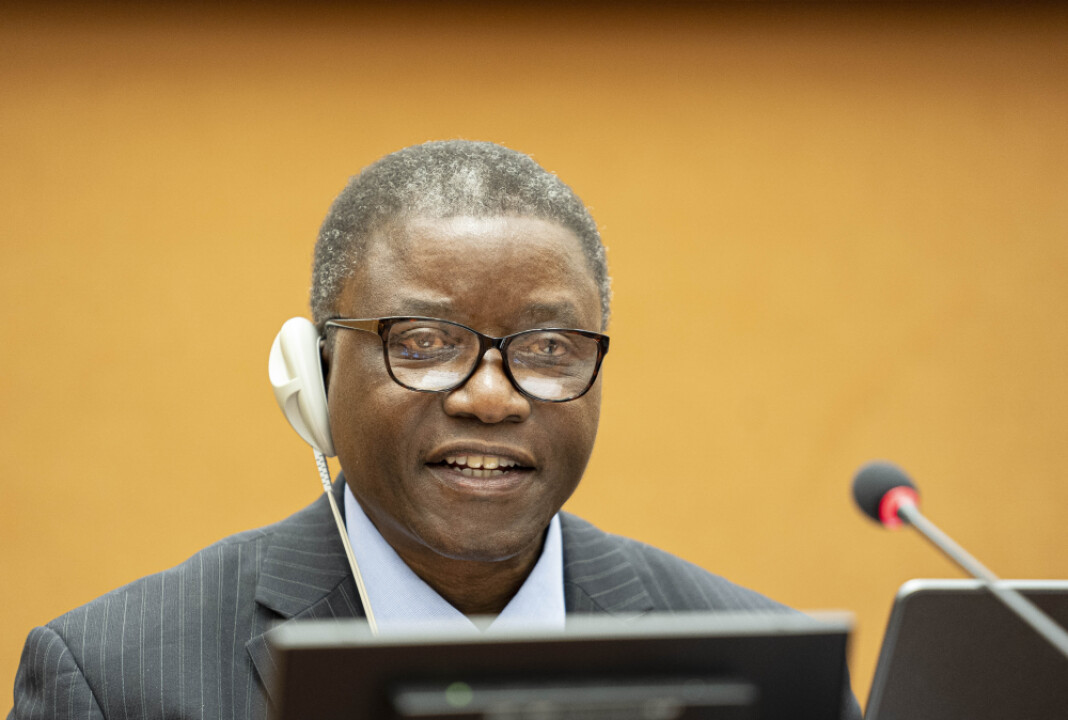
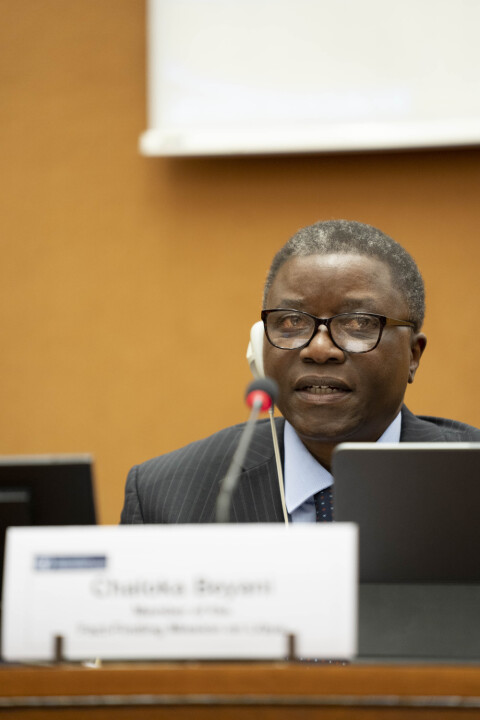
The Mission also expressed its concern about the role of the EU. “The support given by the EU to the Libyan coast guard in terms of pullbacks, pushbacks, interceptions, lead to violations of certain human rights,” said Chaloka Beyani. “Non-refoulement, for example, you can’t push people back to areas that are unsafe, and the Libyan waters are unsafe for embarkation of migrants, quite clearly.”
The report said that detainees were subjected regularly to torture, solitary confinement, held incommunicado and denied adequate access. It documents the “widespread practice” of arbitrary detention, murder, torture, rape, enslavement and enforced disappearance in the country. The Mission states for the first time that sexual slavery was committed against migrants in official detention centres and in secret prisons, amid rampant impunity.
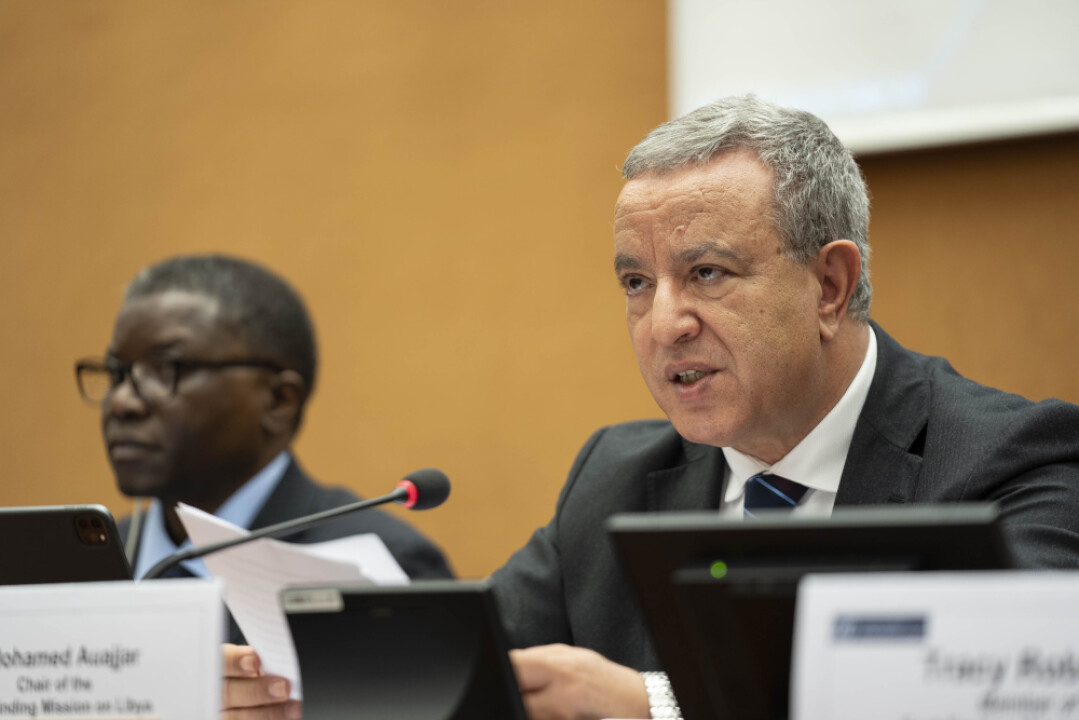
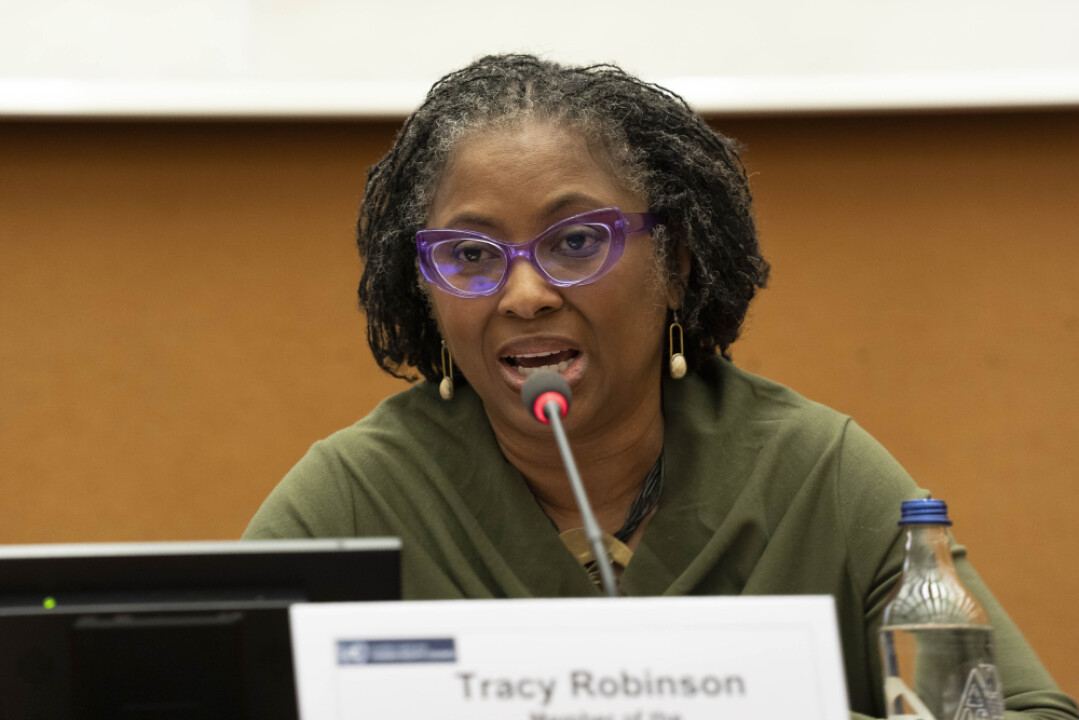
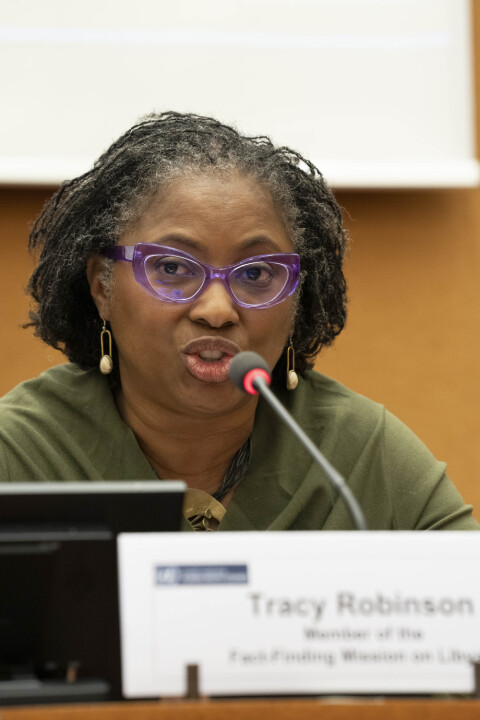
“We have found instances of enslavement, of persons who have been traded to outside entities, to perform various services, but also sexual slavery of women of in and around detention centres,” said Tracy Robinson, Member of the Libya Fact-Finding Mission (FFM). “The findings in respect of both are new for the FFM and represents, I think, a very significant set of violations which we had not been able to establish in our previous reporting cycles.”
Established by the Human Rights Council in 2020 to look investigate human rights violation by all parties since the beginning of 2016, the FFM has undertaken 13 missions and conducted more than 400 interviews. It has also collected more than 2,800 items of information, including photograph and audiovisual imagery. To strengthen accountability, the FFM will share material with the International Criminal Court and other findings that it has collected throughout its mandate.
“Our focus was on the victims and the measures that needed to be taken in relation to the victims,” Mr. Beyani said. “So taking that line in the context of violations, in the context of the State-building project in Libya which is what it is - it’s the collapse of the State of Libya that has led to these violations and, therefore, for the International community - the Fact-Finding Mission has laid out bare facts and bare findings.”
With its mandate coming to an end next week, the Mission called on the Human Rights Council to establish a new monitoring and investigating mechanism for Libya.
-ends-
STORY: Fact-finding Mission Libya
TRT: 3:31”
SOURCE: UNTV CH
RESTRICTIONS: NONE
LANGUAGE: ENGLISH/NATS
ASPECT RATIO: 16:9
DATELINE: 27 March 2023 GENEVA, SWITZERLAND
SHOTLIST
- Medium shot, UN Geneva flag alley.
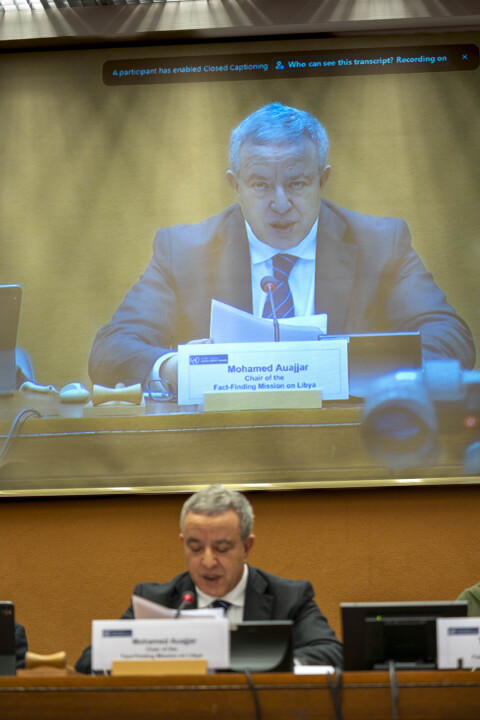
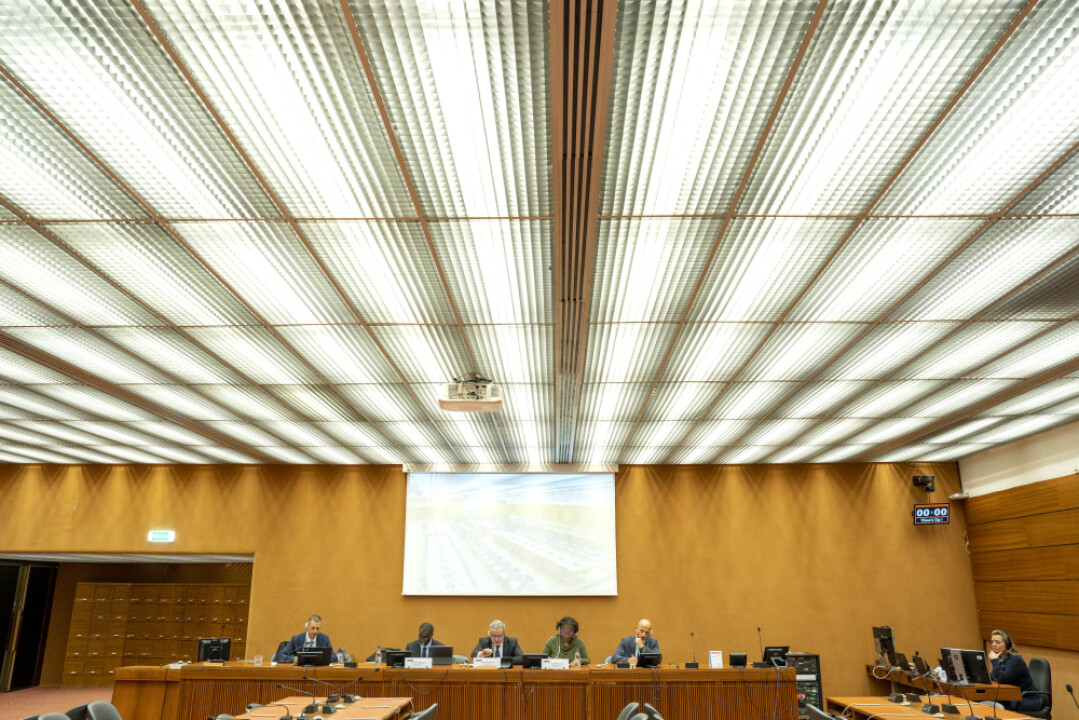
- Wide shot, press room with speakers at the podium
- SOUNDBITE (Arabic) – Mohamed Auajjar, Chair of the Libya Fact-Finding Mission: “The FFM on Libya has found reasonable ground to believe that crimes against humanity were committed against Libyan civilians and migrants who were deprived of their liberties throughout Libya since 2016”.
- Close up, photographer
- SOUNDBITE (Arabic) – Mohamed Auajjar, Chair of the Libya Fact-Finding Mission: “The Commission finalized its assessment of the evidence in the treatment of migrants. The mission has proven that it had enough reasons to believe that sexual slavery which is also a crime against humanity was committed against migrants”.
- Medium shot, journalist taking notes
- SOUNDBITE (Arabic) - Mohamed Auajjar, Chair of the Libya Fact-Finding Mission: ”The mission found that crimes against humanity have been committed against migrants in detention, and which are under the actual or nominal control of Anti-illegal Immigration Agency, the Libyan port guard and the Stability Support Apparatus, these entities received technical, logistical and financial support from the EU and from the EU member countries in order to intercept the paths of migrants and to bring them back home”.
- Wide shot, speakers at the podium with photographer
- SOUNDBITE (ENGLISH) – Chaloka Beyani, Member of the Libya Fact-Finding Mission: “The support given by the EU to the Libyan coast guard in terms of pullbacks, pushbacks, interceptions, lead to violations of certain human rights. Non-refoulement, for example- you can’t push people back to areas that are unsafe, and the Libyan waters are unsafe for embarkation of migrants, quite clearly”.
- Wide shot, speakers at the podium with photographer
- SOUNDBITE (ENGLISH) - Tracy Robinson, Member of the Libya Fact-Finding Mission: “We have found instances of enslavement, of persons who have been traded to outside entities, to perform various services, but also sexual slavery of women of in and around detention centers. The findings in respect of both are new for the FFM and represents, I think, a very significant set of violations which we had not been able to establish in our previous reporting cycles”.
- Wide shot, speakers at podium with journalists
- SOUNDBITE (ENGLISH) – Chaloka Beyani, Member of the Libya Fact-Finding Mission: “Our focus was on the victims, and the measures that needed to be taken in relation to the victims. So taking that line in the context of violations, in the context of the State-building project in Libya which is what it is- it’s the collapse of the state of Libya that has led to these violations and, therefore, for the International community, the Fact-Finding Mission has laid out bare facts and bare findings”.
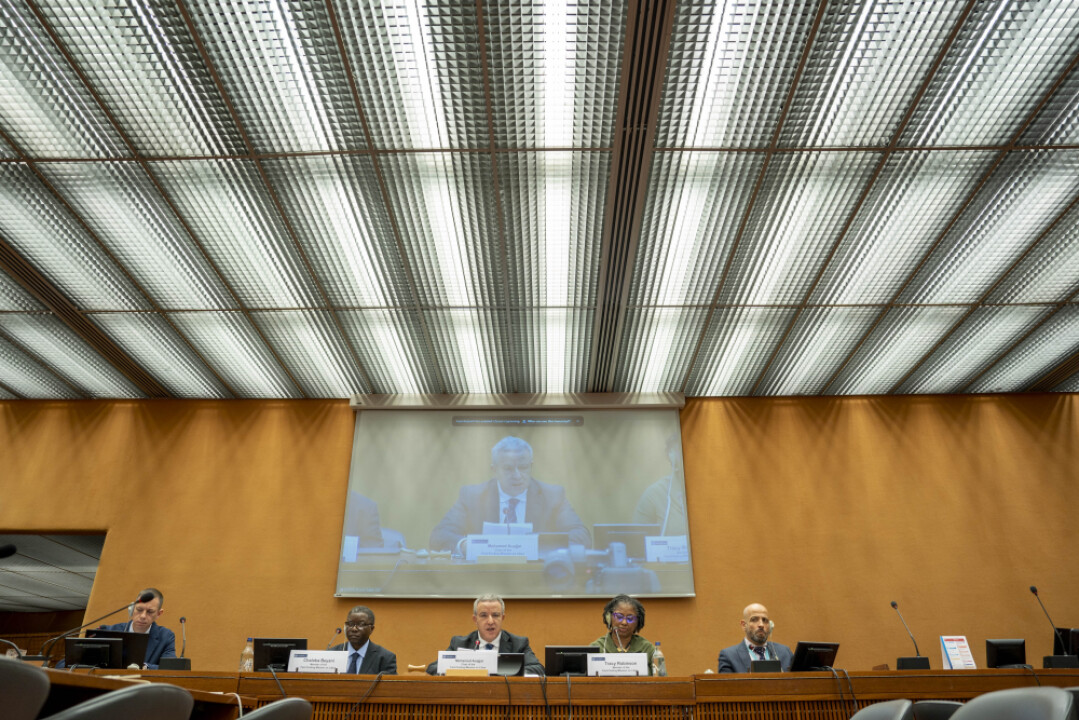
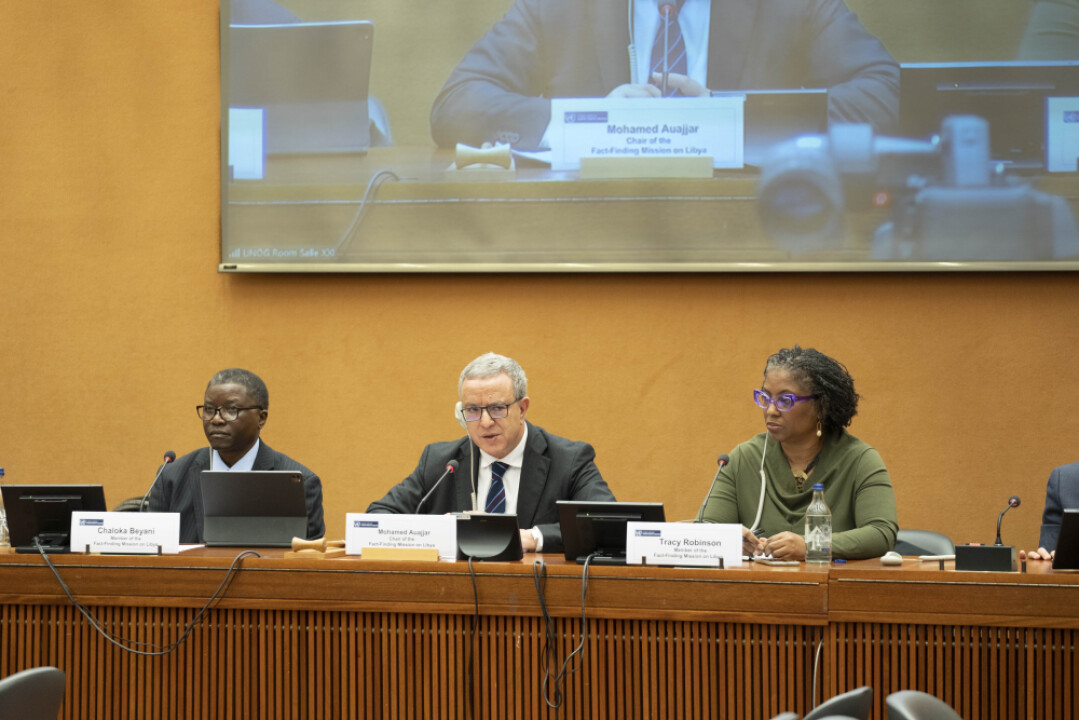
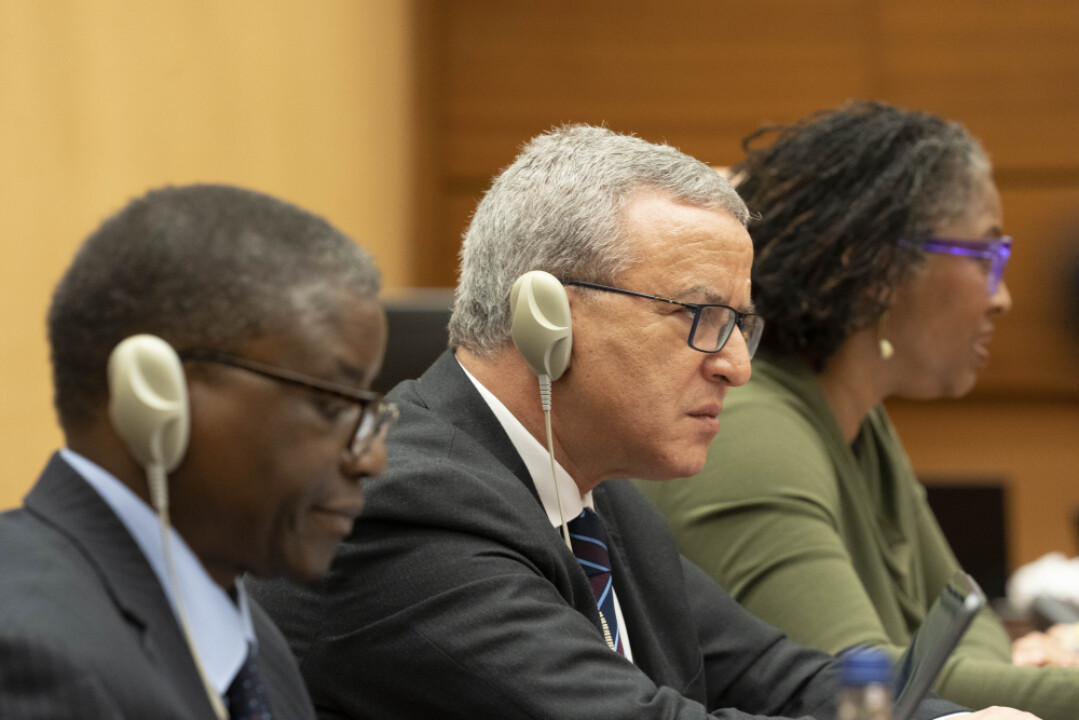
- Medium shot, three Commissioners at the podium
- Close up, hands writing on paper
- Medium shot, journalists with screen on the side
Similar Stories
1
1
1
Edited News | UNHCR , IFRC
Death and destruction have continued unabated in Lebanon while communities are still unable to return to their homes despite a ceasefire that began on 17 April, humanitarians said on Tuesday.
1
1
Edited News | WHO
Deadly hantavirus on board cruise ship may be transmitted among humans - WHO
Hantavirus victims on a ship in the Atlantic Ocean may have been infected prior to joining the cruise and human-to-human transmission on board cannot be ruled out – although it is rare - the World Health Organization (WHO) said on Tuesday.
1
1
1
Press Conferences | ILO , UNHCR , IFRC , WHO , OHCHR , UNECE
ILO: Report on Skills and Lifelong Learning; UNHCR, IFRC: Humanitarian Needs Rise in Lebanon; WHO: Cruise Ship Hantavirus; OHCHR: Civilians Impacted Amid Clashes in Mali; UNECE: Call for Water Cooperation in Central Africa; IFRC: Call for Protection of Humanitarian Personnel on the Anniversary of the Founding of IFRC
1
7
1
1
Press Conferences | ITU , UNDRR
Doreen Bogdan-Martin, ITU Secretary-General and the Special Representative of the UN Secretary-General for Disaster Risk Reduction and head of the UN Office for Disaster Risk Reduction, Kamal Kishore, will brief the media on the launch a joint report titled "When Digital Systems Fail: The Hidden Risks of our Digital World."
1
1
1
Edited News | OHCHR
UN rights chief concerned by upheld convictions of Cambodian activists.
1
1
1
Edited News | UNHCR , OHCHR
Middle East crisis puts aid, food, fuel further out of reach for millions already struggling – UN agencies
As the Middle East crisis continues the humanitarian fallout is worsening, with aid route disruptions and food and fuel price hikes wrecking the lives and rights of the most vulnerable, UN agencies warned on Friday.
1
1
1
Press Conferences | UNHCR , OHCHR
Rolando Gómez, Chief of the Press and External Relations Section, United Nations Information Service (UNIS) at Geneva, chaired a hybrid press briefing, which was attended by spokespersons and representatives of the United Nations High Commissioner for Refugees and the Office of the High Commissioner for Human Rights.
1
1
2
Edited News | UNMAS
Demining experts from around the world have been sharing their collective shock at the widespread and growing threat from unexploded ordnance, the new head of the UN Mine Action Service (UNMAS) said on Wednesday.
1
1
1
Edited News | OHCHR , UNOG
The UN Human Rights Office in Syria conducted a 5-day visit to the northeast of the country where they received accounts of human rights violations and abuses.
1
1
1
Edited News | UNICEF
Sudan: ‘History repeating itself’ for Darfur’s children - UNICEF
Mass atrocities in Sudan’s Darfur 20 years ago reverberated as far as Hollywood, but today, a new generation of children faces attacks, hunger and displacement in an emergency largely ignored by the outside world, the UN Children’s Fund (UNICEF) warned on Tuesday.
1
1
1
Press Conferences | OHCHR , UNICEF , IFRC
Alessandra Vellucci, Director of the United Nations Information Service (UNIS) at Geneva, chaired a hybrid press briefing, which was attended by spokespersons and representatives of the United Nations Children’s Fund, the Office of the High Commissioner for Human Rights, the International Labour Organization, the United Nations Office for Disaster Risk Reduction and the International Federation of the Red Cross.
1
1
Edited News | WHO , UNMAS
Desperate and dangerous conditions in Gaza continue to hamper recovery efforts for the wartorn enclave's people, the UN health agency said on Friday, while demining experts warned that they’ve “barely scratched the surface” in assessing the level of contamination of unexploded ordnance.