

The United Nations Office at Geneva
Multimedia Newsroom
"World should prepare for El Nino development, associated with increased heat and drought", says WMO
The El Niño weather pattern is likely to develop later this year and could contribute to rising global temperatures, the World Meteorological Organization (WMO) said on Wednesday at a news briefing at the United Nations in Geneva.
This would have the opposite impacts on weather and climate patterns in many regions of the world than the three-year period of La Niña that just ended and which often lowers global temperatures.
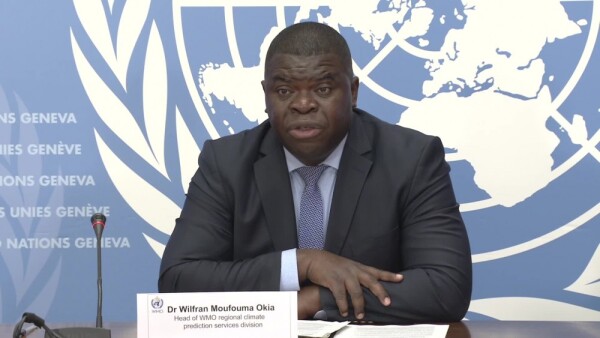
“The next few months from May to July, we have a 60% chance to enter into an El Niño phase. This likelihood will increase to 70% if we look at the period from July to August and even to 80% if we go past August. But of course, beyond, we can't say much,” said Wilfran Moufouma Okia, Head of WMO’s regional climate prediction services division. “Of course, this will change the weather and climate pattern worldwide.”
El Niño is a naturally occurring climate pattern associated with warming of the ocean surface temperatures in the central and eastern tropical Pacific Ocean. It occurs on average every two to seven years, and episodes usually last nine to 12 months.
“The warmest year was 2016, according to our report. So, we are expecting in the coming two years to have a serious increase in the global temperature,” reported Mr. Okia.
According to WMO’s State of the Global Climate reports, 2016 is the warmest year on record because of the “double whammy” of a very powerful El Niño event and human-induced warming from greenhouse gases.
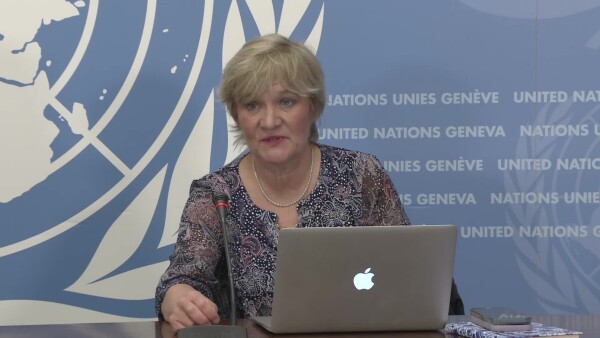
“We just had the eight warmest years on record and three of those were La Niña years. So, this just gives you an indication of the climate context we're in,” said Clare Nullis, WMO’s spokesperson, quoting WMO’s Secretary-General Prof. Petteri Taalas.
According to WMO’s Professor Taalas, the world should prepare for the development of El Niño, which is often associated with increased heat, drought or rainfall in different parts of the world. It might bring relief from the drought in the Horn of Africa and other La Niña- related impacts but could also trigger more extreme weather and climate events.
“The state of the ocean is the warmest and we are currently in the so-called neutral phase of the El Niño oscillation whereby basically we left the state of the La Niña, and we are moving toward a different state,” said WMO’s Wilfran Moufouma Okia.
El Niño and La Niña are major – but not the only - drivers of the Earth’s climate system.
-ends-
STORY: WMO- EL Niño update
TRT: 01’41”
SOURCE: UNTV CH
LANGUAGE: ENGLISH/NATS
ASPECT RATIO: 16:9
RELEASE DATE: 03 May 2023
GENEVA, SWITZERLAND
SHOTLIST
- Wide shot of podium, speakers, conference room, Palais des Nations, Geneva
- SOUNDBITE (ENGLISH) Wilfran Moufouma Okia, Head of WMO regional climate prediction services division, World Meteorological Organization (WMO): “The next few months from May to July, we have a 60% chance to enter into an El Niño phase. This likelihood will increase to 70% if we look at the period from July to August and even to 80% if we go past August. But of course, beyond, we can't say much. That's where we are. Of course, this will change the weather and climate pattern worldwide.”
- Wide shot, laptop screen in foreground with podium, speakers and monitor in background, conference room, Palais des Nations
- SOUNDBITE (ENGLISH) Wilfran Moufouma Okia, Head of WMO regional climate prediction services division, World Meteorological Organization (WMO): “The warmest year was 2016, according to our report. So we are expecting in the coming two years to have a serious increase in the global temperature.”
- Wide shot: camera person, tripod
- SOUNDBITE (ENGLISH) Clare Nullis World Meteorological Organization (WMO): “We just had the eight warmest years on record and three of those were La Niña years. So this just gives you an indication of the climate context we're in.”
- Wide shot: podium and speakers, technicians in background
- SOUNDBITE (ENGLISH): Wilfran Moufouma Okia, Head of WMO regional climate prediction services division, World Meteorological Organization (WMO): “The state of the ocean is the warmest and we are currently in the so-called neutral phase of the El Niño oscillation whereby basically we left the state of the La Niña, and we are moving toward a different state.”
- Medium shot: speakers at podium, conference room
- Close up: camera
- Medium shot: journalist typing
- Wide shot: camera operator, podium
Similar Stories
1
1
1
Edited News | OCHA , UNICEF , WFP
Aid agencies warned on Friday of the fast-developing humanitarian emergency inside Taiz City in Yemen, which has been encircled by de facto Houthi forces fighting government troops along the country’s west coast.
1
1
1
Press Conferences | UN WOMEN , WFP , WHO
UN WOMEN: Sudan Women and girls one year after the fall of El Fasher; increasing drone attacks across the country; WFP: DRC - Ebola spreads to eighth DRC province as WFP delivers food, builds treatment centres and keeps supplies moving; WHO - Update on Ebola (Bundibugyo Virus Disease)
1
12
1
1
Press Conferences , Images | UNOG
Closing Press Conference following the Sixth Consultative Meeting on Enhancing Coordination of Peace Initiatives and Efforts in Sudan

2
17
1
2
Edited News , Press Conferences , Images | OCHA , WMO
Two UN agencies teamed up on Wednesday to issue an appeal for immediate assistance to help communities already being impacted by the strongest El Niño on record.

3
16
2
2
Edited News , B-roll , Conferences , Images | UNITED NATIONS , UNOG
Sixth Consultative Meeting on Enhancing Coordination of Peace Initiatives and Efforts for Sudan
1
1
1
Press Conferences | CITES
Wildlife trade and conservation policy discussions at the 81st meeting of the CITES Standing Committee (SC81)

1
1
1
Edited News | UNICEF , WHO , UNHCR
Yemen war continues to force families from homes amid hunger and disease
More than 250,000 people have now fled renewed fighting in Yemen, the UN said on Tuesday, citing particular concern for those sheltering in the southwestern city of Taiz and the wider governorate, where access is “essentially blocked”.
1
1
1
Press Conferences | UNHCR , UNCTAD , WMO , OCHA , UNICEF , WHO
UNHCR Hungary’s 1956 Refugee Crisis: 70 Years On, UNCTAD World Investment Forum 2026, Doha, WMO Greenhouse Gas Bulletin and Climate Update for COP31, OCHA Afghanistan: Malnutrition, Girls’ Education and Recovery, UNICEF Yemen: Child Malnutrition and Unsafe Water in Taiz, WHO Inequalities in Noncommunicable Diseases and Risk Factors
1
1
1
Press Conferences | UNHCR
End of UNHCR's 77th Annual Executive Committee (ExCom) meeting week

1
1
1
Edited News | UNICEF
A little over one year since a ceasefire agreement was announced between Hamas fighters and Israel, more than 340 children have been reported killed and hundreds more injured, the UN Children’s Fund, UNICEF, said on Friday.
1
1
1
Press Conferences | UNICEF , IOM , UNHCR
UN Special Assistant to the Personal Envoy Office (SUDAN): Peace Initiatives and Efforts in Sudan; UNICEF: Dire situation of children in Gaza; IOM: Damaged Homes and Energy Attacks Risk Displacing Ukrainians for this winter; UNHCR: update on EXCOM week
1
1
1
Press Conferences | IOM , UNDRR
UN stresses importance of household preparedness for disaster risk reduction.