

The United Nations Office at Geneva
Multimedia Newsroom
Sudan crisis: UN’s top humanitarian official urges safe passage agreements for aid convoys
Top UN humanitarian official Martin Griffiths on Wednesday urged Sudan’s warring parties to commit to the safe passage of relief supplies, as terrified civilians continue to flee the country and millions face being pushed into hunger, after more than two weeks of fighting.
“We can and should get assistance to the different parts of Darfur, to Khartoum. Yes, we can and should, and the agency representatives I met here this morning are unanimous about that. But to do that, we need access, we need airlifts, we need supplies that don’t get looted,” said emergency relief chief Griffiths.
Looting fears
Speaking from Port Sudan, Mr. Griffiths noted that the UN World Food Programme (WFP) had reported that six trucks heading to Darfur had been looted on Wednesday “despite assurances of safety and security”, amid ongoing conflict between the national armed forces of Sudan’s ruling general and his deputy’s Rapid Support Forces (RSF).
Since violence erupted on 15 April, more than 334,000 people are believed to be internally displaced and more 100,000 people have fled to neighbouring countries, according to UN aid coordination office, OCHA.
To help the most vulnerable communities in Sudan and to prevent further looting of relief supplies, Mr. Griffiths insisted on the need “to be sure that we have the commitments publicly and clearly given by the two militaries to protect humanitarian assistance, to deliver on the obligations to allow supplies of people to move”. This commitment should apply even without a formal national ceasefire in place, he continued, by means of local arrangements “that can be depended on”.
Desperate health needs
Highlighting the scale of need in areas affected by heavy shooting and airstrikes, the UN relief chief reiterated that restoring medical assistance topped the list of priorities in the capital, Khartoum, where more than six in 10 health facilities are closed, and only around one in seven is operating normally. “Many patients with chronic diseases, like kidney disease, diabetes and cancer, are unable to access the health facilities or medicines they need,” OCHA reported.
Providing safe water also remains a vital priority, to encourage communities to stay where they were so that they can receive help. “We have a plan for how we get supplies to these places” across the country including Darfur, Mr. Griffiths said. “We know how we can do this and we will start doing it.”
Rainy season deadline
Humanitarians fear that unless such aid guarantees from the warring sides are secured, the situation in Sudan could deteriorate further.
“(The UN Food and Agriculture Organization) FAO and the UN World Food Programme, talked to me today about the importance of getting food and seeds into places which are going to be hard to reach because of the rainy season that’s coming in June, and with the planting season, which is also coming from May to July,” Mr. Griffiths said.
“We will still require agreements and arrangements to allow for movement of staff and supplies….It’s a volatile environment. So we need those commitments that that is one of my obligations, I think, in this visit to Sudan, and the region. And then we need to absolutely embed those commitments into clear local arrangements. I think you will find if we have good funding that we will be able to do exactly what the people of Sudan require us to do and are entitled to see us do.”
ends
STORY: Sudan update – Martin Griffiths
TRT: 02’56”
SOURCE: UNTV CH
LANGUAGE: ENGLISH/NATS
ASPECT RATIO: 16:9
RELEASE DATE: 03 May 2023
GENEVA, SWITZERLAND
SHOTLIST
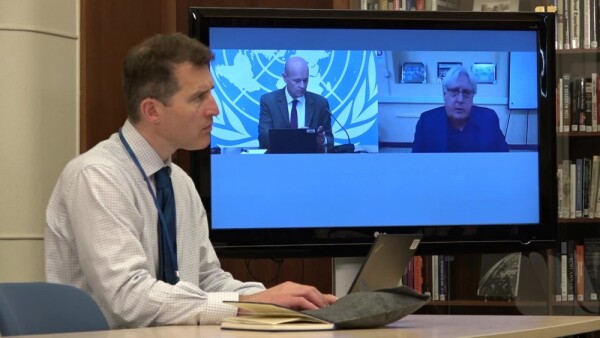
- Medium shot, UN in Geneva
- Wide shot press briefing room, Palais des Nations, Geneva
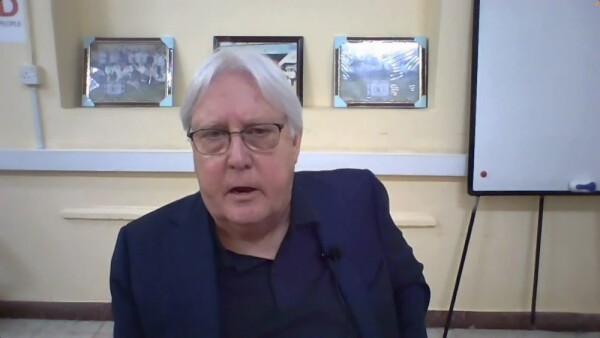
- SOUNDBITE (ENGLISH) - Martin Griffiths, United Nations Under-Secretary-General for Humanitarian Affairs and Emergency Relief Coordinator (from Port Sudan): “We can and should get assistance to the different parts of Darfur, to Khartoum – yes, we can and should and the agency representatives that I met this morning are unanimous about that. But to do that we need access, we need airlift, we need supplies that don’t get looted.“
- Medium shot, journalist listening in conference room, Palais des Nations
- SOUNDBITE (ENGLISH) - Martin Griffiths, United Nations Under-Secretary-General for Humanitarian Affairs and Emergency Relief Coordinator (from Port Sudan): “To be sure that we have the commitments publicly and clearly given by the two militaries to protect humanitarian assistance, to deliver on the obligations to allow supplies of people to move, and that we should do that, and humanitarians universally do this even when there is no formal national ceasefire.”
- Medium shot: Media persons typing in front of screen with speaker
- SOUNDBITE (ENGLISH) - Martin Griffiths, United Nations Under-Secretary-General for Humanitarian Affairs and Emergency Relief Coordinator (from Port Sudan): “We have a plan for how we get supplies to these places. Medical first, obviously, in Khartoum, safe water there as well, supplies and a range of things to Darfur; and we know how we can do this, and we will start doing it.”
- Close up: Spokesperson listening
- SOUNDBITE (ENGLISH) - Martin Griffiths, United Nations Under-Secretary-General for Humanitarian Affairs and Emergency Relief Coordinator (from Port Sudan): “Safe water supplies for people in Khartoum is of vital, obviously importance, not least to encourage them to remain where they are, where it's easier for us to serve them.”
- Close up, hands typing on laptop
- SOUNDBITE (ENGLISH) - Martin Griffiths, United Nations Under-Secretary-General for Humanitarian Affairs and Emergency Relief Coordinator (from Port Sudan): “FAO and World Food Programme (WFP) talked to me today about the importance of getting the food and seeds into places which are going to be hard to reach because of the rainy season that’s coming in June, which is the planting season, which is also coming from May to July.”
- Medium shot: journalists looking at their cell phones
- SOUNDBITE (ENGLISH) - Martin Griffiths, United Nations Under-Secretary-General for Humanitarian Affairs and Emergency Relief Coordinator (from Port Sudan): “We will still require agreements and arrangements to allow for movement of staff and supplies. We will need to have agreements at the highest level and very publicly, and we will need to deliver those commitments into local arrangements that can be depended on.”
- Medium shot, journalist
- SOUNDBITE (ENGLISH) - Martin Griffiths, United Nations Under-Secretary-General for Humanitarian Affairs and Emergency Relief Coordinator (from Port Sudan): “It's a volatile environment. So, we need those commitments that that is one of my obligations, I think, in this visit to Sudan, in the region. And then we need to absolutely embed those commitments into clear local arrangements. I think you will find if we have good funding that we will be able to do exactly what the people of Sudan require us to do and are entitled to see us do.”
- Wide shot, press briefing room with moderator
- Medium shot, journalists listening
- Close up, hands typing on laptop
Similar Stories
1
12
1
1
Press Conferences , Images | UNOG
Closing Press Conference following the Sixth Consultative Meeting on Enhancing Coordination of Peace Initiatives and Efforts in Sudan

2
17
1
2
Edited News , Press Conferences | OCHA , WMO
Two UN agencies teamed up on Wednesday to issue an appeal for immediate assistance to help communities already being impacted by the strongest El Niño on record.

3
16
2
2
B-roll , Conferences , Edited News | UNITED NATIONS , UNOG
Sixth Consultative Meeting on Enhancing Coordination of Peace Initiatives and Efforts for Sudan
1
1
1
Press Conferences | CITES
Wildlife trade and conservation policy discussions at the 81st meeting of the CITES Standing Committee (SC81)

1
1
1
Edited News | UNICEF , WHO , UNHCR
Yemen war continues to force families from homes amid hunger and disease
More than 250,000 people have now fled renewed fighting in Yemen, the UN said on Tuesday, citing particular concern for those sheltering in the southwestern city of Taiz and the wider governorate, where access is “essentially blocked”.
1
1
1
Press Conferences | UNHCR , UNCTAD , WMO , OCHA , UNICEF , WHO
UNHCR Hungary’s 1956 Refugee Crisis: 70 Years On, UNCTAD World Investment Forum 2026, Doha, WMO Greenhouse Gas Bulletin and Climate Update for COP31, OCHA Afghanistan: Malnutrition, Girls’ Education and Recovery, UNICEF Yemen: Child Malnutrition and Unsafe Water in Taiz, WHO Inequalities in Noncommunicable Diseases and Risk Factors
1
1
1
Press Conferences | UNHCR
End of UNHCR's 77th Annual Executive Committee (ExCom) meeting week

1
1
1
Edited News | UNICEF
A little over one year since a ceasefire agreement was announced between Hamas fighters and Israel, more than 340 children have been reported killed and hundreds more injured, the UN Children’s Fund, UNICEF, said on Friday.
1
1
1
Press Conferences | UNICEF , IOM , UNHCR
UN Special Assistant to the Personal Envoy Office (SUDAN): Peace Initiatives and Efforts in Sudan; UNICEF: Dire situation of children in Gaza; IOM: Damaged Homes and Energy Attacks Risk Displacing Ukrainians for this winter; UNHCR: update on EXCOM week
1
1
1
Press Conferences | IOM , UNDRR
UN stresses importance of household preparedness for disaster risk reduction.

1
1
1
Edited News | UNICEF , IFRC
Six weeks after Nepal’s deadly flooding disaster, communities are still struggling to rebuild their lives, but they will need sustained help as global warming increases the risk of another Himalayan catastrophe, the UN Children’s Fund (UNICEF) said on Friday.
1
1
1
Statements , Press Conferences | OHCHR