

The United Nations Office at Geneva
Multimedia Newsroom
Eastern DRC: Disease outbreaks on the rise due to recurrent natural disaster and insecurity putting health system at breaking point
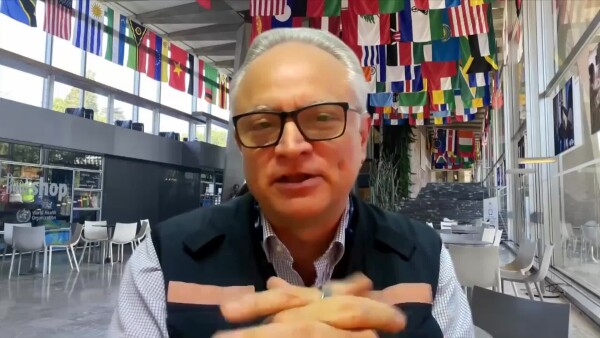
Increased violence, natural disasters and disease outbreaks have fueled the deteriorating health situation in the eastern part of the Democratic Republic of Congo (DRC), said Dr. Jorge Castilla, Senior Emergency Officer of the World Health Organization (WHO) on Friday when briefing journalists at the United Nations in Geneva: “There has been a huge repetitive and very difficult increase of displacement with a total of 7.4 million in DRC that are in need of (health) assistance.”
Since March 2022, almost 3 million people have been forced from their homes in the eastern part of the country, in North Kivu, South Kivu and Ituri provinces, due to attacks from armed groups which is severely impacting people’s health.
“With the different attacks that started in March in which Hutu population moves, they are attacked, they move, they are attacked”, said Dr. Castilla. “Several other areas like Masisi and Nyiragongo have had this same phenomenon collecting people around the city of Goma. And when they move, also diseases move with them. Cholera has spread through the area, and it is now prevalent with 25,000 cases. The area where they arrived has the highest number.”
The country’s health system and resources are under pressure due to concurrent outbreaks of COVID-19, measles, polio and mpox but also yellow fever, cholera and malaria which are on the rise due to recurrent natural disaster and lack of access to safe water and sanitation for those on the move, said the WHO.
Their data has shown that since mid-March 2023, the DRC has been experiencing a large cholera outbreak with an average of 1,000 cases per week. As of 12 June 2023, a total of 24 562 cases and 156 deaths were reported.
The WHO has planned a measles vaccination campaign to take place in the next days. The two provinces of North Kivu and South Kivu alone account for 82% of the more than 136 000 measles cases, including 2,000 deaths, recorded in the country so far this year.
In addition to the armed violence, flooding earlier this year killed and injured hundreds of people and affected 36 health facilities in North Kivu, South Kivu, Kasai and Tshopo provinces, further increasing health needs. Attacks on health care have also impacted access to health care interventions.
According to WHO’s Dr. Castilla who spoke from Kinshasa, “the international attention came to the area because of the landslides and the floods that were in the news with injured people and facilities destroyed. So, the entire health system is really under stress.”
Hunger and malnutrition are growing, said the WHO expert, forcing the displaced to sporadically return to their areas of origin to collect resources, exposing them to further violence and to mental health and psychosocial strain.
“There is this increase in malnutrition and this increasing gap between the needs and the assistance,” noted Dr. Castilla. “The whole UN system, the humanitarian system, decided on the 16th of this month to do a three-month scale-up for everybody in order to improve the actions of the different partners there.”
Close to 26 million people are facing acute food insecurity in 2023, said WHO’s Emergency officer, the world's highest number of food insecure people. Acute malnutrition is severely affecting children under the age of 5, pregnant women and lactating mothers.
From the overall US$174 million which is required to provide urgent health assistance, only US$23 million (13%), have been mobilized so far, informed the WHO.
-ends-
- Exterior wide shot: UN Palais with flags
- SOUNDBITE (English) – Dr. Jorge Castilla, Senior Emergency Officer at the World Health Organization (WHO): “There has been a huge repetitive and very difficult increase of displacement with a total of 7.4 million in DRC that are in need of assistance.”
- Exterior medium shot: UN Palais with flags
- SOUNDBITE (English) – Dr. Jorge Castilla, Senior Emergency Officer at the World Health Organization (WHO): “With the different attacks that started in March in which Hutu population moves, they are attacked, they move, they are attacked. And several other areas like Masisi and Nyiragongo have had this same phenomenon collecting people around the city of Goma. And when they move, also diseases move with them. Cholera has spread through the area, and it is now prevalent with 25,000 cases. The area where they arrived has the highest number.”
- Exterior medium shot: UN Palais with flags
- SOUNDBITE (English) – Dr. Jorge Castilla, Senior Emergency Officer at the World Health Organization (WHO): “On top of this, I think the international attention came to the area because of the landslides and the floods that were in the news with injured people and facilities destroyed. So the entire health system is really under stress.”
- Exterior wide shot: UN Palais with flags
- SOUNDBITE (English) – Dr. Jorge Castilla, Senior Emergency Officer at the World Health Organization (WHO): “There is this increase in malnutrition and this increasing gap between the needs and the assistance. So, the whole UN system, the humanitarian system, decided on the 16th of this month to do a three-month scale-up for everybody in order to improve the actions of the different partners there.”
- Exterior wide shot: UN Palais garden with UN flag
Similar Stories
1
1
1
Edited News | OCHA , UNICEF , WFP
Aid agencies warned on Friday of the fast-developing humanitarian emergency inside Taiz City in Yemen, which has been encircled by de facto Houthi forces fighting government troops along the country’s west coast.

2
17
1
2
Edited News , Press Conferences , Images | OCHA , WMO
Two UN agencies teamed up on Wednesday to issue an appeal for immediate assistance to help communities already being impacted by the strongest El Niño on record.
3
16
2
2
Edited News , B-roll , Conferences , Images | UNITED NATIONS , UNOG
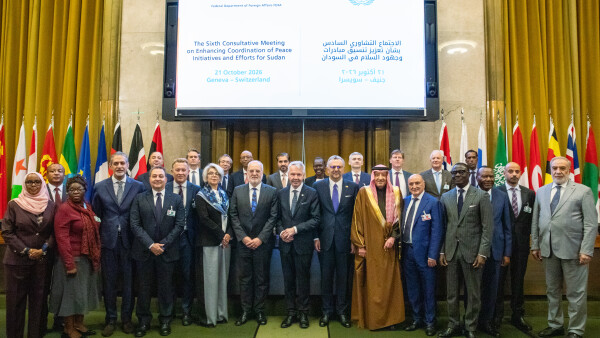
Sixth Consultative Meeting on Enhancing Coordination of Peace Initiatives and Efforts for Sudan
1
1
1
Edited News | UNICEF , WHO , UNHCR
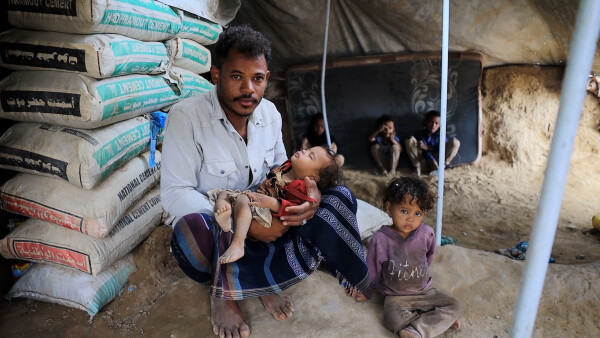
Yemen war continues to force families from homes amid hunger and disease
More than 250,000 people have now fled renewed fighting in Yemen, the UN said on Tuesday, citing particular concern for those sheltering in the southwestern city of Taiz and the wider governorate, where access is “essentially blocked”.

1
1
1
Edited News | UNICEF
A little over one year since a ceasefire agreement was announced between Hamas fighters and Israel, more than 340 children have been reported killed and hundreds more injured, the UN Children’s Fund, UNICEF, said on Friday.

1
1
1
Edited News | UNICEF , IFRC
Six weeks after Nepal’s deadly flooding disaster, communities are still struggling to rebuild their lives, but they will need sustained help as global warming increases the risk of another Himalayan catastrophe, the UN Children’s Fund (UNICEF) said on Friday.

1
1
1
Edited News | WHO
In suspected Russia plague death, testing and monitoring underway – WHO
The death of a lab worker in Russia’s Siberia region has sparked concerns about plague being the cause, the UN World Health Organization (WHO) said on Tuesday, adding that it was following the situation closely.

1
1
Edited News | OHCHR , UNOG
UN Human Rights Chief Volker Türk on Friday provided and oral update to the 63rd session of the Human rights Council on Ukraine.

1
1
1
Edited News | OHCHR , UNOG
UN Human Rights Chief Volker Türk on Friday provided and oral update to the 63rd session of the Human rights Council on the human rights situation in Haiti.

1
1
1
Edited News | WHO
Repeated delays in bringing lifesaving medicines, prosthetics and more from Israel into Gaza risk having devastating consequences on Palestinians who urgently need them in the wartorn enclave, the UN World Health Organization (WHO) said on Friday. “A truck full of non-priority supplies or the right supplies arriving too late, doesn't save lives. That's the question that actually matters," said Dr Reinhilde Van De Weerdt, WHO Representative in the OPT.

1
1
1
Edited News | WHO
DRC: Early access to care and oxygen decisive for Ebola patients’ survival – WHO
In the Democratic Republic of the Congo (DRC), health workers fighting the country’s largest-ever Ebola outbreak are struggling to overcome critical challenges to patient care, the UN World Health Organization (WHO) warned on Tuesday.

1
1
1
Edited News | OCHA , UN
Civilians in Iran are continuing to feel the consequences of months of conflict and military escalation, the UN’s top official in the country has said, as loss of life, damage to civilian infrastructure and mounting economic pressures leave many facing continued uncertainty.