

The United Nations Office at Geneva
Multimedia Newsroom
Worsening air quality through heatwaves - WMO
Climate change is having a measurable impact on air quality and therefore human health, meaning the two must be tackled together, the World Meteorological Organization (WMO) said on Wednesday.
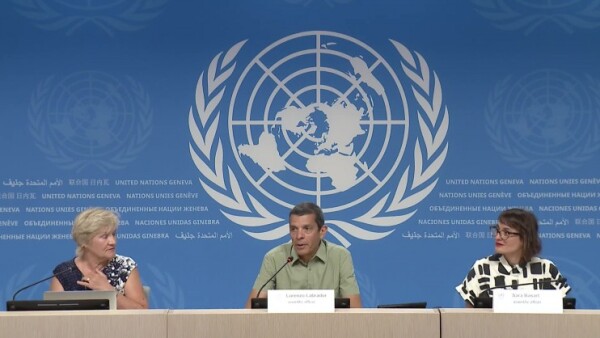
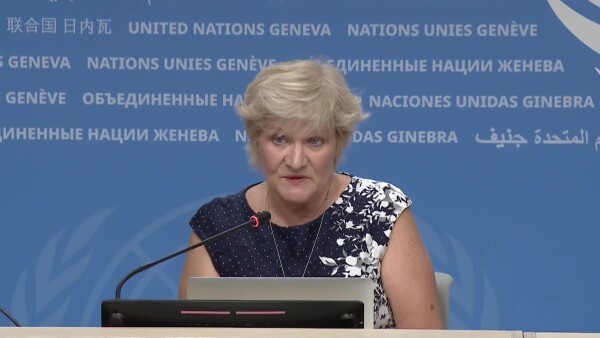
“This record-breaking summer sets the scene for the fact that we are seeing more extreme heat, we are seeing more heatwaves. This does have an impact on human health and on air quality,” said Clare Nullis, WMO spokesperson, at a press conference at the United Nations in Geneva.
The 2023 WMO Air Quality and Climate Bulletin noted that high temperatures are not only a hazard by themselves, but they also trigger damaging pollution.
“The coincidence of high temperature and high levels of particulate matter, such as from forest fires or desert dusts, poses a dangerous health risk for large parts of the population in the world,” stressed Lorenzo Labrador, WMO scientific officer.
Echoing that message, Ms. Nullis noted that global sea surface temperatures were “unprecedented” while Antarctic sea ice was “unprecedentedly low for this time of year”.
In addition, August was the hottest on record “by a big margin. It’s the second hottest month ever and this follows July 2023 which was the hottest month on record.”
Climate change is increasing the frequency and intensity of heatwaves. Smoke from wildfires contain chemicals that affect not only air quality and health, but also damage plants, ecosystems and crops.
“The lengthy heatwave in September of 2022 over the northwestern United States, which correlated with large wildfires and a significant degradation in air quality over the region,” said Mr. Labrador.
He added that “during July 2022, a heatwave was observed across Europe, where hundreds of air quality monitoring sites exceeded the World Health Organization ozone air quality guide lined level of a hundred milligrams per meter cube for an eight-hour exposure.”
WMO pointed out in their report that people who live and work in cities experience the most intense conditions when it comes to heat since they are surrounded by tall buildings.
“Air quality and climate change should be studied not as separate subjects but should be studied together”, according to WMO’s Mr. Labrador. “They are inseparable in the sense that many of the gases that are responsible for climate change are also emitted by the same sources that cause air pollution. Furthermore, there is an intricate link in the set of chemical reactions whereby atmospheric pollutants are produced in part from global greenhouse gases.”
WMO released its report ahead of Thursday’s International Day of Clean Air for blue skies.
-ends-
STORY: Worsening air quality through heatwaves - WMO
DURATION (TRT): 2:24"
SOURCE: UNTV CH
LANGUAGE: ENGLISH/NATS
ASPECT RATIO: 16/9
DATELINE: 6 September 2023, GENEVA SWITZERLAND
FORMAT: HYBRID PRESS BRIEFING
- Exterior medium shot: UN flag alley, UN Geneva
- Wide shot: speakers behind podium, attendees at the press conference, screens with speaker
- SOUNDBITE (English) – Clare Nullis, WMO spokesperson: “Global sea surface temperatures are unprecedented. Antarctic sea ice is unprecedentedly low for this time of year and it was the hottest August on record by a big margin. It’s the second hottest month ever and this follows July 2023 which was the hottest month on record.”
- Medium shot: attendees at the press conference
- SOUNDBITE (English) – Clare Nullis, WMO spokesperson: “This record breaking summer sets the scene for the fact that we are seeing more extreme heat, we are seeing more heatwaves. This does have an impact on human health and on air quality.”
- Wide shot: speakers behind podium, attendees at the press conference, screens with speaker
- SOUNDBITE (English) – Lorenzo Labrador, WMO scientific officer: “The coincidence of high temperature and high levels of particulate matter, such as from forest fires or desert dusts, poses a dangerous health risk for large parts of the population in the world.”
- Wide shot: attendees, cameramen/women and sound engineers at the press conference
- SOUNDBITE (English) – Lorenzo Labrador, WMO scientific officer: “The lengthy heatwave in September of 2022 over the northwestern United States, which correlated with large wildfires and a significant degradation in air quality over the region.”
- Close shot: attendee taking notes at the press conference
- SOUNDBITE (English) – Lorenzo Labrador, WMO scientific officer: “During July 2022, a heatwave was observed across Europe, where hundreds of air quality monitoring sites exceeded the World Health Organization ozone air quality guidelined level of a hundred milligrams per meter cube for an eight hour exposure.”
- Medium shot: attendees and cameraman at the press conference, screens with speaker
- SOUNDBITE (English) – Lorenzo Labrador, WMO scientific officer: “Air quality and climate change should be studied not as separate subjects but should be studied together. They are inseparable in the sense that many of the gases that are responsible for climate change are also emitted by the same sources that cause air pollution. Furthermore, there is an intricate link in the set of chemical reactions whereby atmospheric pollutants are produced in part from global greenhouse gases.”
- Medium shot: speakers behind podium at the press conference
- Close shot: attendee taking notes at the press conference
- Close shot: camerawoman and sound engineer at the press conference
Similar Stories
1
1
1
Edited News | OCHA , UNICEF , WFP
Aid agencies warned on Friday of the fast-developing humanitarian emergency inside Taiz City in Yemen, which has been encircled by de facto Houthi forces fighting government troops along the country’s west coast.
1
1
1
Press Conferences | UN WOMEN , WFP , WHO
UN WOMEN: Sudan Women and girls one year after the fall of El Fasher; increasing drone attacks across the country; WFP: DRC - Ebola spreads to eighth DRC province as WFP delivers food, builds treatment centres and keeps supplies moving; WHO - Update on Ebola (Bundibugyo Virus Disease)
1
12
1
1
Press Conferences , Images | UNOG
Closing Press Conference following the Sixth Consultative Meeting on Enhancing Coordination of Peace Initiatives and Efforts in Sudan

2
17
1
2
Edited News , Press Conferences , Images | OCHA , WMO
Two UN agencies teamed up on Wednesday to issue an appeal for immediate assistance to help communities already being impacted by the strongest El Niño on record.

3
16
2
2
Edited News , B-roll , Conferences , Images | UNITED NATIONS , UNOG
Sixth Consultative Meeting on Enhancing Coordination of Peace Initiatives and Efforts for Sudan
1
1
1
Press Conferences | CITES
Wildlife trade and conservation policy discussions at the 81st meeting of the CITES Standing Committee (SC81)

1
1
1
Edited News | UNICEF , WHO , UNHCR
Yemen war continues to force families from homes amid hunger and disease
More than 250,000 people have now fled renewed fighting in Yemen, the UN said on Tuesday, citing particular concern for those sheltering in the southwestern city of Taiz and the wider governorate, where access is “essentially blocked”.
1
1
1
Press Conferences | UNHCR , UNCTAD , WMO , OCHA , UNICEF , WHO
UNHCR Hungary’s 1956 Refugee Crisis: 70 Years On, UNCTAD World Investment Forum 2026, Doha, WMO Greenhouse Gas Bulletin and Climate Update for COP31, OCHA Afghanistan: Malnutrition, Girls’ Education and Recovery, UNICEF Yemen: Child Malnutrition and Unsafe Water in Taiz, WHO Inequalities in Noncommunicable Diseases and Risk Factors
1
1
1
Press Conferences | UNHCR
End of UNHCR's 77th Annual Executive Committee (ExCom) meeting week

1
1
1
Edited News | UNICEF
A little over one year since a ceasefire agreement was announced between Hamas fighters and Israel, more than 340 children have been reported killed and hundreds more injured, the UN Children’s Fund, UNICEF, said on Friday.
1
1
1
Press Conferences | UNICEF , IOM , UNHCR
UN Special Assistant to the Personal Envoy Office (SUDAN): Peace Initiatives and Efforts in Sudan; UNICEF: Dire situation of children in Gaza; IOM: Damaged Homes and Energy Attacks Risk Displacing Ukrainians for this winter; UNHCR: update on EXCOM week
1
1
1
Press Conferences | IOM , UNDRR
UN stresses importance of household preparedness for disaster risk reduction.