

The United Nations Office at Geneva
Multimedia Newsroom
Edited News , Press Conferences | WMO
Lack of progress to combat climate change hampers fight against poverty, hunger
Lack of progress to combat climate change hampers fight against poverty, hunger
The world is far from meeting its climate goals, seriously undermining efforts to tackle hunger, poverty and ill-health, the UN World Meteorological Organization (WMO) said on Thursday.
Launching a new multi-agency report coordinated by the WMO, the UN agency also warned that insufficient progress towards climate goals is preventing better access to clean water and energy, and many other aspects of sustainable development.
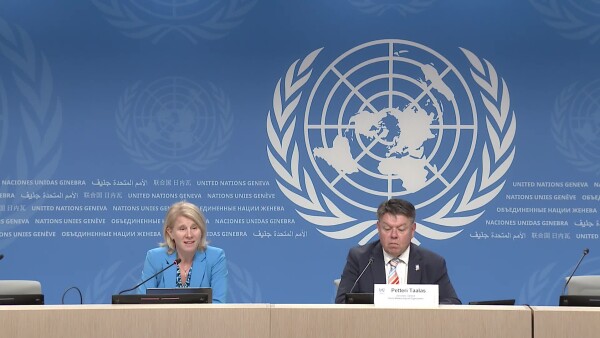
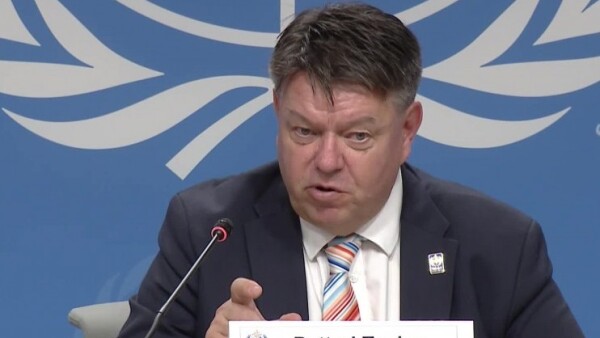
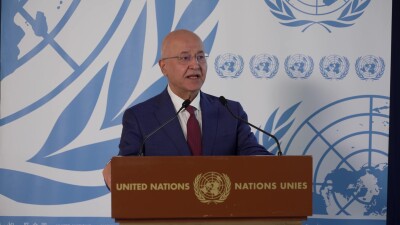
“We are not going to meet climate targets and we are not going to meet the Sustainable Development Goal targets either at the current pace of action”, said Professor Petteri Taalas, WMO’s Secretary-General, at the UN in Geneva. “This was a demonstration of what has happened to the emissions in various parts of the world a year ago and from 2022 to 2023.”
The report, entitled “United in Science 2023” combines input and expertise from 18 UN organizations. It notes that at the midway point of the SDG 2030 Agenda, only 15 per cent of the goals have been achieved. When the SDG Agenda was launched in 2015 in New York, the aim was “a world of universal respect for human rights and human dignity, the rule of law, justice, equality and non-discrimination”.
According to Professor Taalas between 1970 and 2021, “we have seen 12,000 disasters related to weather and there have been two million people who have been killed in those disasters, mostly in less developed countries, 90 per cent in less developed countries. And there has been $4.3 trillion losses and 60 per cent of those have been taking place in less developed countries.”
The report underlines that science is central to find solutions to many of the current challenges the world faces.
“In the report we are demonstrating that with science and services, we can mitigate these negative impacts of climate change”, said the WMO chief. “At the moment, we have a major program called ‘Early Warning Services for All’. So what we aim is that in five years we would have 100 per cent coverage of proper early warning services, also in less developed countries in Africa and island states.”
The report shows how weather forecasting helps to boost food production and efforts to end hunger. Early warning-systems help to reduce poverty by giving people the change to prepare and limit the impact.
The need for science and solutions is more urgent than ever; 2023 has shown that climate change is here with record temperatures and extreme weather causing havoc around the globe.
“We have this record ocean heat this year, which is having impacts on ecosystems and fisheries, and it's also boosted by the acidification of the seawater since oceans serve as a sink of carbon dioxide,” said Professor Taalas.
Some future changes in climate are unavoidable, and potentially irreversible, but every fraction of a degree and every ton of CO2 matters if global warming is to be slowed and the SDGs achieved, says the report.
“The negative trend in weather patterns will anyhow continue until 2060,” said Professor Taalas. “There is no return back to last century's climate anymore and this glacier melting and sea level rise game we have already lost”. He added that “may be a problem for the coming thousands of years because of the very high concentration of carbon dioxide. So this is a growing issue we have just seen the first impacts, but these negative impacts are gradually growing until 2060.”
There is now a 98 per cent chance that one of the next five years will be the warmest on record, according to the WMO, and it quotes the Intergovernmental Panel on Climate Change (IPCC) projection that long-term warming may reach the Paris level of 1.5C “in the early 2030s”.
However, WMO chief stressed that humankind is “not heading towards the end of the world. We are not heading towards the end of mankind, no biosphere, but we are talking about different scales of gray for the future. If we are able to reach the Paris limits of 1.5 to 2 degrees, then we could say that we will have a light gray future”.
The United in Science report was issued ahead of the SDG Summit and the Climate Action Summit which takes place at the UN General Assembly next week.
-ends-
STORY: Report launch: United in Science - WMO
DURATION (TRT): 3:00"
SOURCE: UNTV CH
LANGUAGE: ENGLISH/NATS
ASPECT RATIO: 16/9
DATELINE: 14 September 2023, GENEVA SWITZERLAND
- Exterior medium shot: UN flag alley, UN Geneva
- Wide shot: speakers at podium and attendees at the press conference, screens with speaker
- SOUNDBITE (English) – Petteri Taalas, WMO’s Secretary-General : “We are not going to meet climate targets and we are not going to meet the Sustainable Development Goal targets either at the current pace of action. This was a demonstration of what has happened to the emissions in various parts of the world a year ago and from 2022 to 2023”.
- Medium shot: attendee at the press conference
- SOUNDBITE (English) – Petteri Taalas, WMO’s Secretary-General: “We have seen 12,000 disasters related to weather and there have been 2 million people who have been killed in those disasters, mostly in less developed countries, 90 per cent in less developed countries. And there has been $4.3 trillion losses and 60 per cent of those have been taking place in less developed countries.”
- Close up: journalist
- SOUNDBITE (English) – Petteri Taalas, WMO’s Secretary-General: “In the report we are demonstrating that with science and services, we can mitigate these negative impacts of climate change. At the moment, we have a major program called ‘Early Warning Services for All’. So what we aim is that in five years we would have hundred percent coverage of proper early warning services, also in less developed countries in Africa and island states.”
- Close up: journalist listening
- SOUNDBITE (English) – Petteri Taalas, WMO’s Secretary-General: “We have this record ocean heat this year, which is having impacts on ecosystems and fisheries, and it's also boosted by the acidification of the seawater since oceans serve as a sink of carbon dioxide”.
- Close up: journalist from behind in front of this laptop
- SOUNDBITE (English) – Petteri Taalas, WMO’s Secretary-General: “The negative trend in weather patterns will anyhow continue until 2060. There is no return back to last century's climate anymore and this glacier melting and sea level rise game we have already lost that. That may be a problem for the coming thousands of years because of the very high concentration of carbon dioxide. So this is a growing issue we have just seen the first impacts, but these negative impacts are gradually growing until 2060.”
- Wide shot, podium with speakers
- SOUNDBITE (English) – Petteri Taalas, WMO’s Secretary-General: “We are not heading towards the end of the world. We are not heading towards the end of mankind, no biosphere, but we are talking about different scales of gray for the future. If we are able to reach the Paris limits of 1.5 to 2 degrees, then we could say that we will have a light gray future”.
- Wide shot, speakers at the podium with journalists in the press room
- Medium shot, attendees
- Wide shot, camera people
Similar Stories
1
1
1
Press Conferences | WMO , UNHCR , WHO , ILO
WMO: Greenhouse Gas Bulletin; UNHCR: As attacks intensify UNHCR urges support for war ravaged Ukrainians; WHO: Clinical trials in DRC: vaccines and beyond; ILO: New global and regional estimates on domestic work, informality and working conditions
1
1
1
Edited News | OCHA , UNICEF , WFP
Aid agencies warned on Friday of the fast-developing humanitarian emergency inside Taiz City in Yemen, which has been encircled by de facto Houthi forces fighting government troops along the country’s west coast.
1
1
1
Press Conferences | UN WOMEN , WFP , WHO
UN WOMEN: Sudan Women and girls one year after the fall of El Fasher; increasing drone attacks across the country; WFP: DRC - Ebola spreads to eighth DRC province as WFP delivers food, builds treatment centres and keeps supplies moving; WHO - Update on Ebola (Bundibugyo Virus Disease)
1
12
1
1
Press Conferences , Images | UNOG
Closing Press Conference following the Sixth Consultative Meeting on Enhancing Coordination of Peace Initiatives and Efforts in Sudan

2
17
1
2
Edited News , Press Conferences , Images | OCHA , WMO
Two UN agencies teamed up on Wednesday to issue an appeal for immediate assistance to help communities already being impacted by the strongest El Niño on record.

3
16
2
2
Edited News , B-roll , Conferences , Images | UNITED NATIONS , UNOG
Sixth Consultative Meeting on Enhancing Coordination of Peace Initiatives and Efforts for Sudan
1
1
1
Press Conferences | CITES
Wildlife trade and conservation policy discussions at the 81st meeting of the CITES Standing Committee (SC81)

1
1
1
Edited News | UNICEF , WHO , UNHCR
Yemen war continues to force families from homes amid hunger and disease
More than 250,000 people have now fled renewed fighting in Yemen, the UN said on Tuesday, citing particular concern for those sheltering in the southwestern city of Taiz and the wider governorate, where access is “essentially blocked”.
1
1
1
Press Conferences | UNHCR , UNCTAD , WMO , OCHA , UNICEF , WHO
UNHCR Hungary’s 1956 Refugee Crisis: 70 Years On, UNCTAD World Investment Forum 2026, Doha, WMO Greenhouse Gas Bulletin and Climate Update for COP31, OCHA Afghanistan: Malnutrition, Girls’ Education and Recovery, UNICEF Yemen: Child Malnutrition and Unsafe Water in Taiz, WHO Inequalities in Noncommunicable Diseases and Risk Factors
1
1
1
Press Conferences | UNHCR
End of UNHCR's 77th Annual Executive Committee (ExCom) meeting week

1
1
1
Edited News | UNICEF
A little over one year since a ceasefire agreement was announced between Hamas fighters and Israel, more than 340 children have been reported killed and hundreds more injured, the UN Children’s Fund, UNICEF, said on Friday.
1
1
1
Press Conferences | UNICEF , IOM , UNHCR
UN Special Assistant to the Personal Envoy Office (SUDAN): Peace Initiatives and Efforts in Sudan; UNICEF: Dire situation of children in Gaza; IOM: Damaged Homes and Energy Attacks Risk Displacing Ukrainians for this winter; UNHCR: update on EXCOM week