

The United Nations Office at Geneva
Multimedia Newsroom
Edited News | UNICEF
Mali security chaos leaves dozens of children dead in last month, warns UN Children’s Fund
Mali security chaos leaves dozens of children dead in last month, warns UN Children’s Fund
Protracted conflict across Mali, along with internal displacement and limited humanitarian access are among the unprecedented risks threatening the country’s most vulnerable youngsters, the UN Children’s Fund (UNICEF) said on Tuesday.
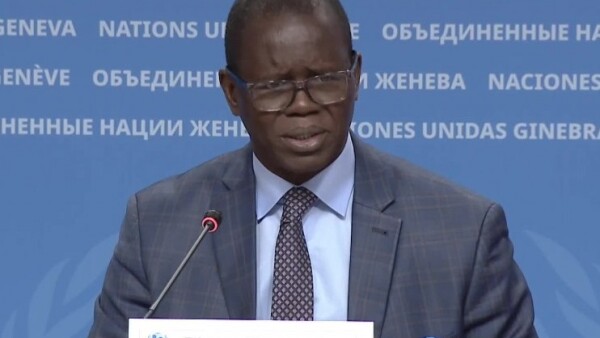
“Children continue…to pay the highest price of a gravely worsening security crisis in Mali,” said Pierre Ngom, UNICEF Representative in Mali.
Briefing reporters in Geneva via Zoom, he said that “dozens” of youngsters had already been killed this month in the north and centre of the country.
In eastern Mali, Mr. Ngom also noted that non-state armed groups had claimed responsibility for a series of attacks against Malian security forces positioned in Gao – the largest town in the east - as well as repeated shelling of the airport and military encampments in Timbuktu, in the country’s centre.
Against this backdrop of chronic insecurity, almost a quarter of the country’s population is now experiencing moderate or acute food insecurity, according to UNICEF. More than 2,500 individuals are on the brink of famine in the crisis-affected Menaka region, including many children.
“Shrinking humanitarian access and growing internal displacement of populations are fuelling a child malnutrition crisis with one million under five (year-old) children at risk amidst the resurgence of polio and (a) measles epidemic,” said the UNICEF representative.
“Non-state armed groups are imposing a blockade on Timbuktu by cutting off demand supply routes. On 7 September 2023, an attack on a boat in the Gao-Timbuktu axis resulted in the deaths of at least 24 children,” said Mr. Ngom.
The ongoing attacks continue to create chaos and danger for the children and their education.
“More than 1,500 schools are still closed, and 9,000 teachers are affected partly because of insecurity and half a million children will not be in school when the school opens in a few weeks”, Mr. Ngom warned. “This heightened insecurity is somehow amplified by MINUSMA's ongoing departure”, he said, in reference to the UN peacekeeping operation in Mali that is drawing to a close by the end of this year.
MINUSMA was established by the Security Council in 2013, following a coup the previous year. Over the past decade, it has become the UN’s most challenging peacekeeping mission, suffering over 303 fatalities amid continuing extremist violence and rampant insecurity across much of the north and centre.
By December, the mission’s 12 camps and one temporary operating base will be closed and handed over to transitional authorities, while its uniformed personnel numbering about 12,947 will be repatriated.
Civilian staff will also be drawn down, and equipment – a load of approximately 5,500 sea containers and nearly 4,000 vehicles - relocated to other missions or repatriated to the countries that provided them.
According to latest estimates, at least 1.6 million children are in urgent need of protection in Mali. In 2022, UN agencies verified 1,024 grave violations against them, including recruitment and use by armed forces and armed groups, killing and maiming.
-ends-
Story: Mali worsening security crisis – UNICEF
DURATION (TRT): 2’07"
SOURCE: UNTV CH
LANGUAGE: ENGLISH/NATS
ASPECT RATIO: 16/9
DATELINE: 26 September 2023, GENEVA SWITZERLAND
FORMAT: HYBRID PRESS BRIEFING
- Exterior medium shot: UN flag alley, UN Geneva
- Wide shot: speakers and attendees at the press conference, screens with speaker
- SOUNDBITE (English) – Pierre Ngom, UNICEF Representative in Mali: “Children continue, indeed, to pay the highest price of a gravely worsening security crisis in Mali. Dozens have been killed this month alone in the north and in the center of the country.”
- Medium shot: attendees at the press conference
- SOUNDBITE (English) – Pierre Ngom, UNICEF Representative in Mali: “Non-state armed groups are imposing a blockade on Timbuktu by cutting off demand supply routes. On September 7th 2023, an attack on a boat in the Gao-Timbuktu axis resulted in the deaths of at least 24 children.”
- Medium shot: attendees at the press conference
- SOUNDBITE (English) – Pierre Ngom, UNICEF Representative in Mali: “Shrinking humanitarian access and growing internal displacement of populations are fueling a child malnutrition crisis with 1 million under 5 (years of age) children at risk amidst the resurgence of polio and measles epidemic.”
- Wide shot: speakers, attendees, cameramen/women and sound engineers at the press conference, screens with speaker
- SOUNDBITE (English) – Pierre Ngom, UNICEF Representative in Mali: “More than 1,500 schools are still closed, and 9,000 teachers are affected partly because of insecurity and half a million children will not be in school when the school opens in a few weeks. This heightened insecurity is somehow amplified by MINUSMA's (UN mission in Mali) ongoing departure.”
- Medium shot: speakers at the press conference
- Medium shot: sound engineers and cameramen at the press conference
- Close shot: attendees at the press conference
Similar Stories

1
1
1
Edited News | OCHA , UNICEF , WFP
Aid agencies warned on Friday of the fast-developing humanitarian emergency inside Taiz City in Yemen, which has been encircled by de facto Houthi forces fighting government troops along the country’s west coast.

2
17
1
2
Edited News , Press Conferences , Images | OCHA , WMO
Two UN agencies teamed up on Wednesday to issue an appeal for immediate assistance to help communities already being impacted by the strongest El Niño on record.

3
16
2
2
Edited News , B-roll , Conferences , Images | UNITED NATIONS , UNOG
Sixth Consultative Meeting on Enhancing Coordination of Peace Initiatives and Efforts for Sudan

1
1
1
Edited News | UNICEF , WHO , UNHCR
Yemen war continues to force families from homes amid hunger and disease
More than 250,000 people have now fled renewed fighting in Yemen, the UN said on Tuesday, citing particular concern for those sheltering in the southwestern city of Taiz and the wider governorate, where access is “essentially blocked”.

1
1
1
Edited News | UNICEF
A little over one year since a ceasefire agreement was announced between Hamas fighters and Israel, more than 340 children have been reported killed and hundreds more injured, the UN Children’s Fund, UNICEF, said on Friday.

1
1
1
Edited News | UNICEF , IFRC
Six weeks after Nepal’s deadly flooding disaster, communities are still struggling to rebuild their lives, but they will need sustained help as global warming increases the risk of another Himalayan catastrophe, the UN Children’s Fund (UNICEF) said on Friday.

1
1
1
Edited News | WHO
In suspected Russia plague death, testing and monitoring underway – WHO
The death of a lab worker in Russia’s Siberia region has sparked concerns about plague being the cause, the UN World Health Organization (WHO) said on Tuesday, adding that it was following the situation closely.

1
1
Edited News | OHCHR , UNOG
UN Human Rights Chief Volker Türk on Friday provided and oral update to the 63rd session of the Human rights Council on Ukraine.

1
1
1
Edited News | OHCHR , UNOG
UN Human Rights Chief Volker Türk on Friday provided and oral update to the 63rd session of the Human rights Council on the human rights situation in Haiti.

1
1
1
Edited News | WHO
Repeated delays in bringing lifesaving medicines, prosthetics and more from Israel into Gaza risk having devastating consequences on Palestinians who urgently need them in the wartorn enclave, the UN World Health Organization (WHO) said on Friday. “A truck full of non-priority supplies or the right supplies arriving too late, doesn't save lives. That's the question that actually matters," said Dr Reinhilde Van De Weerdt, WHO Representative in the OPT.

1
1
1
Edited News | WHO
DRC: Early access to care and oxygen decisive for Ebola patients’ survival – WHO
In the Democratic Republic of the Congo (DRC), health workers fighting the country’s largest-ever Ebola outbreak are struggling to overcome critical challenges to patient care, the UN World Health Organization (WHO) warned on Tuesday.

1
1
1
Edited News | OCHA , UN
Civilians in Iran are continuing to feel the consequences of months of conflict and military escalation, the UN’s top official in the country has said, as loss of life, damage to civilian infrastructure and mounting economic pressures leave many facing continued uncertainty.