

The United Nations Office at Geneva
Multimedia Newsroom
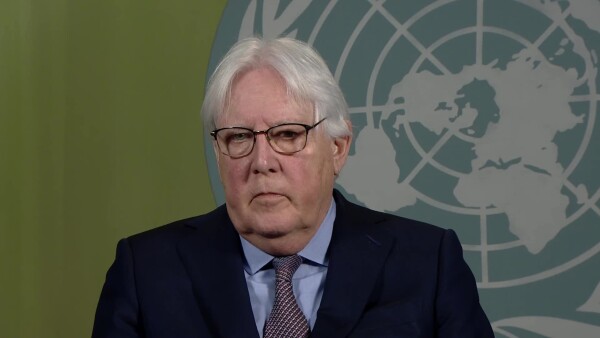
The UN's emergency relief chief Martin Griffiths on Monday expressed deep concern about the deepening humanitarian crisis in Gaza and the fate of Israeli hostages, while also anticipating "good news" regarding aid access into southern Gaza from Egypt.
“History is watching,” Martin Griffiths told UN News in Geneva, highlighting the desperate situation facing around one million Gazans uprooted in recent days, after the Israeli military warned of an imminent offensive following the deadly 7 October attack on Israel by militant group Hamas.
“Aid access is our overwhelming priority. And we are in deep discussions hourly with the Israelis, with the Egyptians, with the Gazans about how to do that,” Mr. Griffiths said, adding that he was optimistic about hearing “some good news” soon that a solution could be found to the political impasse.
Transcription:
“We're living in the worst of times. The first thing I want to emphasize is the unacceptable, illegal act to take those hostages from Israel, many of whom, for God's sake, are children, women, old and sick, and keep them hidden in Gaza against some future eventuality. They have to be let out straight away.
Number two: the response to that egregious act also includes humanitarian rules of war. You cannot ask people to move out of harm's way without assisting them to do it, to go to places of their choice where they want to be safe and with the humanitarian aid that they need to make that journey safely.
And right now, the movement that has happened has not had those provisions and it must have it; hospitals are running out of fuel, are running out of supplies up in the north. People can't move without help.
Number three: we need access for aid. We are in deep discussions with the Israelis, with the Egyptians and with others, hugely helped by Secretary Blinken in his travels around the region. And I'm hoping to hear some good news this morning about getting aid through Rafah, one of the crossing points but an important one, into Gaza to help those million people who have moved south as well as those who live there already. So, rules of war, aid, access.
I shall be going myself tomorrow to the region to try to help in the negotiations, to try to bear witness and to express solidarity with the extraordinary courage of the many thousands of aid workers who have stayed the course and who are still there helping the people in Gaza and in the West Bank.
And I want to leave you with one final thought. History tells us that an act of war has consequences which are often unconsidered, when people move into those acts of war. We have seen this movie far too often before. We need to be concerned about creating a situation - absurd as it may seem at the moment - where Israelis and Palestinians can live as neighbours, as friends, ideally, certainly as interlocutors, where they do not need to teach each other lessons through war.
Thank you.”
Similar Stories

1
1
1
Edited News | UNICEF
A little over one year since a ceasefire agreement was announced between Hamas fighters and Israel, more than 340 children have been reported killed and hundreds more injured, the UN Children’s Fund, UNICEF, said on Friday.

1
1
1
Edited News | UNICEF , IFRC
Six weeks after Nepal’s deadly flooding disaster, communities are still struggling to rebuild their lives, but they will need sustained help as global warming increases the risk of another Himalayan catastrophe, the UN Children’s Fund (UNICEF) said on Friday.

1
1
1
Edited News | WHO
In suspected Russia plague death, testing and monitoring underway – WHO
The death of a lab worker in Russia’s Siberia region has sparked concerns about plague being the cause, the UN World Health Organization (WHO) said on Tuesday, adding that it was following the situation closely.

1
1
Edited News | OHCHR , UNOG
UN Human Rights Chief Volker Türk on Friday provided and oral update to the 63rd session of the Human rights Council on Ukraine.

1
1
1
Edited News | OHCHR , UNOG
UN Human Rights Chief Volker Türk on Friday provided and oral update to the 63rd session of the Human rights Council on the human rights situation in Haiti.

1
1
1
Edited News | WHO
Repeated delays in bringing lifesaving medicines, prosthetics and more from Israel into Gaza risk having devastating consequences on Palestinians who urgently need them in the wartorn enclave, the UN World Health Organization (WHO) said on Friday. “A truck full of non-priority supplies or the right supplies arriving too late, doesn't save lives. That's the question that actually matters," said Dr Reinhilde Van De Weerdt, WHO Representative in the OPT.

1
1
1
Edited News | WHO
DRC: Early access to care and oxygen decisive for Ebola patients’ survival – WHO
In the Democratic Republic of the Congo (DRC), health workers fighting the country’s largest-ever Ebola outbreak are struggling to overcome critical challenges to patient care, the UN World Health Organization (WHO) warned on Tuesday.

1
1
1
Edited News | OCHA , UN
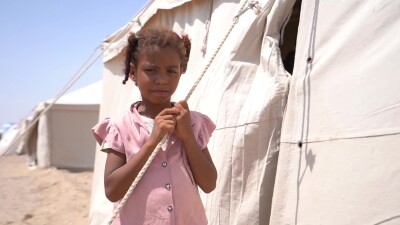
Civilians in Iran are continuing to feel the consequences of months of conflict and military escalation, the UN’s top official in the country has said, as loss of life, damage to civilian infrastructure and mounting economic pressures leave many facing continued uncertainty.
1
1
1
Edited News | WHO , UNICEF
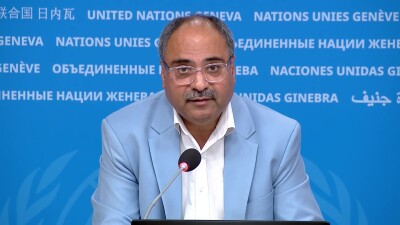
Aid agencies in Yemen highlighted the growing hunger emergency sparked by renewed fighting between Houthi opposition forces and Government troops, after mobile health clinics reported that hundreds of children displaced by the violence are suffering from the most deadly form of malnutrition.
1
1
1
Edited News | UNHCR
Displacement on the rise in Yemen as fighting continues - UNHCR
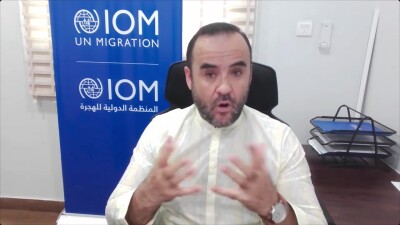
As hostilities worsen in Yemen, more people have been fleeing their homes, further intensifying the humanitarian crisis within the region, the UN Refugee Agency (UNHCR) warned on Tuesday.
1
1
1
Edited News | IOM , OHCHR , UNFPA , UNOG , UNHCR , WHO
Yemen’s humanitarian crisis growing by the hour amid spike in displacement
Yemenis displaced by renewed fighting have described fleeing for their lives amid shelling and gunfire, aid agencies reported on Friday, while highlighting the dramatic increase in humanitarian needs in the country and in Djibouti, where thousands have sought shelter.
1
1
1
Edited News | OHCHR , UNOG
The UN Human Rights Office issued on Friday a report documenting a shocking pattern of sexual violence amid Russia’s full-scale armed attack on Ukraine.