

The United Nations Office at Geneva
Multimedia Newsroom
Chad: With 5.7 million people food insecure, more urgent funding is required, says OCHA
The humanitarian crisis in Chad that’s been driven by a deadly combination of food insecurity, forced displacement, health emergencies and climate change shocks prompted an urgent UN request on Monday for funding to assist seven million people out of at total population of 18 million.
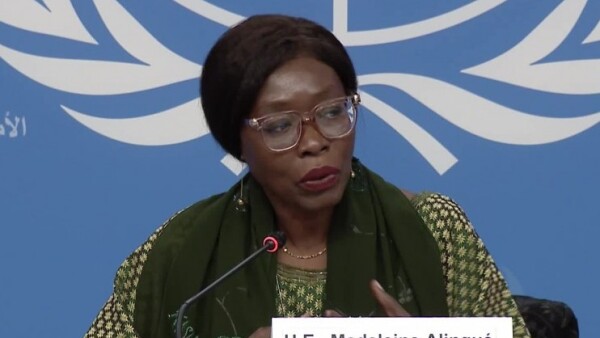
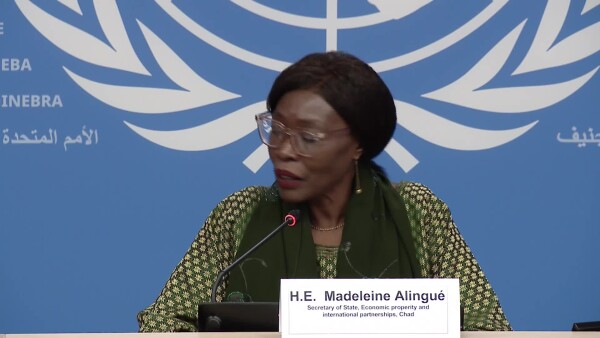
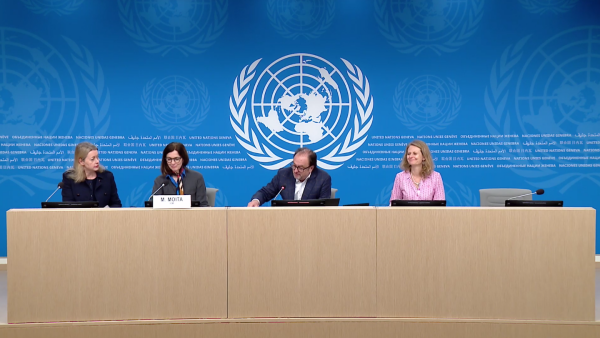
“Chad lives in a regional context which is difficult and which is also very unstable,” said Madeleine Alingué, Chad’s Secretary of State for Economic Prosperity and international Partnerships on Monday.
Briefing reporters at the UN in Geneva she explained that Chad shared its border countries “in crisis. Our border with Libya is in crisis, our border with Niger, with the CAR, with Sudan, the instability of all these countries generates a direct impact on us,” she said.
“More recently, from Sudan, we have received over 460,000 refugees since April of this year. This has put enormous pressure on our already precarious and limited resources,” added Ms. Alingué.
The influx of people from Sudan, combined with insufficient funding, have put a massive strain on already-fragile support services. Today, one in every 17 people living in Chad is a refugee, according to the UN Office for the Coordination of Humanitarian Affairs (OCHA).
Chad suffers from recurrent diseases and epidemics such as malaria, measles and meningitis, affecting almost 1.7 million people, half of whom are women and girls. They face problems of access to basic health care throughout the country, said OCHA.
Its revised Humanitarian Response Plan for 2023 targets 5.2 million people out of 7.6 million in need. More than six months into the response, Chad has received 26 per cent (or $244 million) out of the required funding of a total $920.6 million.
“The HRP (Humanitarian Response Plan) for Chad states that more than 7.7 million people are in need of assistance. 3.6 million people are food insecure. We have 1.1 million refugees and displaced people in the country. So that means that the needs are enormous,” reported Ms. Alingué.
Humanitarians have described the situation in Chad as complex, while needs remain high.
“Chad, in addition to the situation of refugees and internally displaced persons, faces a situation of food insecurity and malnutrition which affects 5.7 million people with 2.1 million of them finding themselves in a situation very critical,” said Violet Kakyomya, UN Resident Coordinator and Humanitarian Coordinator in Chad.
Last year saw the worst lean season in a decade, leaving 2.1 million people severely food insecure. Although the projected figures for the 2023 lean season are lower, they still forecast 1.86 million severely food insecure people.
Joining the call to more urgent funding, Pierre Honnorat, Director and Representative of the UN World Food Programme (WFP) in Chad described the situation in Chad as “catastrophic”. Multiple emergencies have stretched the UN agency’s capacity to respond in full to those in need.
“We have to respond to…six emergencies: we support the Government's response in these six emergencies which are the Cameroonian refugees, Nigerien refugees, refugees from the Central African Republic, Sudanese refugees today and of course internally displaced people, plus as I say, this lean season. So, we really need support and this is a call today. »
Some 2.5 million Chadians received food assistance in the first six months of 2023 and 560,000 benefited from a nutritional intervention; 320,000 children have received school meals.
-ends-
STORY: CHAD Update humanitarian situation - OCHA
TRT: 2 min 30s
SOURCE: UNTV CH
RESTRICTIONS: NONE
LANGUAGE: FRENCH/ENGLISH / NATS
ASPECT RATIO: 16:9
DATELINE: 16 October 2023 GENEVA, SWITZERLAND
- Exterior medium shot: UN flag alley, UN Geneva
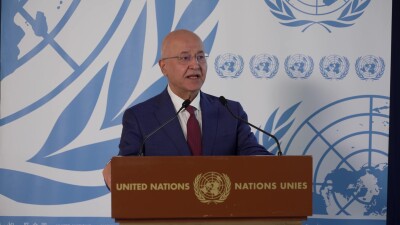
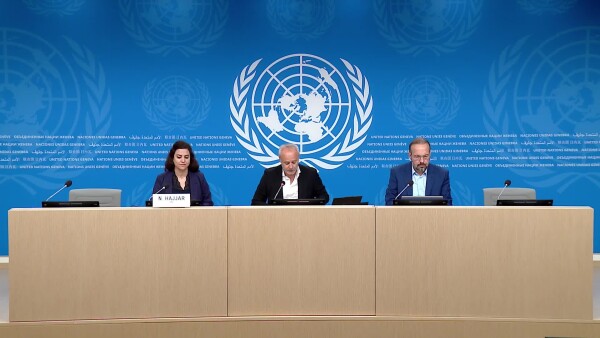
- Wide shot: speakers at the podium
- SOUNDBITE (French) – Madeleine Alingué, Secretary of State, Economic prosperity and international partnerships, Chad: “Le Tchad vit dans un context regional qui est difficile, qui est également très instable. Nous vivons avec des pays frontaliers qui sont en crise. Vous connaissez tous notre frontière avec la Libye est en crise, notre frontière avec le Niger, avec la RCA, avec le Soudan, l’instabilité de tous ces pays génèrent chez nous un impact direct. »
“Chad lives in a regional context which is difficult, which is also very unstable. We live with border countries which are in crisis. You all know our border with Libya is in crisis, our border with Niger, with the CAR, with Sudan, the instability of all these countries generates a direct impact on us. »
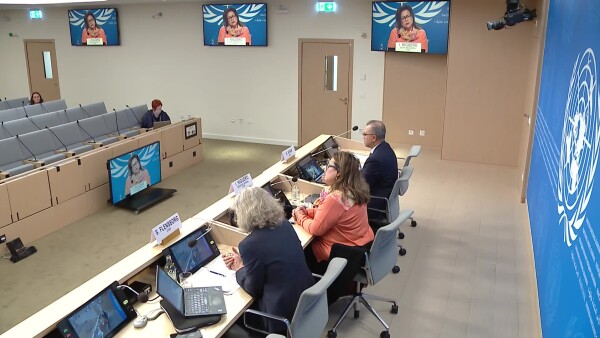
4. Wide shot, attendees at the press conference with screen of speaker
5. SOUNDBITE (French) – Madeleine Alingué, Secretary of State, Economic prosperity and international partnerships, Chad : « Plus récemment, du Soudan, vous le savez, nous avons reçu plus de 460, 000 réfugiés depuis depuis avril de cette année. Cela a mis une pression énorme sur nos ressources déjà précaires et limitées. «
“More recently, from Sudan, as you know, we have received over 460,000 refugees since April of this year. This has put enormous pressure on our already precarious and limited resources. “
6.Wide shot, press room with speakers at the podium and attendees
7. SOUNDBITE (French) – Madeleine Alingué, Secretary of State, Economic prosperity and international partnerships, Chad : “Le Tchad a répertorié dans son HRP (Humanitarian Response Plan) plus de 7,7 millions de personnes ont besoin d'assistance. 3.6 millions de personnes en insécurité alimentaire. Nous avons 1.1 million de personnes réfugiées et déplacés dans le pays. Donc ça veut dire que les besoins sont énormes. »
“The HRP (Humanitarian Response Plan) for Chad states that more than 7.7 million people are in need of assistance. 3.6 million people are food insecure. We have 1.1 million refugees and displaced people in the country. So that means that the needs are enormous. »
8. Wide shot, press room with speakers at the podium and attendees
9. SOUNDBITE (French) – Violet Kakyomya, UN Resident Coordinator and Humanitarian Coordinator in Chad : « Le Tchad, en plus de la situation de réfugiés et de déplacés internes, fait face à une situation d'insécurité alimentaire et de malnutrition qui touche 5,7 millions de personnes avec 2,1 millions d'entre elles qui se trouvent dans une situation très critique. »
“Chad, in addition to the situation of refugees and internally displaced persons, faces a situation of food insecurity and malnutrition which affects 5.7 million people with 2.1 million of them finding themselves in a situation very critical. »
10. Medium shot: Camerawomen with attendees
11. SOUNDBITE (French) – Pierre Honnorat, Director and Representative of the World Food Programme (WFP) in Chad : »Aujourd'hui, c’est vrai que la situation est catastrophique parce qu'on a des vivres pour répondre à ces six urgences, on a quand même six urgences, et on soutient la réponse du gouvernement dans ces six urgences qui sont donc les réfugiés camerounais, les réfugiés nigériens, les réfugiés de la Centrafrique, les réfugiés soudanais aujourd'hui et bien sûr les déplacés internes , en plus comme je le dis, cette période de soudure. Donc vraiment, on a vraiment besoin d'un soutien et c'est un appel aujourd’hui. »
"Today, it is true that the situation is catastrophic because we have food to respond to these six emergencies, we still have six emergencies, and we support the government's response in these six emergencies which are therefore the Cameroonian refugees, Nigerien refugees, refugees from the Central African Republic, Sudanese refugees today and of course internally displaced people, plus as I say, this lean season. So really, we really need support and this is a call today. »
12. Medium shot, attendees at press conference
13. Wide shot: speakers on podium and attendees at the press conference from behind
14. Medium shot, attendees at press conference
15. Close up, cameraman filming
Similar Stories

1
1
1
Edited News | OCHA , UNICEF , WFP
Aid agencies warned on Friday of the fast-developing humanitarian emergency inside Taiz City in Yemen, which has been encircled by de facto Houthi forces fighting government troops along the country’s west coast.
1
1
1
Press Conferences | UN WOMEN , WFP , WHO
UN WOMEN: Sudan Women and girls one year after the fall of El Fasher; increasing drone attacks across the country; WFP: DRC - Ebola spreads to eighth DRC province as WFP delivers food, builds treatment centres and keeps supplies moving; WHO - Update on Ebola (Bundibugyo Virus Disease)
1
12
1
1
Press Conferences , Images | UNOG
Closing Press Conference following the Sixth Consultative Meeting on Enhancing Coordination of Peace Initiatives and Efforts in Sudan

2
17
1
2
Edited News , Press Conferences , Images | OCHA , WMO
Two UN agencies teamed up on Wednesday to issue an appeal for immediate assistance to help communities already being impacted by the strongest El Niño on record.

3
16
2
2
Edited News , B-roll , Conferences , Images | UNITED NATIONS , UNOG
Sixth Consultative Meeting on Enhancing Coordination of Peace Initiatives and Efforts for Sudan
1
1
1
Press Conferences | CITES
Wildlife trade and conservation policy discussions at the 81st meeting of the CITES Standing Committee (SC81)

1
1
1
Edited News | UNICEF , WHO , UNHCR
Yemen war continues to force families from homes amid hunger and disease
More than 250,000 people have now fled renewed fighting in Yemen, the UN said on Tuesday, citing particular concern for those sheltering in the southwestern city of Taiz and the wider governorate, where access is “essentially blocked”.
1
1
1
Press Conferences | UNHCR , UNCTAD , WMO , OCHA , UNICEF , WHO
UNHCR Hungary’s 1956 Refugee Crisis: 70 Years On, UNCTAD World Investment Forum 2026, Doha, WMO Greenhouse Gas Bulletin and Climate Update for COP31, OCHA Afghanistan: Malnutrition, Girls’ Education and Recovery, UNICEF Yemen: Child Malnutrition and Unsafe Water in Taiz, WHO Inequalities in Noncommunicable Diseases and Risk Factors
1
1
1
Press Conferences | UNHCR
End of UNHCR's 77th Annual Executive Committee (ExCom) meeting week

1
1
1
Edited News | UNICEF
A little over one year since a ceasefire agreement was announced between Hamas fighters and Israel, more than 340 children have been reported killed and hundreds more injured, the UN Children’s Fund, UNICEF, said on Friday.
1
1
1
Press Conferences | UNICEF , IOM , UNHCR
UN Special Assistant to the Personal Envoy Office (SUDAN): Peace Initiatives and Efforts in Sudan; UNICEF: Dire situation of children in Gaza; IOM: Damaged Homes and Energy Attacks Risk Displacing Ukrainians for this winter; UNHCR: update on EXCOM week
1
1
1
Press Conferences | IOM , UNDRR
UN stresses importance of household preparedness for disaster risk reduction.