

The United Nations Office at Geneva
Multimedia Newsroom
STORYLINE
More than 66,000 directly affected by Afghanistan’s quake victims
The United Nations Office for the Coordination of Humanitarian Affairs (OCHA) has launched a multi-sectoral Herat Earthquake Response Plan in response to a series of powerful earthquakes that rocked Herat Province since 7 October.
In an update, OCHA reported that at least 1,480 people have been killed and 1,950 wounded.
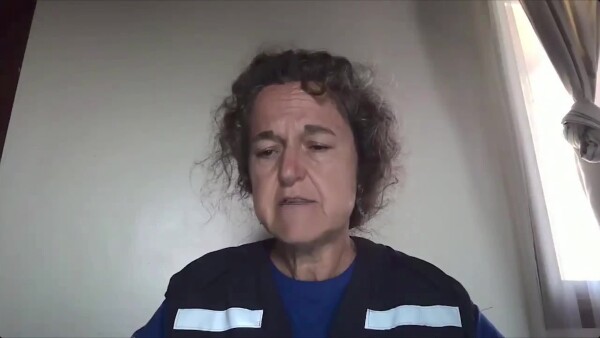
Satellite imagery indicates that 289 villages have been severely impacted with many destroyed. The most recent earthquake on 15 October affected an estimated 30 new villages, forcing families to live in makeshift shelters or informal settlements. Speaking from Kabul, Katherine Carey, deputy head of the OCHA office in Kabul said that around 66,300 people had also been directly impacted across six primary districts.
Many of those who left their homes following the initial earthquake are now residing outside in either makeshift or temporary shelters out of fear of additional aftershocks, Ms. Carey added.
According to the OCHA spokesperson, the earthquake's impact is far-reaching with
reports of more than 3,700 homes completely destroyed and around 5,000 homes severely damaged. Upwards of 2,600 homes have sustained some kind of damage, along with schools and healthcare facilities.
As winter approaches, concern is also growing as people will be exposed to harsh weather and health risks.
With food resources limited and damaged water and sanitation points, fears are rising about disease outbreaks: “The priority really is to ensure that these families and communities have some protection from the elements.
“In terms of shelter requirements, obviously the immediate priority is to ensure that people not residing out in the open completely and they have some kind of protection,” Ms. Carey explained. “So, in the first instance we are providing families with emergency tents. But the reality is, is that will only be able to withstand them for so long as well. We will have to move them in some kind of transitional shelter, normally a sort of repurposed, prefabricated kind of module that is a bit more like a sort of temporary structure,” Ms. Carey added.
To help, the UN’s Herat Earthquake Response Plan requires some $93 million for 114,000 people. The OCHA spokesperson called on the community not to forget Afghanistan amid other high global needs: “We're able to provide the populations with the assistance they need insofar as we have the resources and the supplies to do so. We're already using existing stock that we have in country of tents, for example, and medical supplies and medicines and also of wash kits and hygiene kits and kits. And those will need to be replenished also as well,” she said.
ends
STORY: Update on Afghanistan’s earthquake response - OCHA
TRT: 02:17”
SOURCE: UNTV CH
RESTRICTIONS: NONE
LANGUAGE: ENGLISH
ASPECT RATIO: 16:9
DATELINE: 17 OCTOBER 2023, GENEVA, SWITZERLAND
SHOTLIST
1. Exterior wide shot, United Nations flag flying.
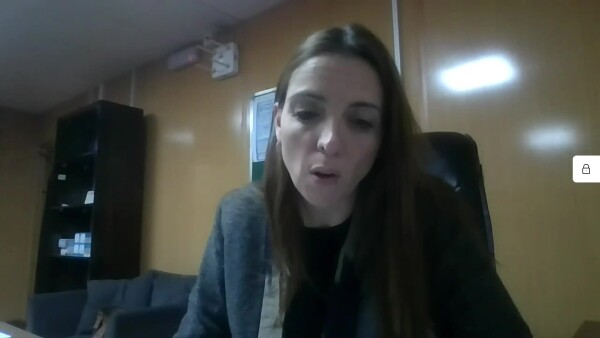
2. View of interview with OCHA spokesperson.
3. SOUNDBITE: (ENGLISH) Katherine Carey, Deputy Head of Office, OCHA Afghanistan: “The information that we've got from our assessments that we've completed is about 66,300 people directly impacted across six primary districts that have sadly been just shy of 1500 people killed and around 2000 injured. The majority of those killed or injured were actually killed and injured in the first earthquake that took place on the 7th of October, after which many people left their homes and are actually residing outside in either makeshift or temporary shelters as well, out of fear that there may be additional aftershocks and the houses may collapse.”
4. View of interview with OCHA spokesperson.
5. SOUNDBITE: (ENGLISH) Katherine Carey, Deputy Head of Office, OCHA Afghanistan: “We've got reports of more than 3700 homes completely destroyed, around 5000 homes have been severely damaged. And then there are upwards of 2600 homes that have sustained some kind of damage. So this is affecting, you know, several thousand families in fairly remote, impoverished communities as well.”
6. View of interview with OCHA spokesperson.
7. SOUNDBITE: (ENGLISH) Katherine Carey, Deputy Head of Office, OCHA Afghanistan: “The priority really is to ensure that these families and communities have some protection from the elements, especially with winter fast approaching.
8. View of interview with OCHA spokesperson.
9. SOUNDBITE: (ENGLISH) Katherine Carey, Deputy Head of Office, OCHA Afghanistan:
In the first instance, we are providing families with emergency tents. But the reality is, is that will only be able to withstand them for so long as well. We will have to move them in some kind of transitional shelter, normally a sort of repurposed, prefabricated kind of module that is a bit more like a sort of temporary temporary structure.”
10. View of interview with OCHA spokesperson.
11. SOUNDBITE: (ENGLISH) Katherine Carey, Deputy Head of Office, OCHA Afghanistan: “Yesterday we launched an earthquake response plan outlining our requirements to meet the needs of the priority affected population over the course of winters up until March next year. And of course, you know, we're able to provide the populations with the assistance they need insofar as we have the resources and the supplies to do so.”
12. Screen with OCHA spokesperson.
13. View of interview with OCHA spokesperson.
14. View of interview with OCHA spokesperson.
Similar Stories
1
1
1
Edited News | UNRWA , WHO
Gaza: Life-saving medicines blocked as killing continues, disease gains ground
In Gaza, a dire humanitarian situation marked by continuing violence, rodent infestations and the spread of diseases is being made worse by blockages of essential medical supplies, UN agencies warned on Friday.
1
1
1
Edited News | OHCHR , UNOG
UN Human Rights spokesperson Shabia Mantoo, warned against the continuing trend of involuntary returns of Afghan refugees and asylum-seekers from host countries to Afghanistan, in violation of international human rights and refugee law, at the bi-weekly press briefing in Geneva.

1
1
1
Edited News | IFRC , OHCHR
Lebanon's first responders face high risks amid conflict, with 116 killed since March.
1
1
1
Edited News | WHO
DRC Ebola outbreak: hundreds of suspected cases, no vaccine
A fast-spreading Ebola outbreak in the Democratic Republic of the Congo (DRC) has health workers rushing to stop transmission while the roll out of any potential vaccine is months away, the UN World Health Organization (WHO) said on Tuesday.
1
1
1
Edited News | OHCHR
A UN Human Rights Office report released today covers 19 months of large-scale violations of international law including atrocity crimes, from October 2023 to the end of May 2025.
1
1
1
Edited News | OCHA , UNICEF
At least six million people in Somalia are going days without enough food, UN aid teams warned on Friday, highlighting that nearly two million of this number are young children “at high risk of illness or death”.
1
1
1
Edited News | UNICEF , WHO
Children shot, stabbed and pepper-sprayed in occupied West Bank; scores of Gaza amputees denied prosthetics, aid teams warn
Israeli military operations and surging settler attacks in the occupied West Bank are killing and maiming Palestinian children, while in Gaza tens of thousands with life-changing injuries lack access to treatment and rehabilitation, UN agencies warned on Tuesday.
1
1
1
Edited News | WHO
The risk of hantavirus spreading to the general population is “absolutely low”, the UN World Health Organization (WHO) stressed on Friday.
1
1
1
Edited News | UNHCR , IFRC
Death and destruction have continued unabated in Lebanon while communities are still unable to return to their homes despite a ceasefire that began on 17 April, humanitarians said on Tuesday.
1
1
Edited News | WHO
Deadly hantavirus on board cruise ship may be transmitted among humans - WHO
Hantavirus victims on a ship in the Atlantic Ocean may have been infected prior to joining the cruise and human-to-human transmission on board cannot be ruled out – although it is rare - the World Health Organization (WHO) said on Tuesday.
1
1
1
Edited News | OHCHR
UN rights chief concerned by upheld convictions of Cambodian activists.