

The United Nations Office at Geneva
Multimedia Newsroom
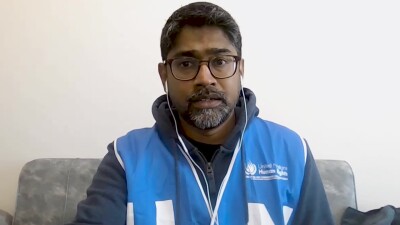
There is utter chaos and desperation in Gaza, Ajith Sunghay, the head of the UN Human Rights Office’s Occupied Palestinian Territory team, said on Friday from Rafah.
Sunghay, who has been in Gaza this week, gave an update on the situation on the ground, including details of his meetings with Palestinians detained for weeks by Israeli forces.
“We are reaching yet another staggering milestone in Gaza – nearly 25,000 people reported killed, according to the Gaza Ministry of Health. Seventy per cent of them women and children. Another 61,500 – at least – have been injured. Several thousands more are under the rubble, many presumed dead,” Sunghay told the biweekly press briefing in Geneva. .
“People continue to arrive in Rafah from various places in their thousands, in desperate situations, setting up makeshift shelters with any material they can get their hands on. I’ve seen men and children digging for bricks to be able to hold in place tents made with plastic bags in place. This is a massive human rights crisis. And a major, human-made, humanitarian disaster. Gaza needs urgent scaling up of humanitarian aid, including of the protection response,” he said.
“It is a pressure cooker environment here, in the midst of utter chaos, given the terrible humanitarian situation, shortages, and pervasive fear and anger,” Sunghay added.
A communications blackout has continued for a sixth consecutive day, adding to the confusion and fear, and preventing Gazans from accessing services and information on areas to evacuate.
“Heavy bombardment of Middle Gaza and Khan Younis is clearly visible and audible from Rafah – especially at night, I hear bombing, sometimes several times an hour. Night-time is clearly the most terrifying time for the people, even in Rafah. And I also think of the over 100 civilians held hostage in Gaza, unseen, who most certainly hear the same sounds and feel the same fear,” Sunghay said.
“During my time here, I have managed to meet a number of released detainees. These are men who were detained by Israeli Security Forces in unknown locations for between 30 to 55 days. They described being beaten, humiliated, subjected to ill-treatment, and to what may amount to torture,” said Sunghay.
“They reported being blindfolded for long periods – some of them for several consecutive days. One man said he had access to a shower only once during his 55 days in detention. There are reports of men who were subsequently released – but only in diapers, without any adequate clothing, in this cold weather,” he said. “Some people were released, had prison uniforms still on everything that they had in the past when they were initially detained were completely taken away, including clothes, belongings, currency, etc, that was not returned. So, they came out in prison uniforms, or they came out in diapers. So, we're not exactly sure why they were put in diapers and sent out, but they were clearly visibly shocked and even shaken when I met them and spoke to them.”
“What they told me was consistent with reports our Office has been gathering of the detention of Palestinians on a broad scale, including many civilians, held in secrecy, often subject to ill-treatment, with no access to their families, lawyers or effective judicial protection,” Sunghay said.
The families of detainees – believed to number in the thousands – have not been given information on the fate or location of their loved ones. Israel must take urgent steps to ensure that all those arrested or detained are treated in line with international human rights and international humanitarian law norms and standards, notably with full respect for their due process rights, Sunghay said.
“What we have heard is it runs into thousands. But I am completely unable to give you exact numbers or even a rough estimate. The commonality from different sources that I have heard is that it comes to thousands. But there are variations in the numbers that they are providing simply because these is detentions are happening from different parts of Gaza, from Middle East, from northern parts, probably in Khan Yunis as well. So, with that being the case where people are not able to move, NGOs are not functioning in the manner they used to do, it's been extremely difficult to come up to some kind of a figure at this stage,” he added.
“I have to end with a resounding plea from Gaza, above all, for an immediate ceasefire, for human rights and humanitarian reasons, and for all hostages to be released. These horrors must not become normalized,” Sunghay concluded.
For more information and media requests, please contact
In Geneva:
Ravina Shamdasani - + 41 22 917 9169 / ravina.shamdasani@un.org
Liz Throssell + 41 22 917 9296 / elizabeth.throssell@un.org
Marta Hurtado - + 41 22 917 9466 / marta.hurtadogomez@un.org
Tag and share - Twitter: @UNHumanRights and Facebook: unitednationshumanrights
STORY: Situation in Gaza from Head of UN Human Rights Office Occupied Palestinian Territory Ajith Sunghay
TRT: 04:42
SOURCE: OHCHR / UNTV
RESTRICTIONS: NONE
LANGUAGE: English/NATS
ASPECT RATIO: 16:9
DATELINE: 19/01/2024 GENEVA, SWITZERLAND
SHOTLIST
- Exterior shot: Palais des Nations
- Cut aways: Briefing room
- SOUNDBITE (English)— Ajith Sunghay Head of OHCHR OPT office in OPT for the UN High Commissioner for Human Rights (OHCHR): “We are reaching yet another staggering milestone in Gaza – nearly 25,000 people reported killed, according to the Gaza Ministry of Health. Seventy per cent of them women and children. Another 61,500 – at least – have been injured. Several thousands more are under the rubble, many presumed dead.”
- Cut aways: Briefing room
- SOUNDBITE (English)— Ajith Sunghay Head of OHCHR OPT office in OPT for the UN High Commissioner for Human Rights (OHCHR): “People continue to arrive in Rafah from various places in their thousands, in desperate situations, setting up makeshift shelters with any material they can get their hands on. I’ve seen men and children digging for bricks to be able to hold in place tents made with plastic bags in place. This is a massive human rights crisis. And a major, human-made, humanitarian disaster. Gaza needs urgent scaling up of humanitarian aid, including of the protection response.”
- Cut aways: Briefing room
- SOUNDBITE (English)— Ajith Sunghay Head of OHCHR OPT office in OPT for the UN High Commissioner for Human Rights (OHCHR): “It is a pressure cooker environment here, in the midst of utter chaos, given the terrible humanitarian situation, shortages, and pervasive fear and anger.”
- Cut aways: Briefing room
- SOUNDBITE (English)— Ajith Sunghay Head of OHCHR OPT office in OPT for the UN High Commissioner for Human Rights (OHCHR): “Heavy bombardment of Middle Gaza and Khan Younis is clearly visible and audible from Rafah – especially at night, I hear bombing, sometimes several times an hour. Night-time is clearly the most terrifying time for the people, even in Rafah. And I also think of the over 100 civilians held hostage in Gaza, unseen, who most certainly hear the same sounds and feel the same fear.”
- Cut aways: Briefing room
- SOUNDBITE (English)— Ajith Sunghay Head of OHCHR OPT office in OPT for the UN High Commissioner for Human Rights (OHCHR): “During my time here, I have managed to meet a number of released detainees. These are men who were detained by Israeli Security Forces in unknown locations for between 30 to 55 days. They described being beaten, humiliated, subjected to ill-treatment, and to what may amount to torture.”
- Cut aways: Briefing room
- SOUNDBITE (English)— Ajith Sunghay Head of OHCHR OPT office in OPT for the UN High Commissioner for Human Rights (OHCHR): “They reported being blindfolded for long periods – some of them for several consecutive days. One man said he had access to a shower only once during his 55 days in detention. There are reports of men who were subsequently released – but only in diapers, without any adequate clothing, in this cold weather.”
- Cut aways: Briefing room
- SOUNDBITE (English)— Ajith Sunghay Head of OHCHR OPT office in OPT for the UN High Commissioner for Human Rights (OHCHR): “Some people were released, had prison uniforms still on everything that they had in the past when they were initially detained were completely taken away, including clothes, belongings, currency, etc, that was not returned. So, they came out in prison uniforms, or they came out in diapers. So, we're not exactly sure why they were put in diapers and sent out, but they were clearly visibly shocked and even shaken when I met them and spoke to them.”
- Cut aways: Briefing room
- SOUNDBITE (English)— Ajith Sunghay Head of OHCHR OPT office in OPT for the UN High Commissioner for Human Rights (OHCHR): “What they told me was consistent with reports our Office has been gathering of the detention of Palestinians on a broad scale, including many civilians, held in secrecy, often subject to ill-treatment, with no access to their families, lawyers or effective judicial protection.”
- Cut aways: Briefing room
- SOUNDBITE (English)— Ajith Sunghay Head of OHCHR OPT office in OPT for the UN High Commissioner for Human Rights (OHCHR): “What we have heard is it runs into thousands. But I am completely unable to give you exact numbers or even a rough estimate. The commonality from different sources that I have heard is that it comes to thousands. But there are variations in the numbers that they are providing simply because these is detentions are happening from different parts of Gaza, from Middle East, from northern parts, probably in Khan Yunis as well. So, with that being the case where people are not able to move, NGOs are not functioning in the manner they used to do, it's been extremely difficult to come up to some kind of a figure at this stage.”
- Cut aways: Briefing room
- SOUNDBITE (English)— Ajith Sunghay Head of OHCHR OPT office in OPT for the UN High Commissioner for Human Rights (OHCHR): “I have to end with a resounding plea from Gaza, above all, for an immediate ceasefire, for human rights and humanitarian reasons, and for all hostages to be released. These horrors must not become normalized,”
Similar Stories
1
1
1
Edited News | OCHA , UNICEF , WFP
Aid agencies warned on Friday of the fast-developing humanitarian emergency inside Taiz City in Yemen, which has been encircled by de facto Houthi forces fighting government troops along the country’s west coast.

2
17
1
2
Edited News , Press Conferences , Images | OCHA , WMO
Two UN agencies teamed up on Wednesday to issue an appeal for immediate assistance to help communities already being impacted by the strongest El Niño on record.

3
16
2
2
Edited News , B-roll , Conferences , Images | UNITED NATIONS , UNOG
Sixth Consultative Meeting on Enhancing Coordination of Peace Initiatives and Efforts for Sudan

1
1
1
Edited News | UNICEF , WHO , UNHCR
Yemen war continues to force families from homes amid hunger and disease
More than 250,000 people have now fled renewed fighting in Yemen, the UN said on Tuesday, citing particular concern for those sheltering in the southwestern city of Taiz and the wider governorate, where access is “essentially blocked”.

1
1
1
Edited News | UNICEF
A little over one year since a ceasefire agreement was announced between Hamas fighters and Israel, more than 340 children have been reported killed and hundreds more injured, the UN Children’s Fund, UNICEF, said on Friday.

1
1
1
Edited News | UNICEF , IFRC
Six weeks after Nepal’s deadly flooding disaster, communities are still struggling to rebuild their lives, but they will need sustained help as global warming increases the risk of another Himalayan catastrophe, the UN Children’s Fund (UNICEF) said on Friday.

1
1
1
Edited News | WHO
In suspected Russia plague death, testing and monitoring underway – WHO
The death of a lab worker in Russia’s Siberia region has sparked concerns about plague being the cause, the UN World Health Organization (WHO) said on Tuesday, adding that it was following the situation closely.

1
1
Edited News | OHCHR , UNOG
UN Human Rights Chief Volker Türk on Friday provided and oral update to the 63rd session of the Human rights Council on Ukraine.

1
1
1
Edited News | OHCHR , UNOG
UN Human Rights Chief Volker Türk on Friday provided and oral update to the 63rd session of the Human rights Council on the human rights situation in Haiti.

1
1
1
Edited News | WHO
Repeated delays in bringing lifesaving medicines, prosthetics and more from Israel into Gaza risk having devastating consequences on Palestinians who urgently need them in the wartorn enclave, the UN World Health Organization (WHO) said on Friday. “A truck full of non-priority supplies or the right supplies arriving too late, doesn't save lives. That's the question that actually matters," said Dr Reinhilde Van De Weerdt, WHO Representative in the OPT.

1
1
1
Edited News | WHO
DRC: Early access to care and oxygen decisive for Ebola patients’ survival – WHO
In the Democratic Republic of the Congo (DRC), health workers fighting the country’s largest-ever Ebola outbreak are struggling to overcome critical challenges to patient care, the UN World Health Organization (WHO) warned on Tuesday.

1
1
1
Edited News | OCHA , UN
Civilians in Iran are continuing to feel the consequences of months of conflict and military escalation, the UN’s top official in the country has said, as loss of life, damage to civilian infrastructure and mounting economic pressures leave many facing continued uncertainty.