

The United Nations Office at Geneva
Multimedia Newsroom
Edited News | UNICEF , OHCHR , UN WOMEN
Humanitarian Situation in Gaza: UNICEF - OHCHR - UN WOMEN
STORYLINE
Gaza: More than one million Palestinian women and girls in Gaza have almost no access to food or safe water, with disease growing amidst ‘inhumane’ living conditions.
Six months into the war in Gaza, UN Women on Tuesday launched its latest Gender Alert on Gaza stating that 10,000 Palestinian women in Gaza have been killed, among them an estimated 6,000 mothers, leaving 19,000 children orphaned.
“To date, UN estimates that more than 8,000 women might have become widowed because of the recent war on Gaza, that means 8,000 husbands have been killed,” said Susanne Mikhail Eldhagen, Regional Director for the Arab States for UN Women.
Briefing journalists at the UN in Geneva from Cairo, she explained that these women were “in a particularly vulnerable situation because, as we can imagine, they are solely responsible for the very protection, well-being, but also assurance of food and water for their entire families”.
Women who have survived Israeli bombardment and ground operations have been displaced, widowed and now face starvation. The disproportionate impact of the conflict has made it a war on women, UN Women maintained.
“Women often find it much more difficult to access services. In this case, access food and water than men do. In the recent survey conducted in Gaza, it shows that 87 per cent of women find it harder to access food than men in Gaza,” said Ms. Eldhagen.
The publication launched on Tuesday (16 April) entitled “Scarcity and Fear” focuses on the lack of access to water, sanitation, and hygiene (WASH) services, which are vital to women's health, dignity, safety and privacy.
According to the report’s finding, more than one million Palestinian women and girls in Gaza face catastrophic hunger, with almost no access to food, safe drinking water, functioning toilets or running water, creating life-threatening risks. Access to clean water is especially critical for breastfeeding mothers and pregnant women, who have higher daily water and calory requirements.
The UN Children's Fund (UNICEF) deplored the high loss of life and injuries that Palestinian children in Gaza have sustained amid ongoing heavy Israeli bombardment.
Following her recent mission to northern Gaza where her UN vehicle was targeted, UNICEF's communications specialist Tess Ingram said from Cairo that over the last six months “a staggering number of children have been wounded amid the intense and often indiscriminate attacks, their lives forever changed by the horrors of war.
She noted that it was not possible to accurately estimate the total number of injured children in the conflict to date “but the most recent data from the Palestinian Ministry of Health documents more than 12,000 children, which is about 70 children a day injured in Gaza since the current conflict began.”
She added that “the war in Gaza is disproportionately impacting kids. Every second person in Gaza is a child, so children are wearing a tremendous share of the scars of this war.”
The UNICEF officer emphasized the ongoing challenges in evacuating critically injured or ill patients from Gaza for medical treatment elsewhere. With fewer than half of all "medivac" requests approved, only approximately 4,500 individuals, predominantly children, have been able to depart Gaza. This equates to fewer than 20 people per day gaining access to the care they urgently require outside the region.
“Sick and injured children who are evacuated must be accompanied by their family members. With at least 70 children injured every single day, we need the number of medical evacuations to increase so children can access the care that they urgently need. And with one child killed or injured every 10 minutes, above anything else, we need a ceasefire,” said Ms. Ingram.
Emphasizing the dire situation in Gaza, Ravina Shamdasani, spokesperson for the UN human rights office, OHCHR, urged “all States with influence to do everything in their power to halt the increasingly horrific human rights and humanitarian crisis in Gaza. The rising violence and targeted attacks in the West Bank and the heightened risk of wider escalation of the conflict in the Middle East.”
According to OHCHR, nearly 1.7 million people remain forcibly displaced, living in appalling conditions and under constant threat. In the past week alone, fighting has intensified in Middle Gaza leading to the displacement of some 10,000 people from in and around An Nuseirat camp and near Wadi Gaza.
-ends-
STORY: Humanitarian Situation in Gaza: UNICEF - OHCHR - UN WOMEN
TRT: 2:51”
SOURCE: UNTV CH
RESTRICTIONS: NONE
LANGUAGE: ENGLISH / NATS
ASPECT RATIO: 16:9
DATELINE: 16 April 2024 GENEVA, SWITZERLAND
- Exterior medium shot: UN flag alley
- Wide shot: speakers at the podium during press conference
- SOUNDBITE (English) – Tess Ingram, Communication specialist, UNICEF (speaking from Cairo): “Over the last six months, a staggering number of children have been wounded amid the intense and often indiscriminate attacks. Their lives forever changed by the horrors of war. The total number of injured children in this conflict is quite difficult to gather, but the most recent data from the Palestinian Ministry of Health documents more than 12,000 children, which is about 70 children a day injured in Gaza since the current conflict began.”
- Med shot: speakers at the podium from behind with screen in front of them
- SOUNDBITE (English) – Tess Ingram, Communication specialist, UNICEF (speaking from Cairo): “It's disproportionately impacting kids. Every second person in Gaza is a child, so children are wearing a tremendous share of the scars of this war.”
- Med shot: Journalists in the press room
- SOUNDBITE (English) – Tess Ingram, Communication specialist, UNICEF (speaking from Cairo): “Sick and injured children who are evacuated must be accompanied by their family members. With at least 70 children injured every single day, we need the number of medical evacuations to increase so children can access the care that they urgently need. And with one child killed or injured every 10 minutes, above anything else, we need a ceasefire.”
- Wide shot: Journalists in the press room and speakers at the podium
- SOUNDBITE (English) – Ravina Shamdasani, spokesperson, OHCHR: “The UN Human Rights Office urges all States with influence to do everything in their power to halt the increasingly horrific human rights and humanitarian crisis in Gaza. The rising violence and targeted attacks in the West Bank, and the heightened risk of wider escalation of the conflict in the Middle East.”
- Med shot: speaker at the podium from the side with journalists in the room
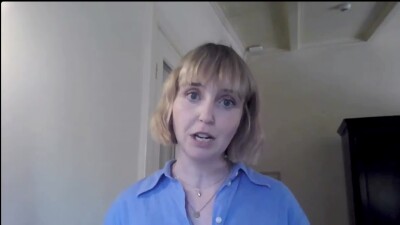
- SOUNDBITE (English) - Susanne Mikhail Eldhagen, Regional Director for the Arab States, UN Women (speaking from Cairo): “Up to date, UN estimates that more than 8,000 women might have become widowed because of the recent war on Gaza. That means 8,000 husbands have been killed. These women are in a particularly vulnerable situation because, as we can imagine, they are solely responsible for the very protection, well-being, but also assurance of food and water for their entire families.”
- Med shot, moderator at the podium with speaker on screen
- SOUNDBITE (English) - Susanne Mikhail Eldhagen, Regional Director for the Arab States, UN Women (speaking from Cairo): “Women often find it much more difficult to access services. In this case, access food and water than men do. In the recent survey conducted in Gaza, it shows that 87 per cent of women find it harder to access food, than men in Gaza.”
- Med shot, journalists in press briefing
- Close up: journalist listening
- Wide shot: Technical team working behind windows
Similar Stories

1
1
1
Edited News | OCHA , UNICEF , WFP
Aid agencies warned on Friday of the fast-developing humanitarian emergency inside Taiz City in Yemen, which has been encircled by de facto Houthi forces fighting government troops along the country’s west coast.

2
17
1
2
Edited News , Press Conferences , Images | OCHA , WMO
Two UN agencies teamed up on Wednesday to issue an appeal for immediate assistance to help communities already being impacted by the strongest El Niño on record.

3
16
2
2
Edited News , B-roll , Conferences , Images | UNITED NATIONS , UNOG
Sixth Consultative Meeting on Enhancing Coordination of Peace Initiatives and Efforts for Sudan

1
1
1
Edited News | UNICEF , WHO , UNHCR
Yemen war continues to force families from homes amid hunger and disease
More than 250,000 people have now fled renewed fighting in Yemen, the UN said on Tuesday, citing particular concern for those sheltering in the southwestern city of Taiz and the wider governorate, where access is “essentially blocked”.

1
1
1
Edited News | UNICEF
A little over one year since a ceasefire agreement was announced between Hamas fighters and Israel, more than 340 children have been reported killed and hundreds more injured, the UN Children’s Fund, UNICEF, said on Friday.

1
1
1
Edited News | UNICEF , IFRC
Six weeks after Nepal’s deadly flooding disaster, communities are still struggling to rebuild their lives, but they will need sustained help as global warming increases the risk of another Himalayan catastrophe, the UN Children’s Fund (UNICEF) said on Friday.

1
1
1
Edited News | WHO
In suspected Russia plague death, testing and monitoring underway – WHO
The death of a lab worker in Russia’s Siberia region has sparked concerns about plague being the cause, the UN World Health Organization (WHO) said on Tuesday, adding that it was following the situation closely.

1
1
Edited News | OHCHR , UNOG
UN Human Rights Chief Volker Türk on Friday provided and oral update to the 63rd session of the Human rights Council on Ukraine.

1
1
1
Edited News | OHCHR , UNOG
UN Human Rights Chief Volker Türk on Friday provided and oral update to the 63rd session of the Human rights Council on the human rights situation in Haiti.

1
1
1
Edited News | WHO
Repeated delays in bringing lifesaving medicines, prosthetics and more from Israel into Gaza risk having devastating consequences on Palestinians who urgently need them in the wartorn enclave, the UN World Health Organization (WHO) said on Friday. “A truck full of non-priority supplies or the right supplies arriving too late, doesn't save lives. That's the question that actually matters," said Dr Reinhilde Van De Weerdt, WHO Representative in the OPT.

1
1
1
Edited News | WHO
DRC: Early access to care and oxygen decisive for Ebola patients’ survival – WHO
In the Democratic Republic of the Congo (DRC), health workers fighting the country’s largest-ever Ebola outbreak are struggling to overcome critical challenges to patient care, the UN World Health Organization (WHO) warned on Tuesday.

1
1
1
Edited News | OCHA , UN
Civilians in Iran are continuing to feel the consequences of months of conflict and military escalation, the UN’s top official in the country has said, as loss of life, damage to civilian infrastructure and mounting economic pressures leave many facing continued uncertainty.