

The United Nations Office at Geneva
Multimedia Newsroom
Press Conferences , Edited News | ILO
ILO Press Conference: Impacts of climate on occupational safety and health - 22 April 2024
Global warming: excessive heat affects 70 percent of workers – ILO
More than 70 percent of the world's workforce faces potential health risks due to climate change, according to the latest report of the International Labour Organization (ILO), published on Monday. This staggering statistic underscores the pressing need to revamp existing occupational safety and health measures to adequately address the emerging threats posed by climate-related hazards.
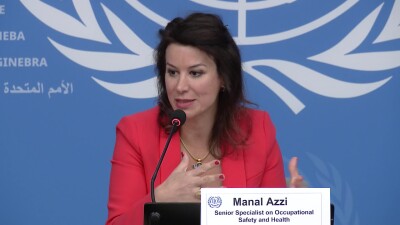
“More than 70 per cent of our workers are exposed to excessive heat, at least excessive heat, at one point in their working lives. That's 2.4 billion workers globally,” out of a global workforce of 3,4 billion, said Manal Azzi, Senior Specialist on Occupational Safety and Health (ILO) at the report launch at the United Nations in Geneva.
Entitled “Ensuring safety and health at work in a changing climate,” the report states that climate change is already having a serious impact on the safety and health of workers in all regions of the world.
Workers, particularly those in the world's most impoverished regions, face heightened susceptibility to the perils of climate extremes like scorching heatwaves, prolonged droughts, raging wildfires, and devastating hurricanes, according to the ILO.
The share of global workers impacted by climate change hazards has increased by about 5 percentage points, to 70 percent, from 65 percent in the year 2000, the report said.
According to Ms. Azzi, “more than 22 million workers suffering from sicknesses and injuries related to exposure to excessive heat and these can range from injuries in transport, in traffic accidents due to bad night of sleep because it was excessively hot, to construction accidents, injuries, slips and falls related to the exposure to heat.”
The report notes that numerous health conditions in workers have been linked to climate change, including cancer, cardiovascular disease, respiratory illnesses, kidney disfunction and mental health conditions. The impact includes the 1.6 billion workers exposed to UV radiation, with more than 18,960 work-related deaths annually from nonmelanoma skin cancer.
“Nearly 20,000 workers are dying yearly because of these injuries in the workplace related to rising temperatures and to exposure to excessive heat, indoor and outdoor heat, and losing millions - over 2 million disability-adjusted years - are lost because of injuries and deaths related to heat,” said ILO’s specialist on occupational safety and health.
With increasing temperatures and higher humidity, more pesticides are used in the agriculture sector. According to the report, there are more than 870 million workers in agriculture that are likely to be exposed to pesticides, with more than 300,000 deaths attributed to pesticide poisoning annually.
“15,000 people die due to parasitic and vector borne diseases exposed to in the workplace,” noted Ms. Azzi. “Obviously, these include a lot of diseases like dengue, rabies and various diseases that are increasing in regions that we never used to see them before. Malaria has even increased and we're seeing it's shown in countries that it never used to be before.”
The ILO expert highlighted that “the key issues we face are not where it's known to be very hot for the longest period where people are very acclimatized. But it's the new regions where heat was never such an issue and has become an issue that we're facing some of the acute injuries that that we're seeing today,” explained Ms. Azzi. “So we do have a list of detailed policy examples, collective bargaining examples, but also awareness raising and training programs that deal with all of the hazards I mentioned from vector borne disease control to air pollution to pesticides.”
Ms. Azzi stressed that all these factors are interlinked and that the right tools need to be in place to measure the impact and to be able to work on recommendations.
A major meeting is planned for 2025 by the ILO with the participation of government, employer and worker representatives to provide policy guidance on climate hazards.
-ends-
STORY: Impacts of climate change on workers - ILO
TRT: 2:34”
SOURCE: UNTV CH
RESTRICTIONS: NONE
LANGUAGE: ENGLISH / NATS
ASPECT RATIO: 16:9
DATELINE: 22 April 2024 GENEVA, SWITZERLAND
- Exterior wide shot: UN flag alley
- Med shot: speakers at the podium during press conference
- SOUNDBITE (English) – Manal Azzi, Senior Specialist on Occupational Safety and Health (ILO): “More than 70 per cent of our workers are exposed to excessive heat, at least excessive heat, at one point in their working lives. That's 2.4 billion workers globally.”
- Med shot: Photographer taking pictures
- SOUNDBITE (English) – Manal Azzi, Senior Specialist on Occupational Safety and Health (ILO): “More than 22 million workers suffering from sicknesses and injuries related to exposure to excessive heat and these can range from injuries in transport, in traffic accidents due to bad night of sleep, because it was excessively hot, to construction accidents, injuries, slips and falls related to the exposure to heat.”
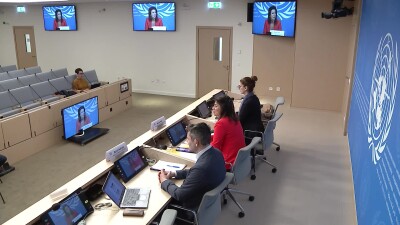
- Wide shot: speakers at the podium with journalists in press room
- SOUNDBITE (English) – Manal Azzi, Senior Specialist on Occupational Safety and Health (ILO): “Nearly 20,000 workers are dying yearly because of these injuries in the workplace related to rising temperatures and to exposure to excessive heat, indoor and outdoor heat, and losing millions - over 2 million disability-adjusted years - are lost because of injuries and deaths related to heat.”
- Med shot: Zoom operators behind window in control room
- SOUNDBITE (English) – Manal Azzi, Senior Specialist on Occupational Safety and Health (ILO): “15,000 people die due to parasitic and vector borne diseases exposed to in the workplace. Obviously, these include a lot of diseases like dengue, rabies and various diseases that are increasing in regions that we never used to see them before. Malaria has even increased and we're seeing it's shown in countries that it never used to be before.”
- Med shot: speakers at the podium with journalists in press room
- SOUNDBITE (English) - Manal Azzi, Senior Specialist on Occupational Safety and Health (ILO): “The key issues we face are not where it's known to be very hot for the longest period where people are very acclimatized. But it's the new regions where heat was never such an issue and has become an issue that we're facing some of the acute injuries that that we're seeing today. So we do have a list of detailed policy examples, collective bargaining examples, but also awareness raising and training programs that deal with all of the hazards I mentioned from vector borne disease control to air pollution to pesticides.”
- Close up: journalist listening
- Med shot, panelists at the podium
- Med shot, journalists in press room
Similar Stories
1
12
1
1
Press Conferences , Images | UNOG
Closing Press Conference following the Sixth Consultative Meeting on Enhancing Coordination of Peace Initiatives and Efforts in Sudan

2
17
1
2
Edited News , Press Conferences | OCHA , WMO
Two UN agencies teamed up on Wednesday to issue an appeal for immediate assistance to help communities already being impacted by the strongest El Niño on record.

3
16
2
2
B-roll , Conferences , Edited News | UNITED NATIONS , UNOG
Sixth Consultative Meeting on Enhancing Coordination of Peace Initiatives and Efforts for Sudan
1
1
1
Press Conferences | CITES
Wildlife trade and conservation policy discussions at the 81st meeting of the CITES Standing Committee (SC81)

1
1
1
Edited News | UNICEF , WHO , UNHCR
Yemen war continues to force families from homes amid hunger and disease
More than 250,000 people have now fled renewed fighting in Yemen, the UN said on Tuesday, citing particular concern for those sheltering in the southwestern city of Taiz and the wider governorate, where access is “essentially blocked”.
1
1
1
Press Conferences | UNHCR , UNCTAD , WMO , OCHA , UNICEF , WHO
UNHCR Hungary’s 1956 Refugee Crisis: 70 Years On, UNCTAD World Investment Forum 2026, Doha, WMO Greenhouse Gas Bulletin and Climate Update for COP31, OCHA Afghanistan: Malnutrition, Girls’ Education and Recovery, UNICEF Yemen: Child Malnutrition and Unsafe Water in Taiz, WHO Inequalities in Noncommunicable Diseases and Risk Factors
1
1
1
Press Conferences | UNHCR
End of UNHCR's 77th Annual Executive Committee (ExCom) meeting week

1
1
1
Edited News | UNICEF
A little over one year since a ceasefire agreement was announced between Hamas fighters and Israel, more than 340 children have been reported killed and hundreds more injured, the UN Children’s Fund, UNICEF, said on Friday.
1
1
1
Press Conferences | UNICEF , IOM , UNHCR
UN Special Assistant to the Personal Envoy Office (SUDAN): Peace Initiatives and Efforts in Sudan; UNICEF: Dire situation of children in Gaza; IOM: Damaged Homes and Energy Attacks Risk Displacing Ukrainians for this winter; UNHCR: update on EXCOM week
1
1
1
Press Conferences | IOM , UNDRR
UN stresses importance of household preparedness for disaster risk reduction.

1
1
1
Edited News | UNICEF , IFRC
Six weeks after Nepal’s deadly flooding disaster, communities are still struggling to rebuild their lives, but they will need sustained help as global warming increases the risk of another Himalayan catastrophe, the UN Children’s Fund (UNICEF) said on Friday.

1
1
1
Statements , Press Conferences | OHCHR