

The United Nations Office at Geneva
Multimedia Newsroom
Edited News , Press Conferences | OHCHR
OHCHR Press conference: Report on Human rights in the Philippines
Storyline of the edited story:
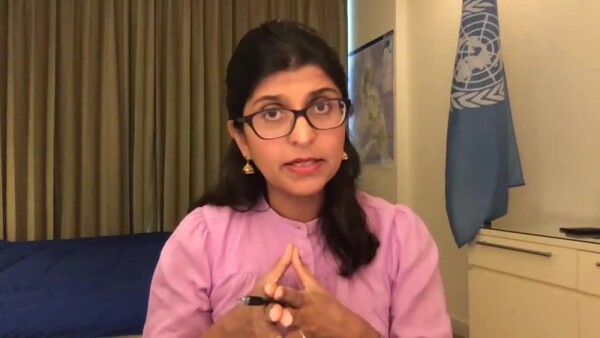
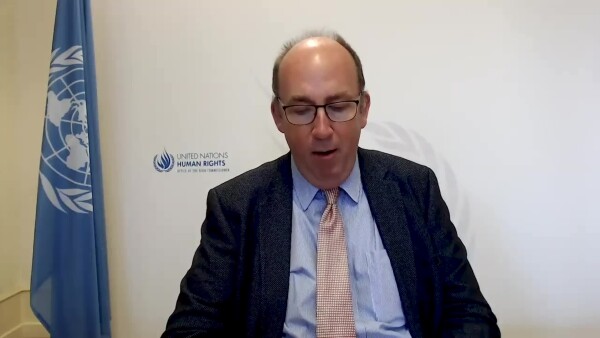
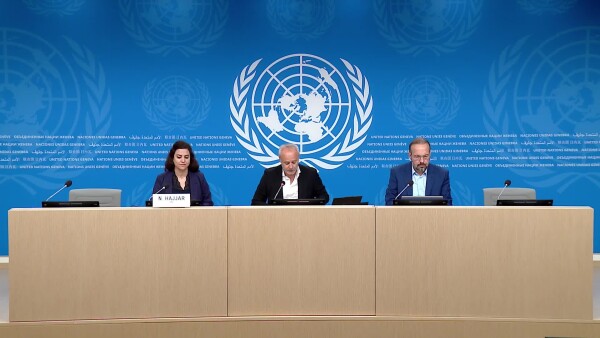
At a virtual press Conference Ravina Shamdasani, Philippines Report Team Leader, UN Human Rights Office, Bangkok and Rory Mungoven, Chief Asia Pacific Section, UN Human Rights Office, Geneva, briefed journalist on Release of report mandated by UN Human Rights Council (Resolution 41/2) on the situation of human rights in the Philippines.
A heavy-handed focus on countering national security threats and illegal drugs has resulted in serious human rights violations in the Philippines, including killings and arbitrary detentions, as well as the vilification of dissent, a new report by the UN Human Rights Office said Thursday. Persistent impunity and formidable barriers to accessing justice need to be urgently addressed, the report said.
The report, which was mandated by a UN Human Rights Council resolution, noted that many of the human rights concerns it has documented are long-standing, but have become more acute in recent years.
SOUNDBITE (English)— Rory Mungoven, Chief Asia Pacific Section, UN Human Rights Office, Geneva: “Although the government opposed the Human Rights Council resolution that mandated this report. We have been pleased that there has been a surprising degree of cooperation from the government in the preparation of the report.
SOUNDBITE (English)— Rory Mungoven, Chief Asia Pacific Section, UN Human Rights Office, Geneva: “So as a result, much of the material in the report is, in fact drawn from government sources, from official documents, from official statements and from the information and responses they provided to us.”
SOUNDBITE (English)— Ravina Shamdasani, Ravina Shamdasani, Philippines Report Team Leader, UN Human Rights Office, Bangkok: “And also, we were able to meet with many of the government representatives here in Bangkok, myself and a colleague who was working on the report. And we had two very intense, full days of candid discussions about the human rights situation in the Philippines, where we heard their perspective. We put allegations to them. And it was it was a very rich exchange.”
There has been near impunity for these killings, with only one conviction for the killing of a drug suspect in a police operation since mid-2016, the report stated.
SOUNDBITE (English)— Ravina Shamdasani, Ravina Shamdasani, Philippines Report Team Leader, UN Human Rights Office, Bangkok: “What we have found is that even by the most conservative figure, and which our government estimates at least eight thousand six hundred and sixty three people have been killed since mid 2016. In the context of this, some so-called war on drugs. This includes five thousand six hundred people who were killed in police operations and a further 3000 that the police say were killed in drug related homicides.”
The phenomenon of “red-tagging” – labelling individuals or groups (including human rights defenders and NGOs) as communists or terrorists – has posed a serious threat to civil society and freedom of expression.
SOUNDBITE (English)— Ravina Shamdasani, Ravina Shamdasani, Philippines Report Team Leader, UN Human Rights Office, Bangkok: “This this issue of red tagging has been a longstanding one in the Philippines. Now, this is very damaging and very dangerous, particularly because in the Philippines, we have documented that, at least two hundred and forty-eight human rights defenders, lawyers, trade unionists and journalists have been killed over the past five years. This is not a small number. And a lot of these individuals were ranked red tagged prior to their killing.”
SOUNDBITE (English)— Ravina Shamdasani, Ravina Shamdasani, Philippines Report Team Leader, UN Human Rights Office, Bangkok: “The widespread killings, detentions, red tagging and score settling by state actors, including in the campaign against illegal drugs, suggests that these public comments may have incited violence and may have had the effect of encouraging backing or even ordering human rights violations with impunity. The use of such language could amount to a violation of the prohibition against the arbitrary deprivation of life, as has been set out in the International Covenant on Civil and Political Rights”
SOUNDBITE (English)— Ravina Shamdasani, Ravina Shamdasani, Philippines Report Team Leader, UN Human Rights Office, Bangkok: “And the International Criminal Court, for its part, is conducting a preliminary examination of the situation in the Philippines.”
SOUNDBITE (English)— Ravina Shamdasani, Ravina Shamdasani, Philippines Report Team Leader, UN Human Rights Office, Bangkok: “The High Commissioner again emphasizes the need for independent, impartial and effective investigations into the killings and stands ready to assist credible efforts towards accountability at the national and international level.”
The report is based on 893 written submissions, substantial input from the Government of the Philippines, analysis of legislation, police reports, court documents, videos, photos and other open source material, as well as interviews with victims and witnesses. It is due to be discussed at the next UN Human Rights Council session in Geneva.
Shot list ot the edited story:
- SOUNDBITE (English)— Rory Mungoven, Chief Asia Pacific Section, UN Human Rights Office, Geneva: “Although the government opposed the Human Rights Council resolution that mandated this report. We have been pleased that there has been a surprising degree of cooperation from the government in the preparation of the report.”
- SOUNDBITE (English)— Rory Mungoven, Chief Asia Pacific Section, UN Human Rights Office, Geneva: “So as a result, much of the material in the report is, in fact drawn from government sources, from official documents, from official statements and from the information and responses they provided to us.”
- SOUNDBITE (English)— Ravina Shamdasani, Ravina Shamdasani, Philippines Report Team Leader, UN Human Rights Office, Bangkok: “And also, we were able to meet with many of the government representatives here in Bangkok, myself and a colleague who was working on the report. And we had two very intense, full days of candid discussions about the human rights situation in the Philippines, where we heard their perspective. We put allegations to them. And it was it was a very rich exchange.”
- SOUNDBITE (English)— Ravina Shamdasani, Ravina Shamdasani, Philippines Report Team Leader, UN Human Rights Office, Bangkok: “What we have found is that even by the most conservative figure, and which our government estimates at least eight thousand six hundred and sixty three people have been killed since mid 2016. In the context of this, some so-called war on drugs. This includes five thousand six hundred people who were killed in police operations and a further 3000 that the police say were killed in drug related homicides.”
- SOUNDBITE (English)— Ravina Shamdasani, Ravina Shamdasani, Philippines Report Team Leader, UN Human Rights Office, Bangkok: “This issue of red tagging has been a longstanding one in the Philippines. Now, this is very damaging and very dangerous, particularly because in the Philippines, we have documented that, at least two hundred and forty-eight human rights defenders, lawyers, trade unionists and journalists have been killed over the past five years. This is not a small number. And a lot of these individuals were ranked red tagged prior to their killing.”
- SOUNDBITE (English)— Ravina Shamdasani, Ravina Shamdasani, Philippines Report Team Leader, UN Human Rights Office, Bangkok: “The widespread killings, detentions, red tagging and score settling by state actors, including in the campaign against illegal drugs, suggests that these public comments may have incited violence and may have had the effect of encouraging backing or even ordering human rights violations with impunity. The use of such language could amount to a violation of the prohibition against the arbitrary deprivation of life, as has been set out in the International Covenant on Civil and Political Rights”
- SOUNDBITE (English)— Ravina Shamdasani, Ravina Shamdasani, Philippines Report Team Leader, UN Human Rights Office, Bangkok: “And the International Criminal Court, for its part, is conducting a preliminary examination of the situation in the Philippines.”
- SOUNDBITE (English)— Ravina Shamdasani, Ravina Shamdasani, Philippines Report Team Leader, UN Human Rights Office, Bangkok: “The High Commissioner again emphasizes the need for independent, impartial and effective investigations into the killings and stands ready to assist credible efforts towards accountability at the national and international level.”
Similar Stories
1
1
1
Edited News | OCHA , UNICEF , WFP
Aid agencies warned on Friday of the fast-developing humanitarian emergency inside Taiz City in Yemen, which has been encircled by de facto Houthi forces fighting government troops along the country’s west coast.
1
1
1
Press Conferences | UN WOMEN , WFP , WHO
UN WOMEN: Sudan Women and girls one year after the fall of El Fasher; increasing drone attacks across the country; WFP: DRC - Ebola spreads to eighth DRC province as WFP delivers food, builds treatment centres and keeps supplies moving; WHO - Update on Ebola (Bundibugyo Virus Disease)
1
12
1
1
Press Conferences , Images | UNOG
Closing Press Conference following the Sixth Consultative Meeting on Enhancing Coordination of Peace Initiatives and Efforts in Sudan

2
17
1
2
Edited News , Press Conferences , Images | OCHA , WMO
Two UN agencies teamed up on Wednesday to issue an appeal for immediate assistance to help communities already being impacted by the strongest El Niño on record.

3
16
2
2
Edited News , B-roll , Conferences , Images | UNITED NATIONS , UNOG
Sixth Consultative Meeting on Enhancing Coordination of Peace Initiatives and Efforts for Sudan
1
1
1
Press Conferences | CITES
Wildlife trade and conservation policy discussions at the 81st meeting of the CITES Standing Committee (SC81)

1
1
1
Edited News | UNICEF , WHO , UNHCR
Yemen war continues to force families from homes amid hunger and disease
More than 250,000 people have now fled renewed fighting in Yemen, the UN said on Tuesday, citing particular concern for those sheltering in the southwestern city of Taiz and the wider governorate, where access is “essentially blocked”.
1
1
1
Press Conferences | UNHCR , UNCTAD , WMO , OCHA , UNICEF , WHO
UNHCR Hungary’s 1956 Refugee Crisis: 70 Years On, UNCTAD World Investment Forum 2026, Doha, WMO Greenhouse Gas Bulletin and Climate Update for COP31, OCHA Afghanistan: Malnutrition, Girls’ Education and Recovery, UNICEF Yemen: Child Malnutrition and Unsafe Water in Taiz, WHO Inequalities in Noncommunicable Diseases and Risk Factors
1
1
1
Press Conferences | UNHCR
End of UNHCR's 77th Annual Executive Committee (ExCom) meeting week

1
1
1
Edited News | UNICEF
A little over one year since a ceasefire agreement was announced between Hamas fighters and Israel, more than 340 children have been reported killed and hundreds more injured, the UN Children’s Fund, UNICEF, said on Friday.
1
1
1
Press Conferences | UNICEF , IOM , UNHCR
UN Special Assistant to the Personal Envoy Office (SUDAN): Peace Initiatives and Efforts in Sudan; UNICEF: Dire situation of children in Gaza; IOM: Damaged Homes and Energy Attacks Risk Displacing Ukrainians for this winter; UNHCR: update on EXCOM week

1
1
1
Press Conferences | IOM , UNDRR
UN stresses importance of household preparedness for disaster risk reduction.