

The United Nations Office at Geneva
Multimedia Newsroom
Edited News | UNICEF , IOM
Sudan sexual violence and famine alert UNICEF - IOM 13 August 2024
Sexual violence and famine stalk Sudan’s displaced: UNICEF, IOM
Sudan’s deepening humanitarian crisis caused by nearly 16 months of war has left countless women and girls subject to sexual violence and rape and tens of thousands of children at risk of death from hunger, UN aid teams said on Tuesday.
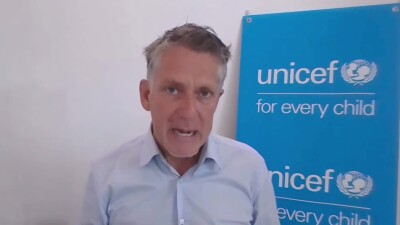
Speaking from Sudan, UN Children’s Fund spokesperson James Elder described meeting a senior medical worker at a hospital outside Khartoum who had “direct contact with hundreds, hundreds of women and girls, some as young as eight years old, who have been raped. Many have been held captive for weeks on end. She also spoke of the distressing number of babies born – born after rape - who are being abandoned now.”
In an update to journalists in Geneva via videolink from the wartorn country, Mr. Elder maintained that “countless atrocities” upon children had gone unreported, often as a result of very limited access. He also warned that without action, tens of thousands of Sudanese children may die over the coming months, “and that is by no means a worst-case scenario…if there is a measles outbreak, if there is diarrhoea, or if there are respiratory infections, then the terrifying outlook for children in Sudan dramatically worsens. Remembering that in the current living conditions, with the heavy rains and the flooding, these diseases will spread like wildfire. ”
Echoing that grim update, the UN migration agency, IOM, noted that flooding has added to the daily challenges facing millions of people whose lives have been uprooted by a battle for control of the country by rival militaries beginning in April 2022, stemming from the overthrow of long-time President Omar al-Bashir in 2019.
Just last week, global food security experts at the Integrated Food Security Phase Classification (IPC) Famine Review Committee (FRC) reported famine conditions in parts of North Darfur including Zamzam camp near Al Fasher town. The camp is home to half a million displaced people confronted by extreme food scarcity, which has fuelled malnutrition and death.
“The scale of devastation brought by the escalating violence in El Fasher town is profound and harrowing,” the IPC report’s authors noted, amid “persistent, intense and widespread clashes [that] have forced many residents to seek refuge in IDP camps, where they face a stark reality: basic services are scant or absent, compounding the hardship of displacement.”
According to IOM, almost all internally displaced persons across Sudan - 97 per cent - are in localities with acute levels of food insecurity or worse.
Worryingly, latest data from the UN agency shows that displacement continues to soar, with more than 10.7 million people seeking safety within the country and many displaced twice or more. Fighting in Sennar state alone displaced over 700,000 people last month with 63 per cent of this number originally displaced from other states, the majority from Khartoum.
Speaking from Port Sudan via video to journalists in Geneva, IOM’s Chief of Mission in the country, Mohamed Refaat, said that more the one in three of Sudan’s internally displaced have come from Khartoum. “That's almost the whole capital of the country has been displaced, so imagine the scale of displacement,” he said.
Citing ongoing aid access obstacles which have prevented UN humanitarians and partners from reaching some of the most vulnerable civilians in Sudan, the IOM officer said that a large number of civilians remain “trapped” in a “very hostile war environment” and with no access to health care services. Many have had to walk large distances in a bid to secure food amid “skyrocketing” prices. “There is a shortage in everything,” Mr. Refaat explained, highlighting how “militias” had also seized control of various locations, restricting the movement of non-combatants.
STORY: Sudan sexual violence and famine alert – UNICEF, IOM
TRT: 2 min 50s
SOURCE: UNTV CH
RESTRICTIONS: NONE
LANGUAGE: ENGLISH / NATS
ASPECT RATIO: 16:9
DATELINE: 13 AUGUST 2024 GENEVA, SWITZERLAND
SHOTLIST
- Exterior medium: UN Geneva flag alley.
- Medium-wide, Press room, UN Geneva.
- SOUNDBITE (English) – James Elder, spokesperson, UNICEF (via Zoom from Sudan): “Yesterday in Khartoum, I spoke to a senior medical worker who gave an insight into the magnitude of sexual violence during this war. She explained she has had direct contact with hundreds, hundreds of women and girls, some as young as eight years old, who have been raped. Many have been held captive for weeks on end. She also spoke of the distressing number of babies born – born after rape - who are being abandoned now.”
- Medium-wide, Press room, UN Geneva.
- SOUNDBITE (English) – James Elder, spokesperson, UNICEF: “Without action, tens of thousands of Sudanese children may die over the coming months, tens of thousands. And that is by no means a worst-case scenario. Any disease outbreak and we will see mortality skyrocket. Disease is our greatest fear.”
- Wide, Press room, UN Geneva, TV screens showing outside speakers.
- SOUNDBITE (English) – Mohamed Refaat, IOM Sudan Chief of Mission (From Port Sudan): “Between 24 June and up to date - so this is less than one and a half months - we have counted 736,000 who have been displaced. This is only one frontline. If you add to this the others - I give you an example, Khartoum: out of the 10.7 million internally displaced in Sudan, 35 per cent of them are coming from the capital of Sudan, Khartoum. That's almost the whole capital of the country has been displaced. So imagine the scale of displacement.”
- Medium-wide, Press room, UN Geneva.
- SOUNDBITE (English) – Mohamed Refaat, IOM Sudan Chief of Mission (From Port Sudan): “We still have a large number of civilians who are trapped, extremely, under very hostile war environment, zero access to health care services. They walk for hundreds, maybe of metres or kilometres, many of them under a very hostile environment trying to secure food. The food prices are skyrocketing. There is a shortage in everything. There are militias who have taken several properties all over the places. So there are civilians who are trapped there, they can't get out, maybe they don't have a place to go out.”
- SOUNDBITE (English) – James Elder, spokesperson, UNICEF: ”
- Medium-wide, Press room, UN Geneva, TV monitors showing external speakers.
- SOUNDBITE (English) – James Elder, spokesperson, UNICEF: “If there is a measles outbreak, if there is diarrhoea, or if there are respiratory infections, then the terrifying outlook for children in Sudan dramatically worsens. Remembering that in the current living conditions, with the heavy rains and the flooding, these diseases will spread like wildfire. ”
- Medium-wide, journalists and TV monitors showing Mr. Elder speaking via video link.
- Medium-wide, journalists and TV screens.
- Medium, participants, journalists.
- Medium, journalists.
Similar Stories

1
1
1
Edited News | OCHA , UNICEF , WFP
Aid agencies warned on Friday of the fast-developing humanitarian emergency inside Taiz City in Yemen, which has been encircled by de facto Houthi forces fighting government troops along the country’s west coast.

2
17
1
2
Edited News , Press Conferences , Images | OCHA , WMO
Two UN agencies teamed up on Wednesday to issue an appeal for immediate assistance to help communities already being impacted by the strongest El Niño on record.

3
16
2
2
Edited News , B-roll , Conferences , Images | UNITED NATIONS , UNOG
Sixth Consultative Meeting on Enhancing Coordination of Peace Initiatives and Efforts for Sudan

1
1
1
Edited News | UNICEF , WHO , UNHCR
Yemen war continues to force families from homes amid hunger and disease
More than 250,000 people have now fled renewed fighting in Yemen, the UN said on Tuesday, citing particular concern for those sheltering in the southwestern city of Taiz and the wider governorate, where access is “essentially blocked”.

1
1
1
Edited News | UNICEF
A little over one year since a ceasefire agreement was announced between Hamas fighters and Israel, more than 340 children have been reported killed and hundreds more injured, the UN Children’s Fund, UNICEF, said on Friday.

1
1
1
Edited News | UNICEF , IFRC
Six weeks after Nepal’s deadly flooding disaster, communities are still struggling to rebuild their lives, but they will need sustained help as global warming increases the risk of another Himalayan catastrophe, the UN Children’s Fund (UNICEF) said on Friday.

1
1
1
Edited News | WHO
In suspected Russia plague death, testing and monitoring underway – WHO
The death of a lab worker in Russia’s Siberia region has sparked concerns about plague being the cause, the UN World Health Organization (WHO) said on Tuesday, adding that it was following the situation closely.

1
1
Edited News | OHCHR , UNOG
UN Human Rights Chief Volker Türk on Friday provided and oral update to the 63rd session of the Human rights Council on Ukraine.

1
1
1
Edited News | OHCHR , UNOG
UN Human Rights Chief Volker Türk on Friday provided and oral update to the 63rd session of the Human rights Council on the human rights situation in Haiti.

1
1
1
Edited News | WHO
Repeated delays in bringing lifesaving medicines, prosthetics and more from Israel into Gaza risk having devastating consequences on Palestinians who urgently need them in the wartorn enclave, the UN World Health Organization (WHO) said on Friday. “A truck full of non-priority supplies or the right supplies arriving too late, doesn't save lives. That's the question that actually matters," said Dr Reinhilde Van De Weerdt, WHO Representative in the OPT.

1
1
1
Edited News | WHO
DRC: Early access to care and oxygen decisive for Ebola patients’ survival – WHO
In the Democratic Republic of the Congo (DRC), health workers fighting the country’s largest-ever Ebola outbreak are struggling to overcome critical challenges to patient care, the UN World Health Organization (WHO) warned on Tuesday.

1
1
1
Edited News | OCHA , UN
Civilians in Iran are continuing to feel the consequences of months of conflict and military escalation, the UN’s top official in the country has said, as loss of life, damage to civilian infrastructure and mounting economic pressures leave many facing continued uncertainty.