

The United Nations Office at Geneva
Multimedia Newsroom
Sudan to open Adre border crossing to facilitate humanitarian aid access
UN aid agencies on Friday welcomed the news that the Sudanese authorities will open Adre border crossing from Chad into Sudan, as the war-torn country faces famine or acute hunger in many regions, with many roads impassable owing to heavy rains.
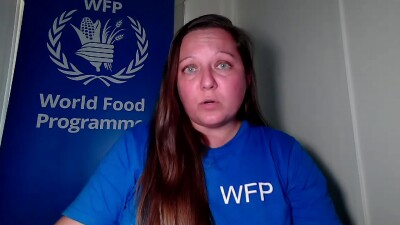
The vital humanitarian corridor will allow the UN World Food Programme (WFP) to scale up assistance to 14 areas facing famine in Darfur, Kordofan, Khartoum and Gezira. “As we speak, two convoys with nearly 6,000 metric tons of food and nutrition supplies for around half a million people, are being loaded, destined for risk-of-famine areas in north, central and west Darfur states as soon as official government communication and clearances are received,” said Leni Kinzli, spokesperson for WFP Sudan.
Just two weeks ago, famine was confirmed in Zamzam displacement camp near El Fasher, the wartorn capital of North Darfur. It shelters more than 400,000 displaced people. In total, WFP aims to support up to 8.4 million people by the end of the year.
Sudan’s war, which erupted 16 months ago between rival militaries the Sudanese Armed Forces and the Rapid Support Forces, has ravaged food production, destroyed essential markets and cut off communities from assistance.
Along with heavy fighting, the continuing rainy season has already caused major setbacks in delivering assistance, with flooded roads halting aid convoys.
“More than 50 trucks carrying an estimated 4,800 metric tons of food and nutrition assistance, enough for around half a million people, are stuck in various locations across Sudan and unable to move toward their final destinations due to flooded and impassable roads,” said WFP’s Ms. Kinzli, who insisted that humanitarian agencies urgently needed to “see the actual opening of (Adre) materialize and see trucks moving across the border as soon as possible”.
Hunger’s lasting impact
Echoing that message, the UN World Health Organization (WHO) highlighted the immediate and lasting effects of poor nutrition and acute food insecurity among vulnerable people.
WHO spokesperson Dr Margaret Harris told journalists in Geneva that a mild infection in a malnourished person with a weakened immune system can easily turn into a catastrophic illness. Children in particular can die very quickly from what might be a minor infection, she said, adding that after 16 months of heavy fighting, Sudan was poorly equipped to provide lifesaving medical care, with up to 80 per cent of hospitals “non-functional”. She added: “People are dying simply from a lack of access to basic and essential health care medication. We are seeing reports of cholera, measles, malaria, dengue and meningitis from several states.”
Preventable tragedy
The development comes amid ongoing conflict including a bombing attack on Wednesday that devastated a school and market in the city of El Obeid, leaving five girls dead and 20 children injured.
The UN migration agency IOM has also warned that Sudan is at “breaking point” and that there will be tens of thousands of preventable deaths from hunger, disease, floods and violence in the coming months without a larger global response. According to IOM, more than 10.7 million people are seeking safety within the country and many have been displaced twice or more times. Almost all internally displaced persons across Sudan – 97 per cent – are in localities with acute levels of food insecurity or worse.
ends
Story: “Sudan hunger – WFP, WHO” – 16 August 2024
Speakers:
- Ms. Leni Kinzli, Spokesperson for the World Food Programme (WFP) Sudan (speaking from Nairobi)
- Dr. Margaret Harris, Spokesperson for the World Health Organization (WHO)
TRT: 02’28”
SOURCE: UNTV CH
LANGUAGE: ENGLISH / NATS
ASPECT RATIO: 16:9
DATELINE: 16 August 2024 - GENEVA, SWITZERLAND
Geneva Press briefing
SHOTLIST
- Exterior medium shot: UN flag alley
- Wide shot of the podium with speakers at the press conference room.
- SOUNDBITE (English) Leni Kinzli, spokesperson for the World Food Programme (WFP) Sudan: “Across the country, WFP is scaling up assistance to 14 areas, either in famine or at risk of famine, largely located in Darfur, Kordofan, Khartoum, and Gezira, with the aim to support up to 8.4 million people by the end of the year. The opening of this critical humanitarian corridor through Adre will enable us to deliver aid into Sudan's conflict rattled Darfur region, where famine was confirmed just two weeks ago in Zamzam IDP camp (Internally Displaced Population), near El Fasher, North Darfur’s capital.”
- Wide shot of press room with speakers.
- SOUNDBITE (English) Leni Kinzli, spokesperson for the World Food Programme (WFP) Sudan: “As we speak, two convoys with nearly 6,000 metric tons of food and nutrition supplies for around half a million people, are being loaded, destined for risk of famine areas in north, central and west Darfur States as soon as official government communication and clearances are received.”
- Medium shot: journalists at the press conference room.
- SOUNDBITE (English) Leni Kinzli, spokesperson for the World Food Programme (WFP) Sudan: “Currently, more than 50 trucks carrying an estimated 4,800 metric tons of WFP food and nutrition assistance, enough for around half a million people, are stuck in various locations across Sudan and unable to move toward their final destinations due to flooded and impassable roads.”
- Wide shot press conference room and control room.
- SOUNDBITE (English) Leni Kinzli, spokesperson for the World Food Programme (WFP) Sudan: “But we need to see those trucks moving across the border as soon as possible, for the actual opening of that corridor to materialize.”
- Medium shot of the press conference room.
- SOUNDBITE (English) Leni Kinzli, spokesperson for the World Food Programme (WFP) Sudan: “It is the world's largest hunger crisis: 25.6 million people are in acute hunger, are facing acute hunger. That's 54 per cent of the population.”
- Wide shot of the press conference room.
- SOUNDBITE (English) Dr. Margaret Harris, spokesperson for the World Health Organization (WHO): “In the conflict hotspots, 70 to 80 per cent of the hospitals are nonfunctional. So, people are dying simply from a lack of access to basic and essential health care medication. We are seeing reports of cholera, measles, malaria, dengue and meningitis from several states.”
- Wide shot of the press conference room and control room at the back.
Similar Stories

2
17
1
2
Edited News , Press Conferences | OCHA , WMO
Two UN agencies teamed up on Wednesday to issue an appeal for immediate assistance to help communities already being impacted by the strongest El Niño on record.

3
16
2
2
B-roll , Conferences , Edited News | UNITED NATIONS , UNOG
Sixth Consultative Meeting on Enhancing Coordination of Peace Initiatives and Efforts for Sudan

1
1
1
Edited News | UNICEF , WHO , UNHCR
Yemen war continues to force families from homes amid hunger and disease
More than 250,000 people have now fled renewed fighting in Yemen, the UN said on Tuesday, citing particular concern for those sheltering in the southwestern city of Taiz and the wider governorate, where access is “essentially blocked”.

1
1
1
Edited News | UNICEF
A little over one year since a ceasefire agreement was announced between Hamas fighters and Israel, more than 340 children have been reported killed and hundreds more injured, the UN Children’s Fund, UNICEF, said on Friday.

1
1
1
Edited News | UNICEF , IFRC
Six weeks after Nepal’s deadly flooding disaster, communities are still struggling to rebuild their lives, but they will need sustained help as global warming increases the risk of another Himalayan catastrophe, the UN Children’s Fund (UNICEF) said on Friday.

1
1
1
Edited News | WHO
In suspected Russia plague death, testing and monitoring underway – WHO
The death of a lab worker in Russia’s Siberia region has sparked concerns about plague being the cause, the UN World Health Organization (WHO) said on Tuesday, adding that it was following the situation closely.

1
1
Edited News | OHCHR , UNOG
UN Human Rights Chief Volker Türk on Friday provided and oral update to the 63rd session of the Human rights Council on Ukraine.

1
1
1
Edited News | OHCHR , UNOG
UN Human Rights Chief Volker Türk on Friday provided and oral update to the 63rd session of the Human rights Council on the human rights situation in Haiti.

1
1
1
Edited News | WHO
Repeated delays in bringing lifesaving medicines, prosthetics and more from Israel into Gaza risk having devastating consequences on Palestinians who urgently need them in the wartorn enclave, the UN World Health Organization (WHO) said on Friday. “A truck full of non-priority supplies or the right supplies arriving too late, doesn't save lives. That's the question that actually matters," said Dr Reinhilde Van De Weerdt, WHO Representative in the OPT.

1
1
1
Edited News | WHO
DRC: Early access to care and oxygen decisive for Ebola patients’ survival – WHO
In the Democratic Republic of the Congo (DRC), health workers fighting the country’s largest-ever Ebola outbreak are struggling to overcome critical challenges to patient care, the UN World Health Organization (WHO) warned on Tuesday.

1
1
1
Edited News | OCHA , UN
Civilians in Iran are continuing to feel the consequences of months of conflict and military escalation, the UN’s top official in the country has said, as loss of life, damage to civilian infrastructure and mounting economic pressures leave many facing continued uncertainty.
1
1
1
Edited News | WHO , UNICEF
Aid agencies in Yemen highlighted the growing hunger emergency sparked by renewed fighting between Houthi opposition forces and Government troops, after mobile health clinics reported that hundreds of children displaced by the violence are suffering from the most deadly form of malnutrition.