

The United Nations Office at Geneva
Multimedia Newsroom
Edited News , Press Conferences
Meeting of the Small Body of the Syrian Constitutional Committee: Arrivals and press conferences
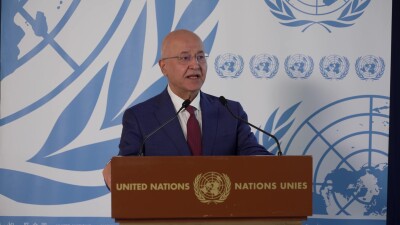
- Edited footage of Geir Pedersen’s comments to the Press, including the participants arriving at UN Geneva earlier
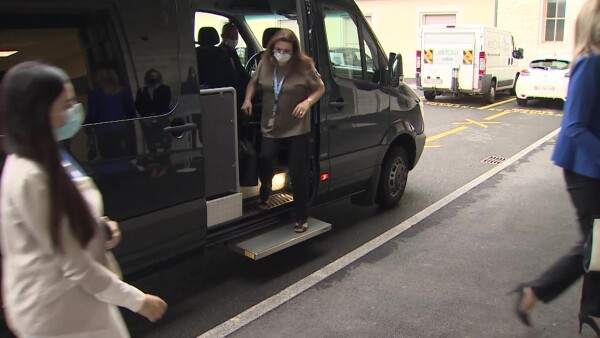
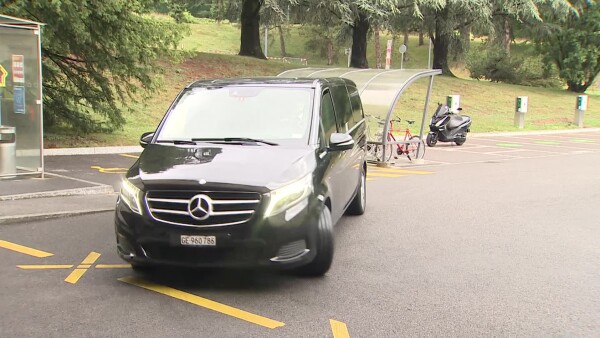
- Edited footage of participants arriving at UN Geneva earlier
- Continuity of Mr Pedersen’s comments in EN
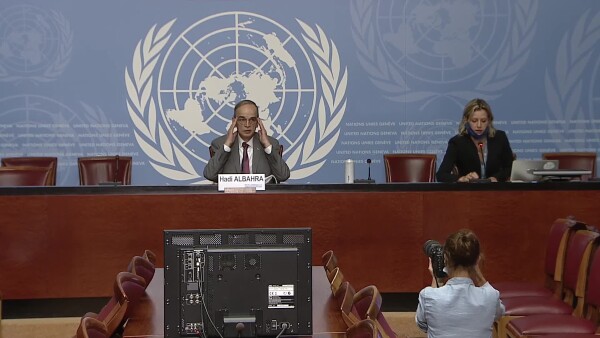
- Continuity of opposition co-chair Hadi Albahra’s comments (he spoke mainly in AR but with some EN).
UN Syria negotiator welcomes ‘commonalities’ shared by Syrians in Geneva talks
Syrian opponents meeting in Geneva as part of efforts to find a peaceful end to nearly a decade of conflict in their country have found common ground on which to pursue further discussions, UN Special Envoy for Syria, Geir Pedersen said on Saturday.
Speaking to journalists in the Swiss city after a week of “challenging” stop-start talks, interrupted by the discovery that four participants had tested positive for COVID-19 on Monday, Geir Pedersen insisted that “several areas of commonalities” had been found.
“There are still very strong disagreements and you know, my Syrian friends are never afraid of expressing those disagreements. But I was also, you know, extremely pleased to hear the two co-chairs saying very clearly that they thought also there were quite a few areas of commonalities. And what I’m looking forward to is hopefully when we meet again, that we will be able to build on those commonalities and bring the process further forward.”
He added: “I am confident that we have been able to build a little bit of confidence, a little bit of trust and that we can build on this and continue the work that we have started, we would see progress in the work of the committee. But as I have said, progress is happening, it’s of course up to the Syrians themselves within the Committee.”
Hoped-for trust-building gestures from the Syrian Government and the opposition including progress on the release of abductees and detainees had been elusive, he said. “The issue of abductees, detainees and missing persons as you know, has been one of my so-called five priorities from when I started, and it’s an area where I’m afraid we haven’t seen enough progress. But of course, it is my hope that with the continued calm on the ground and with progress on the political track, that we could also see some progress on this front.”
Highlighting the keen global interest in the Geneva process, given the presence of several major regional and international nations inside Syria, the Special Envoy reiterated his call for a nationwide ceasefire, beyond the fragile truce largely holding in Syria’s northwest.
“It is calmer and that is obviously conducive to the talks that we are having,” Mr. Pedersen insisted. “But at the same time, I think we have agreed the principle that the talks that are happening here in Geneva do not depend on the situation on the ground. We are, you know, in all my briefings to the Security Council, this is one of the key issues I am addressing, and appealing for the parties to make sure that we develop this calm into what we have called in line with Security Council Resolution 2254, a nationwide ceasefire.”
The third session of the UN-facilitated Syria Constitutional Committee (small body) discussions convened in Geneva after a nine-month break, caused by differences over the agenda which were resolved by March, and then by COVID restrictions.
Earlier negotiations to decide the make-up of the Constitutional Committee (larger body) were held in Geneva at the end of October 2019.
The committee comprises 150 participants, 50 from the Syrian Government, 50 from the opposition and 50 from civil society – the so-called “middle third” - who hail from different religious, ethnic and geographical backgrounds.
Under the Committee’s rules of procedure and terms of reference agreed by participants, the small group of 45 people is tasked with preparing and drafting proposals.
These are then discussed and adopted by the 150-member larger body, although the 75 per cent decision-making threshold means that no single bloc can dictate the Committee’s outcomes.
At the start of the week, Mr. Pedersen told journalists that meetings had been “constructive” and that a “clear agenda” for the session had been agreed.
Owing to the interruption caused by the COVID-19 development, Mr. Pedersen explained that he would continue discussing the agenda for the Committee’s next meeting separately with the two co-chairs, Ahmad Kuzbari from the Government and Hadi Albahra for the opposition.
But as the UN-facilitated process belonged to the Syrian people and their representatives, it was up to them set a new date for the next round of talks, the Special Envoy insisted.
He also reiterated his confidence that the process would result in a fair representation of the wishes of all Syrians, in line with its terms of reference agreed by the co-chairs.
“It is stated in the terms of reference that to be able to proceed in the end we would need consensus or a 75 per cent majority,” he said. “And this is of course something in place exactly to be able so that we can move – that all the sides know that they cannot force their views upon the other – if we are to reach, you know a new constitutional reform, it will have to be built as I said either on a strong consensus or bringing people together with a 75 per cent majority.”
Shotlist of the Edited footage of Geir Pedersen’s comments to the Press, including the participants arriving at UN Geneva earlier:
- Medium shot: Syrian Constitutional Committee participants arriving by minibus, Palais des Nations, United Nations Geneva.
- Medium shot: Syrian Constitutional Committee participants arriving by minibus, led by Opposition co-chair Hadi Albahra, Palais des Nations, United Nations Geneva.
- Medium shot: Syrian Constitutional Committee participants arriving by minibus, Palais des Nations, United Nations Geneva.
- Medium shot: Syrian Constitutional Committee participants arriving by minivan, led by Government of Syria co-chair Ahmad Kuzbari, Palais des Nations, United Nations Geneva.
- SOUNDBITE (EN) - UN Special Envoy for Syria, Geir Pedersen: “There are still very strong disagreements and you know, my Syrian friends are never afraid of expressing those disagreements. But I was also, you know, extremely pleased to hear the two co-chairs saying very clearly that they thought also there were quite a few areas of commonalities. And what I’m looking forward to is hopefully when we meet again, that we will be able to build on those commonalities and bring the process further forward.”.”
- Close-up: journalists’ hands typing on laptop, Press Room III, UN Geneva.
- Medium shot: journalists wearing facemasks, seated, typing on laptops, Press Room III, UN Geneva.
- SOUNDBITE (EN) - UN Special Envoy for Syria, Geir Pedersen: “I am confident that we have been able to build a little bit of confidence, a little bit of trust and that we can build on this and continue the work that we have started, we would see progress in the work of the committee. But as I have said, progress is happening, it’s of course up to the Syrians themselves within the Committee.”
- Medium shot: journalist wearing facemask, seated, typing on laptop, Press Room III, UN Geneva.
- Close-up: journalist’s hands typing on laptop, Press Room III, UN Geneva.
- SOUNDBITE (EN) - UN Special Envoy for Syria, Geir Pedersen: “It is calmer and that is obviously conducive to the talks that we are having. But at the same time, I think we have agreed the principle that the talks that are happening here in Geneva do not depend on the situation on the ground. We are, you know, in all my briefings to the Security Council, this is one of the key issues I am addressing, and appealing for the parties to make sure that we develop this calm into what we have called in line with Security Council Resolution 2254, a nationwide ceasefire.”
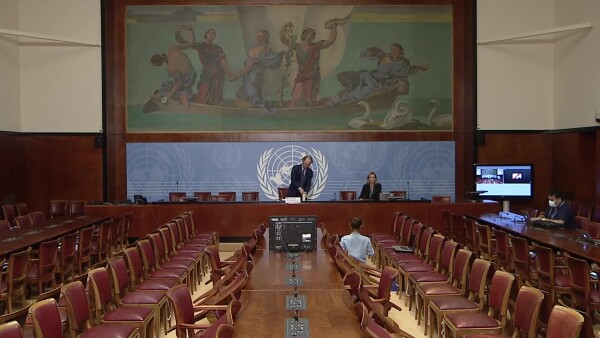
- Medium shot: journalists wearing facemasks, seated, worknig on laptops, with Special Envoy Pedersen listening via earpiece at podium, rear of shot, Press Room III, UN Geneva.
- SOUNDBITE (EN) - UN Special Envoy for Syria, Geir Pedersen: “No, the issue of abductees, detainees and missing persons as you know, has been one of my so-called five priorities from when I started, and it’s an area where I’m afraid we haven’t seen enough progress. But of course, it is my hope that with the continued calm on the ground and with progress on the political track, that we could also see some progress on this front.”
- Medium shot: video-journalist filming, Press Room III, UN Geneva.
- SOUNDBITE (EN) - UN Special Envoy for Syria, Geir Pedersen: “It is stated in the terms of reference that to be able to proceed in the end we would need consensus or a 75 per cent majority. And this is of course something in place exactly to be able so that we can move – that all the sides know that they cannot force their views upon the other – if we are to reach, you know a new constitutional reform, it will have to be built as I said either on a strong consensus or bringing people together with a 75 per cent majority.”
Similar Stories
1
1
1
Press Conferences | WMO , UNHCR , WHO , ILO
WMO: Greenhouse Gas Bulletin; UNHCR: As attacks intensify UNHCR urges support for war ravaged Ukrainians; WHO: Clinical trials in DRC: vaccines and beyond; ILO: New global and regional estimates on domestic work, informality and working conditions
1
1
1
Edited News | OCHA , UNICEF , WFP
Aid agencies warned on Friday of the fast-developing humanitarian emergency inside Taiz City in Yemen, which has been encircled by de facto Houthi forces fighting government troops along the country’s west coast.
1
1
1
Press Conferences | UN WOMEN , WFP , WHO
UN WOMEN: Sudan Women and girls one year after the fall of El Fasher; increasing drone attacks across the country; WFP: DRC - Ebola spreads to eighth DRC province as WFP delivers food, builds treatment centres and keeps supplies moving; WHO - Update on Ebola (Bundibugyo Virus Disease)
1
12
1
1
Press Conferences , Images | UNOG
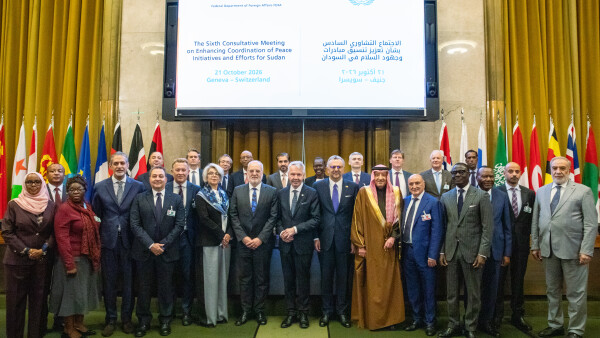
Closing Press Conference following the Sixth Consultative Meeting on Enhancing Coordination of Peace Initiatives and Efforts in Sudan

2
17
1
2
Edited News , Press Conferences , Images | OCHA , WMO
Two UN agencies teamed up on Wednesday to issue an appeal for immediate assistance to help communities already being impacted by the strongest El Niño on record.
3
16
2
2
Edited News , B-roll , Conferences , Images | UNITED NATIONS , UNOG
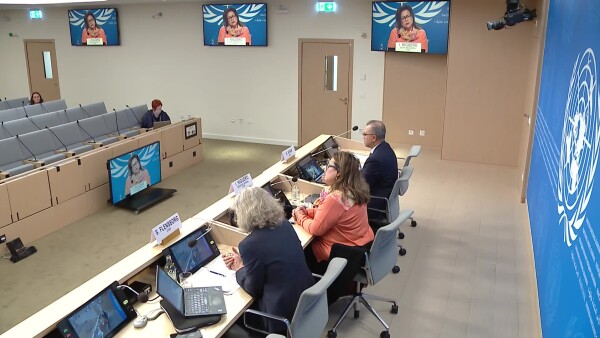
Sixth Consultative Meeting on Enhancing Coordination of Peace Initiatives and Efforts for Sudan
1
1
1
Press Conferences | CITES
Wildlife trade and conservation policy discussions at the 81st meeting of the CITES Standing Committee (SC81)
1
1
1
Edited News | UNICEF , WHO , UNHCR
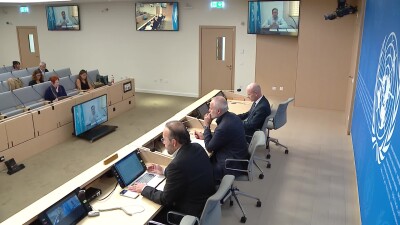
Yemen war continues to force families from homes amid hunger and disease
More than 250,000 people have now fled renewed fighting in Yemen, the UN said on Tuesday, citing particular concern for those sheltering in the southwestern city of Taiz and the wider governorate, where access is “essentially blocked”.
1
1
1
Press Conferences | UNHCR , UNCTAD , WMO , OCHA , UNICEF , WHO
UNHCR Hungary’s 1956 Refugee Crisis: 70 Years On, UNCTAD World Investment Forum 2026, Doha, WMO Greenhouse Gas Bulletin and Climate Update for COP31, OCHA Afghanistan: Malnutrition, Girls’ Education and Recovery, UNICEF Yemen: Child Malnutrition and Unsafe Water in Taiz, WHO Inequalities in Noncommunicable Diseases and Risk Factors
1
1
1
Press Conferences | UNHCR
End of UNHCR's 77th Annual Executive Committee (ExCom) meeting week

1
1
1
Edited News | UNICEF
A little over one year since a ceasefire agreement was announced between Hamas fighters and Israel, more than 340 children have been reported killed and hundreds more injured, the UN Children’s Fund, UNICEF, said on Friday.
1
1
1
Press Conferences | UNICEF , IOM , UNHCR
UN Special Assistant to the Personal Envoy Office (SUDAN): Peace Initiatives and Efforts in Sudan; UNICEF: Dire situation of children in Gaza; IOM: Damaged Homes and Energy Attacks Risk Displacing Ukrainians for this winter; UNHCR: update on EXCOM week