

The United Nations Office at Geneva
Multimedia Newsroom
Heavy seasonal rains have caused severe flooding in Sudan leaving vast damage to people and infrastructure including access to clean water – critical in the middle of the Covid-19 pandemic
Thousands of people, including internally displaced, refugees and host communities in Sudan have been affected by heavy rains which have triggered severed flooding and a rise of the river Nile up to nearly 17,5 metres, the highest level in 100 years according to Sudanese authorities.
“In Khartoum state alone, more than 21,000 people have been affected by the flooding and on Sunday, the Government declared a state of emergency in Khartoum. Across the country, as of 25 August, 380,000 people have been affected and 90 have been killed”, said Jens Laerke, spokesperson for the UN Office for the Coordination of Humanitarian Affairs (OCHA) at a briefing today at the United Nations in Geneva.
According to OCHA, some 37,000 homes have been destroyed, forcing families to seek shelter with relatives and host communities. Another 39,000 houses have been damaged, along with 34 schools and nearly 2,700 health facilities.
Talking on behalf of the refugees, Shabia Mantoo, spokesperson for the UN Refugee Agency (UNHCR) said that “an estimated 125,000 refugees and internally displaced people have been affected in total. This is particularly in East Sudan, White Nile, Darfur and Khartoum, and many are in urgent need of shelter and other emergency assistance”.
Ms. Mantoo added that “rains have been particularly heavy in North Darfur, leaving an estimated 35,000 IDPs, locals and refugees in need of help, and also 15 people have tragically died and a further 23 are missing”.
Many of those affected had been previously displaced by conflict and were already facing loss of income due to the economic challenges related to the Covid-19 pandemic. Access to clean water which is critical in the Covid-19 pandemic has also been affected. Around 2,000 water sources are contaminated or non-functional, according to initial assessments.
“Hygiene and sanitary levels have plummeted due to flooded latrines and contaminated water supplies, preventing people from exercising necessary COVID19 prevention measures such as regular handwashing. Some health facilities have been damaged, hampering their abilities to treat patients should transmission of COVID19 or other viruses and diseases increase”, said UNHCR’s Shabia Mantoo.
Homes and community buildings have been badly damaged and destroyed leaving many in desperate need of shelter. “The damage to infrastructure has been devastating. Roads have become too muddy for traffic to pass, making it extremely difficult or impossible to deliver humanitarian aid to some communities, particularly in Blue Nile where humanitarian agencies are unable to reach some 5,700 people needing humanitarian assistance”, Ms. Mantoo said.
Across the country, UN and humanitarian partners are supporting the national response with emergency shelter and household supplies, water, sanitation and hygiene assistance, food, and health services.
OCHA’s Jens Laerke said that “a quick response has been possible because the Government, UN agencies and our partners had pre-positioned supplies to respond to the needs of 250,000 people before the rain started. But these stocks are being depleted rapidly. We therefore call on more support from donors”.
- Exterior wide shot, Palais des Nations flag alley, nations’ flags flying
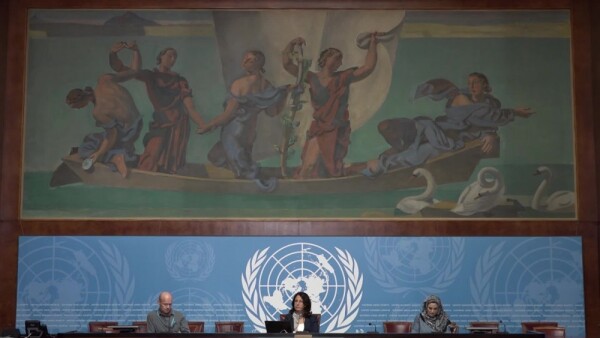
- Wide shot, Press briefing, Palais des Nations
- SOUNDBITE (English) — Jens Laerke, Jens Laerke, Spokesperson for the UN Office for the Coordination of Humanitarian Affairs (OCHA): “In Khartoum state alone, more than 21,000 people have been affected by the flooding and on Sunday, the Government declared a state of emergency in Khartoum. Across the country, as of 25 August, 380,000 people have been affected and 90 have been killed”.
- Medium shot, journalists
- SOUNDBITE (English) — Shabia Mantoo, Spokesperson for the UN Refugee Agency (UNHCR): “An estimated 125,000 refugees and internally displaced people have been affected in total. This is particularly in East Sudan, White Nile, Darfur and Khartoum, and many are in urgent need of shelter and other emergency assistance. Rains have been particularly heavy in North Darfur, leaving an estimated 35,000 IDPs, locals and refugees in need of help, and also 15 people have tragically died and a further 23 are missing”.
- Wide shot, journalists in room with screen
- SOUNDBITE (English) — Shabia Mantoo, Spokesperson for the UN Refugee Agency (UNHCR): “Hygiene and sanitary levels have plummeted due to flooded latrines and contaminated water supplies, preventing people from exercising necessary COVID19 prevention measures such as regular handwashing. Some health facilities have been damaged, hampering their abilities to treat patients should transmission of COVID19 or other viruses and diseases increase”.
- Wide shot, journalists in Press Room III, Palais des Nations.
- SOUNDBITE (English) — Shabia Mantoo, Spokesperson for the UN Refugee Agency (UNHCR): “The damage to infrastructure has been devastating. Roads have become too muddy for traffic to pass, making it extremely difficult or impossible to deliver humanitarian aid to some communities, particularly in Blue Nile where humanitarian agencies are unable to reach some 5,700 people needing humanitarian assistance”.
- Close up, cameraman, Press Room III, Palais des Nations.
- SOUNDBITE (English) — Jens Laerke, Jens Laerke, Spokesperson for the UN Office for the Coordination of Humanitarian Affairs (OCHA): “A quick response has been possible because the Government, UN agencies and our partners had pre-positioned supplies to respond to the needs of 250,000 people before the rain started. But these stocks are being depleted rapidly. We therefore call on more support from donors”.
- Wide shot, journalists in Press Room III, Palais des Nations.
- Wide shot, podium in press Room III, Palais des Nations
- Close up, hands typing on laptop
Similar Stories

2
17
1
2
Edited News , Press Conferences | OCHA , WMO
Two UN agencies teamed up on Wednesday to issue an appeal for immediate assistance to help communities already being impacted by the strongest El Niño on record.

3
16
2
2
B-roll , Conferences , Edited News | UNITED NATIONS , UNOG
Sixth Consultative Meeting on Enhancing Coordination of Peace Initiatives and Efforts for Sudan

1
1
1
Edited News | UNICEF , WHO , UNHCR
Yemen war continues to force families from homes amid hunger and disease
More than 250,000 people have now fled renewed fighting in Yemen, the UN said on Tuesday, citing particular concern for those sheltering in the southwestern city of Taiz and the wider governorate, where access is “essentially blocked”.

1
1
1
Edited News | UNICEF
A little over one year since a ceasefire agreement was announced between Hamas fighters and Israel, more than 340 children have been reported killed and hundreds more injured, the UN Children’s Fund, UNICEF, said on Friday.

1
1
1
Edited News | UNICEF , IFRC
Six weeks after Nepal’s deadly flooding disaster, communities are still struggling to rebuild their lives, but they will need sustained help as global warming increases the risk of another Himalayan catastrophe, the UN Children’s Fund (UNICEF) said on Friday.

1
1
1
Edited News | WHO
In suspected Russia plague death, testing and monitoring underway – WHO
The death of a lab worker in Russia’s Siberia region has sparked concerns about plague being the cause, the UN World Health Organization (WHO) said on Tuesday, adding that it was following the situation closely.

1
1
Edited News | OHCHR , UNOG
UN Human Rights Chief Volker Türk on Friday provided and oral update to the 63rd session of the Human rights Council on Ukraine.

1
1
1
Edited News | OHCHR , UNOG
UN Human Rights Chief Volker Türk on Friday provided and oral update to the 63rd session of the Human rights Council on the human rights situation in Haiti.

1
1
1
Edited News | WHO
Repeated delays in bringing lifesaving medicines, prosthetics and more from Israel into Gaza risk having devastating consequences on Palestinians who urgently need them in the wartorn enclave, the UN World Health Organization (WHO) said on Friday. “A truck full of non-priority supplies or the right supplies arriving too late, doesn't save lives. That's the question that actually matters," said Dr Reinhilde Van De Weerdt, WHO Representative in the OPT.

1
1
1
Edited News | WHO
DRC: Early access to care and oxygen decisive for Ebola patients’ survival – WHO
In the Democratic Republic of the Congo (DRC), health workers fighting the country’s largest-ever Ebola outbreak are struggling to overcome critical challenges to patient care, the UN World Health Organization (WHO) warned on Tuesday.

1
1
1
Edited News | OCHA , UN
Civilians in Iran are continuing to feel the consequences of months of conflict and military escalation, the UN’s top official in the country has said, as loss of life, damage to civilian infrastructure and mounting economic pressures leave many facing continued uncertainty.

1
1
1
Edited News | WHO , UNICEF
Aid agencies in Yemen highlighted the growing hunger emergency sparked by renewed fighting between Houthi opposition forces and Government troops, after mobile health clinics reported that hundreds of children displaced by the violence are suffering from the most deadly form of malnutrition.