

The United Nations Office at Geneva
Multimedia Newsroom
Geneva: Agreement reached by Libyan military delegations
Libyan military delegations from the opposing sides in the conflict have agreed on several measures that will have will have “a direct and material positive impact on the lives of the Libyan people”, according to the top United Nations official in the country, Stephanie Williams.
Speaking at a press conference at the United Nations in Geneva, where the talks are being held this week, Ms. Williams said that “after two days of the first face-to-face direct talks between the two Libyan delegations to the 5+5 Joint Military Commission -- these talks which have been marked by a great degree of patriotism and professionalism and an insistence on maintaining Libya’s unity and sovereignty -- I am pleased to report that the two sides have reached agreement on several important issues which directly impact the lives and welfare of the Libyan people.”
The “5+5 Joint Military Commission” refers to a group consisting of 5 senior military leaders from the Government of National Accord and 5 senior military officers of the opposition Libyan National Army.
“The 5+5 have agreed to the opening of the land routes that connect all the regions and cities of Libya” Ms. Williams announced, highlighting the relief that this could bring to the communities in the South of the country that have been most deprived of basic services.
“The 5+5 have also agreed to the opening of air routes throughout Libya, and especially flights to Sebha, which is the administrative capital of the Southern region.” she added.
In an important development designed to de-escalate tensions, the two sides will also cease fanning the flames of division through hate speech. “The 5+5 agreed upon with the need to end the use of inflammatory and escalatory media rhetoric, to halt the use of hate speech and they urged the judicial authorities to take the necessary deterrent measures to hold accountable the channels and social media platforms that have been promoting hate speech and inciting violence, while ensuring that freedom of expression and speech is protected, “ Ms. Williams said.
These measures are seen as supporting a fourth point of the agreement, namely that “the two sides also agreed to support and continue the current state of calm on the frontlines and to avoid any military escalation.”
Additional points of agreement reached after two days of talks at the United Nations in Geneva – based on the recommendations put forward by the joint military and security committee that met in September in the Egyptian city of Hurghada - include to continue supporting the exchange of detainees, and to work toward full resumption of oil production through a restructuring of the Petroleum Facilities Guards.
This fourth round of talks is occurring against the backdrop of a number of positive developments in Libya, according to Ms. Williams, including the continuation of calm on the frontlines, the resumption of half of the country’s oil production, the holding of municipal elections in some locations, and an on-going political process aimed at including all sectors of Libyan society.
“In light of this emerging hope and these positive developments, I reiterate the call made by the Secretary-General on the 23 March for a global ceasefire,” Ms. Williams said, in reference to the UN’s push to pause armed conflict globally in the face of the COVID-19 pandemic, “and I urge the two parties, negotiating here in Geneva, to solve all outstanding issues and forge a lasting ceasefire agreement.”
In response to a question from a journalist on whether there was truly good cause to be optimistic for the future of Libya, the Acting Special Representative said that the reason for her positive outlook was “the real spirit of professionalism, conviviality that I see between the two delegations.”
She added that “they have easily come together and in just two days, have addressed some really important issues.”
Throughout the press conference, Ms. Williams emphasized that an unacceptable degree of foreign intervention has emphasized the need for Libyan-owned and Libyan-led solutions that would fully restore the country’s sovereignty. The ultimate goal, she said, is the holding of national elections.
Going back to the reasons for feeling optimistic, Ms. Williams mentioned that the agreement in Geneva between the military officials today as focused on “issues which directly impact the lives of their compatriots.”
“They feel they have a responsibility to their fellow Libyans to make a difference,” she said.
The two sides will continue talks in Geneva today to focus on arrangements for Libya’s central region, which are to pave the way for a ceasefire agreement.
SHOTLIST OF THE EDITED STORY:
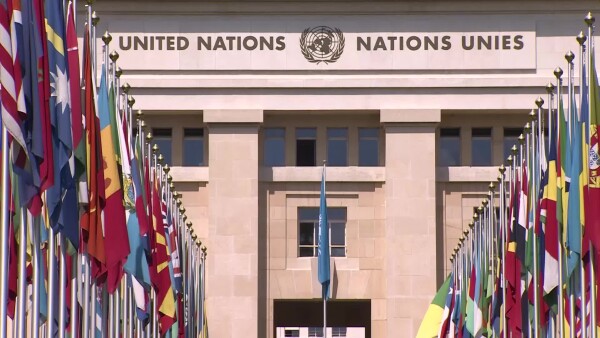
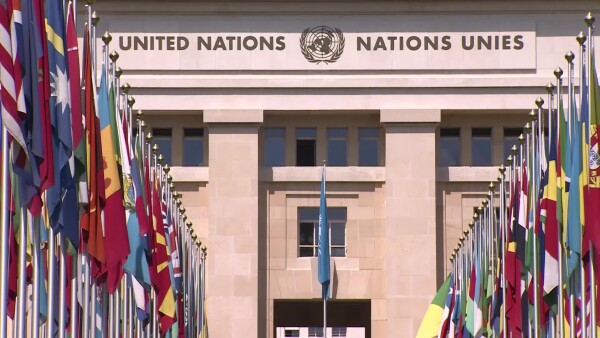
- Exterior wide shot, car passing in front of Palais des Nations, nations’ flags flying, a beautiful day.
- Exterior medium shot, Palais des Nations alley, nations’ flags flying, a beautiful day.
- Wide shot, podium with speaker in a near-empty Room XIV in line with COVID-19 distancing measures, Palais des Nations.
- SOUNDBITE (English) — Stephanie Williams, Acting Special Representative of the Secretary-General and Head of the United Nations Support Mission for Libya (UNSMIL): “After two days of the first face-to-face direct talks between the two Libyan delegations to the 5+5 Joint Military Commission – these talks which have been marked by a great degree of patriotism and professionalism and an insistence on maintaining Libya’s unity and sovereignty -- I am pleased to report that the two sides have reached agreement on several important issues which directly impact the lives and welfare of the Libyan people."
- Medium shot, delegations entering the meeting room, wearing masks, Palais des Nations.
- SOUNDBITE (English) — Stephanie Williams, Acting Special Representative of the Secretary-General and Head of the United Nations Support Mission for Libya (UNSMIL): “The 5+5 have agreed to the opening of the land routes that connect all the regions and cities of Libya.”
- Medium shot, delegations entering the meeting room and sitting down, wearing masks, Palais des Nations.
- SOUNDBITE (English) — Stephanie Williams, Acting Special Representative of the Secretary-General and Head of the United Nations Support Mission for Libya (UNSMIL: “The 5+5 have also agreed to the opening of air routes throughout Libya, and especially flights to Sebha, which is the administrative capital of the Southern region.”
- Medium shot, journalists standing behind cameras, Room XIV, Palais des Nations.
- SOUNDBITE (English) — Stephanie Williams, Acting Special Representative of the Secretary-General and Head of the United Nations Support Mission for Libya (UNSMIL): “The 5+5 agreed upon with the need to end the use of inflammatory and escalatory media rhetoric, to halt the use of hate speech and they urged the judicial authorities to take the necessary deterrent measures to hold accountable the channels and social media platforms that have been promoting hate speech and inciting violence, while ensuring that freedom of expression and speech is protected.”
- Medium shot, near-empty Room XIV in line with COVID-19 distancing measures, Palais des Nations.
- SOUNDBITE (English) — Stephanie Williams, Acting Special Representative of the Secretary-General and Head of the United Nations Support Mission for Libya (UNSMIL): “The two sides also agreed to support and continue the current state of calm on the frontlines and to avoid any military escalation.”
- Close-up, journalist taking pictures between two seats, Room XIV, Palais des Nations
- SOUNDBITE (English) — Stephanie Williams, Acting Special Representative of the Secretary-General and Head of the United Nations Support Mission for Libya (UNSMIL): “So, in light of this emerging hope and these positive developments, I reiterate the call made by the Secretary-General on the 23 March for a global ceasefire, and I urge the two parties, negotiating here in Geneva, to solve all outstanding issues and forge a lasting ceasefire agreement. Thank you.”
- Medium shot, men wearing a mask in foreground and journalist typing on laptop to rear, Room XIV, Palais des Nations.
- SOUNDBITE (English) — Stephanie Williams, Acting Special Representative of the Secretary-General and Head of the United Nations Support Mission for Libya (UNSMIL): “Well, I have to say the reasons for my optimism directly here is the real spirit of professionalism, conviviality that I see between the two delegations where they have easily come together and in just two days, have addressed some really important issues, and as I said, these are issues which directly impact the lives of their compatriots and this was really an area of a focus in their… including in their opening remarks to these talks, that they feel they have a responsibility to their fellow Libyans to make a difference.”
- Close-up, showing camera filming the speaker, Room XIV, Palais des Nations.
- Medium shot, journalist taking notes, sitting in the front row, Room XIV, Palais des Nations.
- Close-up, hands writing in a notebook, Room XIV, Palais des Nations.
- Medium shot, first delegation arrival, participants stepping out of a car, wearing masks.
- Medium shot, second delegation arrival, participants stepping out of a car, wearing masks.
Similar Stories

1
1
1
Press Conferences | UNHCR
End of UNHCR's 77th Annual Executive Committee (ExCom) meeting week

1
1
1
Edited News | UNICEF
A little over one year since a ceasefire agreement was announced between Hamas fighters and Israel, more than 340 children have been reported killed and hundreds more injured, the UN Children’s Fund, UNICEF, said on Friday.

1
1
1
Press Conferences | UNICEF , IOM , UNHCR
UN Special Assistant to the Personal Envoy Office (SUDAN): Peace Initiatives and Efforts in Sudan; UNICEF: Dire situation of children in Gaza; IOM: Damaged Homes and Energy Attacks Risk Displacing Ukrainians for this winter; UNHCR: update on EXCOM week

1
1
1
Press Conferences | IOM , UNDRR
UN stresses importance of household preparedness for disaster risk reduction.

1
1
1
Edited News | UNICEF , IFRC
Six weeks after Nepal’s deadly flooding disaster, communities are still struggling to rebuild their lives, but they will need sustained help as global warming increases the risk of another Himalayan catastrophe, the UN Children’s Fund (UNICEF) said on Friday.

1
1
1
Statements , Press Conferences | OHCHR

1
1
1
Press Conferences | UNHCR , UNICEF , IFRC , OHCHR , UN WOMEN , IOM , OCHA , WHO
UNHCR – ExCom Meeting, UNICEF – Nepal Recovery, IFRC – Flash Floods, WHO – Mental Health, IOM – South Sudan Floods, OCHA – DRC Humanitarian aid, UNHCR – Sahel Displacement, UNICEF – Yemen Update, IOM – Gaza Shelter, UN Women – Gaza Women, OHCHR – Arrests and detentions of Syrians by Israeli force

2
1
2
Press Conferences | UNCTAD
Presentation of the Trade and Developement Report 2026
Embargoed until 9 October 2026 at 11 a.m. (Geneva Time)
UNCTAD: UNCTAD’s flagship report finds that governments increasingly use industrial, trade, financial and technology policies to pursue economic and national security objectives. Market access and the ability to move into higher-value activities now depend more heavily on technology, finance and geopolitics.

1
1
1
Press Conferences | UPU
Release of the State of the Postal Sector Report 2026

1
1
1
Edited News | WHO
In suspected Russia plague death, testing and monitoring underway – WHO
The death of a lab worker in Russia’s Siberia region has sparked concerns about plague being the cause, the UN World Health Organization (WHO) said on Tuesday, adding that it was following the situation closely.
1
1
1
Press Conferences | IOM , ITU , UNECE , UNICEF , WHO , WMO
UNICEF: Ebola, DRC - children orphans or separating them from parents and caregivers; IOM: Humanitarian needs in Djibouti amid arrivals from Yemen and increased migrant movements; WHO: Darfur, scale of health needs far exceeds available resources; WMO co-sponsored Global Heat Forum, Bangkok, monthly Global Seasonal Climate Update; UNECE: UN Forum of Mayors; ITU Plenipotentiary Conference 2026; WHO: child and adolescent obesity guidelines and new global roadmap to tackle pregnancy hypertension, a leading cause of maternal mortality

1
1
Edited News | OHCHR , UNOG
UN Human Rights Chief Volker Türk on Friday provided and oral update to the 63rd session of the Human rights Council on Ukraine.