

The United Nations Office at Geneva
Multimedia Newsroom
Background:
The Libyan Political Dialogue Forum (LPDF)’s Advisory Committee met from 13-16 January at the Palais des Nations in Geneva, Switzerland.
The Committee was recently established to discuss outstanding issues related to the selection mechanism of a unified executive and to put forward concrete and practical recommendations upon which the LDFP plenary shall decide.
The national elections date of December 24, 2021 remains a sine qua non for the United Nations Support Mission in Libya (UNSMIL), a guiding principle and unrenounceable goal. In this sense, the Committee’s mandate will be strictly time-bound.
The 18 members of the Committee represent a broad geographical and political diversity and includes the participation of women, youth and cultural components.
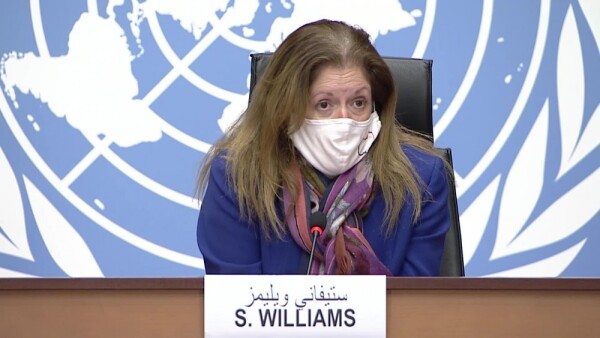
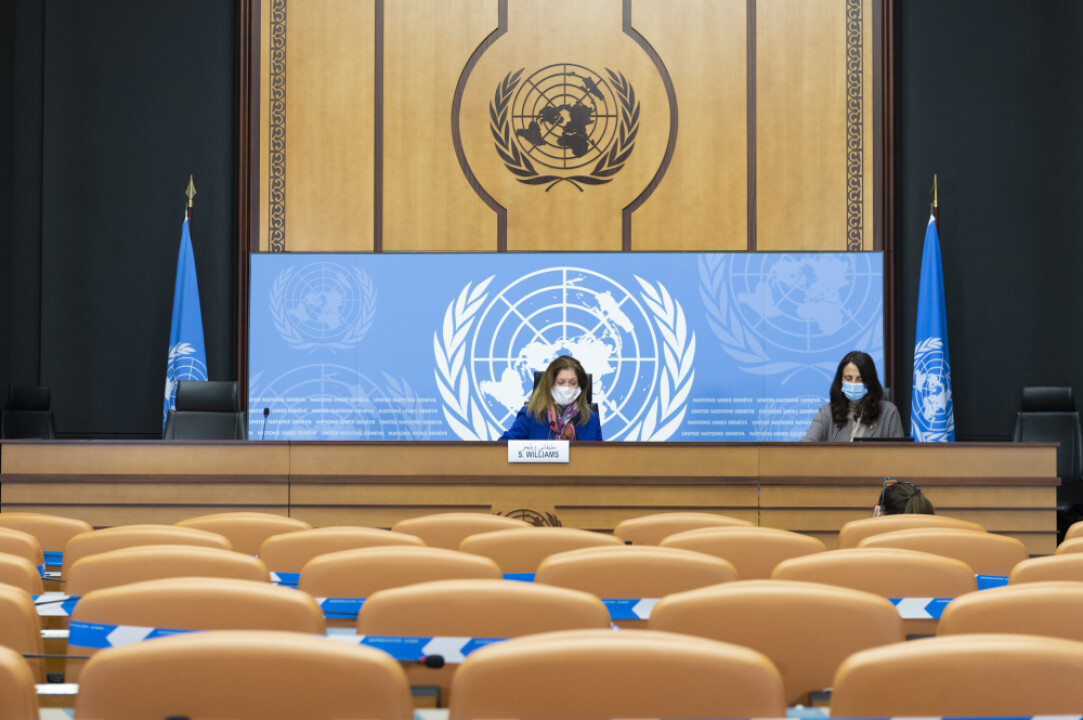
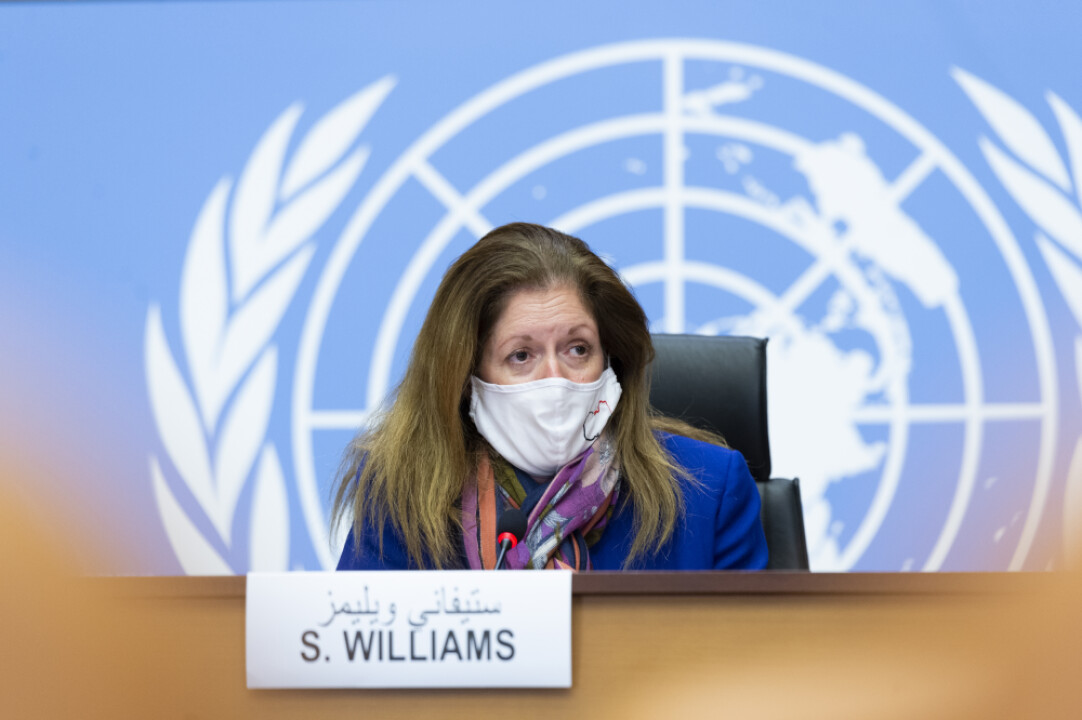
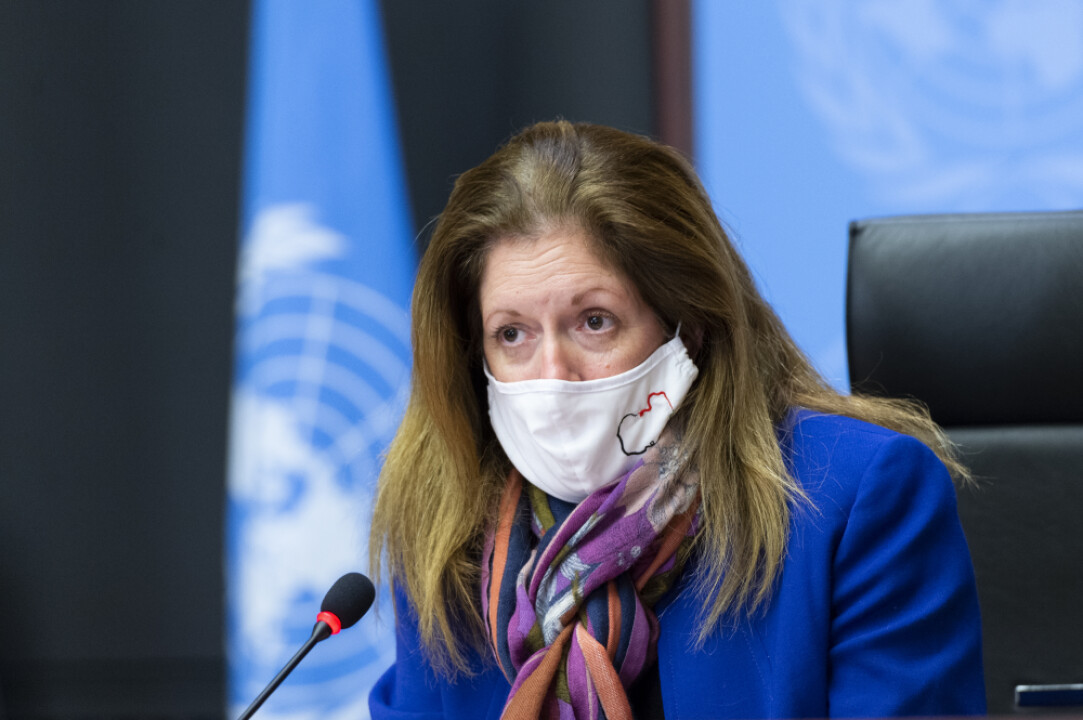
Transcript of Opening Remarks by Stephanie Turco Williams, Acting Special Representative of the Secretary-General and Head of the United Nations Support Mission in Libya, at a Press Conference
Palais des Nations, Geneva, 16 January 2021
Good evening, thank you for being here on a Saturday.
Over the past months, and under the umbrella of the United Nations, Libyans have come together to build bridges within and across the various tracks of the Berlin process in order to genuinely tackle the issues that have driven Libya’s long-standing conflict, including the armed conflict itself, its economic roots, the political crisis and division, and the need for accountability, transitional justice and reconciliation. This is a Libyan-Libyan process. It is not being brokered by foreign powers in smoke-filled rooms in faraway capitals.
The Roadmap that was charted in Tunis in November is the first critical step to renew the political legitimacy of Libyan institutions and to restore their sovereignty through the holding of national elections on December 24 of this year. Through the Roadmap the Libyan Political Dialogue Forum also agreed clear steps leading to these elections that shall be held on an agreed upon constitutional basis, and the Roadmap set out a very reasonable timeframe for the politicians and the relevant institutions to live up to their responsibility to complete these steps - with built in contingencies in the event the institutions fail or impede the process.
In Tunis, the Libyan Political Dialogue Forum also agreed on the need to restructure the executive authority to govern Libya in the run-up to these elections. This new, unified government would be tasked with putting in place the necessary conditions for the elections to take place. It will also launch national reconciliation that will seek to combat corruption and restore the delivery of public services across the country.
As you know, we have convened the advisory committee of the Libyan Political Dialogue Forum here in Geneva since Wednesday. With us here is a group of 18 members selected and nominated from within the broader group of the 75 composing the Libyan Political Dialogue Forum. This is an advisory committee formed to overcome the deadlock on the mechanism for the selection mechanism for this temporary executive authority, in line with the Tunis Roadmap agreed upon in mid-November.
I am very pleased to report that the Advisory Committee members truly rose to the occasion and they have met their responsibility with a constructive spirit, cooperative efforts, and a great deal of patriotism. During these deliberations, I have witnessed a spirit of fraternity, solidarity, and a commitment to put the interests of the country and the Libyan people first and foremost. I wish to extend my heartfelt thanks to the Advisory Committee members for their efforts, and to the rest of the Dialogue members for their continued support during these consultations.
I am happy to announce – and I congratulate them - on reaching an agreement on a recommended selection mechanism that has now been shared with the remaining members of the Libyan Political Dialogue Forum, earlier this afternoon. The Plenary will vote on this mechanism on Monday. They have taken indeed a decisive step towards meeting the goals that were set in Tunis.
On the basis of the proposal devised by the Advisory Committee, each electoral college shall separately nominate their respective representative to the Presidency Council based on the principle of agreement and selection 70 per cent. If this is not possible, lists shall be formed from all regions. Each list shall consist of 4 persons who will specify the position for which they are running: i.e. President of the Presidency Council, member of Presidency Council, or Prime Minister. In order for the list to be presented for voting by the Plenary, it must receive 17 endorsements (8 from the West, 6 from the East, and 3 from the South). The winning list shall be the one that receives 60% of the votes of the Plenary in the first round. If none of the lists receive this percentage, the two lists that received the highest percentage shall compete in the second round. The winning list in that round shall be the one that receives 50%+1 in the Plenary.
I believe this decision reached today is the best possible compromise, as this proposal respects the regional dimension, and it indeed encourages people to work across the divide and across regions, in order to strengthen understanding and to build unity in the country. And it embodies the principles of full inclusivity, transparency and fair representation across regions and within different population groups.
I want to emphasize that the UN will not in any way be involved in composing the lists. As I have repeatedly stated, this is a Libyan-Libyan solution. Our role is to support and facilitate.
On Monday, January 18, UNSMIL will call upon the Political Dialogue members to vote on the proposed mechanism. The vote on the mechanism will be conducted over a 24-hour period. We will announce the results on January 19, 2021, after voting has been completed. The threshold for agreement that was agreed by the Advisory Committee on the selection mechanism is 63% of those who participate in the vote. If this percentage, if the percentage of 63% is not attained, we will conduct a second round of voting that will be held two days later. The required threshold for agreement for the second round is 50%+1 of those who participate in the vote.
It is important to reflect and to remind everyone that what we are talking about here is a temporary, unified executive authority that will be replaced by a permanent, democratically elected government, chosen by the Libyan people on December 24th of this year.
Our principles are unambiguous: a temporary unified executive staffed by Libyan patriots who want to share responsibility rather than to divide the cake. This temporary executive has a clear and limited mandate, and as I said, that expires on the date of the elections are held on the 24th of December. We have set the table to decide a selection mechanism that does embody these principles, and my message to the Libyan people today is: with this breakthrough that we have seen, your patriotic and committed representatives here in the Advisory Committee have fulfilled, you know, their commitments, and have done so in a very admirable manner. Thank you very much.
CH1 (L): English / Ch2 (R): Arabic
Similar Stories
1
1
1
Press Conferences | WIPO , WHO , UNICEF , UNHCR , IOM , WFP , FAO
WIPO Global Innovation Index 2026 launch and press conference, WHO Composition of influenza vaccines for the 2027 Southern Hemisphere flu season, UNICEF Yemen hunger and malnutrition; UNHCR Sudan displacement into Chad; IOM Ebola and population movements in DRC; WFP emergency food assistance in Nepal; and FAO food loss and waste.
2
1
2
Press Conferences | UNCTAD
Gaza reconstruction needs reach $71.5 billion as Palestinian economy and public finances face severe strain. Latest UNCTAD report documents the loss of decades of development gains, economic collapse in Gaza and tightening economic constraints in the West Bank.
The report identifies three immediate priorities: transferring withheld Palestinian revenues, safeguarding the banking system and aligning reconstruction support with the documented scale of damage and economic losses.
1
1
1
Press Conferences | HRC
Press conference on the situation of human rights in Nicaragua by the UN Group of Human Rights Experts
1
1
1
Press Conferences | ITU , UNHCR , WHO , WMO
YEMEN - UNHCR: Escalating conflict in Yemen could fuel more displacement, refugee movement
CLIMATE - WHO / WMO: Health and Climate impact of El Niño
1
1
1
Press Conferences | HRC , OHCHR
Mariana Katzarova discusses human rights in Russia as a UN Special Rapporteur.
1
1
1
Press Conferences | IOM , OHCHR , UN WOMEN , UNFPA , UNHCR , UNOPS , WHO
UN Geneva briefing: Yemen crisis worsens, urgent aid needed across multiple sectors.
1
1
1
Press Conferences | HRC
Press conference on the latest report of the Independent International Fact-Finding Mission on the Bolivarian Republic of Venezuela to the UN Human Rights Council
1
1
1
Press Conferences | OHCHR
Victims Still Waiting: A Global Briefing on Transitional Justice Around the World
2
1
2
Edited News , Press Conferences | WMO
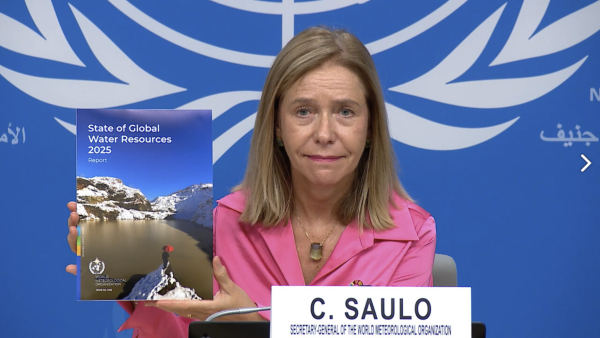
As world’s water reserves change, countries must prepare for a new reality: WMO
New data showing that rivers were at their lowest level for decades last year provides further evidence that the climate crisis is real and countries must act immediately to protect themselves from the increasing threat to communities and livelihoods, the UN World Meteorological Organization (WMO) said on Thursday.
The key findings from WMO’s State of Global Water Resources 2025 report covering the hydrological cycle and extreme events in the five-year period to last year:
- 2025 was one of driest years for river discharge in 35 years
- Past seven years have seen abnorfmal river flows
- Water storage on Earth’s land surface has decreased in past decade
- Widespread glacier loss across all regions for fourth consecutive year
- Asia and Africa are regions most affected by water-related disasters
- Water data availability has improved, but gaps remain in hard-hit areas
Highlighting the long-term decline in the Earth’s freshwater storage and glacier melt, WMO Secretary-General Celeste Saulo explained that the planet’s water reserves used to act as a planetary “savings account” that absorbed the occasional dry season, avoiding a water crisis. “One of the central stories of the 2025 report is what is happening to that savings account? And the simple answer is that we are depleting it,” she told journalists in Geneva.
Groundwater reserves are equally stretched and have been in decline since 2014, WMO’s report states, with nearly two-thirds of monitored wells worldwide showing levels lower than the historical norm and indicating a shift “further toward deficit…not recovery”.
“At the same time, we are seeing more water-related disasters,” Ms. Saulo said, while also stressing that the currently strengthening El Niño “will increase the risk of drought in some areas, and flooding in others”.
Glaciers disappearing
In 2025, for the fourth consecutive year, every major glaciated region on Earth lost ice mass, leading to short-term hazards including floods and long-term water insecurity, according to WMO.
Responding to a question about whether the changing global water cycle might have contributed to the deadly Nepal-China flooding disaster, Ms. Saulo explained that melting ice and rock was just one factor in the chain of events that ultimately sent a massive and deadly wall of water and debris downstream on 26 August, killing at least 1,367 people.
“You asked if it could happen again? Absolutely; the problem in this region is that there’s 63,700 glaciers at the last count,” she told a Press Conference in Geneva. “Even if you’re looking with remote sensing with satellites at these glaciers, you might see some faults, you might see some slight shifting, that does not mean necessarily catastrophic collapse. So, in order to plan for this, it’s very, very difficult. But the international community is looking very hard at ways in which we can bring people together to solve some of these monitoring issues.”
Data indicates that glaciers shrank between 2023 and 2025 with cumulative losses of 1,400 gigatonnes of water – or about one third of annual fresh water needs.
Every major glacier region on Earth lost ice for the fourth consecutive year.
“All 19 glacier regions around the globe lost ice; in Central Asia, Iceland, the Russian Arctic and western Canada and the United States, it was among the three worst years on record,” said Wayne Jenkinson, WMO’s Director of Hydrology and Cryosphere.
Some regions with smaller glaciers such as Central Europe, the Caucasus, the western Canada and the United States may already have reached “peak water”, Mr. Jenkinson warned.
“After this point, the glacier gives less meltwater each year simply because there is less ice left to melt. That matters for every community downstream that relies on water during hot, dry summers,” he explained.
Narelle van der Wel, WMO’s Head of Cryosphere Monitoring, Predictions and Services, stressed that while some further glacier loss is unavoidable, the eventual scale of the decline is not predetermined.
“Some glacier loss is inevitable, but total loss of glaciers is not yet inevitable,” she said, pointing to emissions reductions as central to limiting future losses.
Preparing for moving baselines
The report does not attribute every observed change to climate change alone. WMO says pressure on water resources and natural variability also contribute.
Mr. Jenkinson said governments need to prepare for “moving baselines” as historical patterns become less reliable.
“The situation 30 years ago is not where we are today,” he said. Countries, he added, need to prepare “for those changes that have really already arrived”.
ends
1
1
1
Press Conferences | WMO , OCHA , WHO , UNICEF , UN WOMEN , OHCHR , IOM , UNHCR
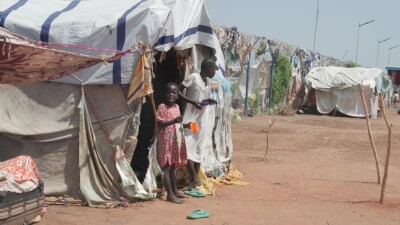
Update on Ebola from WHO and OCHA, update on the situation of children with the beginning of school in Ukraine from UNICEF, UN Women on the impact of the settlers and restrictions on women and girls in West Bank, OHCHR on the recovery of extensive human remains in Gaza, IOM and UNHCR on the new wave of displacement in Yemen
2
1
2
Press Conferences , Edited News | WFP
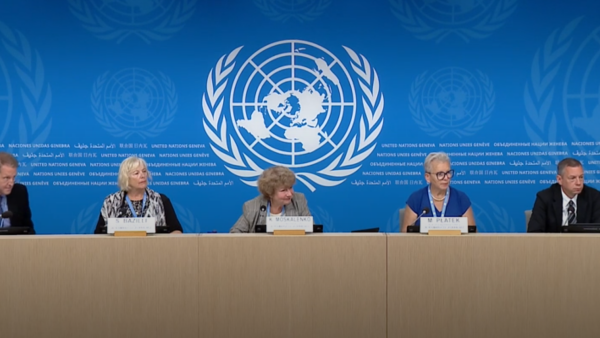
‘Super El Niño’ and converging crises worsen hunger in South Sudan and across the region - WFP
South Sudan’s hunger crisis is becoming increasingly catastrophic as violence, extreme weather and dwindling aid leave millions without enough food, the UN World Food Programme (WFP) warned on Tuesday.
1
1
1
Press Conferences | HRC
Update on the human rights situation in Belarus by the UN Group of Independent Experts on the Human Rights Situation in Belarus