

The United Nations Office at Geneva
Multimedia Newsroom
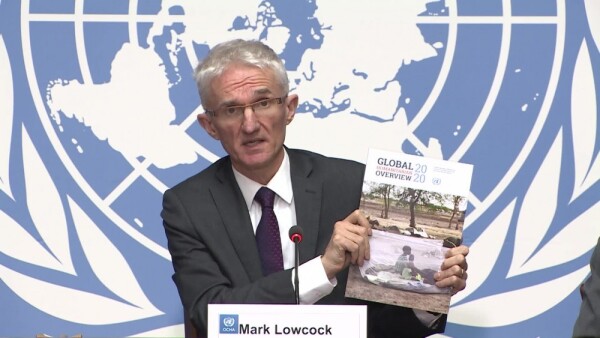
A record 166 million people worldwide will need help and protection in crises spanning more than 50 countries in 2020, the UN’s emergency relief chief said, in an appeal for nearly $29 billion in humanitarian aid from donors.
Climatic shocks, large infectious disease outbreaks and intensifying, protracted conflicts have resulted in global needs increasing by some 22 million people in the past year, Mark Lowcock told journalists in Geneva.
“In 2020, nearly 168 million people worldwide will need humanitarian assistance and protection,” he said. “That represents about one person in 45 on the planet. It is the highest figure in decades.”
Another disturbing trend is that armed conflicts “are killing and maiming a record number of children” Mr. Lowcock explained. “More than 12,000 in fact were killed or maimed in conflict in 2018 and 2019 has been worse.”
In addition, women and girls were at higher risk of sexual and gender-based violence than in the past, and one in five people living in conflict areas has a mental health condition, he said.
In a call to donors, the UN relief chief said that the UN and partner organisations including the Red Cross and other non-governmental organisations “will be aiming to assist 109 million of the most vulnerable people”.
More communities had been affected by conflict and yet more “were affected by climate change-related events than we had projected”, Mr. Lowcock insisted, in reference to more frequent drought, flooding and tropical cyclones that tend to disproportionately affect poor and vulnerable individuals.
“Thirteen of the 20 countries most vulnerable to climate change are places in which we have an inter-agency appeal,” he noted.
In terms of sheer scale, Yemen “is still going to be the world’s worst humanitarian crisis” in 2020 after nearly five years of war, the UN official maintained. “The number of people in need is expected to remain close to this year’s levels, that’s around 24 million people, 80 per cent of the population.”
Detailed in the Global Humanitarian Overview 2020, the appeal for Yemen is $3.2 billion.
Funding is also needed for a multitude of other protracted conflicts, including Afghanistan ($732 million for 9.4 million people), Burundi ($104 million for 1.7 million people), Iraq ($520 million for 4.1 million people), Syria ($3.3 billion for 11 million people) and the Central African Republic ($388 million for 2.6 million people), among others.
To illustrate a growing disregard by combatants for international humanitarian law, Mr. Lowcock highlighted nearly 800 attacks against healthworkers and healthcare facilities in the first nine months of 2019, which claimed 171 lives.
The unexpected scale of infectious disease outbreaks has also helped drive needs to unprecedented levels.
“In Africa, in the first three months of this year, there were 700 per cent more measles cases than in the same period last year,” Mr. Lowcock said, a likely reference to the more than 5,000 measles fatalities in the Democratic Republic of the Congo since January.
Turning to Venezuela, where the funding requirement is $1.35 billion for 3.8 million people in 2020, needs are “substantially outstripping resources”, the UN official said.
A “substantial increase in humanitarian assistance for Venezuelans” was needed for those inside their country” and an approximate doubling of assistance for those who’ve left the country, Mr. Lowcock insisted.
“On current trends, our projections show that more than 200 million people could be in need of assistance by 2022,” he added.
- Wide shot: exterior, flag alley, Palais des Nations, United Nations Geneva.
- Medium shot: Press room, journalists, TV crews.
- Close-up: back of journalist’s head, Global Humanitarian Overview 2020 report on table.
- SOUNDBITE (EN) Mark Lowcock, UN Under-Secretary-General for Humanitarian Affairs and Emergency Relief Coordinator: “In 2020, nearly 168 million people worldwide will need humanitarian assistance and protection. That represents about one person in 45 on the planet. It is the highest figure in decades.”
- Medium shot: photographer taking picture, profile.
- SOUNDBITE (EN) Mark Lowcock, UN Under-Secretary-General for Humanitarian Affairs and Emergency Relief Coordinator: “The UN and partner organisations – the Red Cross, NGOs and the other partners we work with - will be aiming to assist 109 million of the most vulnerable people through the 21 plans that we have summarized in the Global Humanitarian Overview. That’s going to require funding of $29 billion.”
- Close up: journalist holding pen in two hands above press release.
- SOUNDBITE (EN) Mark Lowcock, UN Under-Secretary-General for Humanitarian Affairs and Emergency Relief Coordinator: “More people were affected by conflict and more people were affected by climate change-related events than we had projected.”
- Medium shot: journalists.
- SOUNDBITE (EN) Mark Lowcock, UN Under-Secretary-General for Humanitarian Affairs and Emergency Relief Coordinator: “Yemen is still going to be the world’s worst humanitarian crisis. The number of people in need is expected to remain close to this year’s levels, that’s around 24 million people, 80 per cent of the population.”
- Medium shot: journalists typing on laptops.
- SOUNDBITE (EN) Mark Lowcock, UN Under-Secretary-General for Humanitarian Affairs and Emergency Relief Coordinator: “We are projecting a need for substantial increase in humanitarian assistance for Venezuelans inside their country, but also for Venezuelans who’ve left their country. It’s roughly a doubling of assistance for Venezuelans who’ve left the country including some who we think will continue to leave.”
- Medium shot: journalist’s hands typing on laptop in foreground, podium to rear.
- SOUNDBITE (EN) Mark Lowcock, UN Under-Secretary-General for Humanitarian Affairs and Emergency Relief Coordinator: “Thirteen of the 20 countries most vulnerable to climate change are places in which we have an inter-agency appeal.”
- Medium shot: journalists reading documents.
- SOUNDBITE (EN) Mark Lowcock, UN Under-Secretary-General for Humanitarian Affairs and Emergency Relief Coordinator: “Armed conflicts are killing and maiming a record number of children. More than 12,000 in fact were killed or maimed in conflict in 2018 and 2019 has been worse.”
- Close up: laptops in profile, Global Humanitarian Overview 2020 being opened.
- SOUNDBITE (EN) Mark Lowcock, UN Under-Secretary-General for Humanitarian Affairs and Emergency Relief Coordinator: “Women and girls are at higher risk of sexual and gender-based violence than we’ve seen in the past; one in five people living in conflict areas have a mental health condition.”
- Medium shot: journalist in centre of shot looks at speaker (out of frame), another journalist rests her cheek on her hand.
- SOUNDBITE (EN) Mark Lowcock, UN Under-Secretary-General for Humanitarian Affairs and Emergency Relief Coordinator: “There were 791 attacks against healthworkers and healthcare facilities in the first nine months of 2019, resulting in 171 deaths.”
- Close up: journalist reads Global Humanitarian Overview 2020.
- SOUNDBITE (EN) Mark Lowcock, UN Under-Secretary-General for Humanitarian Affairs and Emergency Relief Coordinator: “In Africa, in the first three months of this year, there were 700 per cent more measles cases than in the same period last year.”
- Close up: journalists’ backs, one is reading Global Humanitarian Overview 2020.
- SOUNDBITE (EN) Mark Lowcock, UN Under-Secretary-General for Humanitarian Affairs and Emergency Relief Coordinator: “On current trends, our projections show that more than 200 million people could be in need of assistance by 2022.”
- Close up: hands typing on laptops.
- Wide shot: Press room with journalists and podium in rear of shot.
- Medium shot: journalists, photographer’s head, podium.
Similar Stories
1
1
1
Edited News | OCHA , UNICEF , WFP
Aid agencies warned on Friday of the fast-developing humanitarian emergency inside Taiz City in Yemen, which has been encircled by de facto Houthi forces fighting government troops along the country’s west coast.

2
17
1
2
Edited News , Press Conferences , Images | OCHA , WMO
Two UN agencies teamed up on Wednesday to issue an appeal for immediate assistance to help communities already being impacted by the strongest El Niño on record.
3
16
2
2
Edited News , B-roll , Conferences , Images | UNITED NATIONS , UNOG
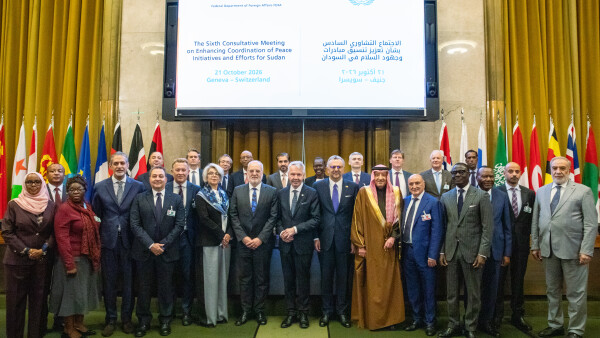
Sixth Consultative Meeting on Enhancing Coordination of Peace Initiatives and Efforts for Sudan

1
1
1
Edited News | UNICEF , WHO , UNHCR
Yemen war continues to force families from homes amid hunger and disease
More than 250,000 people have now fled renewed fighting in Yemen, the UN said on Tuesday, citing particular concern for those sheltering in the southwestern city of Taiz and the wider governorate, where access is “essentially blocked”.

1
1
1
Edited News | UNICEF
A little over one year since a ceasefire agreement was announced between Hamas fighters and Israel, more than 340 children have been reported killed and hundreds more injured, the UN Children’s Fund, UNICEF, said on Friday.

1
1
1
Edited News | UNICEF , IFRC
Six weeks after Nepal’s deadly flooding disaster, communities are still struggling to rebuild their lives, but they will need sustained help as global warming increases the risk of another Himalayan catastrophe, the UN Children’s Fund (UNICEF) said on Friday.

1
1
1
Edited News | WHO
In suspected Russia plague death, testing and monitoring underway – WHO
The death of a lab worker in Russia’s Siberia region has sparked concerns about plague being the cause, the UN World Health Organization (WHO) said on Tuesday, adding that it was following the situation closely.

1
1
Edited News | OHCHR , UNOG
UN Human Rights Chief Volker Türk on Friday provided and oral update to the 63rd session of the Human rights Council on Ukraine.

1
1
1
Edited News | OHCHR , UNOG
UN Human Rights Chief Volker Türk on Friday provided and oral update to the 63rd session of the Human rights Council on the human rights situation in Haiti.

1
1
1
Edited News | WHO
Repeated delays in bringing lifesaving medicines, prosthetics and more from Israel into Gaza risk having devastating consequences on Palestinians who urgently need them in the wartorn enclave, the UN World Health Organization (WHO) said on Friday. “A truck full of non-priority supplies or the right supplies arriving too late, doesn't save lives. That's the question that actually matters," said Dr Reinhilde Van De Weerdt, WHO Representative in the OPT.

1
1
1
Edited News | WHO
DRC: Early access to care and oxygen decisive for Ebola patients’ survival – WHO
In the Democratic Republic of the Congo (DRC), health workers fighting the country’s largest-ever Ebola outbreak are struggling to overcome critical challenges to patient care, the UN World Health Organization (WHO) warned on Tuesday.

1
1
1
Edited News | OCHA , UN
Civilians in Iran are continuing to feel the consequences of months of conflict and military escalation, the UN’s top official in the country has said, as loss of life, damage to civilian infrastructure and mounting economic pressures leave many facing continued uncertainty.