

The United Nations Office at Geneva
Multimedia Newsroom
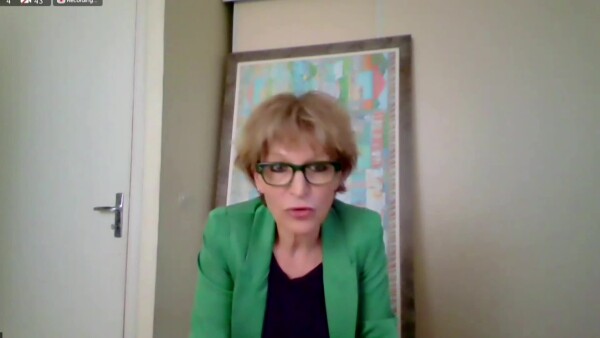
UN independent expert Agnès Callamard today welcomed a report published earlier this week by U.S. authorities that named Saudi Arabia's Crown Prince Mohammad bin Salman as the person who gave the go ahead to the operation to kill or capture journalist Jamal Khashoggi. Mr. Khashoggi was assassinated in the Saudi consular offices in Istanbul, Turkey, in October 2018.
While welcoming the finding, which corroborates previous work done by her as the UN Special Rapporteur on extrajudicial, summary or arbitrary executions, Ms. Callamard said she was "disappointed" that there was no new factual evidence in the report, and that there were no plans for holding the Saudi royal accountable.
“The fact that the report named the quasi-head of a state, Mr. Mohammed bin Salman, as being responsible for the operation that killed Mr. Jamal Khashoggi, is an important demonstration as well on the part of United States to be transparent”, Ms Callamard said.
“On another level I was disappointed, and I am disappointed," she added. "First of all, factually speaking, the report provided nothing new. It is an analysis of circumstantial evidence and a judgment that is being brought forward, important but I would have expected more material evidence and presumably they exist, but they have not been declassified,” Ms. Callamard said.
The Special Rapporteur called on the U.S. government to commit to the promises of the election campaign and to put human rights, and particularly the freedom of the press, at the forefront of its agenda.
U.S. officials have announced visa restrictions affecting 76 Saudi citizens involved in harassing activists and journalists. They have so far declined to apply sanctions to the crown prince, however.
“So far, the government of the United States has not announced any actions to build on their findings and liability and responsibility on the part of the Crown Prince Mohammed bin Salman, " Ms. Callamard said. "It is extremely problematic in my view, if not dangerous to acknowledge someone’s culpability and then to tell that someone ‘but we don’t do anything, please proceed as if we had said nothing’. That to me is an extremely dangerous move on the part of the USA,” she added.
“What President Biden has announced during his campaign to protect the freedom of the press, to announce a new era in terms of human rights based policy, then to refuse to held to account, to sanction the man who is ultimately responsible for killing Jamal Khashoggi, that to me is extremely worrisome”, Agnes Callamard said. “I am calling on the US government to act on its public findings and to sanction Mohammed bin Salman for what he has done”.
Ms Callamard was supported by her colleague Irene Khan, the Special Rapporteur on the promotion and protection of the right to freedom of opinion and expression.
“I am pleased that the report has been published, but very disappointed, very disappointed, that on the issue of accountability," Ms. Khan said. "The US has not seen it fit to take a stronger action at this stage. They have announced Khashoggi sanctions, and I hope they will be used”.
Speaking directly to the importance of the case for the media, Ms. Khan told reporters at a press conference in Geneva, Ms. Khan said that “only 12 percent, only 12 percent, of killings of journalists ever get investigated, prosecuted."
"That is an appalling number around the world and the U.S. should take the lead in pushing for accountability,” Ms. Khan argued.
- Exterior wide shot, United Nations flag flying.
- Wide shot, press briefing room, UN Palais
- SOUNDBITE (English) —Agnès Callamard, UN Special Rapporteur on extrajudicial, summary or arbitrary executions: “The fact that the report named the quasi head of a state, Mr. Mohammed bin Salman, as being responsible for the operation that killed Mr. Jamal Khashoggi is an important demonstration as well on the part of United States to be transparent”.
- Medium shot, press briefing room
- SOUNDBITE (English) —Agnès Callamard, UN Special Rapporteur on extrajudicial, summary or arbitrary executions: “On another level I was disappointed, and I am disappointed. First of all, factually speaking, the report provided nothing new. It is an analysis of circumstantial evidence and a judgment that is being brought forward, important but I would have expected more material evidence and presumably they exist, but they have not been declassified”.
- Medium shot, journalist with laptop
- SOUNDBITE (English) —Agnès Callamard, UN Special Rapporteur on extrajudicial, summary or arbitrary executions: “So far, the government of the United States has not announced any actions to build on their findings and liability and responsibility on the part of the Crown prince Mohammed bin Salman. It is extremely problematic in my view, if not dangerous to acknowledge someone’s culpability and then to tell that someone ‘but we don’t do anything, please proceed as if we had said nothing’. That to me is an extremely dangerous move on the part of the USA”.
- Medium shot, journalist in press briefing room
- SOUNDBITE (English) —Agnès Callamard, UN Special Rapporteur on extrajudicial, summary or arbitrary executions: “What President Biden has announced during his campaign to protect the freedom of the press, to announce a new era in terms of human rights based policy, then to refuse to held to account, to sanction the man who is ultimately responsible for killing Jamal Khashoggi, that to me is extremely worrisome. I am calling on the US government to act on its public findings and to sanction Mohammed bin Salman for what he has done”.
- Medium shot, podium
- SOUNDBITE (English) —Irene Khan, Special Rapporteur on the promotion and protection of the right to freedom of opinion and expression: “I am pleased that the report has been published, but very disappointed, very disappointed, that on the issue of accountability, the US has not seen it fit to take a stronger action at this stage. They have announced Khashoggi sanctions and I hope they will be used”.
- Medium shot, podium
- SOUNDBITE (English) —Irene Khan, Special Rapporteur on the promotion and protection of the right to freedom of opinion and expression: “Only 12 %, only 12 % of killings of journalists ever get investigated, prosecuted. That is an appalling number around the world and the US should take the lead in pushing for accountability”.
- Wide shot, press briefing room
Similar Stories

2
17
1
2
Edited News , Press Conferences , Images | OCHA , WMO
Two UN agencies teamed up on Wednesday to issue an appeal for immediate assistance to help communities already being impacted by the strongest El Niño on record.

3
16
2
2
Edited News , B-roll , Conferences , Images | UNITED NATIONS , UNOG
Sixth Consultative Meeting on Enhancing Coordination of Peace Initiatives and Efforts for Sudan

1
1
1
Edited News | UNICEF , WHO , UNHCR
Yemen war continues to force families from homes amid hunger and disease
More than 250,000 people have now fled renewed fighting in Yemen, the UN said on Tuesday, citing particular concern for those sheltering in the southwestern city of Taiz and the wider governorate, where access is “essentially blocked”.

1
1
1
Edited News | UNICEF
A little over one year since a ceasefire agreement was announced between Hamas fighters and Israel, more than 340 children have been reported killed and hundreds more injured, the UN Children’s Fund, UNICEF, said on Friday.

1
1
1
Edited News | UNICEF , IFRC
Six weeks after Nepal’s deadly flooding disaster, communities are still struggling to rebuild their lives, but they will need sustained help as global warming increases the risk of another Himalayan catastrophe, the UN Children’s Fund (UNICEF) said on Friday.

1
1
1
Edited News | WHO
In suspected Russia plague death, testing and monitoring underway – WHO
The death of a lab worker in Russia’s Siberia region has sparked concerns about plague being the cause, the UN World Health Organization (WHO) said on Tuesday, adding that it was following the situation closely.

1
1
Edited News | OHCHR , UNOG
UN Human Rights Chief Volker Türk on Friday provided and oral update to the 63rd session of the Human rights Council on Ukraine.

1
1
1
Edited News | OHCHR , UNOG
UN Human Rights Chief Volker Türk on Friday provided and oral update to the 63rd session of the Human rights Council on the human rights situation in Haiti.

1
1
1
Edited News | WHO
Repeated delays in bringing lifesaving medicines, prosthetics and more from Israel into Gaza risk having devastating consequences on Palestinians who urgently need them in the wartorn enclave, the UN World Health Organization (WHO) said on Friday. “A truck full of non-priority supplies or the right supplies arriving too late, doesn't save lives. That's the question that actually matters," said Dr Reinhilde Van De Weerdt, WHO Representative in the OPT.

1
1
1
Edited News | WHO
DRC: Early access to care and oxygen decisive for Ebola patients’ survival – WHO
In the Democratic Republic of the Congo (DRC), health workers fighting the country’s largest-ever Ebola outbreak are struggling to overcome critical challenges to patient care, the UN World Health Organization (WHO) warned on Tuesday.

1
1
1
Edited News | OCHA , UN
Civilians in Iran are continuing to feel the consequences of months of conflict and military escalation, the UN’s top official in the country has said, as loss of life, damage to civilian infrastructure and mounting economic pressures leave many facing continued uncertainty.
1
1
1
Edited News | WHO , UNICEF
Aid agencies in Yemen highlighted the growing hunger emergency sparked by renewed fighting between Houthi opposition forces and Government troops, after mobile health clinics reported that hundreds of children displaced by the violence are suffering from the most deadly form of malnutrition.