

The United Nations Office at Geneva
Multimedia Newsroom
Arbitrary killing of nine activists in the Philippines
Ravina Shamdasani, for the Office of the United Nations High Commissioner for Human Rights (OHCHR), said that OHCHR was appalled by the apparently arbitrary killing of nine activists in simultaneous police-military operations in Batangas, Cavite, Laguna and Rizal provinces. According to available information, the eight men and one woman were killed in joint police and military operations that reportedly began at around 3:15 a.m. on 7 March in execution of search warrants issued by a Manila court in the context of the Government’s counter-insurgency campaign against the New People’s Army. Among those killed were a labour rights activist, a couple who worked on the rights of fishing communities, two housing rights activists and two indigenous rights activists. Six people had reportedly been arrested during the operations. The execution of search warrants had resulted in killings on previous occasions.
OHCHR welcomed the Government’s commitment to investigate those cases, and the United Nations was working with the Government to strengthen domestic investigative mechanisms. However, OHCHR stressed that the mechanisms must be prompt, transparent and effective in order to meet international standards. The High Commissioner’s June 2020 report to the Human Rights Council on the Philippines documented a serious lack of due process in police operations and near-total impunity for the use of lethal force by the police and military.
OHCHR was deeply worried that the latest killings indicated an escalation in violence, intimidation, harassment and “red-tagging” – the accusation of being fronts for the armed wing of the Communist party – of human rights defenders.
The full briefing note is available here.
In response to journalists, Ms. Shamdasani said that, in addition to the most recent killings, nine other activists had been killed in December 2020, two lawyers had been killed between November and December 2020 and four journalists had been killed between May and November 2020. However, those were only the cases OHCHR had been able to document and typically involved prominent human rights defenders connected with well-established organizations. While there had been a lot of Government engagement with the United Nations, including through an advisory and capacity-building programme, there had been no concrete progress on accountability. Furthermore, the investigations carried out by the National Human Rights Commission were credible, but they did not lead to prosecutions. She recalled that the Secretary for Justice had spoken at the current session of the Human Rights Council about a review of cases where anti-drug operations had resulted in lethal force by the police, which had raised a lot of questions about due process. Though the review was welcome, much more needed to be done to end impunity.
Also in response to journalists, Ms. Shamdasani said that the High Commissioner, as a former doctor and Head of State, was keenly aware of the issues around the importance and accessibility of vaccines and did not wish to see the roll-out of the COVID-19 vaccine suffer from the same inequities seen in other domains. Hoarding vaccines was counterproductive, and the High Commissioner had called on all States to support the COVAX Vaccine Global Access Facility.
Legislation about face-covering
Replying to a question, Ravina Shamdasani, for the Office of the United Nations High Commissioner for Human Rights (OHCHR), said that using the law to dictate what women should wear was problematic from a human rights perspective. Women should not be forced to cover their faces, but a statutory ban on face-coverings would unduly restrict women’s freedom to manifest their religion or beliefs and further marginalize and exclude them from public life. Under article 18 (3) of the International Covenant on Civil and Political Rights, that freedom could only be subjected to limitations necessary to protect public safety, order, health or morals or the fundamental rights and freedoms of others. Vague justifications on how the wearing of face coverings would be a threat to safety, health or the rights of others could not be considered a legitimate reason for such an invasive restriction of fundamental freedoms.
Arguments in favour of such ban in various European countries, including Switzerland, called into question the free agency of women who wore face coverings and punished them further for something that, in some cases, was beyond their control. OHCHR appreciated the fact that the Swiss Federal Government had opposed the initiative; however, now that the initiative had been approved, following a political publicity campaign with strong xenophobic undertones, Switzerland was joining the small number of countries where active discrimination against Muslim women was now sanctioned by law.
Concerns ahead of the legislative elections in the Central African Republic
Alessandra Vellucci, for the United Nations Information Service (UNIS), said that the United Nations Multidimensional Integrated Stabilization Mission in the Central African Republic (MINUSCA) continued to support the preparations for the second round of the legislative elections on 14 March. On 5 March, Mission staff in Markounda had met with the local commander of the Coalition des patriotes pour le changement (CPC)/Front populaire pour la renaissance de la Centrafrique, who had expressed his commitment to facilitate peaceful legislative elections in Markounda and the surrounding areas. In addition, the Mission was completing the deployment of election materials in all 16 prefectures and would be providing security services in the context of the elections.
Ravina Shamdasani, for the Office of the United Nations High Commissioner for Human Rights (OHCHR), said that OHCHR was very worried about the volatile situation in the Central African Republic and the risk of renewed violence. The electoral process in December had been marked by violence linked primarily to a new coalition of armed groups, known as the CPC, who opposed the holding of elections and had launched a violent boycott of the process. As a result, there had been a steep increase in documented human rights violations and abuses.
Between 1 October and 31 December 2020, the Human Rights Division of MINUSCA had documented 185 such incidents, 86 per cent of which were attributable to armed groups. The incidents included the killing and abduction of civilians, attacks on United Nations peacekeepers, seven of whom had been killed in December and January, and the destruction of polling stations and election materials.
The post-electoral period had also been characterized by human rights violations and abuses committed during counter-offensives against the armed groups by Central African defence and security forces and their allies.
In that context, the imposition of a nationwide curfew and the decision to extend the state of emergency had resulted in a fragile situation in which human rights might be further at risk. OHCHR reminded the authorities that security forces must protect civilians, prevent violence and act in conformity with international law, that any allegations of violations must be thoroughly, impartially and effectively investigated and that those responsible must be held accountable.
The full briefing note is available here.
Replying to questions, Ms. Shamdasani said that there were overseas militia involved in the crimes, but their provenance had not been verified. The considerable lawlessness was why OHCHR was raising the alarm and reminding the Government that, despite the challenges on the ground, it had a duty to protect civilians, ensure the elections went ahead freely and without the fear of violence and bring perpetrators of abuse to trial. The Human Rights Division of MINUSCA was conducting monitoring, though it was hampered by the size of the country and the security situation.
Human Rights Council update
Rolando Gomez, for the Human Rights Council, in follow-up to Ms. Shamdasani’s statements, said that the Central African Republic was very much on the Council’s agenda, and an interactive discussion was scheduled on 19 March, with special emphasis on the fight against impunity. Representatives of MINUSCA and the Government were expected to take part. The Philippines and equitable access to COVID-19 vaccines were also on the agenda. In fact, a draft resolution on the latter issue had been discussed that morning.
Regarding the Council’s programme, he said that a debate on item 3 – promotion and protection of all human rights, civil, political, economic, social and cultural rights, including the right to development – was under way and was expected to last into the next day. That afternoon would be devoted to the reports of the Special Representative on the impact of armed conflict on children and the Special Rapporteurs on the situation of human rights in the Democratic People's Republic of Korea and the Islamic Republic of Iran. An oral update on the fact-finding mission to Venezuela was scheduled for 4 p.m. on 10 March.
Mr. Gomez recalled that the deadline for submission of draft resolutions was 11 March. Thirty were expected and would all be available on the extranet.
In response to a question, Mr. Gomez said that Ecuador was the main penholder for the draft resolution on vaccine accessibility, along with a cross-regional group of States.
February weather and climate statistics
Clare Nullis, for the World Meteorological Organization (WMO), said that the data were showing very mixed patterns with regard to the northern hemisphere winter and southern hemisphere summer. For boreal winter, the region with the most above-average temperatures covered northeastern Canada, Greenland and the Arctic Ocean, whereas Siberia stood out as the region with the most below-average temperatures. February had been much colder than its 1991–2020 average over much of Russia and North America, but much warmer than average over parts of the Arctic and other parts of the world. The United States of America had had its coldest February since 1989, essentially because of the polar vortex. The swirling westerly Jet Stream winds were typically strong enough to keep the coldest air in the Arctic during the winter, but a weakening had allowed that air to spill out. None of that negated climate change or reversed the long-term rise in temperatures. Cold waves were becoming rarer and heat waves much more frequent, and green house gas concentrations continued to rise.
New 30-year baseline for calculating above-average temperatures
Clare Nullis, for the World Meteorological Organization (WMO), said that, with the start of a new decade and at the recommendation of WMO, Europe’s Copernicus Climate Change Service and some national meteorological and hydrological services in Europe had recently switched to the new 1991–2020 baseline to calculate climatological averages. Prior to now, the most current and widely used standard reference period had been the period 1981–2010. It was necessary to update climate normals to support decision-makers in climate sensitive sectors, such as agriculture, health, energy, infrastructure and transportation. However, for the purposes of historical comparison and climate change monitoring, WMO still recommended the use of the 1961–1990 period. For its annual state of the climate reports, WMO used the pre-industrial era (1850–1900) as the baseline because that was what had been used in the Paris Agreement on Climate Change.
Replying to questions, Ms. Nullis said that switching to the new 30-year baseline entailed considerable work, so developed countries tended to be quicker at implementing it. WMO offered technical assistance to developing countries who wished to make the switch. WMO and other organizations purposely did not use the misleading term “global warming”, preferring instead the term “climate change”, which encompassed many facets, including extreme weather and melting ice caps. Active investigation was ongoing into whether the melting of Arctic ice was affecting atmospheric and ocean circulation patterns, which would have an impact on the weather in parts of the world. What had been seen in 2020–2021 was so-called “blocking patterns”, with effects in the United States and elsewhere. Current higher rain fall in Central America was likely due to the residual effects of La Niña; more neutral patterns were expected to return to the region by the northern summer.
Hurricane Committee meeting
Clare Nullis, for the World Meteorological Organization (WMO), said that Hurricane Committee would be meeting virtually on 15–17 March. A press release would be issued at the start and end of the meeting.
In response to a journalist, Ms. Nullis said that the meeting would be divided between reviewing the previous, record-breaking season through reports from all the members in North and Central America and the Caribbean and considering an operational plan for the 2021 season, including the refinement of early-warning systems. The Committee would also consider retiring names of particularly destructive or deadly hurricanes. WMO did not issue forecasts for hurricane season, but the United States of America usually did in May.
Announcements
Alessandra Vellucci, for the United Nations Information Service (UNIS), said that UNIS had sent an extensive note the previous day on the Strategic Heritage Plan and how journalists who had offices or booths in the Palais could prepare for their move during the renovations. Questions could be directed to Rhéal LeBlanc and François Richer.
Ms. Vellucci also said that the Conference on Disarmament would be holding two public plenary meetings that day, at 10 a.m. and 3 p.m., still under the presidency of Ambassador Gonçalo de Barros Carvalho e Mello Mourão of Brazil.
The Human Rights Committee would review the periodic report of Kenya on 9–11 March at virtual meetings to run from 4 p.m. to 6 p.m.
The Committee on the Rights of Persons with Disabilities had opened its twenty-fourth session on 8 March and would review the periodic report of Estonia on 12, 15 and 17 March at virtual meetings to run from 12.30 p.m. to 2.30 p.m.
Ms. Vellucci announced that the International Federation of Red Cross and Red Crescent Societies (IFRC) would hold a virtual press conference on Tuesday, 9 March, at 3.30 p.m., on 12 months of COVID-19 and the deadly gap in global plans to equitably roll out COVID-19 vaccines. Speakers would include Francesco Rocca, IFRC President, and Emanuele Capobianco, IFRC Director of Health. The report was under embargo until 10 March, at 12.01 a.m.
The United Nations Office for Disaster Risk Reduction would hold a virtual press conference on Wednesday, 10 March, at 11 a.m, on the tenth anniversary of the great east Japan earthquake and tsunami. The speakers would be Mami Mizutori, Special Representative for Disaster Risk Reduction, and Dr. Vladimir Ryabinin, Executive Secretary of the Intergovernmental Oceanographic Commission, UNESCO.
Replying to questions, Margaret Harris, for the World Health Organization (WHO), said that WHO was not a co-sponsor of the event on vaccine supply organized on 9 and 10 March by the Coalition for Epidemic Preparedness Innovations and the International Federation of Pharmaceutical Manufacturers and Associations and Dr. Tedros would not be speaking, but WHO experts would be taking part.
Similar Stories
1
1
1
Press Conferences | IOM , OHCHR , UN WOMEN , UNFPA , UNHCR , UNOPS , WHO
UN Geneva briefing: Yemen crisis worsens, urgent aid needed across multiple sectors.
1
1
1
Press Conferences | HRC
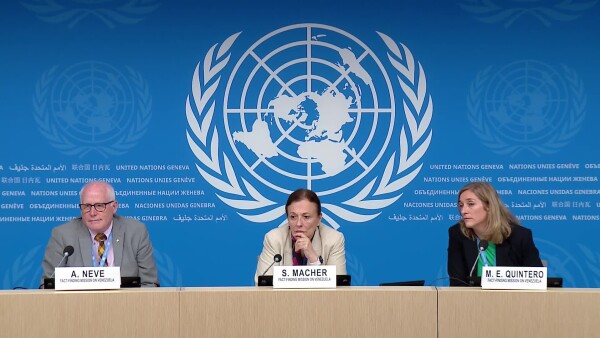
Press conference on the latest report of the Independent International Fact-Finding Mission on the Bolivarian Republic of Venezuela to the UN Human Rights Council
1
1
1
Press Conferences | OHCHR
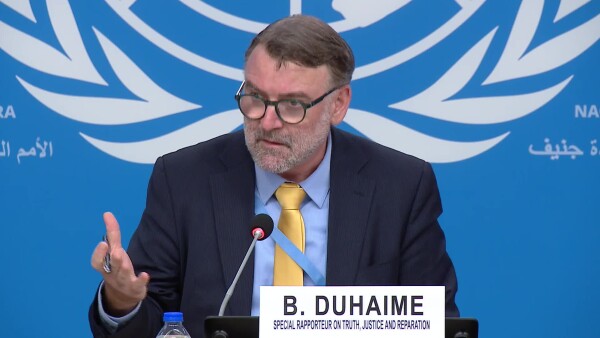
Victims Still Waiting: A Global Briefing on Transitional Justice Around the World
2
1
2
Edited News , Press Conferences | WMO
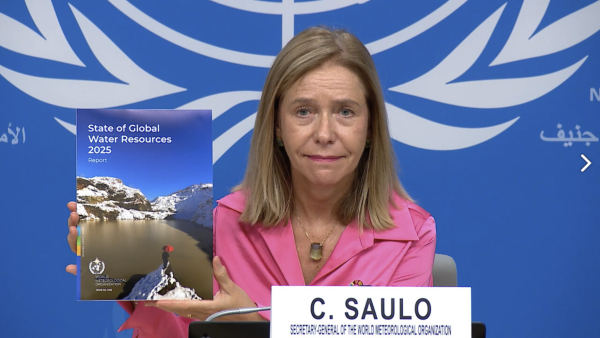
As world’s water reserves change, countries must prepare for a new reality: WMO
New data showing that rivers were at their lowest level for decades last year provides further evidence that the climate crisis is real and countries must act immediately to protect themselves from the increasing threat to communities and livelihoods, the UN World Meteorological Organization (WMO) said on Thursday.
The key findings from WMO’s State of Global Water Resources 2025 report covering the hydrological cycle and extreme events in the five-year period to last year:
- 2025 was one of driest years for river discharge in 35 years
- Past seven years have seen abnorfmal river flows
- Water storage on Earth’s land surface has decreased in past decade
- Widespread glacier loss across all regions for fourth consecutive year
- Asia and Africa are regions most affected by water-related disasters
- Water data availability has improved, but gaps remain in hard-hit areas
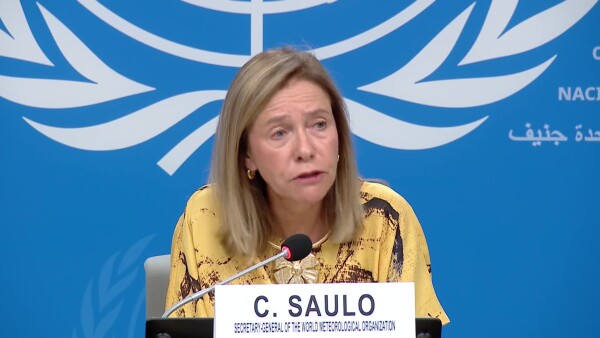
Highlighting the long-term decline in the Earth’s freshwater storage and glacier melt, WMO Secretary-General Celeste Saulo explained that the planet’s water reserves used to act as a planetary “savings account” that absorbed the occasional dry season, avoiding a water crisis. “One of the central stories of the 2025 report is what is happening to that savings account? And the simple answer is that we are depleting it,” she told journalists in Geneva.
Groundwater reserves are equally stretched and have been in decline since 2014, WMO’s report states, with nearly two-thirds of monitored wells worldwide showing levels lower than the historical norm and indicating a shift “further toward deficit…not recovery”.
“At the same time, we are seeing more water-related disasters,” Ms. Saulo said, while also stressing that the currently strengthening El Niño “will increase the risk of drought in some areas, and flooding in others”.
Glaciers disappearing
In 2025, for the fourth consecutive year, every major glaciated region on Earth lost ice mass, leading to short-term hazards including floods and long-term water insecurity, according to WMO.
Responding to a question about whether the changing global water cycle might have contributed to the deadly Nepal-China flooding disaster, Ms. Saulo explained that melting ice and rock was just one factor in the chain of events that ultimately sent a massive and deadly wall of water and debris downstream on 26 August, killing at least 1,367 people.
“You asked if it could happen again? Absolutely; the problem in this region is that there’s 63,700 glaciers at the last count,” she told a Press Conference in Geneva. “Even if you’re looking with remote sensing with satellites at these glaciers, you might see some faults, you might see some slight shifting, that does not mean necessarily catastrophic collapse. So, in order to plan for this, it’s very, very difficult. But the international community is looking very hard at ways in which we can bring people together to solve some of these monitoring issues.”
Data indicates that glaciers shrank between 2023 and 2025 with cumulative losses of 1,400 gigatonnes of water – or about one third of annual fresh water needs.
Every major glacier region on Earth lost ice for the fourth consecutive year.
“All 19 glacier regions around the globe lost ice; in Central Asia, Iceland, the Russian Arctic and western Canada and the United States, it was among the three worst years on record,” said Wayne Jenkinson, WMO’s Director of Hydrology and Cryosphere.
Some regions with smaller glaciers such as Central Europe, the Caucasus, the western Canada and the United States may already have reached “peak water”, Mr. Jenkinson warned.
“After this point, the glacier gives less meltwater each year simply because there is less ice left to melt. That matters for every community downstream that relies on water during hot, dry summers,” he explained.
Narelle van der Wel, WMO’s Head of Cryosphere Monitoring, Predictions and Services, stressed that while some further glacier loss is unavoidable, the eventual scale of the decline is not predetermined.
“Some glacier loss is inevitable, but total loss of glaciers is not yet inevitable,” she said, pointing to emissions reductions as central to limiting future losses.
Preparing for moving baselines
The report does not attribute every observed change to climate change alone. WMO says pressure on water resources and natural variability also contribute.
Mr. Jenkinson said governments need to prepare for “moving baselines” as historical patterns become less reliable.
“The situation 30 years ago is not where we are today,” he said. Countries, he added, need to prepare “for those changes that have really already arrived”.
ends
1
1
1
Press Conferences | WMO , OCHA , WHO , UNICEF , UN WOMEN , OHCHR , IOM , UNHCR
Update on Ebola from WHO and OCHA, update on the situation of children with the beginning of school in Ukraine from UNICEF, UN Women on the impact of the settlers and restrictions on women and girls in West Bank, OHCHR on the recovery of extensive human remains in Gaza, IOM and UNHCR on the new wave of displacement in Yemen
2
1
2
Press Conferences , Edited News | WFP
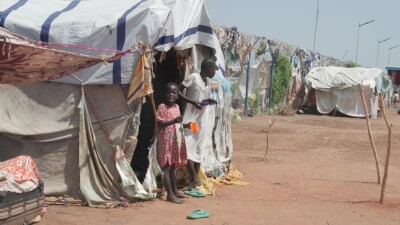
‘Super El Niño’ and converging crises worsen hunger in South Sudan and across the region - WFP
South Sudan’s hunger crisis is becoming increasingly catastrophic as violence, extreme weather and dwindling aid leave millions without enough food, the UN World Food Programme (WFP) warned on Tuesday.
1
1
1
Press Conferences | HRC
Update on the human rights situation in Belarus by the UN Group of Independent Experts on the Human Rights Situation in Belarus
1
1
1
Press Conferences | HRC , OHCHR
Update on the human rights situation in Syria by the Independent International Commission of Inquiry on the Syrian Arab Republic
1
1
1
Press Conferences | UNOG , IOM , UN WOMEN , UNCTAD , WHO , UNECE
IOM Yemen's Western Coast displacement; UN WOMEN on Gaza; UNCTAD Strait of Hormuz disruptions impacts; WHO Ebola logistics in DRC; WHO smoking and infertility; UNECE Data centres and energy.
1
1
1
Press Conferences | UNITAR , WMO
UNITAR: GA resolution on the merger of the United Nations System Staff College into the United Nations Institute for Training and Research; WMO: Air Quality and Climate Bulletin released; WHO: Ukraine update
2
2
2
Press Conferences , Edited News | WMO
Powerful El Niño heightens extreme-weather risks through 2027, as countries brace for impact - WMO
Fuelled by extraordinarily warm waters across the tropical Pacific Ocean, the El Niño climate pattern is expected to intensify in the coming months. Forecasters are almost certain that it will persist through February next year, with unusually warm conditions expected across the globe.
1
1
1
Press Conferences | IFRC , UN WOMEN , WFP , WHO , WMO , OCHA
UN WOMEN/IFRC: Update on the impact of the floods in Nepal, WFP: Food assistance in the West Bank, WHO: Gaza’s rehabilitation needs and continued spread of diseases