

The United Nations Office at Geneva
Multimedia Newsroom
Edited News , Press Conferences | UNOG
UN Secretary-General’s press conference on the Informal Meeting on Cyprus
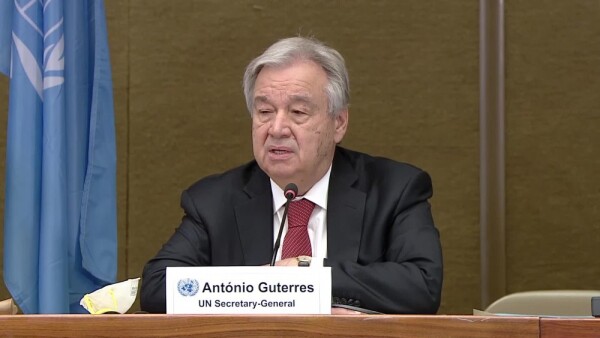
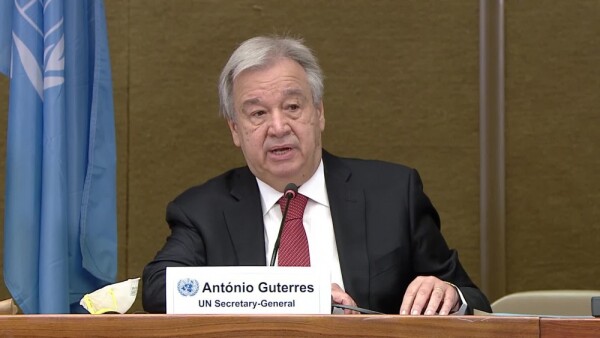
UN Secretary-General António Guterres pledged on Thursday that he would continue to represent the interests of “every Cypriot” in future talks on the divided Mediterranean island, as an informal effort to break the impasse ended without finding common ground.
“The truth is that in the end of our efforts we have not yet found enough common ground to allow for the resumption of formal negotiations in relation to the settlement of the Cyprus problem,” he told journalists in Geneva, where the informal talks took place.
“We have been able to agree that I will convene in the near future another meeting of the 5+1 - the five plus the United Nations - again with the objective to move in the direction of reaching common ground to allow for formal negotiations to start.”
The development represents the latest UN-led effort to resolve decades of tensions in Cyprus between the Turkish Cypriot north and the Turkish Greek south, whose communities have been split since 1974.
Four years ago, Mr. Guterres attempted to bring the two sides to a deal at the Swiss Alpine resort of Crans-Montana, where detailed talks ultimately broke down.
Six main issues were on the table, including security and guarantees, new territorial boundaries, and power-sharing.
Ahead of this latest push for a solution to the Cyprus problem, Mr. Guterres was said to “realistic” about the chances of making progress, according to his spokesperson.
But he explained that the position officially outlined 24 hours earlier by the Turkish Cypriot delegation – led by recently-elected Ersin Tatar – “was that the many efforts made to solve the Cyprus issue over the years have failed, including the most recent attempt made in Crans-Montana. They believe that efforts to negotiate the bi-zonal, bi-communal federation have been exhausted.”
Set against this, the Greek Cypriot position – reiterated by leader Nicos Anastasiades – was “that negotiations should resume from where they left off in Crans- Montana (that should) aim to achieve a settlement based on a bi-zonal, bi-communal federation,” Mr. Guterres explained, after holding bilateral meetings with the leaders of the Turkish Cypriot and Turkish Greek communities, and with the Foreign Ministers of “guarantor” powers Turkey, Greece and the UK.
“I do not give up,” the UN chief insisted, adding that his agenda was very simple: “strictly to fight for the security and wellbeing for every Cypriot, of the Greek Cypriots and the Turkish Cypriots that deserve to live in peace and prosperity together.”
The UN push for a solution to the Cyprus impasse follows consultations conducted in recent months on his behalf by Under Secretary-General Jane Holl Lute.
One of the UN’s longest-running peacekeeping missions helps to maintain peace on the island.
The United Nations Peacekeeping Force in Cyprus (UNFICYP) was established in 1964 to prevent further fighting between the Greek Cypriot and Turkish Cypriot communities and bring about a return to normal conditions.
Its Force Commander is Major General Ingrid Gjerde of Norway.
The mission’s responsibilities expanded in 1974, following a coup d’etat by elements favouring union with Greece and subsequent military intervention by Turkey, whose troops established control over the northern part of the island.
Since a de facto ceasefire in August 1974, UNFICYP has supervised ceasefire lines, provided humanitarian assistance and maintained a buffer zone between the Turkish and Turkish Cypriot forces in the north and the Greek Cypriot forces in the south.
Ceasefire lines extend over 180 kilometres across the island. In the absence of a formal ceasefire agreement, UNFICYP’s 800-plus troops and 60-plus police officers deal with hundreds of incidents each year, according to the force’s website.
ends
STORY: Cyprus Presser - António Guterres
TRT: 02 min 26s
SOURCE: UNTV CH
RESTRICTIONS: NONE
LANGUAGE: ENGLISH / NATS
ASPECT RATIO: 16:9
DATELINE: 29 APRIL 2021 GENEVA, SWITZERLAND
SHOTLIST
- Exterior wide shot, Palais des Nations flag alley, nations’ flags flying, a cloudy day.
- Wide shot, projection screen in Room XVIII, Palais des Nations.
- Wide medium shot, photographer taking pictures of the podium with speakers, Room XVIII, Palais des Nations.
- SOUNDBITE (English) — UN Secretary-General António Guterres: “The truth is that, in the end of our efforts, we have not yet found enough common grounds to allow for the resumption of formal negotiations in relation to the settlement of the Cyprus problem.”
- Wide medium shot, TV camera operator filming in foreground and podium to rear, Room XVIII, Palais des Nations.
- SOUNDBITE (English) — UN Secretary-General António Guterres: “We have been able to agree that I will convene in the near future another meeting of the 5+1, the five plus the United Nations, again with the objective to move in the direction of reaching common ground to allow for formal negotiations to start.”
- Medium wide shot, podium with speakers, side shot, Room XVIII, Palais des Nations.
- SOUNDBITE (English) — UN Secretary-General António Guterres: “The position expressed yesterday by the Turkish Cypriots was that the many efforts made to solve the Cyprus issue over the years have failed, including the most recent attempt made in Crans-Montana. They believe that efforts to negotiate the bi-zonal, bi-communal federation have been exhausted.”
- Medium shot, podium with speakers, Room XVIII, Palais des Nations.
- SOUNDBITE (English) — UN Secretary-General António Guterres: “The position expressed yesterday by the Greek Cypriot delegation was that negotiations should resume from where they left off in Crans Montana. They should aim to achieve a settlement based on a bi-zonal, bi-communal federation.”
- Wide shot, podium with speakers standing up, side shot, Room XVIII, Palais des Nations.
- SOUNDBITE (English) — UN Secretary-General António Guterres: “My agenda is very simple. My agenda is strictly to fight for the security and well-being of the Cypriots, of the Greek Cypriots and the Turkish Cypriots, that deserve to live in peace and prosperity together.”
- Wide shot, Room XVIII, Palais des Nations.
Similar Stories
1
1
1
Edited News | OCHA , UNICEF , WFP
Aid agencies warned on Friday of the fast-developing humanitarian emergency inside Taiz City in Yemen, which has been encircled by de facto Houthi forces fighting government troops along the country’s west coast.
1
1
1
Press Conferences | UN WOMEN , WFP , WHO
UN WOMEN: Sudan Women and girls one year after the fall of El Fasher; increasing drone attacks across the country; WFP: DRC - Ebola spreads to eighth DRC province as WFP delivers food, builds treatment centres and keeps supplies moving; WHO - Update on Ebola (Bundibugyo Virus Disease)
1
12
1
1
Press Conferences , Images | UNOG
Closing Press Conference following the Sixth Consultative Meeting on Enhancing Coordination of Peace Initiatives and Efforts in Sudan

2
17
1
2
Edited News , Press Conferences , Images | OCHA , WMO
Two UN agencies teamed up on Wednesday to issue an appeal for immediate assistance to help communities already being impacted by the strongest El Niño on record.

3
16
2
2
Edited News , B-roll , Conferences , Images | UNITED NATIONS , UNOG
Sixth Consultative Meeting on Enhancing Coordination of Peace Initiatives and Efforts for Sudan
1
1
1
Press Conferences | CITES
Wildlife trade and conservation policy discussions at the 81st meeting of the CITES Standing Committee (SC81)

1
1
1
Edited News | UNICEF , WHO , UNHCR
Yemen war continues to force families from homes amid hunger and disease
More than 250,000 people have now fled renewed fighting in Yemen, the UN said on Tuesday, citing particular concern for those sheltering in the southwestern city of Taiz and the wider governorate, where access is “essentially blocked”.
1
1
1
Press Conferences | UNHCR , UNCTAD , WMO , OCHA , UNICEF , WHO
UNHCR Hungary’s 1956 Refugee Crisis: 70 Years On, UNCTAD World Investment Forum 2026, Doha, WMO Greenhouse Gas Bulletin and Climate Update for COP31, OCHA Afghanistan: Malnutrition, Girls’ Education and Recovery, UNICEF Yemen: Child Malnutrition and Unsafe Water in Taiz, WHO Inequalities in Noncommunicable Diseases and Risk Factors
1
1
1
Press Conferences | UNHCR
End of UNHCR's 77th Annual Executive Committee (ExCom) meeting week

1
1
1
Edited News | UNICEF
A little over one year since a ceasefire agreement was announced between Hamas fighters and Israel, more than 340 children have been reported killed and hundreds more injured, the UN Children’s Fund, UNICEF, said on Friday.
1
1
1
Press Conferences | UNICEF , IOM , UNHCR
UN Special Assistant to the Personal Envoy Office (SUDAN): Peace Initiatives and Efforts in Sudan; UNICEF: Dire situation of children in Gaza; IOM: Damaged Homes and Energy Attacks Risk Displacing Ukrainians for this winter; UNHCR: update on EXCOM week
1
1
1
Press Conferences | IOM , UNDRR
UN stresses importance of household preparedness for disaster risk reduction.