

The United Nations Office at Geneva
Multimedia Newsroom
Edited News , Press Conferences | WHO , WFP
UNOG Bi-weekly press briefing Tigray Update WFP - WHO 13 July 2021
UN appeals for smoother passage for aid convoys to Ethiopia’s Tigray UN humanitarians appealed on Tuesday for better access to Ethiopia’s embattled Tigray region, after the first aid trucks in days to reach the local capital, Mekelle, encountered multiple, rigorous checks on their way there. “The United Nations World Food Programme (WFP) convoy of 50 trucks arrived in the Tigrayan capital of Mekelle Monday with 900 metric tonnes of food as well as other emergency supplies,” said Tomson Phiri, spokesperson for the World Food Programme (WFP). “It was the first humanitarian convoy to reach Tigray since WFP re-started operations in the northwest on 02 July following fighting…Of the 50 trucks, 29 truckloads transported food commodities comprising of wheat, split peas and vegetable oil, enough to cover the most pressing urgent food needs of 200,000 people for a week. It is not enough.” Unobstructed aid deliveries are crucial in the northern Ethiopian region where four million people need emergency food assistance after more than eight months of conflict between regional and central government forces, the WFP spokesperson explained. “What is important here is to note is that these convoys are going through rigorous checks,” Mr Phiri said. “It should not be like that. We need to send these convoys every day from now on so that we are able to meet demand. We therefore appeal for quicker and smoother passage into the region as soon as possible.” According to WFP the aid convoy took four days to travel from Semera in the northeast to Mekelle, a distance of 445 kilometres. Drivers had to stop at 10 checkpoints where “at each and every stop, the humanitarian cargo was rigorously checked”, Mr. Phiri said. Some 100 aid trucks “need to be moving on any given day” and they need to for half the time if we are to reverse the catastrophic humanitarian situation in the region” he continued, before noting that WFP needs $176 million to continue to scale up its response in Tigray to save lives and livelihoods to the end of the year. Latest reports from Tigray on Tuesday also indicate that healthcare provision is non-existent in many areas, the World Health Organization (WHO) said. “Most health facilities are not functioning at the moment and first-hand accounts that we just received this morning tell us that medical equipment and supplies were removed or destroyed in almost all health facilities in the region,” said spokesperson Christian Lindmeier. Despite the challenges of access, the UN agency has allocated $1.9 million for malaria, cholera and nutrition treatments. “But this is only a fraction of what’s needed (it) will be critical for local authorities and partners to deliver assistance,” Mr. Lindmeier insisted. In June, the WHO warned that conflict between Ethiopian Government troops and those loyal to the dominant regional force, the Tigray People’s Liberation Front (TPLF), had left hospitals “barely functioning”, people displaced and famine “looming”. The agency also underlined the serious danger of communicable and vaccine-preventable diseases spreading owing to a lack of food, clean water, safe shelter and access to health care. ends
STORY: Tigray Update – WFP, WHO
TRT: 02 min 22s
SOURCE: UNTV CH
RESTRICTIONS: NONE
LANGUAGE: ENGLISH / NATS
ASPECT RATIO: 16:9
DATELINE: 13 July 2021 GENEVA, SWITZERLAND
SHOTLIST
- Exterior wide shot, Palais des Nations flag alley, nations’ flags flying, overcast.
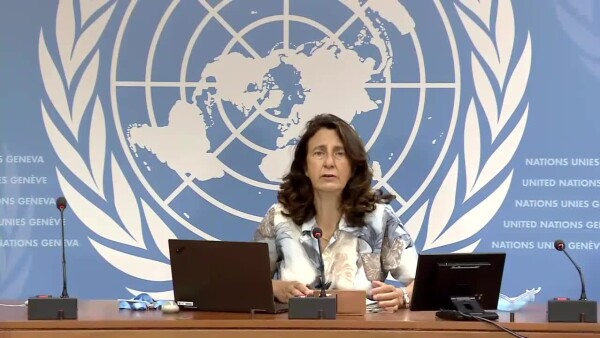
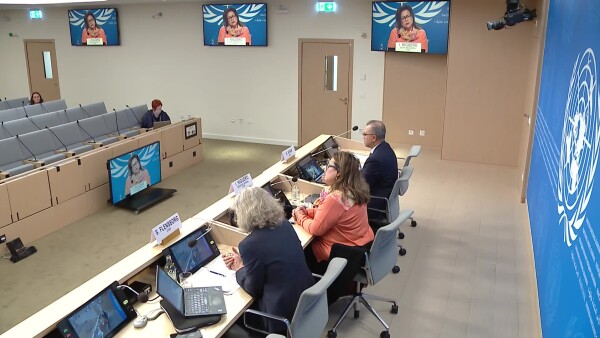
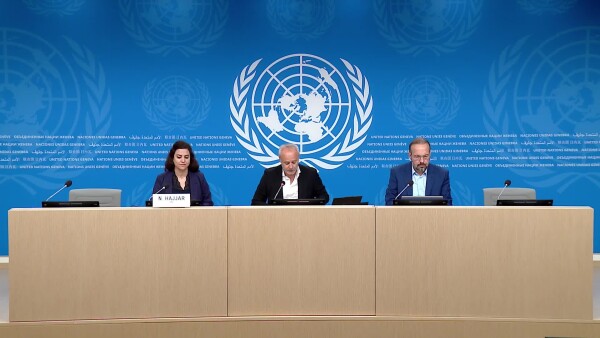
- Wide shot of press conference room at UN Geneva, TV camera on tripod in centre, podium and host/participants to rear and to sides.
- SOUNDBITE (English) — Tomson Phiri, UN World Food Programme (WFP): “The United Nations World Food Programme (WFP) convoy of 50 trucks arrived in the Tigrayan capital of Mekelle Monday with 900 metric tonnes of food as well as other emergency supplies. It was the first humanitarian convoy to reach Tigray since WFP re-started operations in the northwest on 02 July following fighting.”
- Medium shot, technician, masked, wearing white coat and checking mobile phone, partly obscured by conference microphones.
- SOUNDBITE (English) — Tomson Phiri, UN World Food Programme (WFP): “What is important here is to note is that these convoys are going through rigorous checks. It should not be like that. We need to send these convoys every day from now on so that we are able to meet demand. We therefore appeal for quicker and smoother passage into the region as soon as possible.”
- Medium shot, participants seated behind laptops, masked, interpreters’ booths to rear.
- SOUNDBITE (English) — Tomson Phiri, UN World Food Programme (WFP): “Of the 50 trucks, 29 truckloads transported food commodities comprising of wheat, split peas and vegetable oil, enough to cover the most pressing urgent food needs of 200,000 people for a week. It is not enough”
- Medium shot, participants seated behind laptops, masked, podium with host and UN logo backdrop to rear.
- SOUNDBITE (English) — Tomson Phiri, UN World Food Programme (WFP): “We need 100 trucks to be moving on any given day for half the time if we are to reverse the catastrophic humanitarian situation in the region.”
- Wide shot, big screen TV showing remote participant and host seated at podium, UN logo backdrop to rear.
- SOUNDBITE (English) — Christian Lindmeier, World Health Organization (WHO): “Most health facilities are not functioning at the moment and first-hand accounts that we just received this morning tell us that medical equipment and supplies were removed or destroyed in almost all health facilities in the region.”
- Wide shot, big screen TV showing remote participant and host seated at podium, UN logo backdrop to rear.
- SOUNDBITE (English) — Christian Lindmeier, World Health Organization (WHO): “With our limited remaining financial resources, WHO is procuring vitally needed supplies worth $1.9 million for malaria, cholera and nutrition. But this is only a fraction of what’s needed; these will be critical for local authorities and partners to deliver assistance.”
- Wide shot of press conference room, TV camera on tripod in centre, podium and host/participants to rear and to sides.
- Wide reverse shot of press conference room at UN Geneva, TV camera on tripod in centre next to arc light, participants to the sides.
- Wide shot of podium, host seated and masked in front of UN backdrop, arranging papers.

Similar Stories
1
1
1
Press Conferences | CITES
Wildlife trade and conservation policy discussions at the 81st meeting of the CITES Standing Committee (SC81)

1
1
1
Edited News | UNICEF , WHO , UNHCR
Yemen war continues to force families from homes amid hunger and disease
More than 250,000 people have now fled renewed fighting in Yemen, the UN said on Tuesday, citing particular concern for those sheltering in the southwestern city of Taiz and the wider governorate, where access is “essentially blocked”.
1
1
1
Press Conferences | UNHCR , UNCTAD , WMO , OCHA , UNICEF , WHO
UNHCR Hungary’s 1956 Refugee Crisis: 70 Years On, UNCTAD World Investment Forum 2026, Doha, WMO Greenhouse Gas Bulletin and Climate Update for COP31, OCHA Afghanistan: Malnutrition, Girls’ Education and Recovery, UNICEF Yemen: Child Malnutrition and Unsafe Water in Taiz, WHO Inequalities in Noncommunicable Diseases and Risk Factors
1
1
1
Press Conferences | UNHCR
End of UNHCR's 77th Annual Executive Committee (ExCom) meeting week

1
1
1
Edited News | UNICEF
A little over one year since a ceasefire agreement was announced between Hamas fighters and Israel, more than 340 children have been reported killed and hundreds more injured, the UN Children’s Fund, UNICEF, said on Friday.
1
1
1
Press Conferences | UNICEF , IOM , UNHCR
UN Special Assistant to the Personal Envoy Office (SUDAN): Peace Initiatives and Efforts in Sudan; UNICEF: Dire situation of children in Gaza; IOM: Damaged Homes and Energy Attacks Risk Displacing Ukrainians for this winter; UNHCR: update on EXCOM week

1
1
1
Press Conferences | IOM , UNDRR
UN stresses importance of household preparedness for disaster risk reduction.

1
1
1
Edited News | UNICEF , IFRC
Six weeks after Nepal’s deadly flooding disaster, communities are still struggling to rebuild their lives, but they will need sustained help as global warming increases the risk of another Himalayan catastrophe, the UN Children’s Fund (UNICEF) said on Friday.

1
1
1
Statements , Press Conferences | OHCHR

1
1
1
Press Conferences | UNHCR , UNICEF , IFRC , OHCHR , UN WOMEN , IOM , OCHA , WHO
UNHCR – ExCom Meeting, UNICEF – Nepal Recovery, IFRC – Flash Floods, WHO – Mental Health, IOM – South Sudan Floods, OCHA – DRC Humanitarian aid, UNHCR – Sahel Displacement, UNICEF – Yemen Update, IOM – Gaza Shelter, UN Women – Gaza Women, OHCHR – Arrests and detentions of Syrians by Israeli force

2
1
2
Press Conferences | UNCTAD
Presentation of the Trade and Developement Report 2026
Embargoed until 9 October 2026 at 11 a.m. (Geneva Time)
UNCTAD: UNCTAD’s flagship report finds that governments increasingly use industrial, trade, financial and technology policies to pursue economic and national security objectives. Market access and the ability to move into higher-value activities now depend more heavily on technology, finance and geopolitics.

1
1
1
Press Conferences | UPU
Release of the State of the Postal Sector Report 2026