

The United Nations Office at Geneva
Multimedia Newsroom
Edited News | OCHA
Bi-weekly Press Briefing: Flooding in South Sudan and Sudan - OCHA 01 October 2021
South Sudan and Sudan experiencing severe seasonal flooding with their relief pipelines at risk of breaking, warns the UN Office for the Coordination of Humanitarian Affairs (OCHA)
Almost half a million people are affected by flooding along the Nile and Lol rivers and Sudd marshlands so far in 2021. Immediate pipeline breaks are expected in water, sanitation and hygiene supplies, emergency shelter and non-food items in coming months if not replenished, said Jens Laerke, OCHA’s spokesperson, at a news briefing today at the United Nations in Geneva.
“In South Sudan, OCHA has received reports of almost half a million people affected by flooding along the Nile and Lol rivers and Sudd marshlands so far this year”, Laerke said. He added that “Humanitarian teams are helping those in need. Jonglei, Unity, Northern Bahr el Ghazal and Upper Nile are the worst affected states. These are also states with a high proportion of people facing crisis and emergency food insecurity.”
The UN and NGOs have been responding with food, water purification tablets, plastic sheeting for temporary shelter, mosquito nets, medical supplies and other assistance.
According to Jens Laerke, “access is a major challenge, though, with most of the flood-affected areas inaccessible by road, and the transport of aid by air is very costly.”
The people affected by flooding reflects a 23 per cent increase in the numbers of people reported to be affected since the end of August.
“Some of the flood-affected counties are also affected by ongoing violence, which creates significant challenges for the people affected and the humanitarians who try to respond to their needs”, Laerke said.
Rapid needs assessments have been completed in 15 of the 22 counties affected by the flooding in South Sudan. Humanitarians are responding to the needs of people in most of the flood-affected counties. “Dikes repaired in Bor South and Pibor ahead of the floods seem to have helped to protect many areas from flooding since May”, Laerke noted. “However, water levels are now dangerously high in both counties and many dikes are close to overflowing. If that happens, the impact on people already deemed vulnerable due to previous years of flooding, violence, and food insecurity will be devastating.”
The US$1.7 billion response plan for South Sudan is currently 61 per cent funded.
In Sudan, more than 314,000 people have also been affected by heavy rains since July.
Fourteen states out of 18 in Sudan have been hit by the floods and the number of people affected has increased more than five-fold since the end of August. White Nile, Gedaref and Aj Jazirah states in the south-east are the worst hit.
The UN in Sudan has made projections for the remainder of the year and warns that without additional resources, 330,000 people would not receive adequate water, sanitation and hygiene support, 290,000 would be left without a shelter response; and over a quarter of a million people would be deprived of essential health services.
-ends-
- Exterior wide shot, United Nations flag flying.
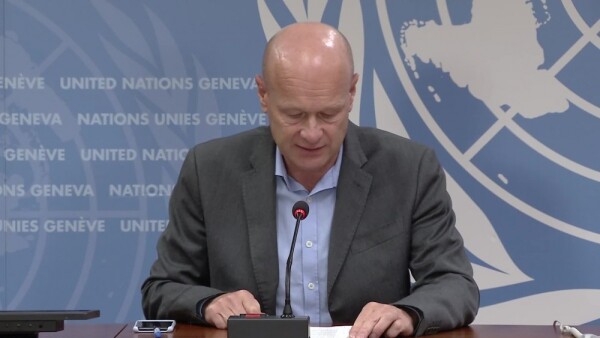
- Wide shot, inside the bi-weekly press conference room, participants.
- SOUNDBITE (English): Jens Laerke, Spokesperson, United Nations Office for the Coordination of Humanitarian Affairs (OCHA): “In South Sudan, OCHA has received reports of almost half a million people affected by flooding along the Nile, Lol rivers and Sudd marshlands so far this year. Jonglei, Unity, Northern Bahr el Ghazal and Upper Nile are the worst affected States. These are also States with a high proportion of people facing crisis and emergency food insecurity.”
- Medium shot, speakers at podium and briefing broadcast on large-screen TV.
- SOUNDBITE (English): Jens Laerke, Spokesperson, United Nations Office for the Coordination of Humanitarian Affairs (OCHA): “Access is a major challenge, though, with most of the flood-affected areas inaccessible by road, and the transport of aid by air is very costly.”
- Medium shot, speakers at podium and briefing broadcast on large-screen TV.
- SOUNDBITE (English): Jens Laerke, Spokesperson, United Nations Office for the Coordination of Humanitarian Affairs (OCHA): “Some of the flood-affected counties are also affected by ongoing violence, which creates significant challenges for the people affected and the humanitarians who try to respond to their needs.”
- Close shot of the hand of one of the participants.
- SOUNDBITE (English): Jens Laerke, Spokesperson, United Nations Office for the Coordination of Humanitarian Affairs (OCHA): “Dikes repaired in Bor South and Pibor ahead of the floods seem to have helped to protect many areas from flooding since May. However, water levels are now dangerously high in both counties and many dikes are close to overflowing. If that happens, the impact on people already deemed vulnerable due to previous years of flooding, violence, and food insecurity will be devastating.”
- Wide shot, participants attending the press briefing.
- Close shot, a participant at the press briefing wearing a mask.
- Close shot, a participant taking notes.
Similar Stories

2
17
1
2
Edited News , Press Conferences | OCHA , WMO
Two UN agencies teamed up on Wednesday to issue an appeal for immediate assistance to help communities already being impacted by the strongest El Niño on record.

3
16
2
2
B-roll , Conferences , Edited News | UNITED NATIONS , UNOG
Sixth Consultative Meeting on Enhancing Coordination of Peace Initiatives and Efforts for Sudan

1
1
1
Edited News | UNICEF , WHO , UNHCR
Yemen war continues to force families from homes amid hunger and disease
More than 250,000 people have now fled renewed fighting in Yemen, the UN said on Tuesday, citing particular concern for those sheltering in the southwestern city of Taiz and the wider governorate, where access is “essentially blocked”.

1
1
1
Edited News | UNICEF
A little over one year since a ceasefire agreement was announced between Hamas fighters and Israel, more than 340 children have been reported killed and hundreds more injured, the UN Children’s Fund, UNICEF, said on Friday.

1
1
1
Edited News | UNICEF , IFRC
Six weeks after Nepal’s deadly flooding disaster, communities are still struggling to rebuild their lives, but they will need sustained help as global warming increases the risk of another Himalayan catastrophe, the UN Children’s Fund (UNICEF) said on Friday.

1
1
1
Edited News | WHO
In suspected Russia plague death, testing and monitoring underway – WHO
The death of a lab worker in Russia’s Siberia region has sparked concerns about plague being the cause, the UN World Health Organization (WHO) said on Tuesday, adding that it was following the situation closely.

1
1
Edited News | OHCHR , UNOG
UN Human Rights Chief Volker Türk on Friday provided and oral update to the 63rd session of the Human rights Council on Ukraine.

1
1
1
Edited News | OHCHR , UNOG
UN Human Rights Chief Volker Türk on Friday provided and oral update to the 63rd session of the Human rights Council on the human rights situation in Haiti.

1
1
1
Edited News | WHO
Repeated delays in bringing lifesaving medicines, prosthetics and more from Israel into Gaza risk having devastating consequences on Palestinians who urgently need them in the wartorn enclave, the UN World Health Organization (WHO) said on Friday. “A truck full of non-priority supplies or the right supplies arriving too late, doesn't save lives. That's the question that actually matters," said Dr Reinhilde Van De Weerdt, WHO Representative in the OPT.

1
1
1
Edited News | WHO
DRC: Early access to care and oxygen decisive for Ebola patients’ survival – WHO
In the Democratic Republic of the Congo (DRC), health workers fighting the country’s largest-ever Ebola outbreak are struggling to overcome critical challenges to patient care, the UN World Health Organization (WHO) warned on Tuesday.

1
1
1
Edited News | OCHA , UN
Civilians in Iran are continuing to feel the consequences of months of conflict and military escalation, the UN’s top official in the country has said, as loss of life, damage to civilian infrastructure and mounting economic pressures leave many facing continued uncertainty.
1
1
1
Edited News | WHO , UNICEF
Aid agencies in Yemen highlighted the growing hunger emergency sparked by renewed fighting between Houthi opposition forces and Government troops, after mobile health clinics reported that hundreds of children displaced by the violence are suffering from the most deadly form of malnutrition.