

The United Nations Office at Geneva
Multimedia Newsroom
Press Conferences , Edited News | HRC
CDH - Conférence de presse : Commission d'enquête sur le Territoire palestinien occupé - 19 juin 2024
Dernier rapport de la Commission d'enquête internationale indépendante sur le territoire palestinien occupé, y compris Jérusalem-Est, et Israël
Orateurs :
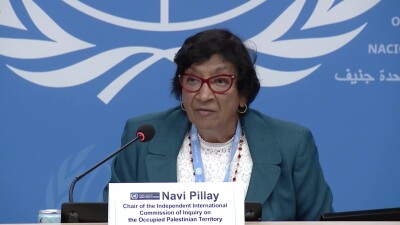
- Navi Pillay, Présidente de la Commission
- Chris Sidoti, Membre de la Commission
Modéré par :
Todd Pitman, OHCHR
HISTOIRE : Commission d'enquête - Territoires palestiniens occupés
SOURCE : UNTV CH
DURÉE : 2’39”
LANGUE : ANGLAIS / NATS
FORMAT D'IMAGE : 16:9
RESTRICTIONS : AUCUNE
DATE : 19 JUIN 2024 GENÈVE, SUISSE
LISTE DES PLANS
1. Extérieur moyen-large, allée des drapeaux de l'ONU Genève.
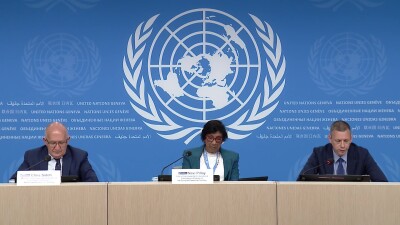
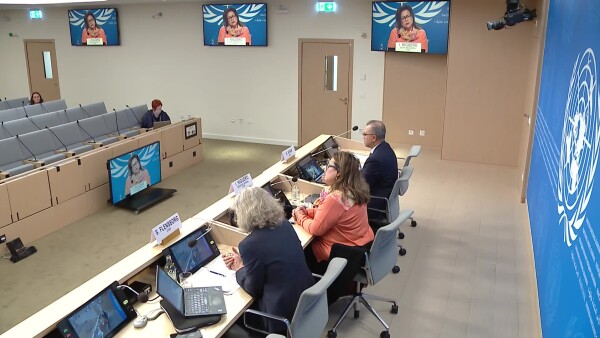
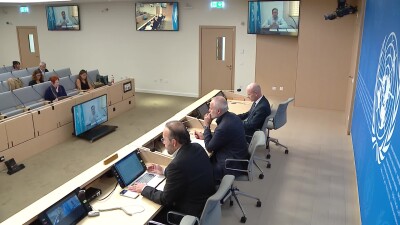
2. Large, plan en hauteur de l'estrade des orateurs et des journalistes.
3. EXTRAIT SONORE (Anglais) – Navi Pillay, Présidente de la Commission d'enquête sur le Territoire palestinien occupé, y compris Jérusalem-Est et Israël : “Les gens du nord de Gaza se déplacent vers le sud et soudainement ils sont attaqués dans le sud. Nous lisons toutes ces instructions contradictoires comme indiquant une attitude de mépris pour leurs vies, de destruction et de déplacement.”
4. Plan moyen-large de la salle de presse avec des journalistes.
5. EXTRAIT SONORE (Anglais) – Navi Pillay, Présidente de la Commission d'enquête sur le Territoire palestinien occupé, y compris Jérusalem-Est et Israël : “Nous respectons la loi ; vous ne pouvez pas tuer des civils, vous devez les protéger. Avec cette occupation, d'après toutes les informations que nous avons recueillies, il est très clair pour nous qu'il y a une intention très nette de déplacement forcé des gens juste pour les expulser.”
6. Plan moyen, orateurs assis à l'estrade.
7. EXTRAIT SONORE (Anglais) – Chris Sidoti, Membre de la Commission d'enquête : “Je ne sais pas si c'est l'une des armées les plus morales du monde ou non... Mais ce que je sais et ce que j'ai l'autorité de faire, c'est d'évaluer les conduites criminelles. Et nous l'avons fait en relation avec les événements récents et vous pouvez le voir dans le rapport. Et la seule conclusion que vous pouvez tirer est que l'armée israélienne est l'une des armées les plus criminelles du monde.”
8. Plan moyen-large, journalistes et vidéojournalistes avec caméras.
9. EXTRAIT SONORE (Anglais) – Navi Pillay, Présidente de la Commission d'enquête sur le Territoire palestinien occupé, y compris Jérusalem-Est et Israël : “Des milliers de personnes nous disent que sans l'aide de pays puissants, Israël n'aurait pas pu mener cette occupation perpétuelle.”
10. Plan moyen-large, salle de presse montrant des rangées de sièges, journalistes et estrade.
11. EXTRAIT SONORE (Anglais) – Chris Sidoti, Membre de la Commission d'enquête : “Il y a des otages qui ont été libérés. Nous aimerions beaucoup leur parler quand ce sera approprié de le faire, en tenant compte des conditions physiques et psychologiques. Je veux dire, notre première règle dans la collecte de preuves est de ne pas nuire. Donc, à un moment approprié pour eux, nous voulons leur parler. Nous voulons savoir ce qui s'est passé.”
12. Plan moyen, journalistes écoutant, prenant des notes dans la salle de presse.
13. EXTRAIT SONORE (Anglais) – Chris Sidoti, Membre de la Commission d'enquête : “Cela s'est produit encore et encore. Et c'est le pire de tous. C'est le plus grand nombre de morts jamais enregistré dans cette période prolongée de guerre. Et il doit y avoir une responsabilité pour chaque acte criminel spécifique. Mais si nous voulons l'arrêter à l'avenir, nous devons également aborder la question du contexte dans lequel cela s'est produit.”
14. Plan rapproché, caméraman au travail.
15. Plan large, journalistes et vidéojournalistes de dos.
16. Plan rapproché, journaliste prenant des notes.
Similar Stories

1
1
1
Edited News | OCHA , UNICEF , WFP
Aid agencies warned on Friday of the fast-developing humanitarian emergency inside Taiz City in Yemen, which has been encircled by de facto Houthi forces fighting government troops along the country’s west coast.
1
1
1
Press Conferences | UN WOMEN , WFP , WHO
UN WOMEN: Sudan Women and girls one year after the fall of El Fasher; increasing drone attacks across the country; WFP: DRC - Ebola spreads to eighth DRC province as WFP delivers food, builds treatment centres and keeps supplies moving; WHO - Update on Ebola (Bundibugyo Virus Disease)
1
12
1
1
Press Conferences , Images | UNOG
Closing Press Conference following the Sixth Consultative Meeting on Enhancing Coordination of Peace Initiatives and Efforts in Sudan

2
17
1
2
Edited News , Press Conferences , Images | OCHA , WMO
Two UN agencies teamed up on Wednesday to issue an appeal for immediate assistance to help communities already being impacted by the strongest El Niño on record.

3
16
2
2
Edited News , B-roll , Conferences , Images | UNITED NATIONS , UNOG
Sixth Consultative Meeting on Enhancing Coordination of Peace Initiatives and Efforts for Sudan
1
1
1
Press Conferences | CITES
Wildlife trade and conservation policy discussions at the 81st meeting of the CITES Standing Committee (SC81)

1
1
1
Edited News | UNICEF , WHO , UNHCR
Yemen war continues to force families from homes amid hunger and disease
More than 250,000 people have now fled renewed fighting in Yemen, the UN said on Tuesday, citing particular concern for those sheltering in the southwestern city of Taiz and the wider governorate, where access is “essentially blocked”.
1
1
1
Press Conferences | UNHCR , UNCTAD , WMO , OCHA , UNICEF , WHO
UNHCR Hungary’s 1956 Refugee Crisis: 70 Years On, UNCTAD World Investment Forum 2026, Doha, WMO Greenhouse Gas Bulletin and Climate Update for COP31, OCHA Afghanistan: Malnutrition, Girls’ Education and Recovery, UNICEF Yemen: Child Malnutrition and Unsafe Water in Taiz, WHO Inequalities in Noncommunicable Diseases and Risk Factors

1
1
1
Press Conferences | UNHCR
End of UNHCR's 77th Annual Executive Committee (ExCom) meeting week

1
1
1
Edited News | UNICEF
A little over one year since a ceasefire agreement was announced between Hamas fighters and Israel, more than 340 children have been reported killed and hundreds more injured, the UN Children’s Fund, UNICEF, said on Friday.

1
1
1
Press Conferences | UNICEF , IOM , UNHCR
UN Special Assistant to the Personal Envoy Office (SUDAN): Peace Initiatives and Efforts in Sudan; UNICEF: Dire situation of children in Gaza; IOM: Damaged Homes and Energy Attacks Risk Displacing Ukrainians for this winter; UNHCR: update on EXCOM week

1
1
1
Press Conferences | IOM , UNDRR
UN stresses importance of household preparedness for disaster risk reduction.