

The United Nations Office at Geneva
Multimedia Newsroom
Press Conferences , Edited News | UNCTAD
Conférence de presse de la CNUCED : Rapport sur l'évolution de l'économie des territoires palestiniens occupés - 12 septembre 2024
Lancement du rapport de la CNUCED "Développements dans l'économie du Territoire palestinien occupé"
Orateurs :
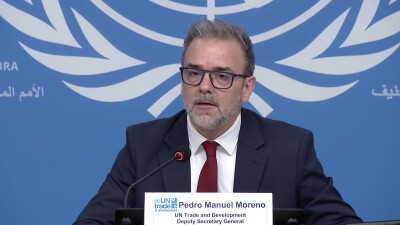
· Pedro Manuel Moreno, Commerce et Développement des Nations Unies – Secrétaire général adjoint
· Mutasim Elagraa, Commerce et Développement des Nations Unies – Coordinateur, Assistance de la CNUCED au peuple palestinien
· Rami Alazzeh, Commerce et Développement des Nations Unies – Économiste
Histoire : Rapport de la CNUCED sur la Palestine – 12 septembre 2024
TRT : 03’36”
SOURCE : UNTV CH
LANGUE : ANGLAIS / SON
FORMAT : 16:9
DATELINE : 12 septembre 2024 - GENÈVE, SUISSE
LISTE DES PLANS
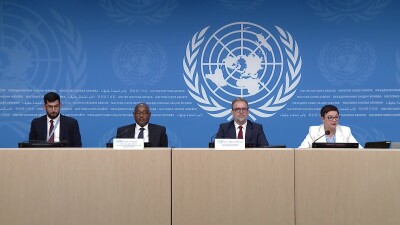
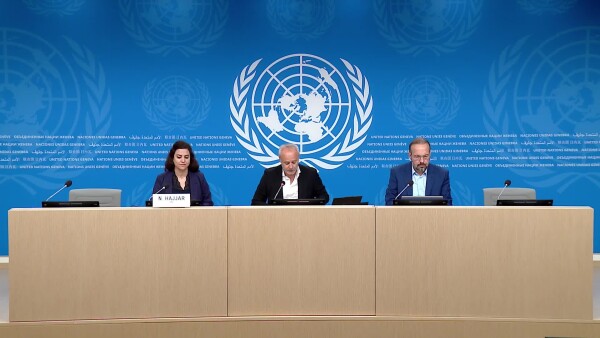
- Plan large de la salle de conférence de presse avec les orateurs sur le podium.
- EXTRAIT SONORE (Anglais) Pedro Manuel Moreno, Secrétaire général adjoint, CNUCED : “L'économie palestinienne est en chute libre. Le rapport appelle la communauté internationale à stopper cette chute économique, à répondre à la crise humanitaire et à jeter les bases d'une paix et d'un développement durables. Cela inclut la considération d'un plan de relance complet pour le territoire palestinien occupé, une augmentation de l'aide et du soutien internationaux, la libération des revenus retenus et la levée du blocus de Gaza.”
- Plan moyen : Salle de presse avec des journalistes et la salle de contrôle à l'arrière.
- EXTRAIT SONORE (Anglais) Mutasim Elagraa, Coordinateur, Assistance de la CNUCED au peuple palestinien : “Le secteur agricole palestinien a diminué de 11 % au dernier trimestre de 2023, et cela est particulièrement préoccupant car le secteur agricole fournit une part importante de l'emploi, et il génère des revenus. Il produit des exportations. Il contribue à la sécurité alimentaire, et en Palestine, il joue un autre rôle spécial. Le secteur agricole est un amortisseur de chocs - chaque fois qu'il y a une crise et que les travailleurs palestiniens perdent leur emploi, que ce soit dans l'économie domestique ou avec leur travail en Israël et dans les colonies, ils retournent temporairement à l'agriculture, et là, ils peuvent produire un certain revenu.”
- Plan rapproché : Journaliste dans la salle de presse.
- EXTRAIT SONORE (Anglais) Rami Alazzeh, Économiste, CNUCED : “Pour vous donner une comparaison : au plus fort de la deuxième Intifada, de 2000 à 2002, l'économie palestinienne a perdu 33 % de sa valeur. Et maintenant, nous voyons cette chute en un an. En gros, c'est le taux de chômage le plus élevé enregistré pour la Cisjordanie. Même au plus fort de la deuxième Intifada, le plus élevé que nous ayons vu était de 28 %. Au premier trimestre de 2024, le chômage a atteint 35 %. Donc, nous parlons de presque le triple de ce qu'il était avant octobre 2023.”
- Plan moyen : Orateurs au podium dans la salle de presse.
- EXTRAIT SONORE (Anglais) Mutasim Elagraa, Coordinateur, Assistance de la CNUCED au peuple palestinien : “Le problème est général. Il est à Gaza, en Cisjordanie et à Jérusalem-Est. Ce n'est pas seulement Gaza. Bien que la situation à Gaza soit vraiment extrême. Il faudra des décennies et des dizaines de milliards de dollars, voire plus, pour reconstruire Gaza et la ramener à son état d'avant octobre 2023. Donc, si nous voulons ramener Gaza à son état d'avant octobre 2023, nous avons besoin de dizaines de milliards de dollars, voire plus, et de décennies.”
- Plan moyen : Orateurs au podium.
- EXTRAIT SONORE (Anglais) Rami Alazzeh, Économiste, CNUCED : “Ce qui reste à Gaza, c'est essentiellement le soutien humanitaire. Il ne reste plus grand-chose à Gaza et quand vous dites que les deux tiers des emplois ont été perdus, le taux de chômage à Gaza avant octobre 2023 était déjà de 45 %. Donc, ce qui reste à Gaza maintenant, ce sont juste les travailleurs humanitaires, le personnel local de l'ONU, les médecins, les infirmières. C'est tout. L'économie s'est essentiellement effondrée il y a des mois. Donc, c'est ce qui reste de fonctionnel à Gaza maintenant.”
- Plan moyen : Journaliste dans la salle de presse.
Similar Stories
1
1
1
Press Conferences | WMO , UNHCR , WHO , ILO
WMO: Greenhouse Gas Bulletin; UNHCR: As attacks intensify UNHCR urges support for war ravaged Ukrainians; WHO: Clinical trials in DRC: vaccines and beyond; ILO: New global and regional estimates on domestic work, informality and working conditions

1
1
1
Edited News | OCHA , UNICEF , WFP
Aid agencies warned on Friday of the fast-developing humanitarian emergency inside Taiz City in Yemen, which has been encircled by de facto Houthi forces fighting government troops along the country’s west coast.
1
1
1
Press Conferences | UN WOMEN , WFP , WHO
UN WOMEN: Sudan Women and girls one year after the fall of El Fasher; increasing drone attacks across the country; WFP: DRC - Ebola spreads to eighth DRC province as WFP delivers food, builds treatment centres and keeps supplies moving; WHO - Update on Ebola (Bundibugyo Virus Disease)
1
12
1
1
Press Conferences , Images | UNOG
Closing Press Conference following the Sixth Consultative Meeting on Enhancing Coordination of Peace Initiatives and Efforts in Sudan

2
17
1
2
Edited News , Press Conferences , Images | OCHA , WMO
Two UN agencies teamed up on Wednesday to issue an appeal for immediate assistance to help communities already being impacted by the strongest El Niño on record.

3
16
2
2
Edited News , B-roll , Conferences , Images | UNITED NATIONS , UNOG
Sixth Consultative Meeting on Enhancing Coordination of Peace Initiatives and Efforts for Sudan
1
1
1
Press Conferences | CITES
Wildlife trade and conservation policy discussions at the 81st meeting of the CITES Standing Committee (SC81)

1
1
1
Edited News | UNICEF , WHO , UNHCR
Yemen war continues to force families from homes amid hunger and disease
More than 250,000 people have now fled renewed fighting in Yemen, the UN said on Tuesday, citing particular concern for those sheltering in the southwestern city of Taiz and the wider governorate, where access is “essentially blocked”.
1
1
1
Press Conferences | UNHCR , UNCTAD , WMO , OCHA , UNICEF , WHO
UNHCR Hungary’s 1956 Refugee Crisis: 70 Years On, UNCTAD World Investment Forum 2026, Doha, WMO Greenhouse Gas Bulletin and Climate Update for COP31, OCHA Afghanistan: Malnutrition, Girls’ Education and Recovery, UNICEF Yemen: Child Malnutrition and Unsafe Water in Taiz, WHO Inequalities in Noncommunicable Diseases and Risk Factors
1
1
1
Press Conferences | UNHCR
End of UNHCR's 77th Annual Executive Committee (ExCom) meeting week

1
1
1
Edited News | UNICEF
A little over one year since a ceasefire agreement was announced between Hamas fighters and Israel, more than 340 children have been reported killed and hundreds more injured, the UN Children’s Fund, UNICEF, said on Friday.
1
1
1
Press Conferences | UNICEF , IOM , UNHCR
UN Special Assistant to the Personal Envoy Office (SUDAN): Peace Initiatives and Efforts in Sudan; UNICEF: Dire situation of children in Gaza; IOM: Damaged Homes and Energy Attacks Risk Displacing Ukrainians for this winter; UNHCR: update on EXCOM week